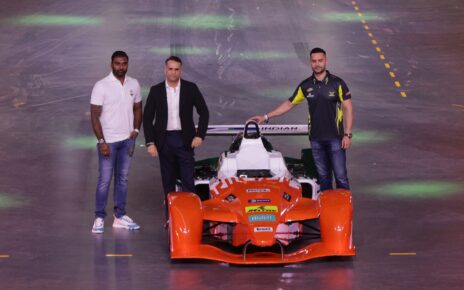
Most people don’t buy a car just to get from one place to another. For many, it says something about who they are. That simple idea sits at the heart of the new Tata Aeris.
While designing the Aeris, Tata focused on personal buyers, many of them stepping up from a hatchback, who make up about 65% of India’s compact sedan market. These buyers aren’t chasing a single standout feature. They want style, comfort, technology and connectivity, all working together. The company calls this customer the “balance seeker,” and the Aeris has been built around exactly that need.
So, when I got behind the wheel of the Aeris, available in iCNG and petrol versions with manual and AMT gearboxes, one question stayed with me throughout the drive: does it really strike that balance?
What Both Versions Share
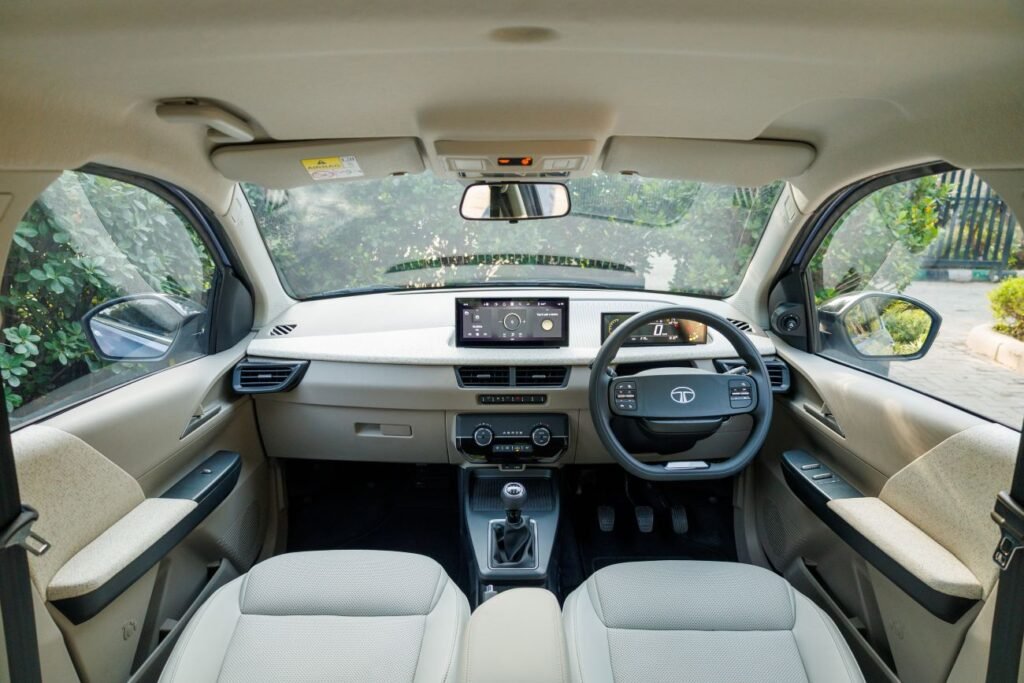
Whichever version you choose, the Aeris makes a good first impression the moment you open the door. The cabin feels clean, bright and roomy, helped by its light colour scheme. The textured surfaces and new knobs and switches feel genuinely premium for a car at this price.
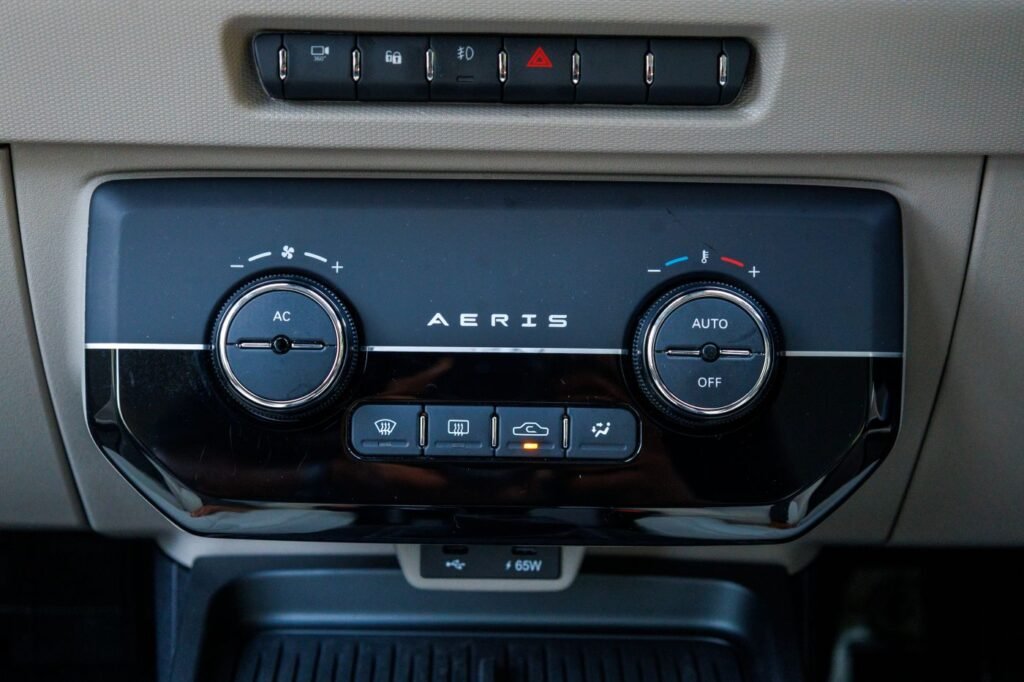
Small details show that someone has thought about the driver. The start button sits on the right of the steering wheel, so as I settled in, my thumb found it almost without looking. From the driver’s seat, the bonnet is designed to let you see the road as close as about two metres ahead, which helps in tight spots. It took me a little while to judge the left-front corner, but the 360-degree camera quickly took care of that, so well that it almost does the thinking for you. The 360-degree camera switch could easily sit closer to the driver. There’s a blank switch on the far right of the panel that would make an ideal spot, putting the camera just a fingertip away.
The feature list is long for this segment. There’s a touchscreen with wireless Android Auto and Apple CarPlay, which paired with my phone within seconds, along with automatic climate control, a wireless charger and connected car features through a smartphone app. Ventilated seats for both the driver and front passenger were a real treat, and something I didn’t expect at this price.
The feature that impressed me most, though, was the built-in dashcam. It uses the 360-degree cameras to record footage on 4 GB of internal memory, saving two minutes before and three minutes after an incident. Plug in a pen drive, and it can record continuously. The air conditioning cooled the cabin quickly, and rear passengers get their own vents. In the back, the backrest angle is fixed, but it is well chosen. With the armrest folded down, I found it a relaxed and comfortable place to sit.
On the Road
Once moving, the Aeris felt stable and composed from the very first few kilometres. Tata’s ALFA platform keeps body roll well in check, even though quick corners, and that gave me real confidence behind the wheel. Instead of hesitating before a turn or a sudden lane change, I found myself trusting the car to stay planted. It felt just as comfortable in bumper-to-bumper traffic as it did on the open highway.
There is one small niggle common to both. On a tree-lined stretch, the upper dashboard trim reflected in the windscreen, creating a distracting glare as the car moved between shade and sunlight. A non-reflective finish would fix that easily.
iCNG: For the Balance Seeker Who Counts Every Rupee
Among balance seekers, the iCNG buyer leans a little more towards running costs. This is the typical Indian buyer who wants more for less, and the Aeris iCNG is clearly built with this person in mind.
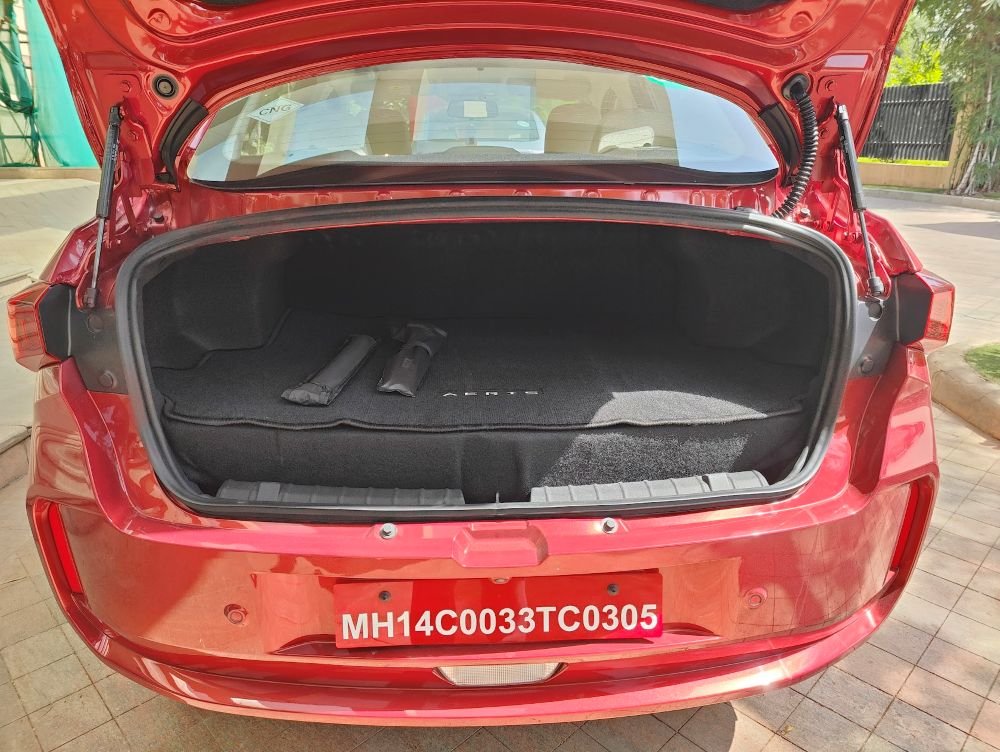
The first clever touch is in the boot. Instead of one large CNG tank that eats into the luggage space and leaves awkward gaps, the Aeris uses twin cylinders mounted under the boot floor. The space above stays together as one usable block, which makes a real difference when you load bags for a family trip.
Switching between CNG and petrol on the move was seamless, whether I was crawling at a signal or cruising on the highway. Switch to petrol and there’s a noticeable surge of power. On CNG, there is some lag, as you’d expect, but the savings make up for it.
The AMT gearbox surprised me with how well it is tuned. It holds fourth gear until about 85 km/h before shifting to fifth. When I pressed the accelerator hard to overtake, it quickly dropped back to fourth for a burst of speed, so paddle shifters were never missed. It isn’t flawless, though, the steering feels heavy, which may not suit buyers who value comfort. Engine noise is noticeable at idle and at lower speeds, and settles down only once you cross 60–80 km/h.
Petrol: Same Face, a Few Clever Differences
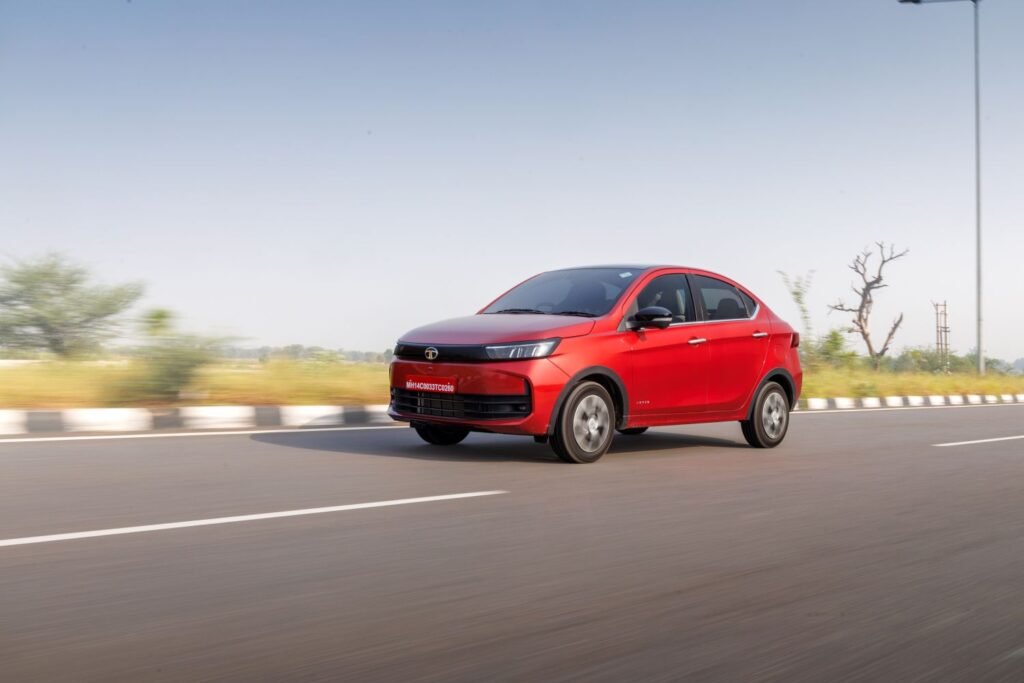
Park the petrol Aeris next to its iCNG sibling and you’d struggle to tell them apart. Both share the same face, with LED headlamps and daytime running lights, LED fog lamps, a chunky black grille and a front camera for the 360-degree view. Spend a few minutes walking around it, though, and the differences start to show.
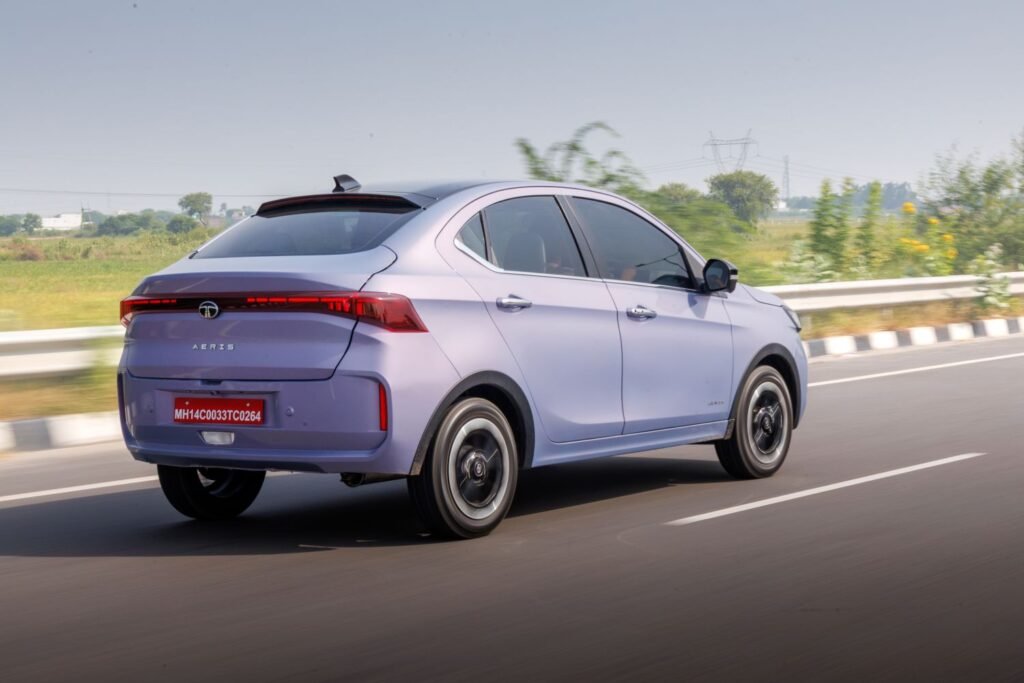
The first is on the side. The petrol version rides on 15-inch alloy wheels with 175/60 R15 tyres, while the iCNG makes do with 14-inch wheels. Both offer the same ground clearance. At the back, the LED tail lamps look like one connected strip but are actually made up of five separate bars, a neat design trick.
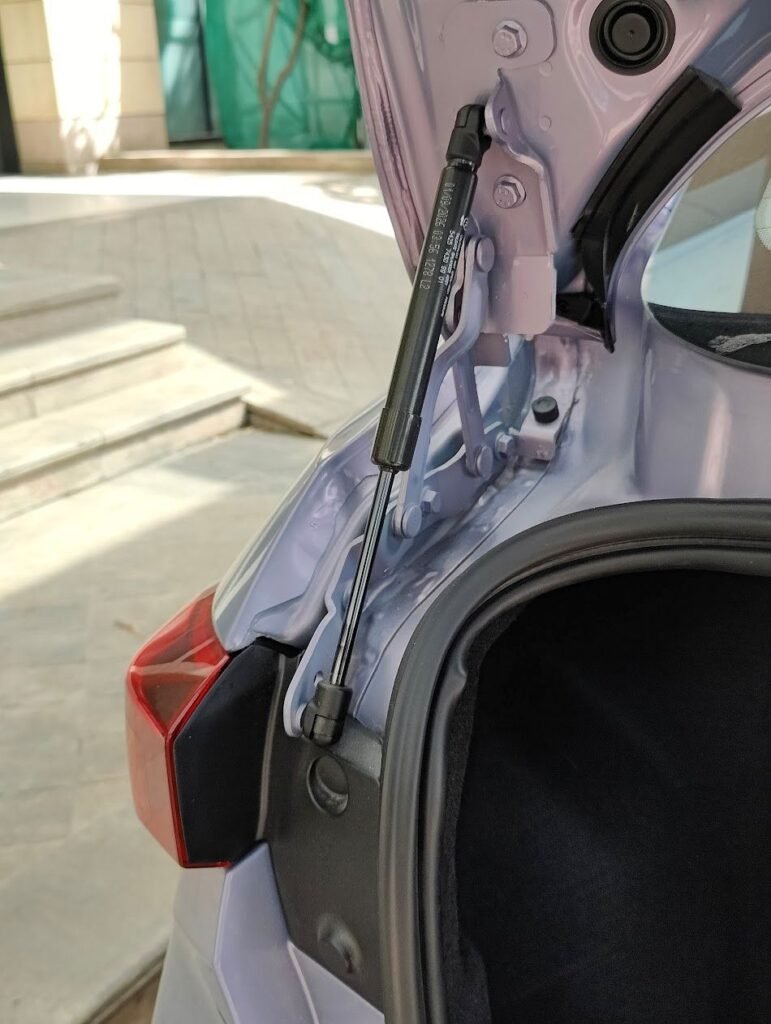
The biggest change is in the boot. Without CNG cylinders to accommodate, the petrol Aeris offers 419 litres of space. It also uses hydraulic struts instead of the old gooseneck hinges, which used to swing into the boot and get in the way of luggage. With a wide, rectangular opening, the boot is easy to load and takes four to five cabin bags.
In the back, rear passengers get a 65-watt USB Type-C fast charger, a handy touch for long journeys. Top variants mix fabric and leather upholstery, while lower variants stick to fabric. I didn’t feel any discomfort sitting in the rear seat, but passengers over 6 feet tall may find the under-thigh support a little short.
Up front, the petrol manual, which I drove, has one advantage over the AMT: cruise control, which Tata offers only with the manual gearbox. Lower variants swap the digital driver’s display for a simpler cluster that connects to your phone over Bluetooth. The designers have a sense of humour too, hiding a few Easter eggs around the cabin, including one in the cup holders.
I also went looking for trouble, deliberately taking the petrol Aeris over a few rough, broken patches. It handled them without scraping its underbody, thanks to its generous ground clearance. The suspension is on the firm side and makes itself felt on broken roads, but never once did I worry about what lay beneath.
Under the bonnet, the petrol Aeris uses Tata’s 1.2-litre, three-cylinder Revotron engine, producing 85 bhp and 113 Nm. Buyers can choose between a 5-speed manual and a 5-speed AMT. Prices for the Aeris range from ₹5.29 lakh to ₹9.74 lakh (ex-showroom).
Colours with a Story
My test car (petrol) wore Dandeli Drizzle, a shade that shifts between purple and teal as the light changes, and it turned heads wherever I stopped. It was only when I chatted with Tata’s design team that I realised the colour came with a story of its own.
Tata names its colours after places in India, the team explained. The first word points to the place, and the second captures its character. Therefore, Dandeli Drizzle takes its name from the forests of Dandeli, a dense tropical jungle in the Western Ghats of Karnataka, where a light drizzle with sunlight breaking through paints the surroundings in a shade much like the one on my car.
The same idea runs through Tata’s range. The Tiago hatchback, for instance, comes in Pangong Pulse, a pastel blue inspired by Ladakh’s Pangong Lake, which glows a similar blue just before sunset, and in Varanasi Vibrance, which draws on the colours of the holy city.
The idea is to build an emotional connection. As one designer put it, there are a thousand shades of blue, but when a colour is tied to a place, you remember both the shade and the feeling that place brings back. No two lakes even look the same, he added, since the life within them changes the colour of the water.
It makes sense. In India, buying a car is rarely just a practical decision. It is tied to family, friends, work and life’s milestones. So, alongside its connected technology, the Aeris offers something a little more unusual: connected colours.
The Verdict
So, does the Aeris strike that balance? If I had to sum it up in one line, it would be this: SUV safety and features, sedan style and space, at hatchback running costs. After a day of driving, that line rings true, especially for a car that starts at about ₹5.29 lakh. It offers features that many pricier cars still lack, without cutting corners on space, style or safety. A lighter steering and a quieter engine would make it even better. As it stands, the balance seeker has a very strong reason to take a closer look.