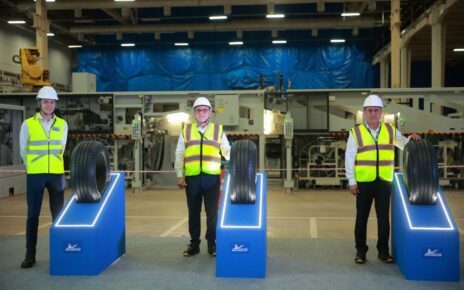
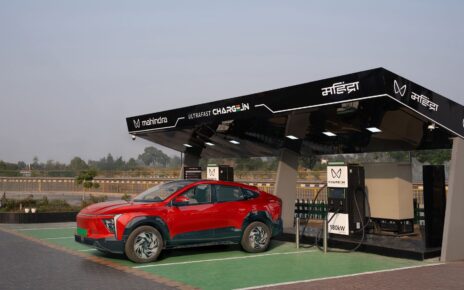
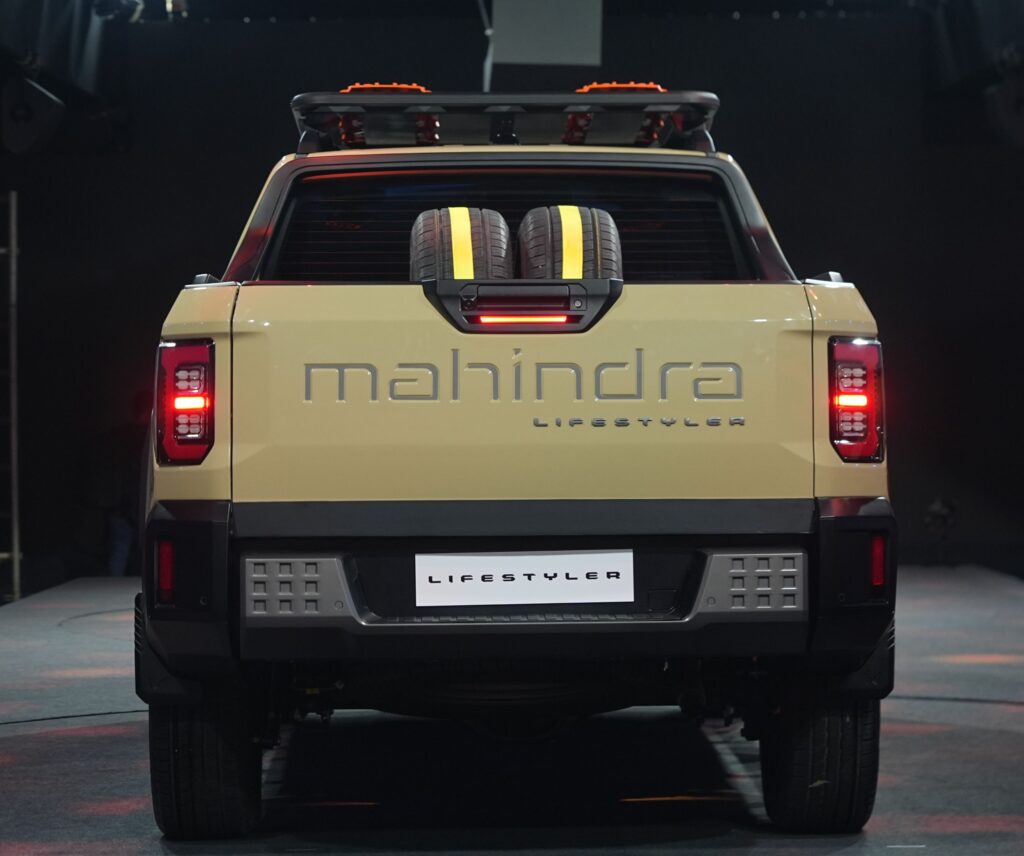
Back on 15 August 2023, Mahindra showed off a concept vehicle in Cape Town, South Africa. It caught people’s attention, but it was still just an idea on wheels, nothing customers could actually buy. Now, that idea has a name, the Lifestyler, and more importantly, it’s finally ready for mass production. In the coming months, it will roll out in phases, in the international markets and in India. For Mahindra, this isn’t just another new vehicle launch. It marks a real milestone in the company’s journey to become a genuinely global brand.
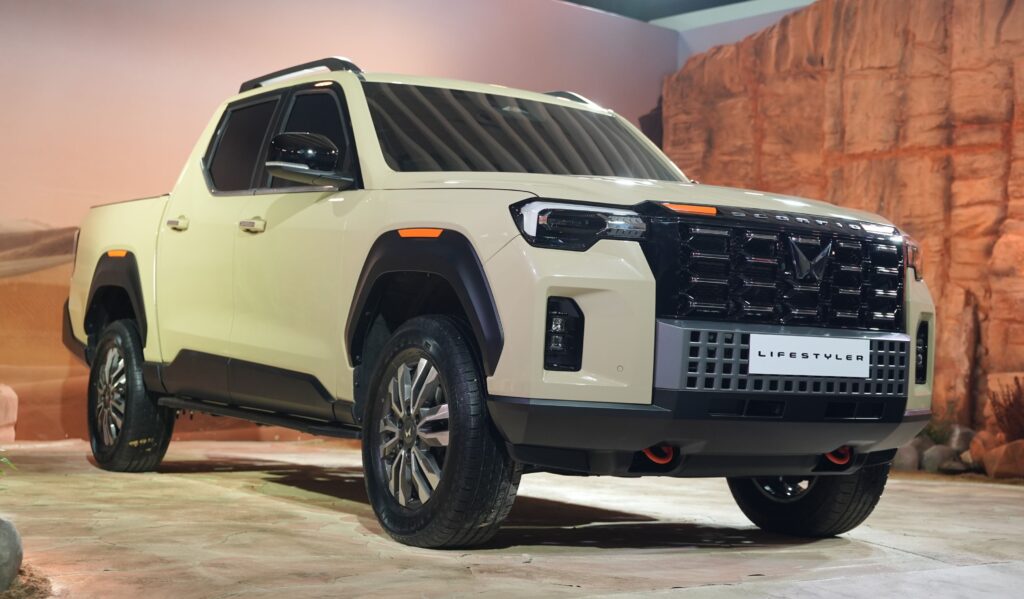
Globally, the pickup market, big and midsize combined, stood at 6.2 million vehicles in 2025. Of this, 60% belongs to America’s large, full-size pickups, while the remaining 40% is spread across the rest of the world. Within that 40% lies a market of about 1.9 million midsize pickups, and that’s exactly where Mahindra wants to plant its flag.
Australia: A Game Changer for Mahindra
The Australian sojourn for the OEM began over a decade ago, with a conversation between Australian cricket legend Mr. Matthew Hayden and Mahindra Group Chairman Mr. Anand Mahindra. When Mahindra set his sights on Australia’s fiercely competitive market, already home to over 60 OEMs, the cricketer had a simple question for him, why bother? Mahindra’s answer stuck with him. “If you can win in Australia, you can win anywhere.” That conviction, and a shared set of values, was enough to turn Mr. Hayden into Mahindra’s brand ambassador, the cricketer told this writer a couple of years ago. Few years ago, he became the independent Director of Mahindra Automotive Australia Pty.
Initially, the challenge was significant, as dealerships were hesitant to invest in a single product line for the auto sector. Moreover, Australians, Hayden said, are spoiled for choice, well-travelled, and used to the world’s best. Yet they cherish their own rugged lifestyle, one where SUVs must handle diverse terrain with ease. Mahindra’s durable, competitively priced vehicles fit that bill, and the XUV700 has been a runaway success. Today, it has close to 40 dealerships and established brand recall too.
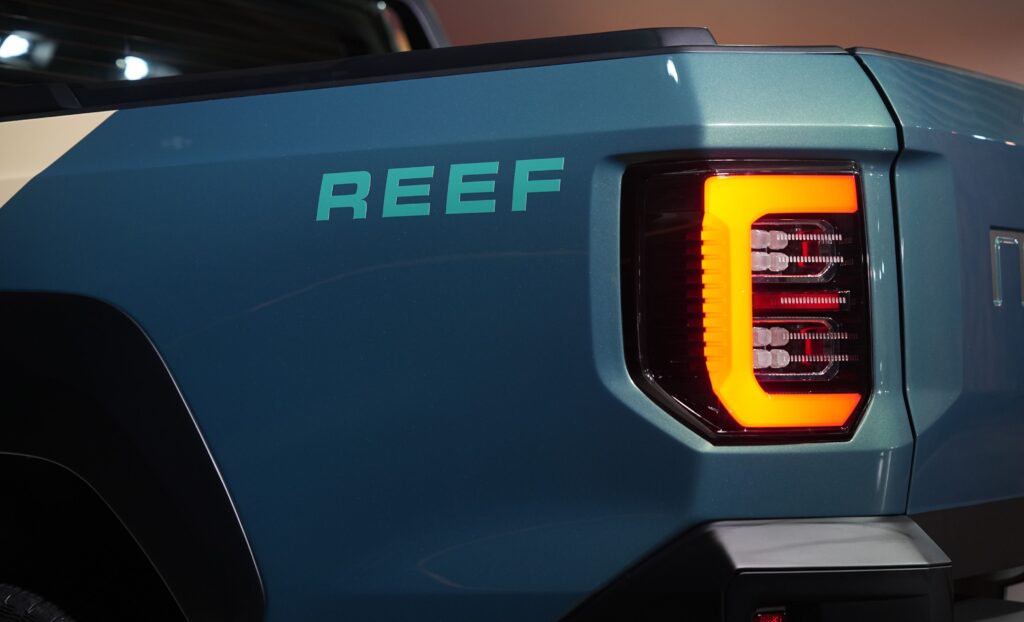
Outside the Americas, Australia leads the global pickup market, with roughly 235,000 units sold last year, ahead of South Africa’s 135,000 units. Yet the two markets couldn’t be more different. South Africa, where Mahindra has been present for over 24 years, prizes versatility and affordability, while Australia demands adventure capability, towing muscle, and premium touches. These contrasting priorities shaped Mahindra’s thinking behind the Lifestyler.
A Global Product, Built for Different Markets
Dr. Velusamy R, President, Automotive Business, Mahindra & Mahindra, said the pickup’s core business case was built around global markets, and that opportunity remains intact regardless of how the Indian market responds.

On global expansion strategy, Mr. Nalinikanth Gollagunta, CEO, Automotive Division, Mahindra & Mahindra, described a three-phase approach. First, doubling down on core existing markets like South Africa and Australia, along with smaller but consistently strong markets like Tunisia and Chile, where Mahindra already has an established dealer network.
Second, exploring bigger right-hand-drive markets like the UK, the largest RHD SUV market after India, but only once the company is confident it can genuinely win there, not simply enter to have a presence. Third, expanding more tactically into markets like Indonesia, where existing products could do well with relatively low additional effort.
On whether a hybrid variant makes sense for markets like South Africa, where it currently outsell EVs, Dr. Velusamy compared the decision to choosing an aircraft engine: what matters to the customer is the outcome and experience, not which specific powertrain is under the hood. The powertrain decision, he said, would be based purely on what best fits customer needs and market context.

On what success in a market like the UK would actually look like, Mr. Gollagunta clarified it isn’t purely about sales volume. He pointed to Mahindra’s strong brand recall in India, where it ranks as the top unaided SUV brand with the widest gap over its nearest competitor in five years, as the kind of brand strength the company wants to build internationally too. The goal, he said, is for the brand to be remembered with strong positive association in new markets, not just be “one more also-ran.”
India Innings: Testing a Real Opportunity
Would Mahindra’s new pickup echo the success of Thar and Scorpio, or stay a niche play? For India, according to Mr. Gollagunta said, this is a chance to test the product in a serious, legitimate way, backed by a genuine and growing opportunity, rather than treating it purely as a volume play from day one.
He recalled that no one asked for Scorpio either, yet it became a phenomenon. “Just because customers can’t express a desire clearly doesn’t mean it isn’t there,” he said, pointing to a long-sensed appetite for pickup functionality, SUV comfort, and 4×4 capability, all at an affordable price, a combination Mahindra believes it’s uniquely equipped to deliver. Until now, customers had to compromise, on capability or budget. Mahindra believes that trade-off shouldn’t exist, and built the pickup to close that gap. Conceived globally three years ago, growing Indian demand made its case undeniable, he added.
On sales expectations, Mr. Gollagunta was clear that he didn’t want to neither underestimate now over-promise, pointing to how Mahindra had once underestimated demand for its own SUVs, cases where actual volumes far exceeded internal projections. The approach, he said, is to build the right product for genuine customer needs rather than chase a specific volume target upfront.
Understanding the Customer
Mahindra deliberately held back full product and pricing details at launch, choosing instead to spend the coming months studying the market and testing its assumptions, weekend farmers and coffee estate owners being illustrative sketches, not the whole picture. The price shown publicly, starting below ₹19.79 lakh (ex-showroom), was only a ceiling, meant to start conversations, not close them.
The decision to borrow the Scorpio name, Mr. Gollagunta said, comes down to the brand’s emotional pull; some owners swear by the Scorpio Classic, others by the newer Scorpio N, despite it once being meant as a replacement. If both can coexist with loyal followings, he believes, there’s room for a pickup too.
Shared Technology, Lower Costs
Explaining how the pickup achieves an aggressive price point despite being a new product category, Dr. Velusamy said it draws on four already-proven technology pillars: body-on-frame architecture from existing SUVs, double-cab technology from current pickups, established supplier relationships (where suppliers already producing certain components can extend that revenue relationship rather than starting fresh), and safety technologies borrowed from Mahindra’s EV lineup. This shared technology base, he said, is what allows the pickup to be priced accessibly without requiring an entirely new engineering or supplier ecosystem.
On production readiness, he explained that the company first builds manufacturing capacity, then scales up operational output based on actual demand as it materialises, rather than committing to full-scale production upfront. He didn’t confirm whether the pickup would share a production line with the XUV700.