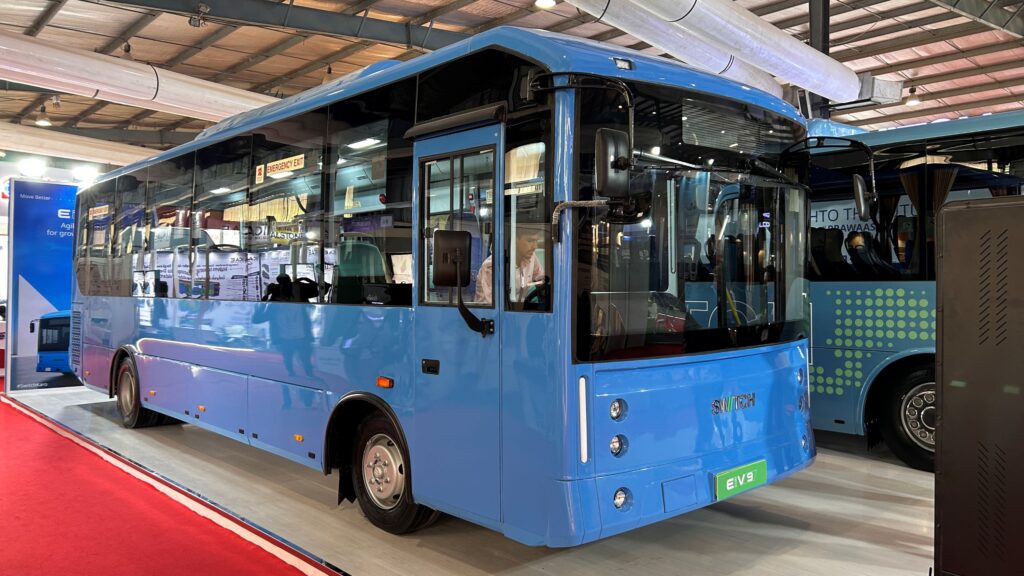
Switch Mobility has launched a new 9-metre electric bus at PRAWAAS 2026, and the company is clear about one thing from the outset — this is not an adapted version of its existing 12-metre model. It is a completely new product, designed from scratch to address the specific needs of shorter routes, staff transportation, school buses, and intercity travel where the 12-metre format is simply too large.
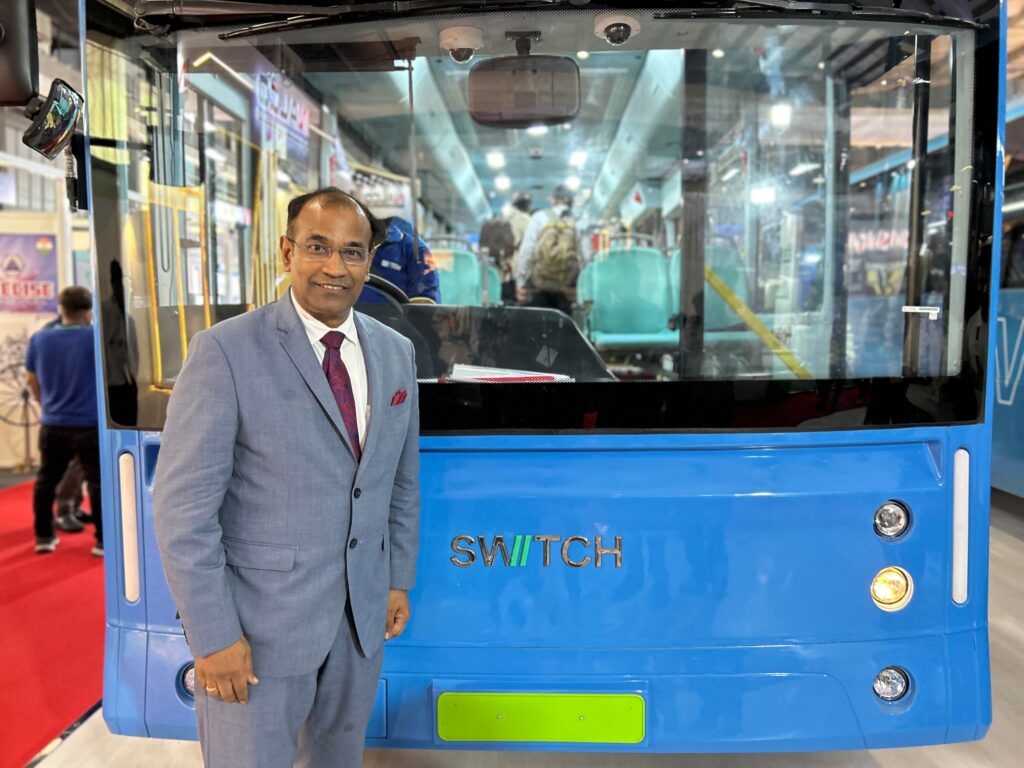
Mr. Ganesh Mani, CEO, Switch Mobility, said, the decision to enter the 9-metre segment was driven by market reality. Around 50 to 60% of buses currently operating in India fall in the 9-metre and 12-metre categories. While the 12-metre segment is dominated by government tenders, the 9-metre space offers a rich opportunity in private retail — staff buses, school buses, and shorter intercity routes where operators are looking for a right-sized, efficient, electric alternative.
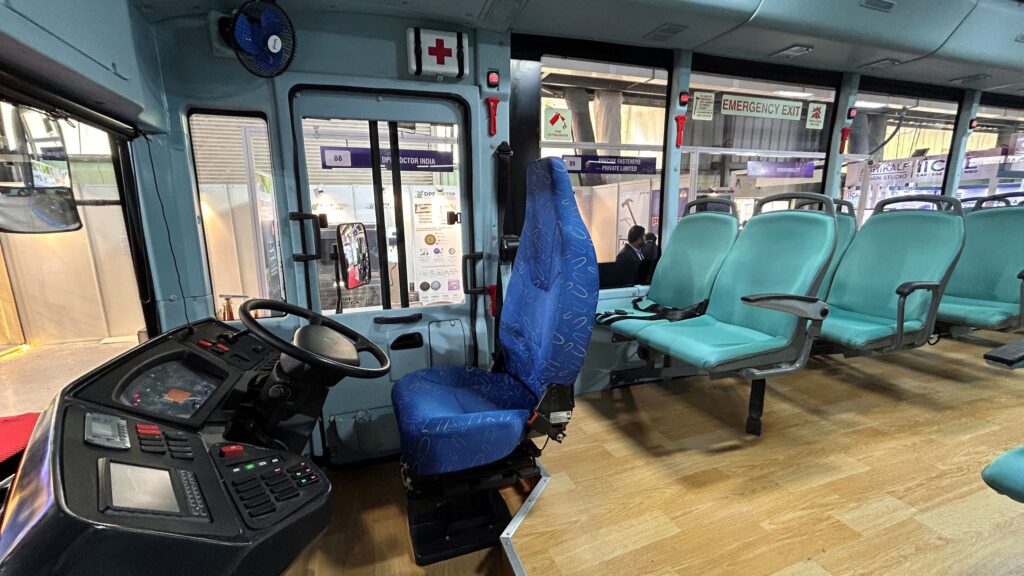
Building the product from the ground up allowed the company to make choices that would not have been possible on a modified platform. The bus sits on a flat-bed layout with no steps, making entry and exit smooth and accessible for all passengers. The front door opens to 900 mm and the rear to 1,100 mm — generous clearances for a vehicle of this size. All batteries are floor-mounted, keeping the centre of gravity low and improving road stability. The curb weight has been kept to just 9.1 tonnes, lighter than comparable products in the segment, which directly benefits payload capacity and energy efficiency.
On range, the OEM is offering two battery options. The standard pack delivers 184 kWh, while a larger 283 kWh pack delivers a minimum range of 200-plus kilometres, effectively eliminating range anxiety for operators running longer routes without access to mid-route charging.
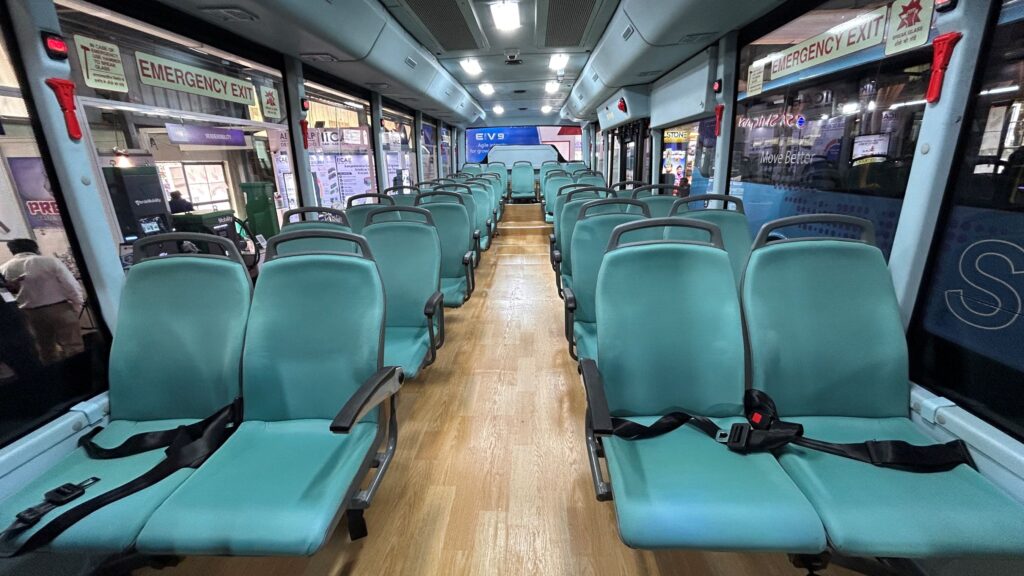
Inside, the bus has been designed with the passenger experience firmly in mind. There are no floor-mounted stanchions — all handholds are seat-based, leaving the floor completely clear and easy to clean. The glazing area is large, giving passengers an open, airy feel and a clear view of their surroundings. Air conditioning is standard, front and rear disc brakes are fitted, and full air suspension is provided at both axles — features the company positions as part of its commitment to treating EV products as inherently premium.
Safety has been addressed comprehensively. The battery is AIS 037 (type Approval and Conformity of Production for safety-critical automotive components) certified and has undergone needle penetration testing at both pack and module level. A fire detection and suppression system is integrated into the battery box. The battery management system feeds real-time data to a central monitoring centre, enabling proactive intervention. The vehicle structure itself is validated through a four-post test that simulates ten years of accelerated joint-stress testing before any product leaves the factory.
On total cost of ownership — the question every bus operator asks first — SWITCH Mobility presents a clear picture. “The initial cost of an electric bus is higher than diesel, but operational savings begin from day one. For operators running more than 250 km per day with opportunity charging, the economics turn positive quickly. The payback period ranges from three to five years depending on daily kilometres, with the gap between diesel and electric TCO narrowing steadily. The company’s service network of over 5,000 stations across India supports a vehicle uptime of over 97%, which keeps buses earning rather than sitting in workshops,” he said.
Mr. Mani drew to a point, a particularly encouraging sign — repeat purchases. Customers who have already bought SWITCH buses are coming back for more, which he sees as the clearest validation of the product’s real-world performance and the company’s after-sales commitment.
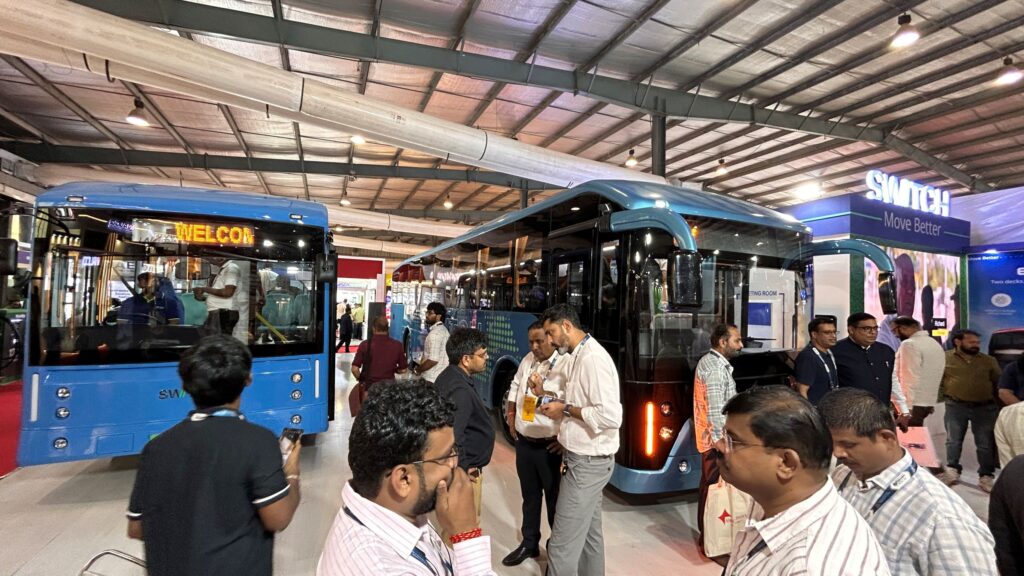
For the company, PRAWAAS was not just a launch platform. It was an opportunity to listen — to operators who came, sat in the bus, asked hard questions, and gave feedback that will shape the next generation of products. In an industry that is still finding its electric footing, that kind of direct market engagement may matter as much as the product itself.