Swaniti Initiative and Purpose organised a dialogue bringing together four women parliamentarians, women truck drivers, and women fleet operators to chart strategies for gender-inclusive freight electrification. The dialogue shed light on the lived experiences of women in freight and focused on how women can emerge as leaders to shape the transition to cleaner freight.
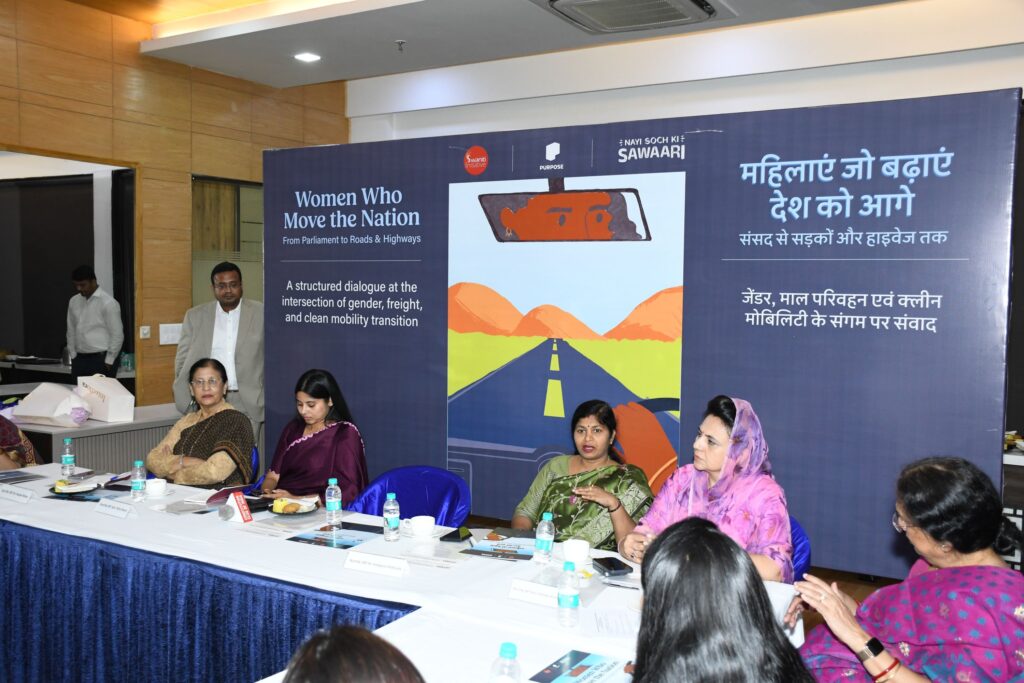
India’s truck market is projected to grow rapidly as economic activity expands. This presents an opportunity to transition to zero emission trucks (ZETs) and reshape the employment landscape. A study estimates that the trucking sector will create approximately 30 million jobs by 2050, with ZETs accounting for over 21 per cent of these roles. This shift could be pivotal in addressing gender imbalances, as women find opportunities across the value chain. Emphasising this opportunity arising from India’s transition to cleaner freight, Saudamini Zutshi, Manager – Partnerships and Business Development, Purpose, stated, “Women’s participation in India’s EV workforce has reached 11–15 per cent; this is an early signal that change has begun.” Uma Bhattacharya, Trustee, Swaniti Initiative, underscored the significance of this transition and the policy support required to create a gender-inclusive workforce, noting, “Deliberate policy choices, shaped by the perspectives of those participating in the new green economy, are critical for a gender-balanced transition.”
These developments signal progress in the right direction; however, challenges to women’s participation in the workforce still persist. Speaking on how she overcame these barriers, Reema Jogani, CEO and Founder of Reema Logistics, shared her experience working with vehicle sarthis: “There is a need for improved infrastructure, including CCTV and parking facilities. Women drivers prefer to operate on local routes, as this allows them to better manage their care responsibilities.” Ms. Ummatunbibi Jahangir Shaikh, a pilot operating an electric bus, stated, “Driving an electric vehicle improved my earnings, but more importantly, I feel respected. The majority of people I interact with receive me well, and I am able to share my experiences with other women who wish to participate in this space,” highlighting how the transition to electric mobility is a welcome change.
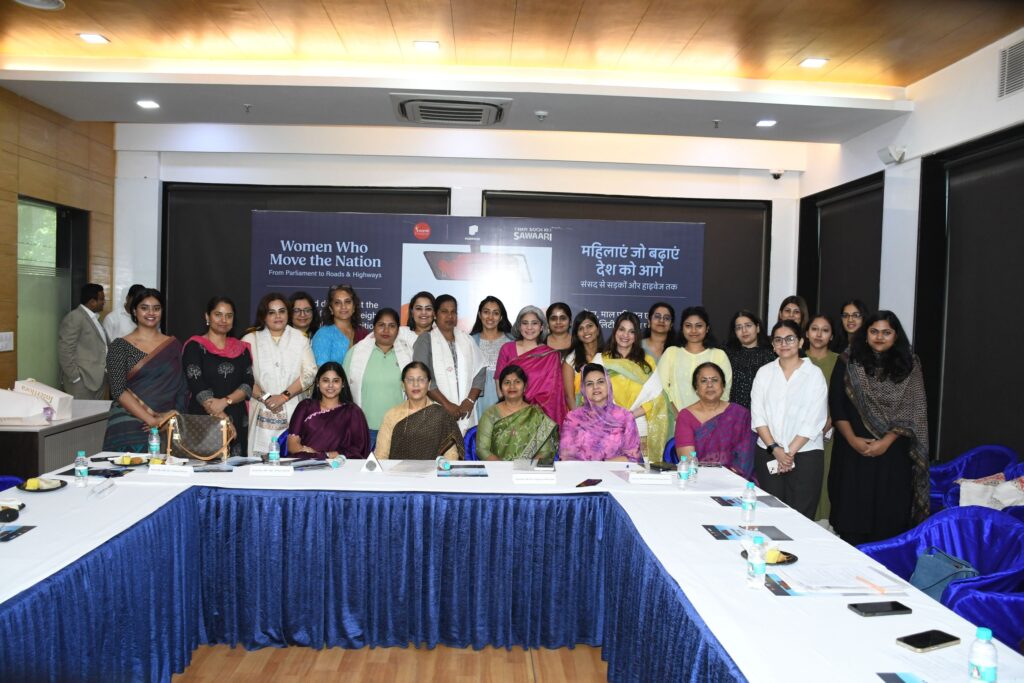
Shifting focus to the role women can play in driving the dual goals of gender inclusion and sustainability, Hon’ble MP Dr. Fauzia Khan stated, “Electric vehicles present us with a rare opportunity to reimagine the way we do things. Seizing it demands collaboration across society, government, and industry to ensure that decision-making and the design of supporting infrastructure are intentionally shaped through a gender lens.” Hon’ble MP Dr. Sangeeta Balwant echoed this call to action and shared her vision for gender empowerment in the freight sector: “Driving a truck is no small feat; it may be even more challenging than flying a plane. Yet, the women gathered here are proving that not only can they rise to that challenge, they are driving transformational change. We are ready to do things differently, and we stand committed to turning that determination into something truly impactful.” Hon’ble MP Adv. Priya Saroj added, “While the right policies exist, challenges continue to persist at the ground level.”
A successful transition requires a shift in societal mindsets and sustained support from families. Increasing the visibility of women in these spaces is also key to building trust and transforming these sectors into environments that are inclusive and accessible.
Hon’ble MP Smt. Mahima Kumari Mewar, along with the other MPs present, felicitated the participants and assured them that, within their capacity, they would foster a safe and enabling environment for women in the emerging EV ecosystem.
The dialogue facilitated meaningful exchanges, with participants highlighting how women are already driving change, running fleets, and shaping policy. While India’s transition to clean transport may not follow a single pathway, every pathway converges on a critical question — how can we ensure meaningful participation of women? India’s transition to clean freight is as much about people as it is about technology. The task now is to build a freight future designed with them from the outset.