With a sharp focus on automation, digital integration and process discipline, the facility reinforces the trailer maker’s long-term vision of scalable, future-ready manufacturing.
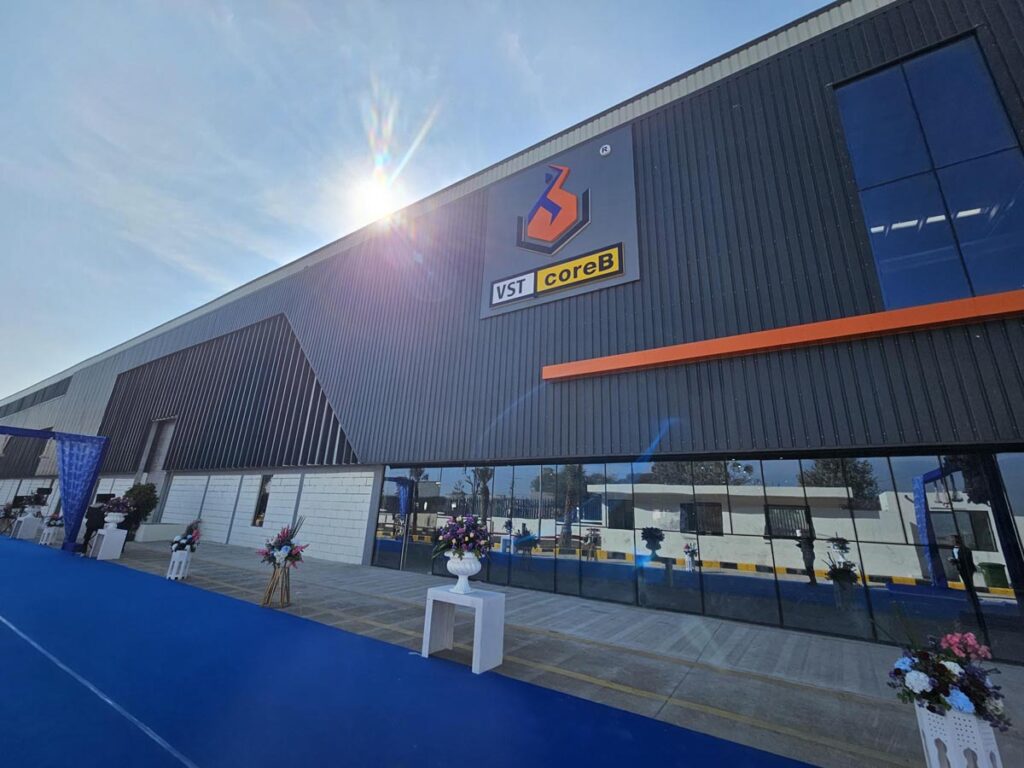
When VST CoreB Trailers formally unveiled its new manufacturing facility near Kotputli in Rajasthan, it did more than add capacity; it redefined what scale and seriousness look like in India’s trailer manufacturing industry. Spread across a vast 235,000 square metres, the facility stands today as the largest dedicated trailer manufacturing plant in the country, signalling a decisive shift from fragmented fabrication to organised, technology-driven production.
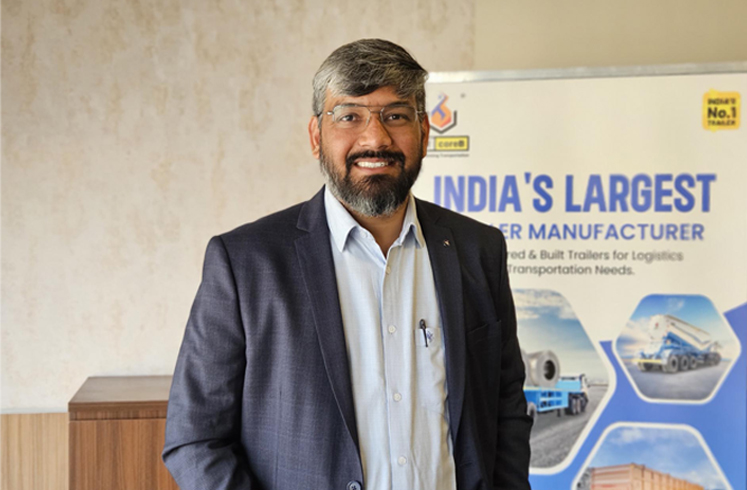
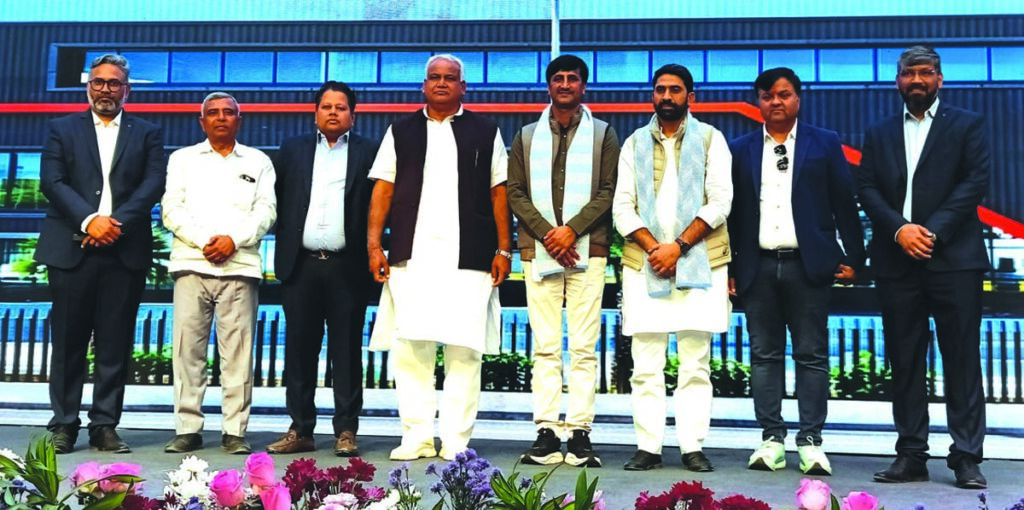
At the centre of this milestone is Mr. Vikas Yadav, Managing Director, VST CoreB Trailers, whose journey mirrors the evolution of the company itself; measured, disciplined and rooted in long-term thinking. Speaking at the inauguration and during detailed interactions with Motorindia, Mr. Yadav made it clear that the plant was not conceived as a short-term capacity addition, but as a foundational asset for the next phase of India’s logistics and infrastructure growth.
“This plant is not about just numbers,” said Mr. Yadav. “It is about setting a new standard for how trailers should be designed, built and delivered in India, without compromising on quality or timelines.”
The sheer physical scale of the facility immediately commands attention. But beyond the land area, what truly defines the project is the clarity of intent; to industrialise trailer manufacturing in a country where customisation, inconsistency and delays have long been accepted as inevitable.
From Scale to Output: Building for Volume Without Losing Customisation
The Rajasthan facility has been designed for high-volume manufacturing while retaining the flexibility required in a largely customised market. At full utilisation, the plant is capable of producing nearly 1,800 trailers every month, translating to an annual capacity of around 22,000 units. This alone places VST CoreB among the largest trailer manufacturers in Asia.
In addition to trailers, the facility also marks the company’s formal entry into bus manufacturing. With certifications recently completed, the plant is ready to roll out 200 to 250 buses per month, adding a new vertical to the group’s manufacturing portfolio. Combined, the monthly output potential of the facility stands close to 1,900 units across trailers and buses.
“Our idea was never to build capacity in isolation,” Mr. Yadav explained. “We wanted an ecosystem where multiple mobility solutions can be developed under one roof, using shared technology, skilled manpower and disciplined processes.”
This dual capability positions the plant uniquely; it can respond to cyclical demand shifts across logistics, infrastructure and passenger mobility without being overly dependent on a single segment.
Technology as the Core Differentiator
If scale defines the facility’s presence, technology defines its purpose. From the outset, VST CoreB has positioned itself as a technology-led manufacturer, and the Rajasthan plant is a culmination of that philosophy.
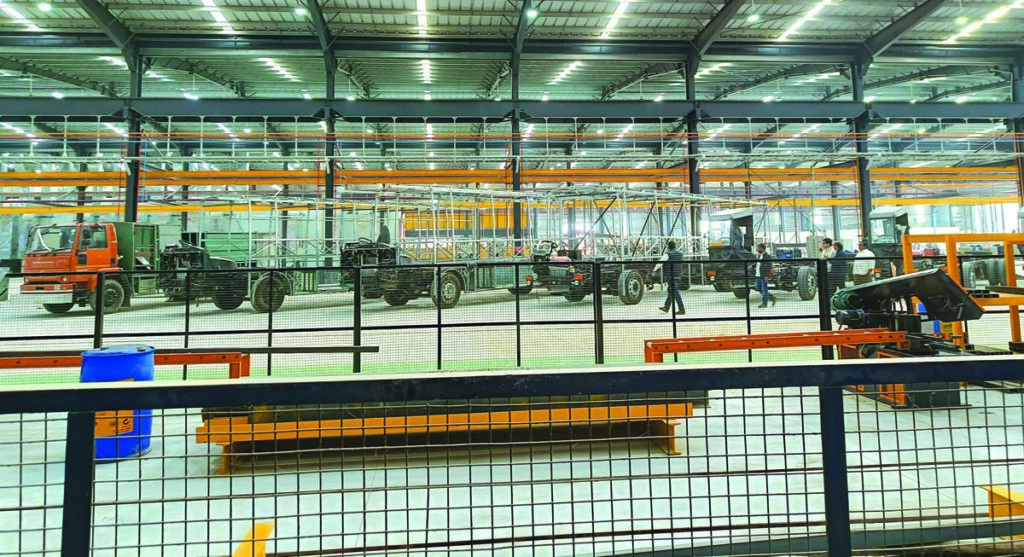
The production lines are equipped with double-leveller cut-to-length machines that ensure high cutting accuracy and consistent material quality. Continuous pull-through welding lines provide uniform weld strength across structural members, while multiple CNC machines, laser cutting systems and robotic welding cells elevate precision to micron-level tolerances.
“When we introduced semi-robotic welding years ago, it was an industry first,” said Mr. Yadav. “At this plant, we have gone several steps ahead by integrating automation wherever it adds real value, not just for showcase.”
Paint and surface treatment have received particular attention. The facility houses two semi-robotic continuous paint lines; one measuring 15 metres and the other 21 metres. These lines feed directly into curing ovens, enabling a production cycle time of approximately 23 to 24 minutes per trailer. The result is a consistent finish, improved corrosion resistance and faster throughput without sacrificing durability.
“This level of consistency is only possible when design, process and people are aligned,” Mr. Yadav noted. “Technology alone cannot deliver results unless the organisation is ready to absorb it.”
Infrastructure Growth and the Market Opportunity Ahead
The timing of the plant’s commissioning aligns closely with India’s infrastructure and logistics transformation. With sustained investments in highways, expressways and freight corridors, the demand profile for long-haul and high-payload vehicles is changing rapidly.
According to Mr. Yadav, the trailer market in India, currently estimated at around 65,000 to 70,000 units annually, is poised for structural growth. He expects a gradual but steady migration from rigid trucks to trailers, driven by payload efficiency, operating economics and emerging hub-and-spoke logistics models.
“As warehousing expands outside major cities, trailers become the natural choice for moving higher volumes efficiently,” he explained. “The focus will increasingly be on carrying more goods per trip, and that plays directly to the strengths of well-designed trailers.”
VST CoreB expects the overall trailer market to grow at an annual rate of 8 to 10 percent in the coming years. The Rajasthan plant, with its scale and process discipline, is positioned to capture a significant share of this growth while also influencing product standards across the industry.
Addressing Customer Pain Points: Delivery, Quality and Support
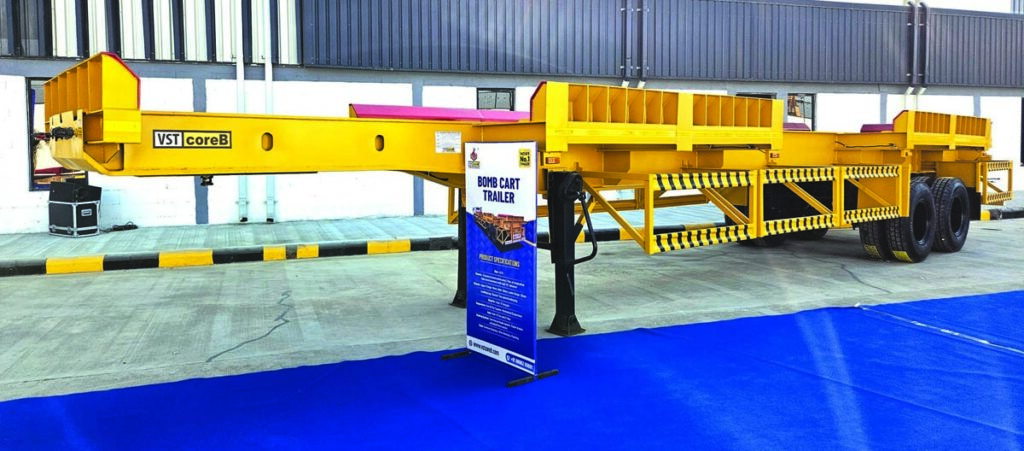
One of the most persistent challenges in the trailer industry has been on-time delivery, largely due to the high degree of customisation involved. VST CoreB has addressed this head-on through plant design and process planning.
The standard production cycle allows a trailer to move from fabrication start to dispatch within 24 hours for customised products. For standard configurations, this cycle time reduces further to around 15 to 16 hours. This predictability enables better planning for fleet operators and logistics companies.
“Customisation does not have to mean delay,” Mr. Yadav stated. “With the right process design, you can offer flexibility and still deliver on time.”
Beyond manufacturing, aftersales support has been identified as a strategic priority. Currently, VST CoreB operates through a network of around 90 authorised service workshops across India, supported by 28 service engineers. The average service response time stands at 48 hours.
Looking ahead, the company plans to establish its own company-controlled service centres on a zonal basis, beginning with one to three locations in the current financial year. This move aims to give customers greater confidence in long-term support and lifecycle reliability.
“When a customer invests in a trailer, he is investing in uptime,” said Mr. Yadav. “Our responsibility does not end at delivery.”
Exports, Sustainability and Global Standards
Exports form a key pillar of the Rajasthan plant’s long-term strategy. While VST CoreB has already supplied trailers to international markets from its earlier facilities, the new plant has been designed with global compliance in mind from day one.
The company intends to allocate 30 to 40 percent of the plant’s output for exports, with active focus on Australia, Saudi Arabia and select African markets. Certifications, material standards and process controls are being aligned to meet region-specific regulations.
“Quality cannot be selective,” Mr. Yadav emphasised. “If a product meets global standards, it will automatically deliver better value in the domestic market as well.”
Sustainability, in this context, is viewed not merely through environmental metrics but through product longevity and structural integrity. Precision manufacturing, controlled welding and consistent material quality contribute directly to longer service life and reduced total cost of ownership.
Vision for the Next Phase
Looking ahead, VST CoreB’s immediate focus remains on stabilising operations at the new plant, achieving high utilisation levels and expanding its presence in export markets. Parallel investments in R&D will continue, enabling faster product development, weight optimisation and application-specific customisation.
“Improvement is a continuous process,” said Mr. Yadav. “The day we believe we are perfect is the day we stop growing.”
As India’s logistics, infrastructure and mobility needs evolve, the Rajasthan plant stands as a clear statement of intent; that large-scale manufacturing, advanced technology and customer-centric thinking can coexist in an industry long characterised by compromise. For VST CoreB, this facility is not the culmination of a journey, but the foundation for the road ahead.