The move to 100V architecture, well above the voltage levels used by most scooters in the market today, is at the centre of this update.
Around a month ago, Ultraviolette announced a significant overhaul of its Tesseract electric scooter, introducing what it claims is India’s first 100V electrical architecture for a scooter. The company is now positioning it as the most technologically advanced electric scooter in the world — not just for India, but globally.
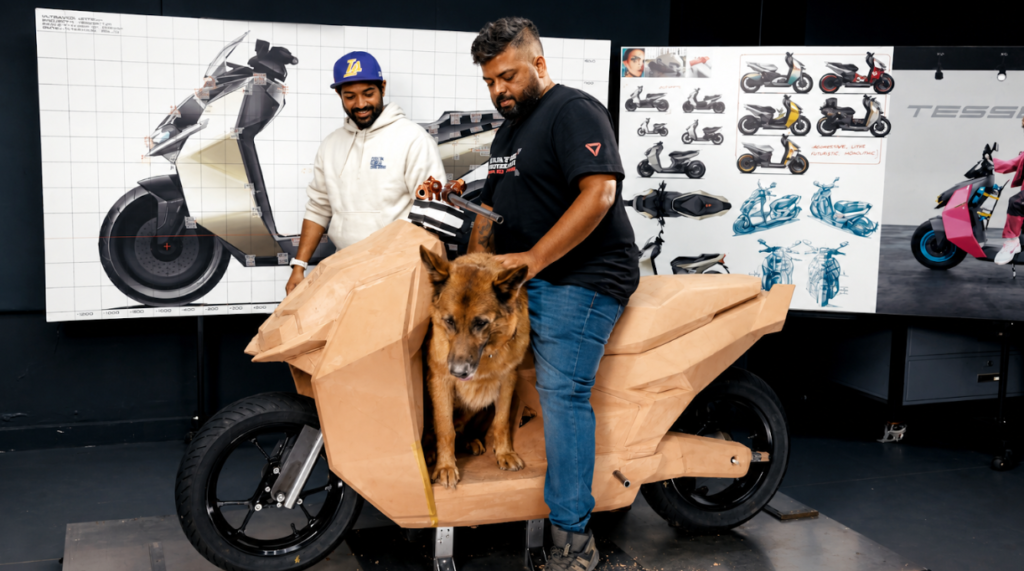
The Tesseract was first unveiled in March 2025, with deliveries initially promised by early 2026. The timeline has since been revised twice — first to mid-2026, and most recently to early 2027. According to the company, the delays came down to one core challenge — fitting motorcycle-grade powertrain technology into the tighter confines of a scooter, which turned out to be a far more complex engineering task than initially planned.
The delays have not dampened enthusiasm — 70,000 bookings have already come in, and in a reassuring move for existing customers, the pricing across all bookings remains unchanged. The Tesseract will continue to be offered with 3.5 kWh, 5 kWh, and 6 kWh battery pack options, with a top speed of 125 kmph and 15 kW of peak power output.
The 100V Difference
Speaking on the sidelines of the company’s second Chennai dealership opening, Mr. Niraj Rajmohan, CTO and Co-founder, Ultraviolette, explained that the decision to go back to the drawing board was driven by the ambition to build something genuinely differentiated. One number separates the Tesseract from every other electric scooter in the market today. That number is 100V — well above the voltage levels used by most scooters currently available.
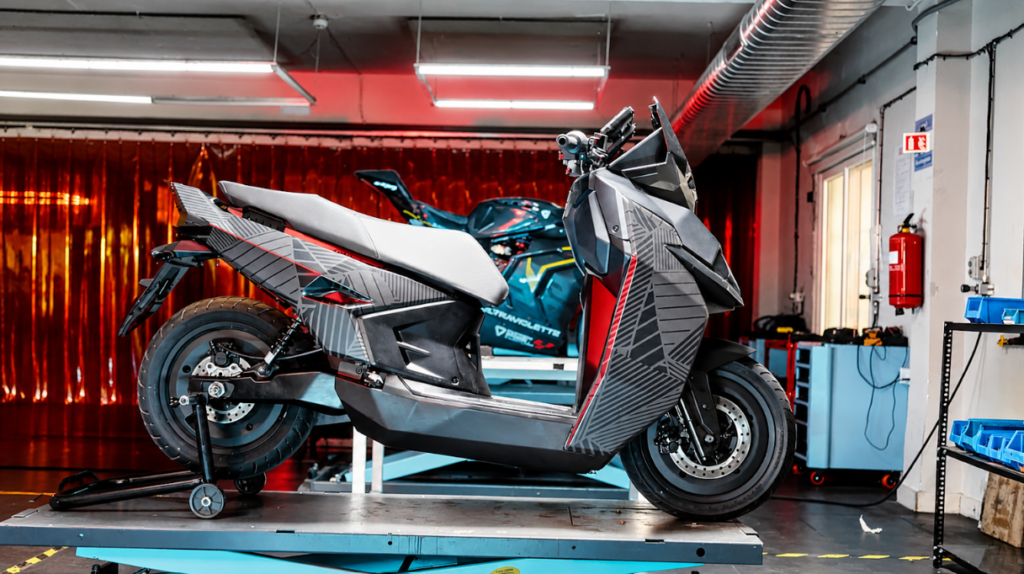
The move to a 100V architecture enables higher performance capability, improved efficiency, faster charging potential, and stronger sustained performance under demanding riding conditions. It also allows for a lighter and more compact powertrain and vehicle electronics package, while enhancing overall system reliability. With an air-cooled system, the new Tesseract will deliver nearly three times the power and approximately twice the range of comparable electric scooters, with charging time brought down to under 30 minutes.
Mr. Rajmohan noted that electric scooters currently account for approximately 20% of total scooter sales in India, with 80% of the market still running on petrol. “Rather than viewing this as a challenge, we are seeing it as an opportunity — a large and largely untapped market that is ready for a product capable of accelerating the shift to electric mobility,” he said.
Second Chennai Showroom
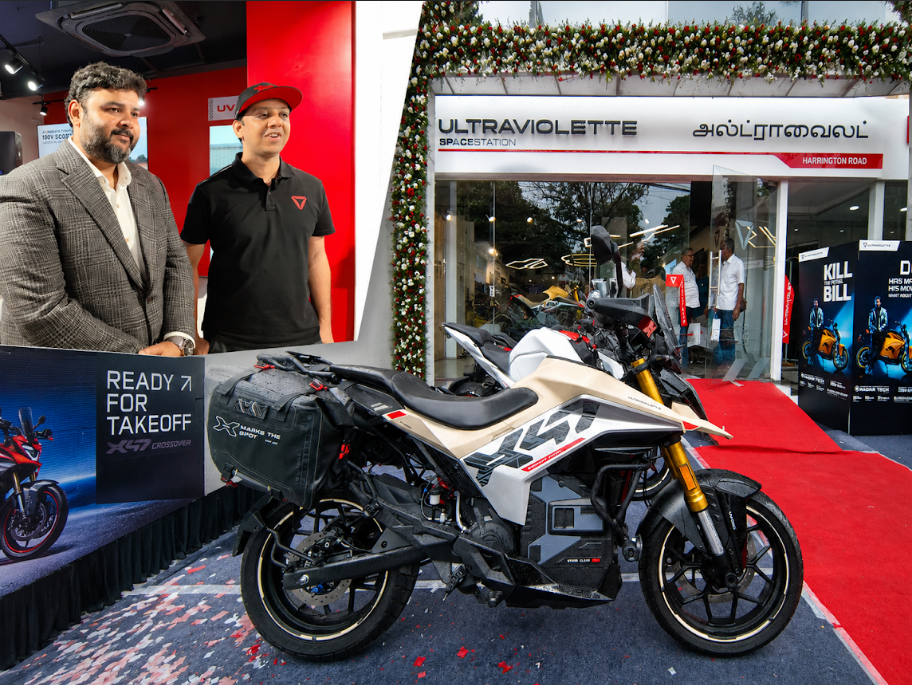
With new models in the pipeline and sales momentum building, the OEM is expanding its dealership network across India. The opening of its second Experience Centre in Chennai this month is the first visible sign of that plan taking shape.
When Ultraviolette opened its first outlet in Chennai a few years ago, the response from riders was immediate and overwhelming. In a short span of time, the brand sold over 500 units in the city alone — a number that spoke clearly about the appetite for high-performance electric motorcycles in one of India’s most discerning two-wheeler markets. It did not take long for the company to start looking for a second partner in the city.
Mr. Satish Kumar Mehta, Managing Director, JMB Motors, is the dealer principal behind Ultraviolette’s second Chennai outlet — and notably, the same partner already running the brand’s showroom in Puducherry. With nearly four decades of business experience across real estate, automobile finance, and publications, and 17 years specifically in the automobile industry, Mr. Mehta’s decision to take on a second Ultraviolette outlet was driven by confidence in the brand and growing interest from electric performance bike riders. His portfolio already includes Yamaha, Kawasaki, Indian Motorcycle, Piaggio, Vespa, Moto Guzzi, Jawa, and BSA — names that reflect a clear preference for premium, aspirational two-wheelers. Adding Ultraviolette to that list a second time was, by his own account, an easy decision.
Tamil Nadu Momentum
This is not just the second Ultraviolette store in Chennai — it is the fifth in Tamil Nadu, and the 42nd in India. The expansion is being driven by genuine consumer interest and market feedback. The new facility offers customers a complete three-in-one experience — sales, service, and spares — all under one roof. With a pan-India network target of 50 stores and further expansion planned across Tamil Nadu and other States, the 2W maker is scaling with intent. The riding community’s enthusiasm for the existing F77 and X47 range is fuelling that growth, and with new products in the pipeline, the company’s commercialisation journey — which began just two years ago — is only gathering pace.
Built From Scratch
Behind every Ultraviolette motorcycle that rolls out of a showroom is nearly a decade of quiet, painstaking engineering work done entirely in-house. The company’s R&D facility in Bengaluru is where everything was built from the ground up: software, embedded systems, batteries, battery management systems, power electronics, powertrain technology, charging systems, and even the manufacturing equipment itself. Over 200 patents have been filed across this technology stack, making Ultraviolette one of the most IP-rich electric vehicle makers to have emerged from India. Across the entire fleet, the company reports having covered over 15 million kilometres with zero battery failures — a number that speaks more clearly about product quality than any specification sheet.
Capacity Ramps Up
On the manufacturing front, Ultraviolette is scaling rapidly. The current production facility is adding a new line to take annual capacity to 50,000–60,000 units, and a second production plant is in the works — with a formal announcement expected in the coming weeks.
Charging Network Grows
Range anxiety has long been one of the biggest barriers to EV adoption. The vehicle maker is addressing it through a partnership with Bolt.Earth, which now operates close to 200 DC fast-charging stations — predominantly across South India, with North India expansion planned. Beyond fast chargers, over one lakh AC charge points are also accessible to riders through their onboard chargers, meaning any standard power connection can serve as a charging point. All of these are visible directly on the Ultraviolette app.