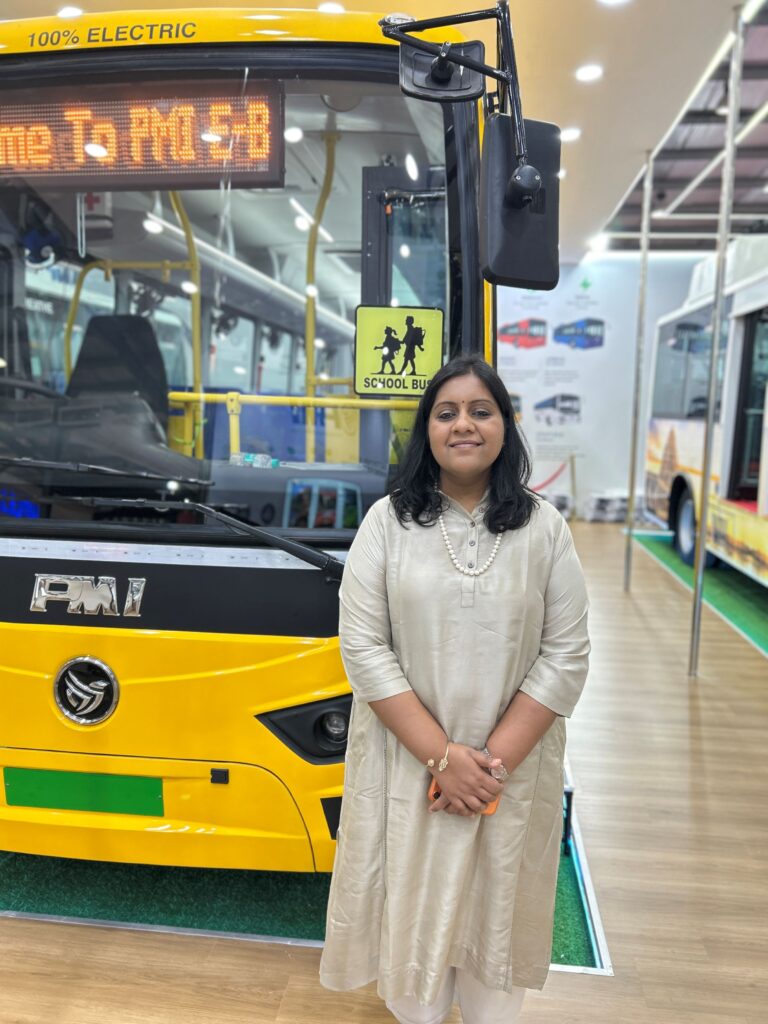
At Prawaas 5.0, Dr. Aanchal Jain, CEO, PMI Electro Mobility Solutions Pvt. Ltd., outlined the company’s strategy to expand electric mobility beyond state transport undertakings (STUs) by introducing purpose-built electric buses for school and staff transportation. With a strong focus on reducing total cost of ownership (TCO) through engineering innovation, PMI believes these segments could play a pivotal role in accelerating the adoption of electric buses in the private sector.
According to Aanchal, while the Indian electric bus market has so far been largely driven by STUs, the next phase of growth lies in addressing private fleet applications where vehicle usage patterns are predictable and operational requirements differ significantly.
Engineering innovation drives affordability
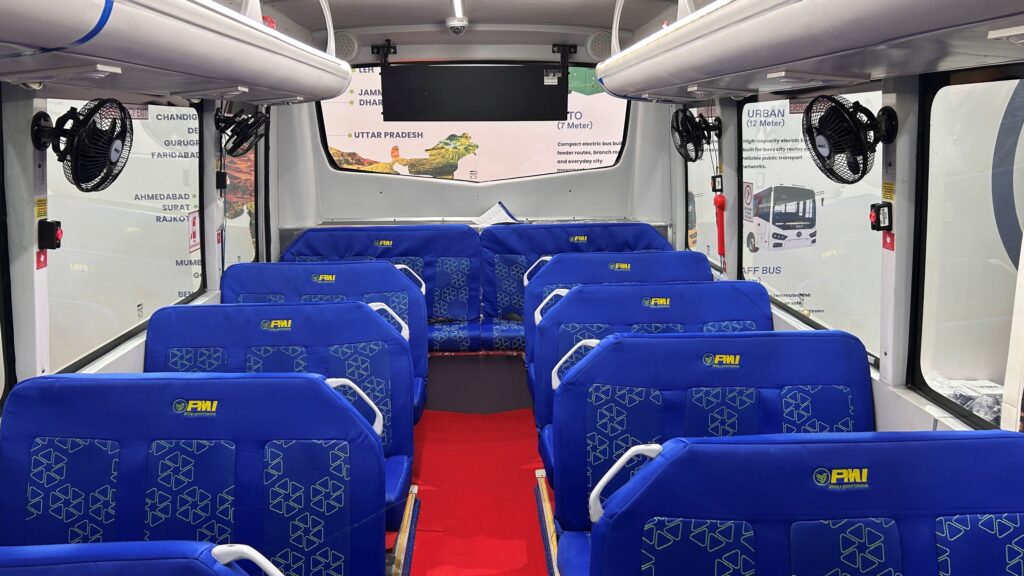
Highlighting the company’s latest electric school bus, Aanchal explained that PMI identified the segment as a strategic opportunity based on three key factors – market potential, route predictability and the emotional importance of transporting children in cleaner, safer vehicles.
“The electric bus market has largely been driven by STU buses, where high daily utilisation makes the total cost of ownership work very well. But when we looked at where we could innovate next, school buses stood out immediately,” she said.
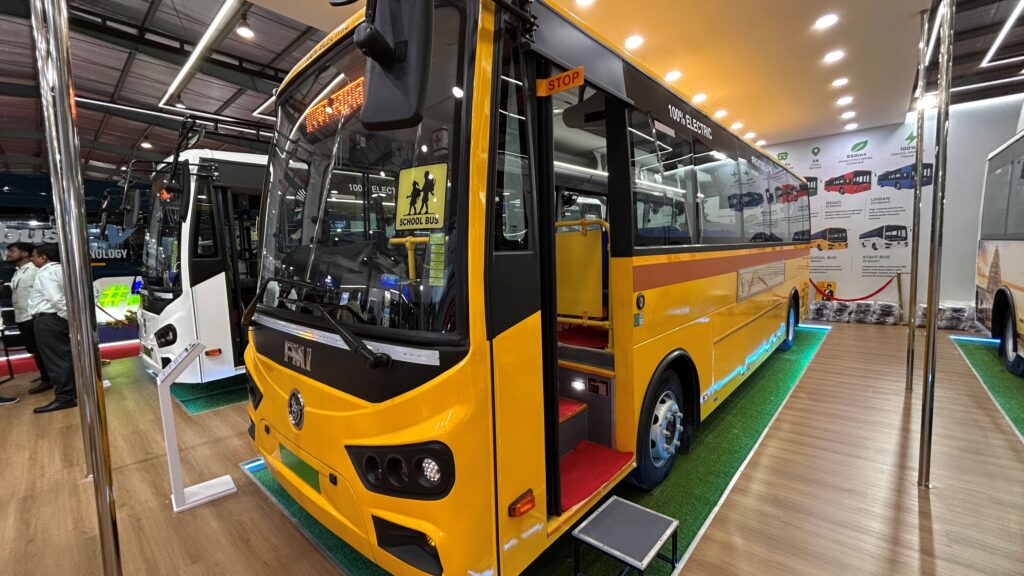
According to her, India sees annual sales of around 30,000 school buses, presenting a sizeable opportunity for electrification. “Even if the electric bus industry captures just 10% of that market, we’re talking about nearly 3,000 buses every year,” she observed.
The fixed operating routes of school buses further strengthen the business case for electrification, making charging infrastructure easier to plan and deploy. Equally important, she noted, is the growing preference among parents for environmentally friendly and safer transport solutions for children.
However, unlike STU buses, school buses typically operate around 100 km per day, run only during the academic year and have comparatively shorter replacement cycles. These factors made cost optimisation critical. “The challenge remained the TCO. We worked tirelessly over the last year and a half to develop engineering solutions that significantly reduced the vehicle cost. Today, we are offering a school bus at around ₹55 lakh, enabling a lifecycle saving of nearly ₹20-25 lakh compared to a diesel bus,” Aanchal revealed.
Extending the platform to staff transportation
PMI has also introduced an electric staff bus that builds on the same engineering philosophy while catering to longer operating routes. “The staff bus follows similar engineering principles to reduce cost but offers a higher driving range because staff transportation generally involves longer routes,” Aanchal explained.
She pointed out that staff and school buses have more predictable passenger loads compared to public transport buses, allowing manufacturers to optimise vehicle design more effectively. “STU buses often experience highly variable passenger loads and require standing space. Staff buses, on the other hand, are primarily seating solutions with consistent occupancy. That allows us to engineer a more application-specific, price-friendly product,” she said.
Growing confidence in electric mobility
Reflecting on the broader electric bus ecosystem, Aanchal said industry confidence has strengthened considerably over the past year. “If I had to describe the industry’s mood in one word, it would be ‘confident’. People are embracing electric mobility with much more confidence than they did a year or two ago,” she remarked.
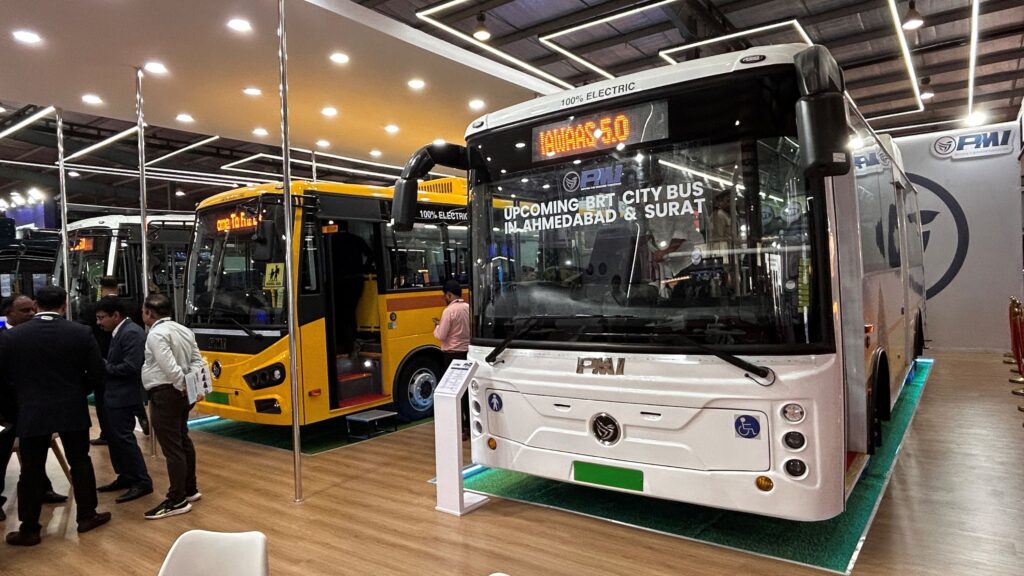
She believes the perception of electric buses has evolved beyond being an STU-focused solution, with increasing interest emerging from private fleet operators as well. “Initially, everybody viewed electric buses only as an STU solution. Today, the private market is also beginning to recognise the opportunity. Even from a policy perspective, we’ve seen the focus gradually shift from only government fleets to supporting private operators as well,” she said, adding that the industry is looking forward to policy initiatives from the Ministry of Heavy Industries that could further accelerate private sector adoption.
Addressing increasing competition in the electric bus space, Aanchal welcomed the entry of new manufacturers, saying a larger ecosystem would ultimately benefit the industry. “The demand potential is extremely high. More players mean greater confidence, a stronger supply chain and a more mature ecosystem. I see that as a positive development,” she said.
On PMI’s own growth journey, she emphasised that the company’s long-term vision remains rooted in its founding philosophy. “This venture was started by my father with a strong conviction to serve the community. Those values continue to guide us, motivate us and will remain at the heart of everything we do,” Aanchal concluded.