Tata Motors reported a record standalone performance for Q4 and FY26, driven by strong commercial vehicle demand, disciplined execution, improved profitability and robust cash flow generation.
The company’s standalone revenue for Q4 FY26 rose 22% year-on-year to ₹24,500 crore, while EBITDA increased 35% to ₹3,400 crore. EBITDA margin expanded by 130 basis points to 13.9%, surpassing the company’s mid-term guidance and marking one of its strongest quarterly profitability performances in recent years.
EBIT margin for the quarter stood at 12.1%, improving by 220 basis points, supported by higher volumes, better realisations and continued cost optimisation measures, partially offset by rising input costs. Profit before tax (before exceptional items) grew 58% to ₹3,000 crore, while profit after tax surged 70% to ₹2,400 crore.
For the full financial year FY26, standalone revenue rose 11% to ₹77,400 crore. EBITDA grew 22% to ₹10,200 crore, with EBITDA margin improving to 13.2%. EBIT margin expanded to 11%, while profit before tax before exceptional items increased 46% to ₹8,700 crore.
The company’s standalone profit after tax for FY26 stood at ₹3,400 crore, down 23% year-on-year due to exceptional items amounting to ₹3,700 crore related to mark-to-market losses on listed investments in Tata Capital, new labour code implementation and demerger-related costs.
Strong operational performance and efficient working capital management enabled the company to generate free cash flow of ₹9,200 crore during FY26, up by ₹2,200 crore over the previous year. Net cash for the domestic business stood at ₹7,500 crore as of March 31, 2026.
The company also achieved an industry-leading Auto Return on Capital Employed (ROCE) of 72% in FY26, compared to 61% in FY25.
On a consolidated basis, Tata Motors reported Q4 FY26 revenues of ₹26,100 crore, up 19% year-on-year. Consolidated EBITDA margin improved to 13.1%, while EBIT margin stood at 11.5%. Profit after tax for the quarter rose 35% to ₹1,800 crore.
For the full year FY26, consolidated revenue stood at ₹83,900 crore. Consolidated EBITDA margin came in at 12.3%, while EBIT margin stood at 10.2%. Consolidated profit after tax for FY26 declined 24% to ₹3,000 crore due to exceptional costs linked to labour code implementation and demerger-related expenses.
The company ended FY26 with a consolidated net cash position of ₹13,700 crore. Finance costs for Q4 FY26 reduced sharply to ₹166 crore compared to ₹319 crore in the corresponding quarter last year.
The Board of Directors has recommended a final dividend of ₹4 per share, subject to shareholder approval.
Among key corporate developments, Tata Motors said regulatory approvals for the proposed acquisition of Iveco Group are progressing well, with most approvals already secured. The company expects the transaction to be completed by Q2 FY27.
Operationally, the commercial vehicle business recorded strong momentum during the year. Q4 FY26 wholesales rose 25% to 132,000 units, while FY26 wholesales increased 14% to 428,000 units. Domestic and export volumes grew 12% and 54% respectively during the year.
The company maintained its leadership position in the domestic commercial vehicle market with an overall VAHAN market share of 35.7% in FY26. Segment-wise market shares stood at 55% in heavy commercial vehicles, 39.5% in intermediate and light commercial vehicles, 26.8% in small commercial vehicles and 36.4% in passenger transportation.
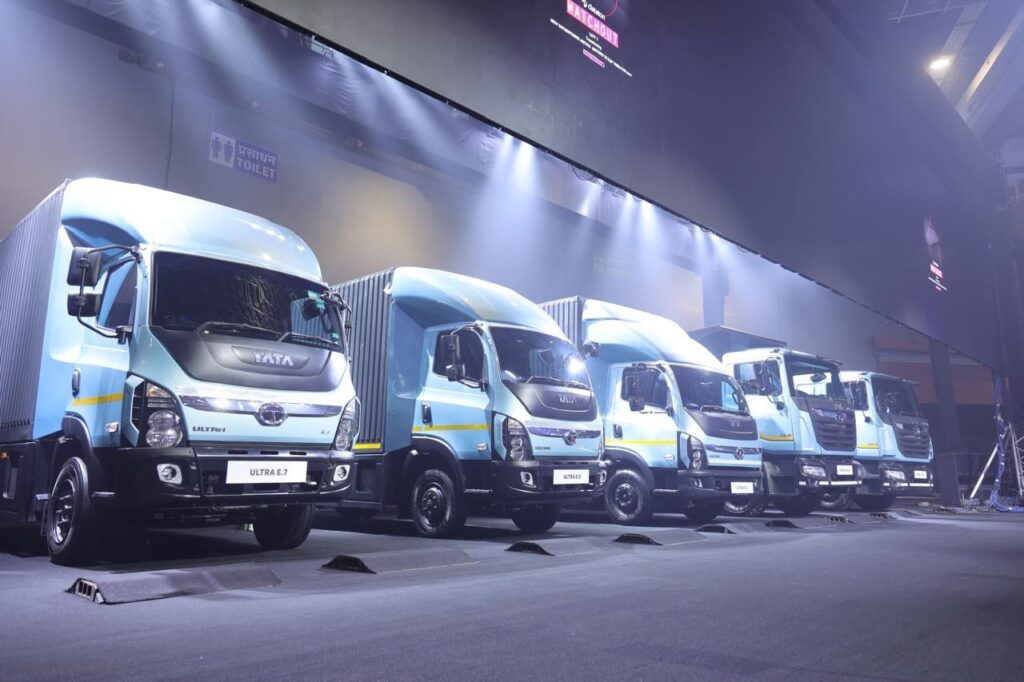
During FY26, the company launched 17 next-generation trucks and introduced the Tata Ace Pro range, positioned as India’s most affordable four-wheel mini truck. It also secured a major international order for 70,000 Tata Yodha and Ultra T.7 vehicles for deployment in Indonesia, alongside pan-India orders for over 5,000 buses from multiple state transport undertakings.
Girish Wagh, MD and CEO of Tata Motors, said FY26 marked a turning point for the commercial vehicle industry as volumes surpassed pre-FY19 levels, supported by GST 2.0 reforms and sustained infrastructure investments.
“FY26 was a landmark year as we delivered milestones of revenues and profits, reinforced industry leadership and strengthened our market position. With strong business fundamentals, proactive risk mitigation and a refreshed portfolio offering industry-leading total cost of ownership and smart digital solutions, we remain well positioned to sustain momentum,” he said.
GV Ramanan, CFO of Tata Motors, highlighted the company’s strong profitability and free cash flow generation, noting that Q4 EBITDA margin crossed the “teens” threshold at 13.9%.
“Our robust cash position gives us the flexibility to pursue disciplined capital allocation while continuing to deliver meaningful returns to shareholders. While near-term headwinds including commodity cost pressures are expected to persist, we remain confident in our ability to navigate these challenges through operational efficiency, pricing discipline and proactive supply chain management,” he said.