In FY2025–26, India’s automotive retail industry didn’t just grow — it picked up speed and moved ahead with confidence. It crossed important milestones and raised expectations for the future. But behind these strong numbers, there’s a bigger story — one of recovery, supportive policies, and changing customer preferences.

According to FADA President Mr. C. S. Vigneshwar, the core of this milestone is the sales numbers – 2.96 crore vehicles sold — the highest ever, marking a 13.3% year-on-year growth and bringing the industry within touching distance of the historic 3-crore milestone.
A Year of Two Halves
FY26 did not start very strongly. The first few months were slow, with customers waiting and dealers being cautious due to uncertainty around policy changes. Growth was there, but it was gradual. Things changed after GST 2.0. From September, prices became more favourable, confidence improved, and demand picked up. The festive season gave an extra boost, and this strong momentum continued steadily till March.
What makes FY26 special is not just the growth, but the fact that it was seen across all segments. Two-wheelers crossed 2.14 crore units and returned to pre-COVID levels, while passenger vehicles went past 47 lakh units for the first time. Tractors also performed strongly, crossing 10 lakh units with nearly 19% growth. Commercial vehicles moved above the 10-lakh mark as well, reflecting strong infrastructure activity, and three-wheelers continued to grow steadily. The only segment that saw a decline was construction equipment, mainly due to delays in projects.
Rural India Steps Forward
One of the most important shifts this year came from outside the cities. Rural demand nearly matched urban growth — and in some segments like passenger vehicles, even outpaced it. Better farm incomes, strong monsoons, and improved connectivity are changing the consumption landscape.
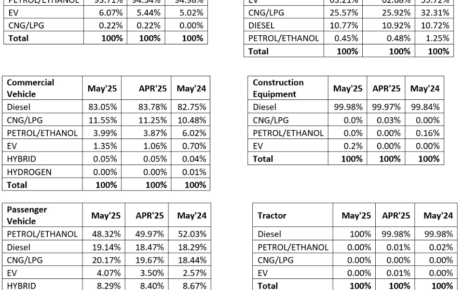
At the same time, there is a quiet shift happening in fuel choices. Electric vehicles are slowly gaining share across segments, while CNG is becoming a strong option, especially in passenger and commercial vehicles. In fact, three-wheelers have already moved largely towards electric, with over 60% share. Today, customers are not just looking at the purchase price, but are also thinking about running costs and overall efficiency, FADA observed.
March Ends on a High
March 2026 saw vehicle sales reach 26.9 lakh units, the highest ever for the month, with a strong 25% growth. This growth was not driven by heavy discounts or excess stock, but by genuine customer demand, supported by strong enquiries and conversions.
At the same time, there were positive changes behind the scenes. Passenger vehicle inventory levels came down significantly to around 28 days, compared to over 50 days last year. This shows better coordination between OEMs and dealers, leading to a more stable and demand-driven market. Financing also improved, making it easier for customers to buy vehicles and supporting overall sales.
The Road Ahead
Mr. Vigneshwar said, the outlook ahead looks positive, but there are a few challenges to watch. While long-term growth remains strong, the near-term may see some caution. Dealers are hopeful, but also careful. Around half of them expect growth in April, though many feel there could be a short slowdown after the strong March performance.
There are also some concerns such as geopolitical tensions in West Asia affecting supply chains, rising fuel prices that could delay buying decisions, and overall economic uncertainty. Even with these challenges, confidence remains strong. Nearly 75% of dealers expect the industry to grow in FY27, mostly in the range of 3–7%, he mentioned.
FY26 tells what happens when policy support, improving incomes, and evolving consumer choices come together. It highlights a market that is not just growing, but maturing — becoming more balanced, more efficient, and more future-ready. India’s auto retail industry is no longer just chasing numbers. It is building momentum. And if FY26 is any indication, the road ahead may be even more exciting — provided the industry continues to navigate its turns with the same balance of optimism and caution, he added.