As passenger expectations continue to evolve, bus operators and coach builders are increasingly investing in technologies that enhance comfort, safety and connectivity. With nearly three decades of experience in the segment, CARBON is strengthening its position by expanding its portfolio of entertainment and security solutions while backing them with a strong nationwide after-sales network.
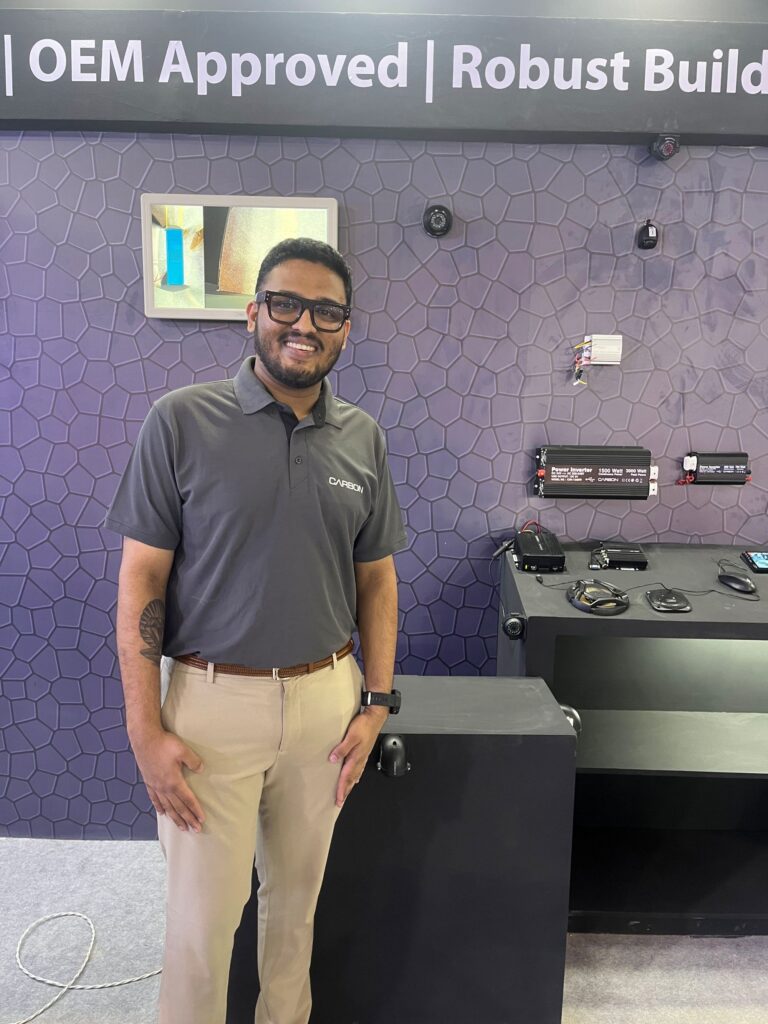
Speaking to MOTORINDIA on the sidelines of Prawaas 5.0, Mr. Nihal K. H, Head of Operations, CARBON, said the company remains focused on continuously upgrading its offerings to meet the changing demands of the market.
“India is heading in the right direction and we are constantly evolving with the market,” he said. “Twenty years ago, having a USB port was considered a luxury. Today, it is a basic expectation. Passenger expectations have increased significantly, and we have to keep innovating to deliver that premium travel experience.”
Complete portfolio backed by strong service
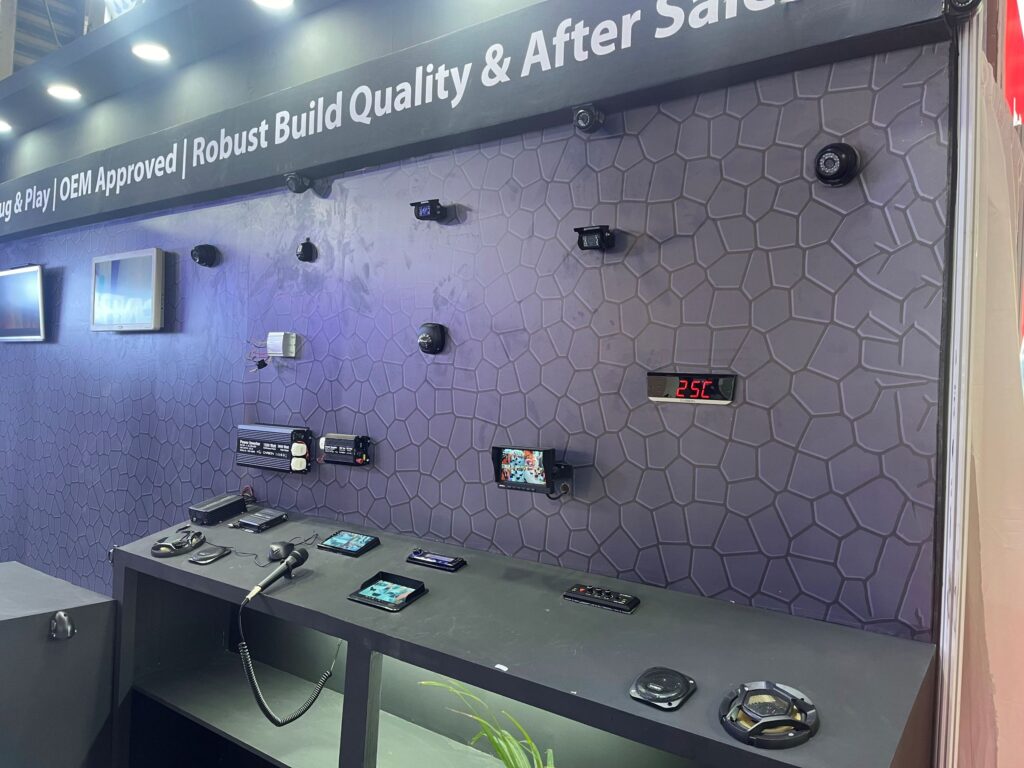
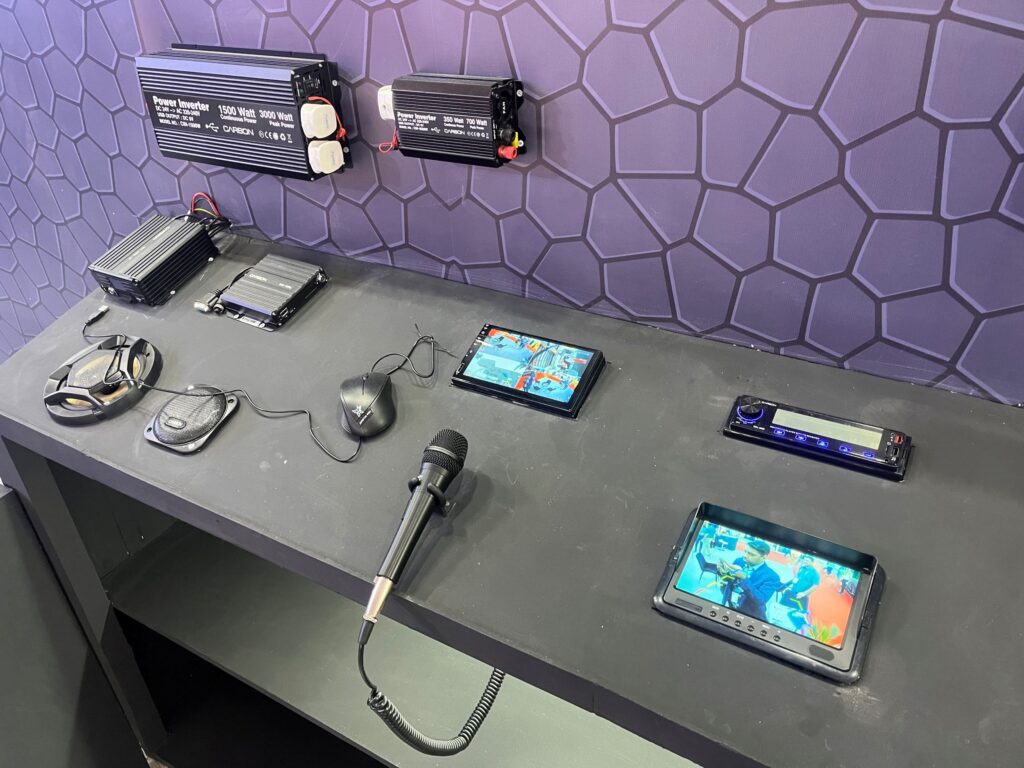
At Prawaas 5.0, CARBON showcased its comprehensive range of onboard electronics and safety solutions for buses and coaches. The portfolio includes rear-view cameras, indoor surveillance cameras, digital video recorders (DVRs), GPS-based live vehicle tracking, touchscreen infotainment systems and large-format passenger displays.
The company is also preparing to introduce a Video on Demand (VOD) platform designed for both seater and sleeper coaches, bringing an aircraft-like entertainment experience to long-distance bus travel.
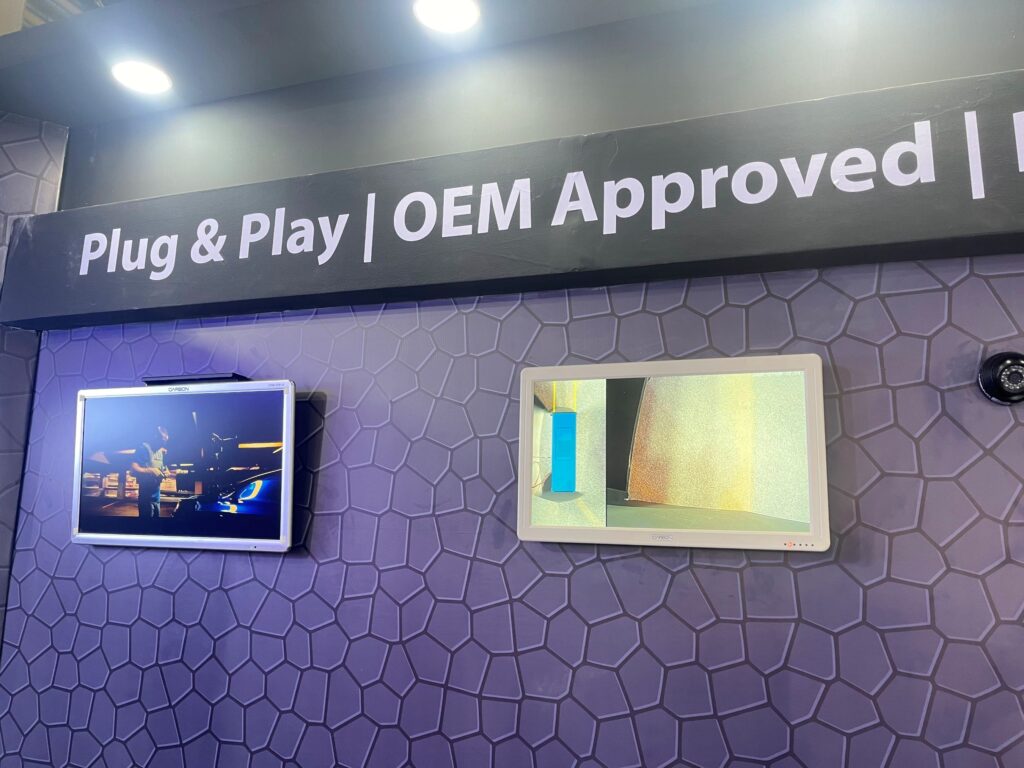
“We offer a complete snapshot of entertainment and security solutions for buses and coaches,” Nihal explained. “Passengers today expect a premium journey, and operators need technologies that can deliver both comfort and safety.”
Beyond product development, CARBON places equal emphasis on after-sales support, which Nihal believes is a key differentiator in a geographically diverse market like India.
“Having a good product is one thing, but having a strong after-sales network is equally important,” he noted. “Our products are serviceable across India. We have our own service teams, all major metro cities are covered, and around 10 dedicated service teams support customers across the country.”
The company supplies its solutions to leading bus manufacturers and coach builders, including Volvo, MG, Sutlej and ACGL, while also exporting to international customers such as MCV in Egypt. Exports currently contribute around 20% of CARBON’s overall business.
Rising safety awareness driving demand
According to Nihal, growing consumer awareness around safety is playing a significant role in encouraging operators to invest in higher-quality systems.
“Earlier, operators were reluctant to spend on premium products,” he observed. “Today, passengers are much more aware of safety, and that is forcing operators to upgrade their vehicles. The market itself is demanding better quality, and that helps set higher industry standards.”
He also welcomed recent government initiatives that mandate onboard surveillance and security systems in buses, while pointing out that implementation still requires greater consistency.
“The government has made indoor cameras and security systems mandatory, which is definitely a step in the right direction,” he said. “There are still grey areas in implementation, but in a country as large as India, these changes take time.”
Business momentum has remained positive for the company, supported by increasing demand from OEMs and coach builders.
Looking ahead to electric luxury coaches
While electric buses are steadily gaining traction in India’s public transport ecosystem, Nihal believes the next major opportunity lies in premium intercity coaches.
“India currently produces a lot of city buses, but not enough luxury coaches,” he said. “Passengers today are willing to travel long distances if they are offered a premium experience. I would like to see India develop more luxury coach manufacturers rather than focusing only on city buses.”
He also highlighted that although private operators account for the overwhelming majority of the country’s coach operations, electric bus deployment continues to remain largely concentrated within government-owned city transport fleets.
“Nearly 92% of tour operators in India are private, but most electric buses today are deployed by government transport undertakings and are mainly city buses,” he noted. “Over the next five to ten years, we should gradually move towards electric coaches as well because they offer a more sustainable future.”
At the same time, he acknowledged that challenges such as charging infrastructure, vehicle range and technology maturity still need to be addressed before electric coaches become mainstream.
“The first generation of any technology takes time to mature,” Nihal said. “Electric buses are very cost-efficient, but concerns around range and charging infrastructure remain. As the ecosystem develops, these challenges will gradually reduce.”
With continuous product innovation, expanding service capabilities and a clear focus on enhancing the passenger experience, CARBON aims to remain at the forefront of India’s evolving bus and coach industry while supporting its transition towards safer, smarter and more connected mobility.