By Ravichandran Srinivasan
In India’s highly competitive passenger vehicle retail ecosystem, scale alone is no longer enough. The real differentiator lies in how effectively dealerships can balance growth with profitability, customer retention, operational discipline, and workforce capability. Few dealer groups exemplify this balance as effectively as Bimal Auto, one of the largest and most influential retail partners in the Maruti Suzuki India Limited network.
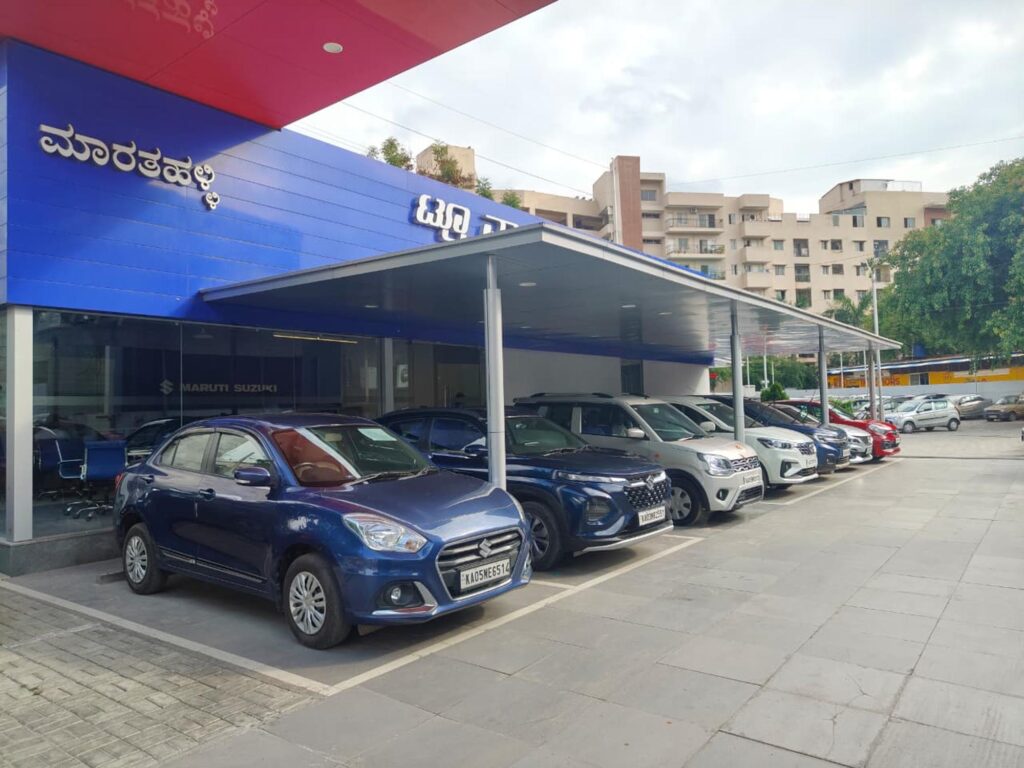
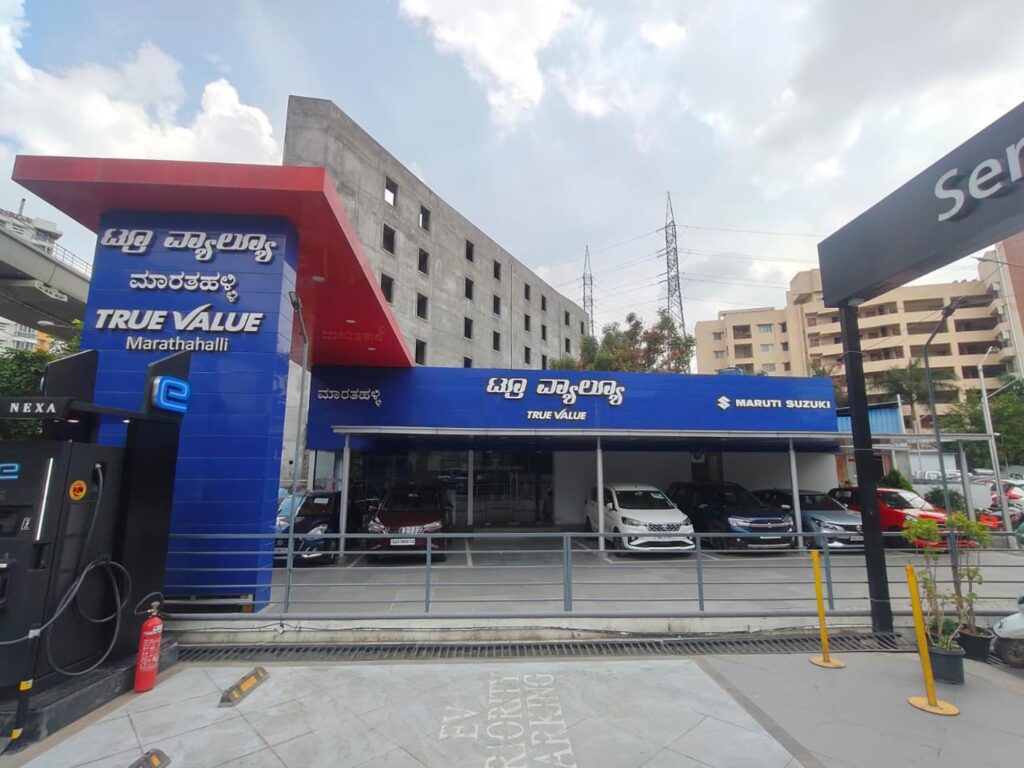
With a growing footprint spanning Bengaluru and North Kerala, the company has built a reputation for operational consistency across sales, service, and pre-owned vehicle operations. At the centre of this transformation is Naveen Sarawgi, Director & CEO, Bimal Auto, who believes that sustainable growth comes not from scale alone, but from disciplined execution and strong systems.

“Bimal Auto’s growth has been built on execution, discipline, and customer trust,” says Naveen. “We scaled not by chasing volume alone, but by creating systems that can sustain volume profitably across sales, service, and True Value. In a business like ours, scale only matters when control and consistency scale with it.”
Building Scale with Operational Discipline
Managing a geographically diverse network with nearly 30 locations requires far more than decentralised leadership. According to Naveen, Bimal Auto has adopted a structured operational philosophy that combines centralised strategic direction with localised execution.
“Our operating philosophy is simple: strategy is centralized, execution is localized, and accountability is non-negotiable,” he explains. “Every outlet must function within a common framework, while still responding to local market realities. That balance is what allows us to stay agile without losing control.”
This balance has become especially important in after-sales operations, which Naveen describes as the “operating engine” of the dealership business.
“After-sales is the operating engine of the dealership, not just a support function,” he notes. “We manage throughput by aligning capacity, demand, and discipline across Paid Maintenance and General Repair and Body and Paint. The focus is always on maximizing efficiency without compromising the customer experience.”
At a time when dealership profitability is increasingly dependent on workshop performance, Bimal Auto’s focus on workshop productivity, process discipline, and revenue optimisation has emerged as a critical business differentiator.
Driving Productivity Beyond OEM Benchmarks
Like most leading dealer groups, Bimal Auto benchmarks its workshop performance against OEM standards. However, Naveen insists that compliance alone is insufficient.
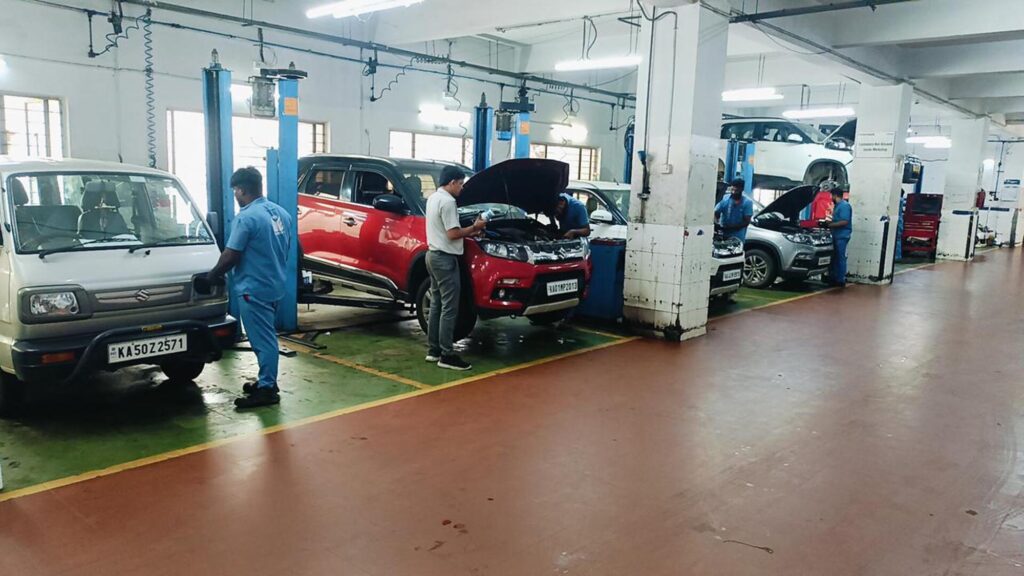
“We benchmark ourselves against Maruti Suzuki India Limited standards, but we don’t stop at compliance,” he says. “Wherever productivity falls short, we act quickly through tighter planning, stronger supervision, and skill correction. Benchmarking is useful only when it leads to real improvement on the ground.”
A significant part of this operational focus revolves around workshop equipment utilisation. In many dealership environments, expensive workshop assets remain underutilised, directly impacting returns on investment. Bimal Auto has addressed this challenge through rigorous tracking and planned deployment strategies.
“Every asset in the workshop must justify its existence through utilization and return,” Naveen emphasises. “Equipment like wheel aligners, wheel balancing machines, throttle body cleaning machines, fuel injector cleaning machines, and scanners are tracked through usage, planned deployment, and preventive maintenance. Our approach is to turn equipment into revenue-producing capacity, not idle capital.”
The same level of discipline extends to inventory management as well, particularly in handling spare parts across multiple facilities.
“Parts management at scale requires precision, not assumption,” he says. “We maintain tight control on replenishment, movement, and aging so that stock supports the business rather than blocks cash. Dead stock is monitored aggressively because inventory discipline is directly linked to profitability.”
Enhancing Revenue Per Vehicle
For Bimal Auto, improving workshop economics is not merely about increasing billing values but about creating meaningful value for customers.
“Labour Per Vehicle and Parts Per Vehicle are outcomes of process quality, advisor discipline, and customer confidence,” Naveen points out. “We push for consistent value creation at every touchpoint so that revenue per vehicle grows naturally, not artificially. The real measure of strength is whether the workshop is able to create value every single day.”
Value Added Services (VAS) also play an increasingly important role in strengthening customer engagement and dealership profitability. However, Naveen believes relevance is the key determinant of success.
“The best Value Added Services are those that solve a real customer need while strengthening margins,” he says. “We focus on services that improve convenience, enhance ownership experience, and create repeat value. If customers see relevance, Value Added Services become a business driver; if not, they become noise.”
In parallel, the company continues to focus heavily on cost discipline and operational efficiency.
“Cost control is about leadership attention and operating rigor,” Naveen explains. “We focus on areas where savings can be repeated at scale — manpower planning, energy usage, vendor efficiency, and process discipline. In a high-volume business, small improvements in overheads create a major impact on the bottom line.”
Investing in Human Capital and Future Skills
As the automotive industry moves rapidly toward electrification, connected mobility, and hybrid technologies, dealership workforce capability is becoming a strategic priority. Naveen believes talent retention and skill development must go hand-in-hand.
“Retention is built on growth, respect, and predictability,” he says. “We invest in career paths, recognition, and a work environment where people see long-term opportunity. If you want to reduce attrition, you must first create a workplace people want to stay in.”
The company has also significantly strengthened its training ecosystem to ensure technicians and service advisors remain future-ready.
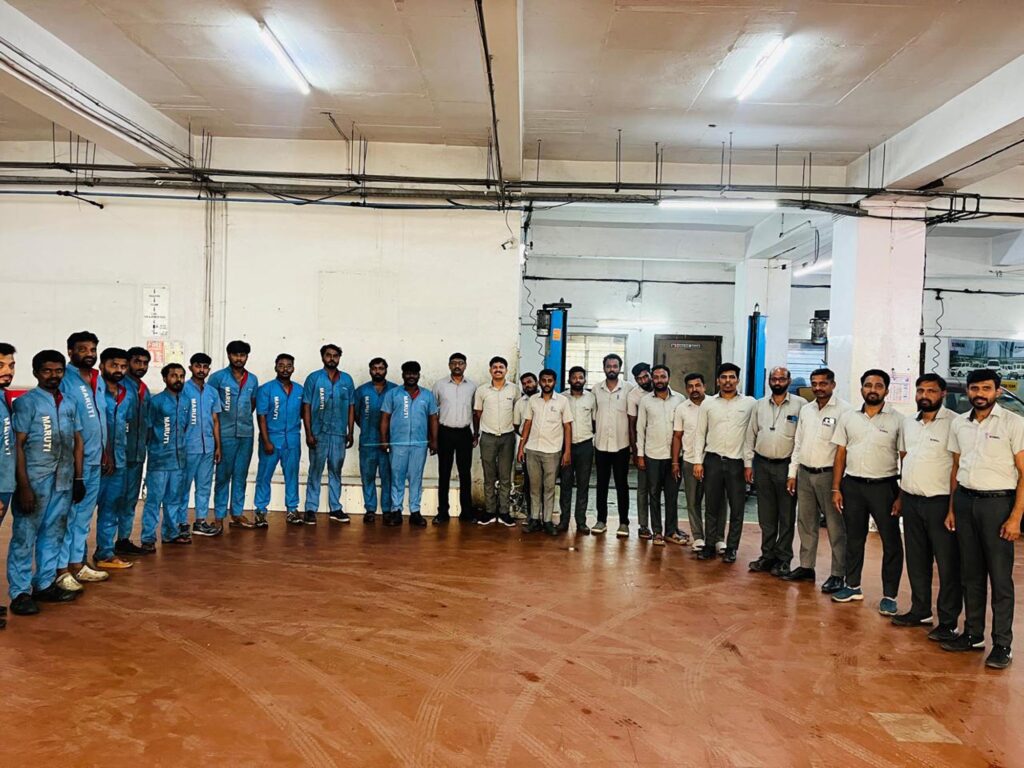
“Training cannot be a one-time event; it must be a continuous capability-building system,” Naveen says. “We use ongoing audits, refresher programs, and OEM-linked upskilling to keep the team current. With electric vehicles and hybrid vehicles entering the market, technical competence and advisor awareness both need to move up sharply.”
Data, Governance and AI-Led Decision Making
Governance and performance monitoring remain central pillars of Bimal Auto’s management philosophy. The company follows a structured review mechanism that focuses equally on execution, profitability, and corrective action.
“Our review system is structured, regular, and outcome-driven,” says Naveen. “Weekly reviews focus on execution and deviations; monthly reviews focus on performance trends, profitability, and corrective action. Every review must end with clear ownership, timelines, and follow-through.”
From a leadership perspective, Naveen keeps a sharp focus on three key performance indicators.
“The three KPIs I hold workshop heads to are productivity, customer satisfaction, and profitability,” he states. “These three tell me whether the workshop is healthy, efficient, and customer-centric. If those numbers are strong, the business is on the right track.”
Bimal Auto is also gradually integrating advanced analytics and AI-driven systems into its operations to strengthen decision-making capabilities.
“We are increasingly using data and analytics to improve decision-making,” Naveen reveals. “The real value of Artificial Intelligence is not in reports — it is in early warning, better planning, and stronger compliance. The next level of efficiency will come from turning data into action faster than before.”
Strengthening Customer Retention Beyond Warranty
One of the biggest challenges for dealerships today lies in retaining customers after the warranty period expires. Bimal Auto is addressing this through a mix of personal engagement and technology-led communication.
“Post-warranty retention is one of the biggest opportunities in our business,” says Naveen. “We use a combination of personal outreach, automated follow-up, and structured engagement to stay connected with customers after warranty ends. The goal is to make Bimal Auto the natural service destination for the customer over the full life cycle of ownership.”
Maintaining consistently high CSI and NPS scores across multiple locations is another major focus area.
“High Customer Satisfaction Index and Net Promoter Score are the result of consistency across people, process, and promise,” he says. “Customers rate us well when they experience transparency, speed, and reliability across every outlet. In a multi-location business, standardization is what protects the brand.”
The company’s grievance redressal framework is also designed around early intervention and accountability.
“We believe in resolving issues at the source, not after they escalate,” Naveen notes. “The Workshop Head must own the problem early, and every complaint must move through a defined resolution path. Fast closure and clear accountability are essential to maintaining trust.”
Equally important, according to him, is the emotional aspect of customer experience.
“The ‘feel good’ factor is created by how the customer is treated, not just by how the vehicle is serviced,” he explains. “Clean facilities, respectful communication, transparent updates, and a well-managed delivery experience all matter. Customers return when they feel valued, not just serviced.”
A Future Built on Sustainable Growth
Looking ahead, Bimal Auto is focusing on deepening operational capability while driving profitable expansion.
“Our focus for the next three years is profitable growth with stronger operational depth,” Naveen says. “We want to improve margins, strengthen customer loyalty, and build a more future-ready organization. Growth is important, but sustainable growth with discipline is what defines long-term value.”
The company is also moving toward a hybrid operating structure that blends centralised oversight with regional flexibility.
“We are moving toward a hybrid model that combines central control with cluster-level flexibility,” he concludes. “Bengaluru and North Kerala are different markets, so the operating model must reflect those differences while preserving a common customer standard. That is how we stay efficient without becoming rigid.”