Overall, the results underline Maruti Suzuki’s strong market position, even as capacity constraints highlight the need for further production expansion to meet rising demand.
Maruti Suzuki India Limited has reported a record-breaking financial performance for FY2025–26, driven by strong demand in the domestic market, particularly in the second half of the year following GST reductions.
The company recorded its highest-ever total sales of 2.42 million units, with domestic sales at 1.97 million units and exports rising sharply to 447,774 units. This marks a notable increase over the previous year’s total of 2.23 million units.
Financially, the company posted record net sales of ₹1.74 lakh crore, up 20.2% year-on-year. Net profit also reached an all-time high of ₹14,445 crore, marginally higher than the previous year.
However, growth was partially constrained by production limitations. At the end of the fiscal, Maruti Suzuki had around 190,000 pending customer orders, including nearly 130,000 in the small car segment. Dealer inventory levels also remained tight at about 12 days, indicating strong underlying demand.
In the fourth quarter, the company achieved its highest-ever quarterly sales of 676,209 units, up 11.8% year-on-year. Net sales for the quarter stood at ₹50,078 crore, while operating profit (EBIT) rose 30.4% to ₹4,409 crore.
Despite strong operational performance, net profit for the quarter declined 6.9% to ₹3,590 crore due to mark-to-market impacts.
The Board has recommended a dividend of ₹140 per share for FY26, slightly higher than ₹135 per share declared in the previous year.
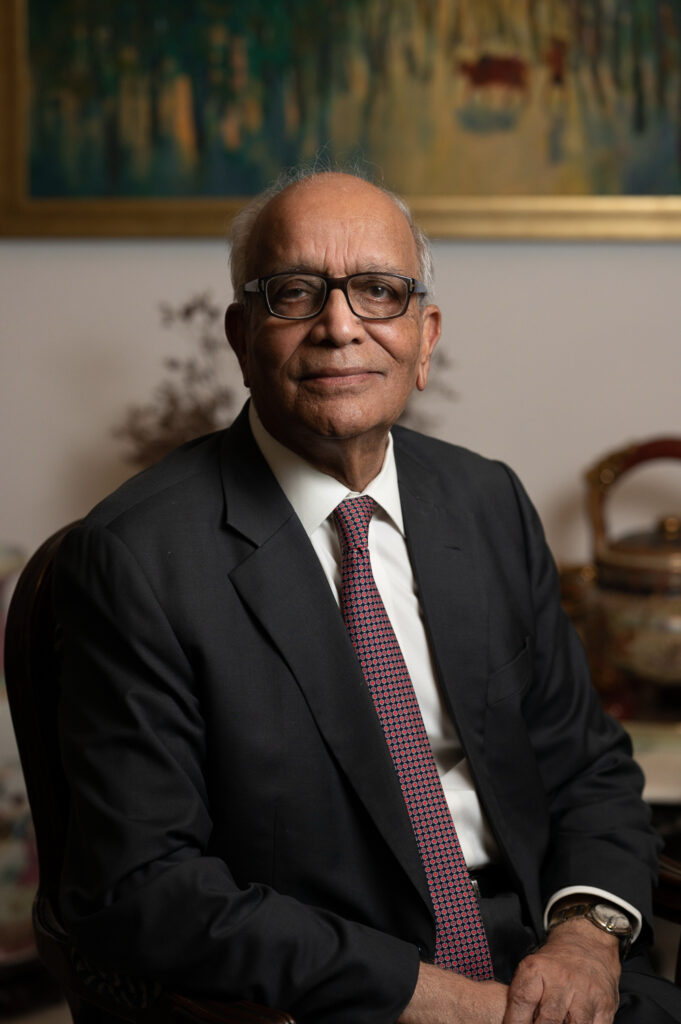
Speaking to media after the announcement of Q425 and FY2026 results, Mr. R. C. Bhargava, Chairman, Maruti Suzuki, said, it was a year that stood out in almost every way. The company saw record performance, and a big reason behind it was a policy change that came at the right time. When the government reduced GST rates last September, it gave a strong push to demand. Not just for automobiles, but across sectors. Interestingly, even with lower tax rates, overall GST collections went up—showing that lower taxes can actually support growth rather than reduce revenue.
According to him, this boost was clearly visible in the second half of the year, when demand picked up sharply. The company benefited from this momentum, but also faced a challenge—it was already operating at nearly full capacity. Production lines were running at 100%, inventories were low, and there was a backlog of orders waiting to be fulfilled, he noted.
Looking ahead, “the growth will depend less on demand and more on the ability to produce. To address this, new production lines have been set up at Kharkhoda (Haryana) and a new facility in Sanand (Gujarat), aiming to add over five lakh units of capacity in 2026 to reach four million units annually by FY2031.
While each line has a full capacity of 250,000 cars annually, they have only recently started operations. So, in the current year, the company is expected to add around 250,000 units to total capacity.
With demand now back and capacity gradually expanding, the outlook remains positive. The industry is expected to see steady growth in the coming years, supported by stronger demand and a more supportive policy environment, he added.
Touchpoints
Recently the company announced addition of a record 502 new service touchpoints in FY 2025-26. This marks the highest-ever network expansion in a single financial year by the company. With this, Maruti Suzuki’s total after-sales service network has reached to 5,926 touchpoints, covering 3,000 cities and towns in India.
It may be noted that the company inaugurated its first service workshop in 1983 and reached 1,000 service touchpoints by 1997, in about 14 years. In May 2024, the OEM announced the opening of its 5,000th service touchpoint. Over the last five financial years, the company, along with its network partners, has significantly accelerated network expansion efforts, adding almost 2,000 service touchpoints.