Third Generation Drives Expansion and Connectivity
Few transport businesses sustain their relevance across generations while continuing to grow in a competitive market. Mumbai-based Jalaram Transport Company is one such example. Recently, the company expanded its operational footprint by opening six new branches while strengthening its core routes in western India. For a business that began with a single consignment and a modest profit decades ago, this phase reflects both continuity and renewed ambition.
Founded in 1970 by Damji Devji Limda, the company traces its roots to a classic entrepreneurial journey. Damji Limda migrated from Kutch to Mumbai in pursuit of opportunity and began operations with a small godown in Masjid Bunder. His first transport assignment reportedly earned a profit of just ₹10; a modest beginning that would eventually grow into a regional transport network serving industrial and trading clients across Maharashtra and Gujarat.
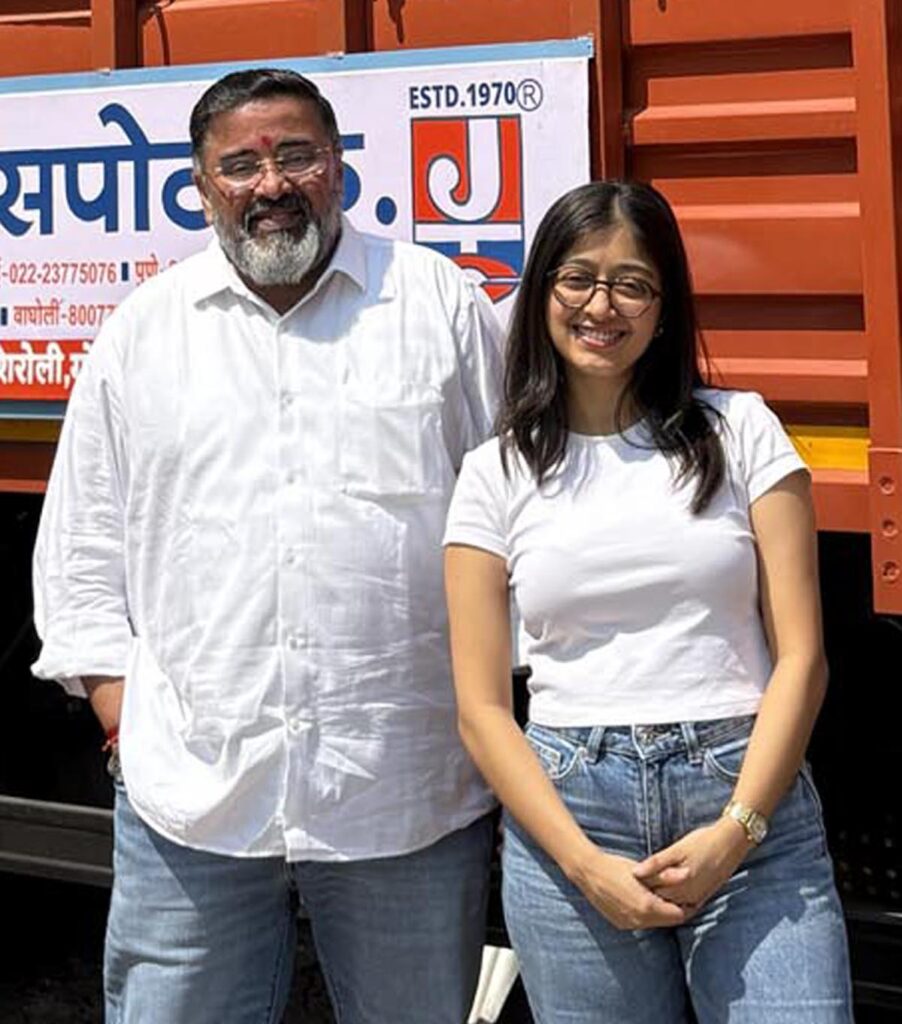
“Every time I hear the story of that first consignment and the ₹10 profit, it reminds me how humble beginnings can build something lasting,” says Ms. Vaishakhi Limda, Business Development Manager, Jalaram Transport Company. “My grandfather started with determination and relationships; those values still guide us even today.”
For decades, Damji Limda personally ran the business, gradually building a loyal client base. In the early 2010s, the second generation stepped in when Girish Limda joined the company and later assumed leadership around 2018. His tenure marked an important transition phase; introducing operational systems, digital tracking and the gradual development of an owned fleet.
“While my grandfather built the trust and customer relationships, my father brought in transformation,” explains Vaishakhi. “He introduced software systems, tracking solutions and started investing in our own vehicles; that helped the company move into a more organised phase.”
Today, Jalaram Transport Company operates with around 80 employees across its locations. The third generation is now contributing to the next phase of growth, with Vaishakhi focusing on business development, marketing and expansion while working alongside the operational framework built by her father.
Building Strength in Regional Routes
Over the years, the company has carved a niche in regional distribution, particularly along the Mumbai–Kolhapur corridor. The business handles non-perishable cargo across segments such as textiles, FMCG products, tyres, paper consignments and industrial goods.
“Our core business is B2B distribution,” says Vaishakhi. “We serve traders, distributors, manufacturers and retailers who require reliable movement of goods between Mumbai, Kolhapur, Pune and Vapi.”
The company manages both full truckload (FTL) and part truckload (PTL) consignments; a segment that remains essential for India’s trading ecosystem. Textile shipments, industrial materials and daily trading consignments form a significant share of the loads moving on these routes.
Long-term client relationships remain one of the company’s strengths. Among them are well-known brands and distributors that have relied on Jalaram Transport for years. Raymond, for instance, has been associated with the transporter for over three decades for textile consignments. The company has also handled shipments for printing firms such as Manugraph, FMCG brands including ITC through third-party logistics arrangements, and tyre distribution assignments involving Bridgestone.
“Some of our clients have been with us for decades,” Vaishakhi notes. “That continuity only happens when customers feel confident that their goods will reach on time, every time.”
Fleet Strategy and Daily Operations
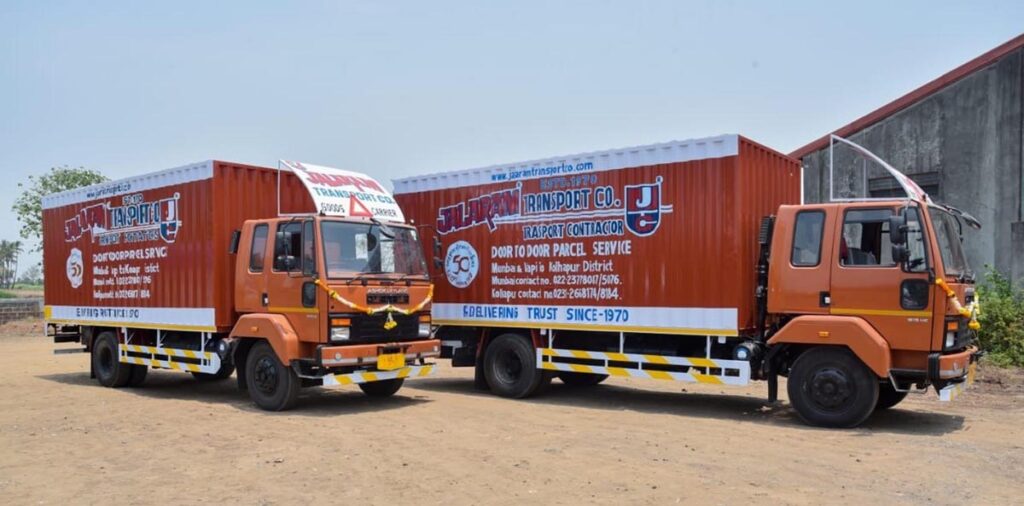
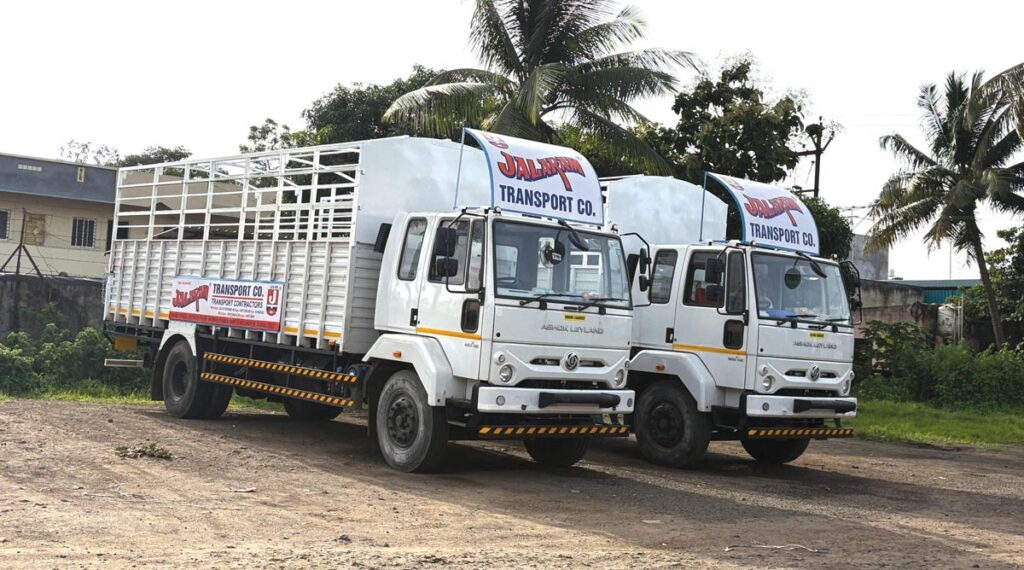
While many transporters increasingly adopt asset-light models, Jalaram Transport Company has steadily invested in building its own fleet in recent years. The company currently operates around 30 vehicles across different tonnage categories.
The fleet mainly includes 10- to 12-tonne trucks deployed on key intercity routes, largely from Ashok Leyland along with a few Tata CNG trucks. For last-mile deliveries in Kolhapur and surrounding areas, the company uses smaller commercial vehicles such as Tata 407 trucks, Mahindra pickups and Eicher light commercial vehicles.
“Our fleet ranges from one tonne to about twelve tonnes,” Vaishakhi explains. “Since our routes are relatively short but frequent, smaller and mid-range vehicles help us maintain higher delivery frequency and flexibility.”
The network operates largely on fixed routes where vehicles move daily between hubs. Mumbai functions as the primary loading centre, while Kolhapur serves as a major distribution hub for door-delivery services. On average, the company handles close to 100 tonnes of cargo per day on the Kolhapur route alone.
Maintenance practices also follow a structured approach. Instead of running in-house workshops, the company relies on authorised service centres and integrated garages along its operational routes.
“Our routes are typically between 400 and 600 kilometres, so vehicles return regularly,” Vaishakhi says. “This allows us to maintain them through authorised garages and keep them in good condition.”
People, Drivers and Operational Discipline
In the transport industry, driver availability and retention remain persistent challenges. Jalaram Transport Company addresses this through structured operations and driver-focused practices.
For intercity routes, the company deploys two drivers per vehicle; a system designed to maintain schedules and reduce fatigue during overnight journeys. Incentives are also built into the operational model.
“If a vehicle completes its trip on time and returns without breakdowns, we reward the drivers,” says Vaishakhi. “When drivers know that safe and timely driving earns recognition, it benefits everyone.”
The approach has helped the company retain drivers for longer durations. Several drivers have remained associated with the company for over a decade, which is uncommon in a sector known for high workforce mobility.
Vaishakhi also believes technology should complement operations rather than replace human oversight, especially for shorter routes where vehicles return to base frequently.
“Technology has its place; we use GPS and basic monitoring systems,” she says. “But for our routes, the most important factor is still the driver and the people managing operations.”
Resilience and Community During Challenging Times
One of the most defining chapters in the company’s recent journey came during the COVID-19 pandemic. At a time when logistics networks were disrupted across the country, Jalaram Transport Company continued operating on the Mumbai–Kolhapur corridor.
According to Vaishakhi, the company’s trucks were among the few that remained active on this route during the lockdown, helping move essential goods when supply chains were under pressure.
“During the pandemic, we kept our trucks running when many routes had stopped,” she recalls. “Everything coming into Kolhapur or leaving it was largely moving through our vehicles at that time.”
Beyond commercial operations, the company also supported local initiatives by transporting relief consignments free of cost for community groups assisting vulnerable populations.
“That period showed us the importance of transport in people’s daily lives,” says Vaishakhi. “It was not about one client; it was about serving an entire city when supply lines had to remain open.”
Growth Plans and Future Outlook
Looking ahead, Jalaram Transport Company intends to strengthen its existing network rather than expand aggressively into new geographies. The company recently added six new branches and now operates through about 15 locations including multiple branches in Mumbai, Pune and Kolhapur.
Vaishakhi believes the immediate priority lies in deepening connectivity on established routes while gradually increasing the fleet size.
“In the next couple of years, our focus is on strengthening what we already have,” she says. “If we add more vehicles, improve connectivity and build stronger teams, we can grow significantly within the same network.”
The company’s asset base is also expected to grow steadily, with plans to add three to four vehicles annually depending on demand.
“Our biggest strength is trust built over 56 years,” concludes Vaishakhi. “Customers come back because they know that when they hand over their goods to us, we take responsibility for delivering them safely and on time.”