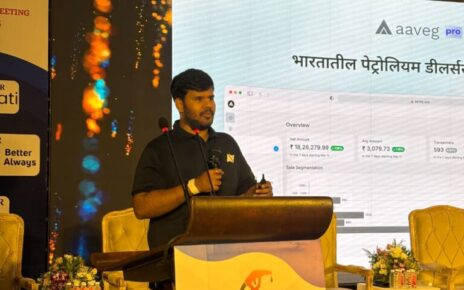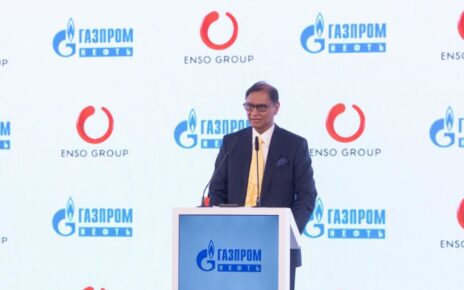
Hitendra Bhargava, CEO, Klüber Lubrication India & Regional Management Board Member – Asia Pacifific, Klüber Lubrication
By 2030, competitiveness will increasingly be measured through total lifecycle value—efficiency, durability, carbon impact, circularity and dependable performance—rather than initial component cost alone, says, Mr. Hitendra Bhargava, CEO, Klüber Lubrication India & Regional Management Board Member – Asia Pacific, Klüber Lubrication.
The automotive component industry is entering a decade in which transformation and resilience must progress together. In the immediate term, volatile trade policies, geopolitical realignment, raw-material uncertainty and supply disruptions will make localisation, diversified sourcing, traceability and faster engineering decisions strategic imperatives. India is well positioned to benefit as global OEMs seek competitive, high-quality manufacturing ecosystems; however, suppliers must simultaneously deliver global standards of quality, cost, sustainability and speed, Mr. Bhargava said.
Up to 2030, electrification will accelerate but unevenly across two-wheelers, passenger vehicles, buses, and commercial vehicles — prolonging coexistence of ICE, hybrid, and electric platforms. Component manufacturers must design for higher torque, thermal stress, electrical compatibility, quieter operation, longer service life, and reduced weight.
Software-defined vehicles, connected diagnostics, and intelligent manufacturing will make tribology more critical. Specialty lubricants must deliver lifetime lubrication, low friction, optimised NVH, and material compatibility across e-motors, bearings, actuators, steering, braking, and thermal-management systems.
Driving Future Growth
“Klüber Lubrication is preparing for 2030 by positioning tribology as an engineering enabler of next-generation mobility. Our priority is to collaborate earlier and more closely with OEMs and Tier suppliers to develop application-specific lubrication solutions for electric, hybrid and advanced internal-combustion platforms. In India, we will continue strengthening application engineering, testing and customer collaboration, supported by Klüber’s global research and development capabilities and rigorous automotive quality systems.
Our innovation agenda focuses on three outcomes: greater component efficiency, longer reliable service life and measurably lower environmental impact. This includes specialty lubricants engineered for high torque, broad temperature ranges, low noise, appropriate electrical behaviour, polymer compatibility and lifetime performance—alongside solutions that enhance efficiency and reliability within automotive manufacturing operations,” Mr. Bhargava mentioned.
Klüber targets 90% reduction in Scope 1 and 2 emissions by 2030 versus 2019, advancing renewable electricity and value-chain decarbonisation. “Equally important is the impact delivered through our products: lower friction, reduced wear, extended lubrication intervals and longer component life help customers conserve energy and resources. Our ambition for 2030 is clear: to be the preferred tribology and innovation partner for India’s evolving mobility ecosystem—translating advanced lubricant technology into efficiency, reliability, comfort and sustainable competitive advantage, he added.
“As global OEMs look beyond their traditional manufacturing bases, India is emerging as the destination of choice — competitive, capable, and increasingly difficult to overlook.”