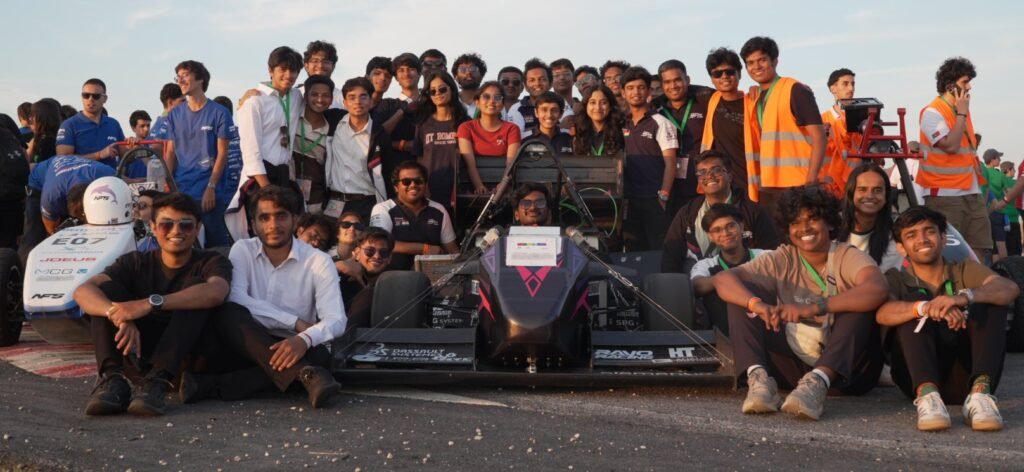
IIT Bombay Racing has achieved a significant international milestone, securing first place overall in both the Electric Vehicle and Driverless Vehicle categories at Formula Student Portugal 2026.
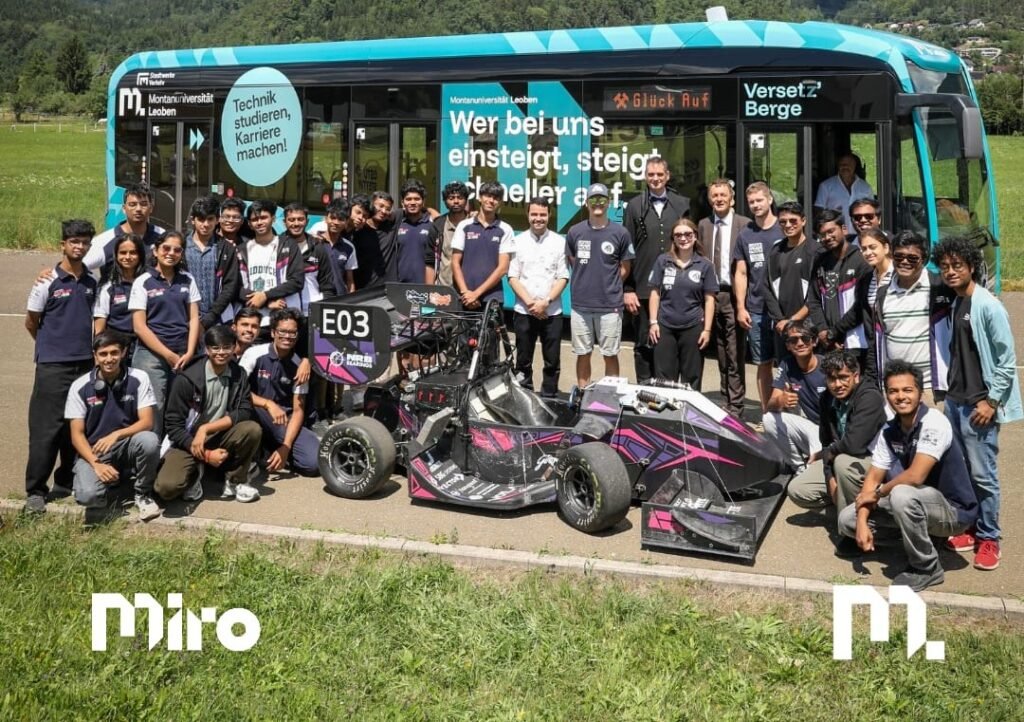
The Formula Student team of IIT Bombay delivered an impressive performance at the international engineering competition, demonstrating its capabilities across vehicle design, efficiency, endurance, cost and manufacturing, and business planning.

The team secured 1st place overall in the Electric Vehicle category and also emerged 1st overall in the Driverless Vehicle category. Its strong showing across individual events further underlined the breadth of its engineering and technical capabilities.

Among the key results were 1st place in the Engineering Design Presentation and Efficiency events, along with 2nd place finishes in Endurance and Cost & Manufacturing. The team also secured 4th place in the Business Plan Presentation.
A particularly noteworthy achievement was IIT Bombay Racing’s participation in the Driverless category, making it the first Indian Formula Student team to compete in the Driverless category at an international Formula Student competition. The milestone represents an important step for student-led autonomous vehicle development in India and highlights the growing capabilities of young Indian engineers in advanced mobility technologies.
Formula Student competitions bring together university teams from around the world to design, develop and compete with purpose-built vehicles, providing students with hands-on experience spanning vehicle engineering, electronics, software, manufacturing, testing and business strategy.
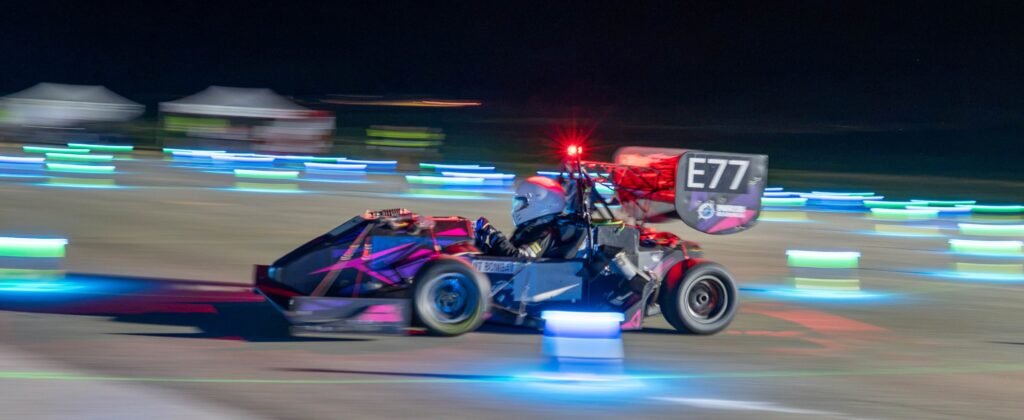
IIT Bombay Racing’s success in Portugal is therefore more than a competition result. It reflects the growing depth of India’s student engineering ecosystem and its ability to develop sophisticated electric and autonomous mobility technologies to international standards.
The achievement also reinforces the importance of initiatives that give young engineers an opportunity to translate classroom knowledge into real-world vehicle development — an increasingly critical capability as the global automotive industry moves towards electrification, automation and software-defined mobility.