Hyundai Motor Company and TVS Motor Company Ltd. have signed a Joint Development Agreement (JDA) to co-develop and commercialise electric three-wheeler (E3W) solutions tailored for India’s last-mile mobility needs, marking a significant step in the evolution of sustainable urban transport.
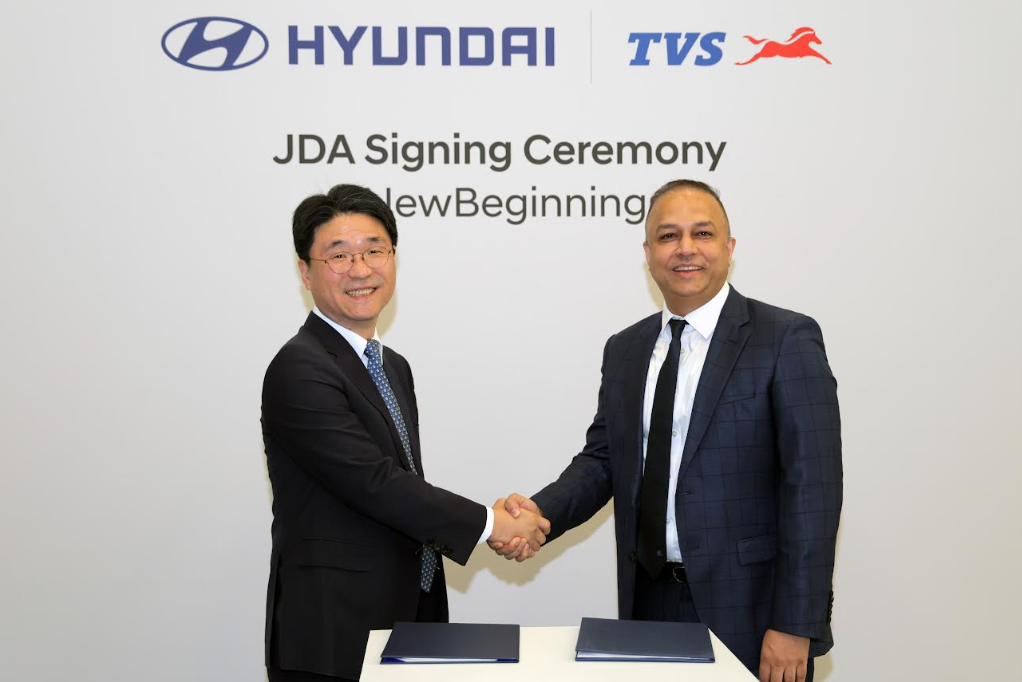
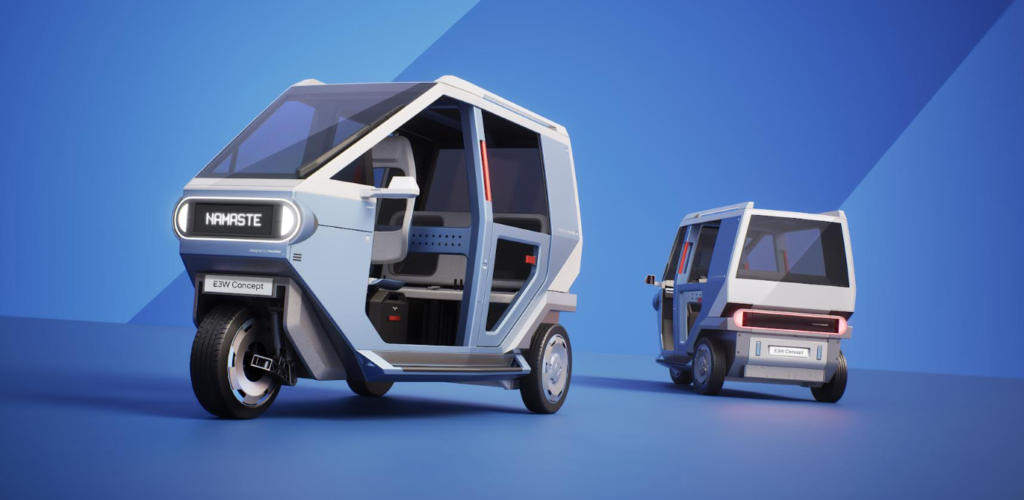
The partnership follows the unveiling of a concept E3W at the Bharat Mobility Global Expo 2025 and signals a transition from concept exploration to full-scale product development and eventual mass production. The collaboration brings together Hyundai’s global R&D capabilities and design expertise with TVS Motor’s deep understanding of the Indian market and its established electric three-wheeler platform.
Under the agreement, Hyundai Motor will lead the design and co-development of the E3W, leveraging its advanced mobility technologies and human-centric design philosophy. TVS Motor, on the other hand, will contribute its engineering expertise and local market insights while taking the lead on manufacturing and sales for both domestic and export markets.
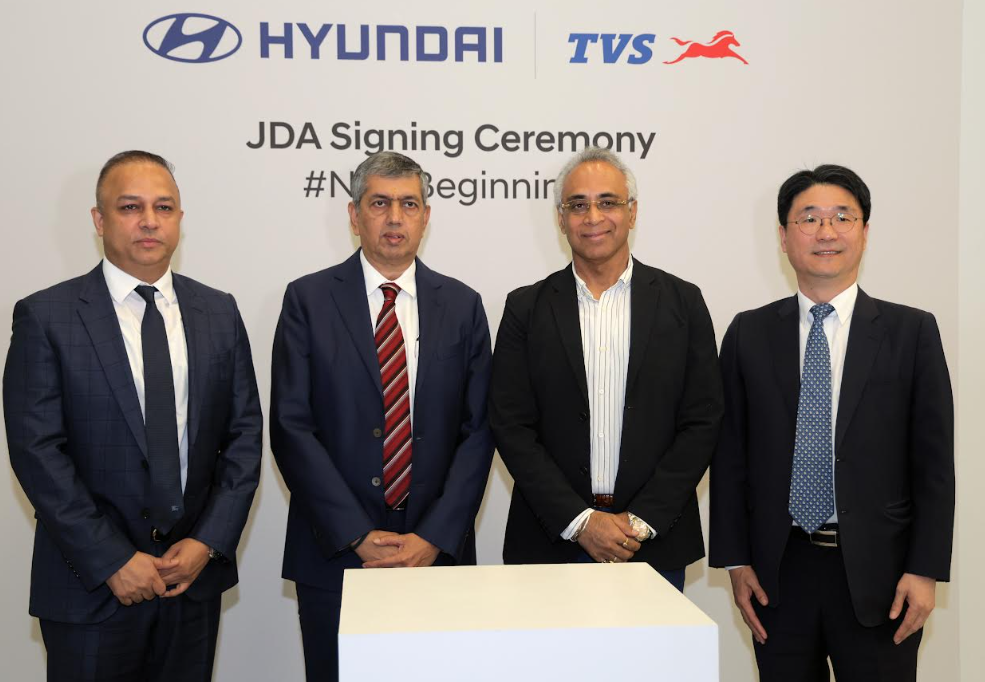
Mr. Joongsun Ko, Senior Vice President of Corporate Strategy & Planning at Hyundai Motor Company, said the collaboration aligns with Hyundai’s long-term commitment to improving India’s mobility ecosystem. He added that the co-developed E3W aims to expand access to safer and more sustainable transportation across the country.
Mr. Sharad Mishra, President, Group Strategy at TVS Motor Company, noted that the agreement strengthens the company’s ambition to deliver scalable and purpose-built electric mobility solutions. He emphasised that the partnership combines complementary strengths to set new benchmarks in technology, quality and customer experience in the three-wheeler segment.
The upcoming E3W will be engineered specifically for Indian operating conditions, addressing challenges such as uneven road infrastructure, climate variations and diverse usage requirements. It will incorporate features such as adaptive ground clearance for monsoon-prone roads, improved thermal management for tropical climates, enhanced safety systems, and flexible cabin configurations suited for passenger, cargo and emergency applications.
A key pillar of the partnership is localisation. Both companies have committed to sourcing and manufacturing major components within India, a move aimed at strengthening the domestic supply chain, reducing costs, enabling faster service support and generating employment opportunities.
The vehicle will undergo rigorous testing, localisation refinement and regulatory certification before its market introduction. Dedicated cross-functional teams from both companies have been set up to accelerate development timelines and ensure compliance with Indian standards.