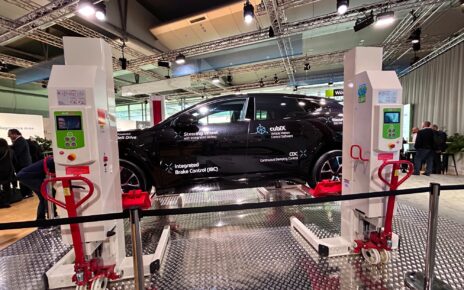
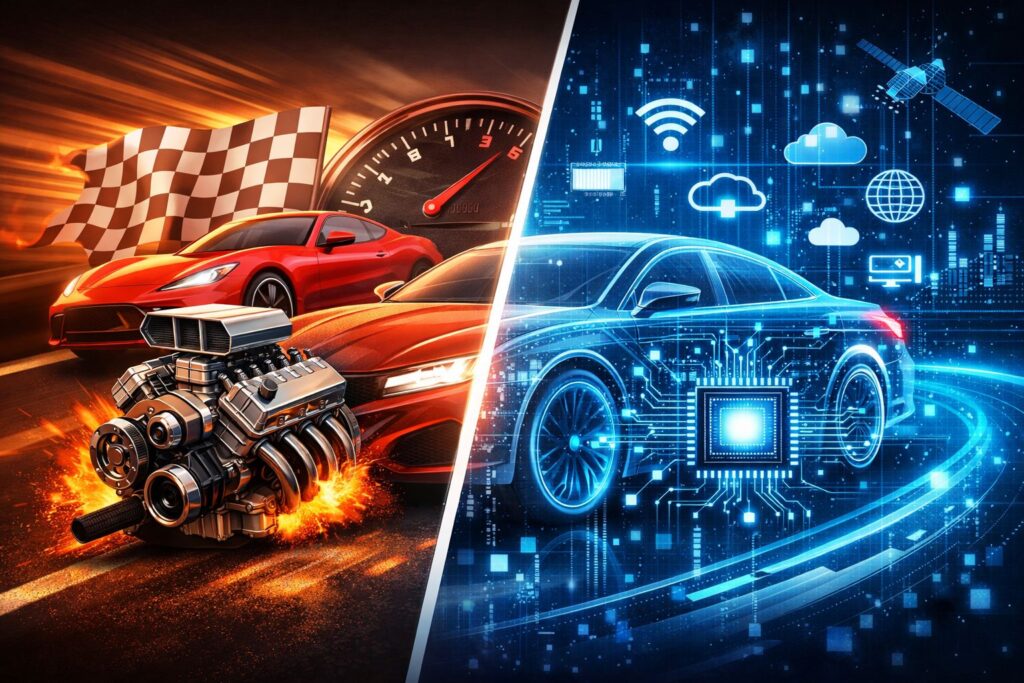
For decades, the race for vehicle makers was about engines, performance and design. Today, the real battleground is software — the new signature of every OEM.
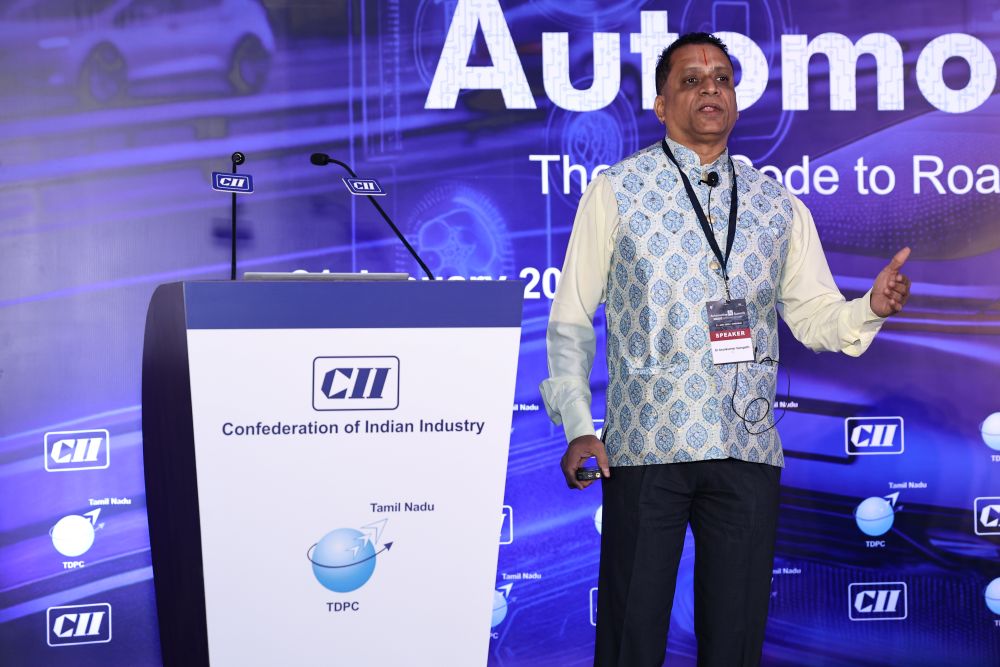
A quiet but massive shift is happening inside the automotive world, and Dr. Arunkumar Sampath, Principal Consultant & Global Head, SDV & eVTOL, Aircraft, TCS, calls it one of the biggest transitions the industry has ever seen. Cars are no longer engineered only as mechanical machines — they are becoming software-driven products that learn, upgrade and evolve long after they leave the factory.
For years, carmakers competed on engines, performance and design. Today, according to him, software is turning into the real differentiator. Global brands are already earning revenue from features offered on demand, and at events like CES, almost every new vehicle showcased was built around digital experiences. Even as markets like the US and Europe move quickly, India — now the world’s third-largest auto market — presents its own unique software challenges because of its mix of two-wheelers, three-wheelers and passenger cars, Dr. Sampath observed.
New Architecture
To meet this shift, the industry is witnessing “an evolution of the ecosystem that is going from a vertical top-down approach to what is called collaborative approach,” he said. The OEMs and suppliers now work side by side, sometimes as partners rather than traditional tiers. Vehicle electrical systems are changing too — instead of dozens of little control units scattered everywhere, hybrid architectures combine in-vehicle compute with cloud-based systems. This is essential for speed, performance and security, he noted.
Some companies want full control, building their own operating systems and cloud environments. Others prefer a more open, shared platform approach. But regardless of strategy, everyone is moving toward service-oriented architecture — software that can be updated, reused and deployed anywhere in the world while still meeting regional needs.
AI Everywhere
“If you are going to build the software defined vehicles (SDVs), obviously you need somebody to work on intelligent cockpit, ADAS system, hyper personalisation, regulatory standards, software, bill of materials etc. This is where actually the AI agents, help. In fact, TCS also has come up with bunch of different agents. We work very closely with different automotive players; we showcased some of these solutions in the recently concluded CES. So, what you notice here is essentially you can define the AI agents to do specific tasks,” he indicated.
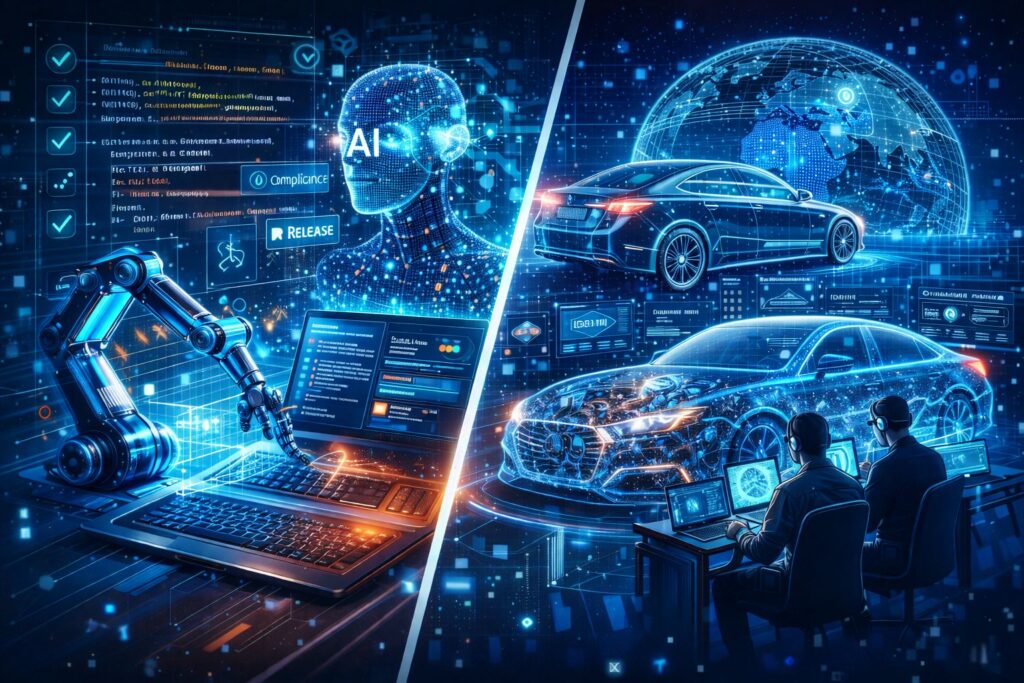
According to Dr. Sampath, AI is becoming the backbone of this new vehicle world. Specialised AI agents manage everything from cockpit functions to ADAS, safety, compliance and driver behaviour. Multi-agent systems allow different AI modules to work together, learn quickly and handle complex traffic conditions — something especially important in countries like India where road behaviour varies by the minute.
The industry is also “exploring the idea of using humanoid drivers as surrogates inside vehicles to replicate human behaviour and gather real-world road data. There is also growing interest in using humanoid robots to collect real-world driving data for autonomous training. And with (large language model) LLM-driven interfaces, vehicles will understand the world around them more like humans do, helping them react better in chaotic traffic,” clarified.
Building Faster, With Better Quality
To keep up with the pace of innovation, car development pipelines are now heavily automated. AI can generate code, check compliance, fix bugs and speed up the release process. Digital twins — virtual replicas of components or entire vehicles — allow teams across the world to test, refine and validate systems without waiting months for prototypes.
This also supports predictive maintenance, allowing vehicles to monitor their own health just like fitness trackers do for people. Federated learning helps personalise vehicle behaviour without exposing private data, making it easier for fleet customers and shared mobility providers to optimise performance safely.
The Software Bill of Materials (SBoM) ensures every line of code is traceable. In a complex global ecosystem, this transparency helps diagnose issues instantly — just as ISRO quickly recovered from a rocket launch abort because every component was digitally traceable, he said.
What Comes Next
The shift to Software-Defined Vehicles is now permanent and accelerating. AI, digital twins, new software architecture, and data-powered development are rewriting how cars are built and how they behave.
What lies ahead is even more transformative: the Internet of Vehicles, deeper vehicle-to-vehicle communication, real-time safety networks, and national records that unify data for faster development and safer mobility. India’s own digital infrastructure — from Vahan databases to upcoming battery passports — will play a big role in this evolution, he observed.
In this new era, cars won’t just be machines. They’ll be intelligent digital systems — always learning, always updating, always connected, he concluded.