India’s commercial vehicle and three-wheeler segments both had a strong June 2026, with total registrations hitting record highs across both categories. Freight demand, e-commerce growth, and the continued expansion of last-mile mobility drove volumes upward, while the accelerating shift toward electric vehicles added a new dimension to the competitive landscape. Established leaders held their ground, but the market share movements give a more interesting story — with several players growing faster than the market and others losing ground despite posting higher volumes.
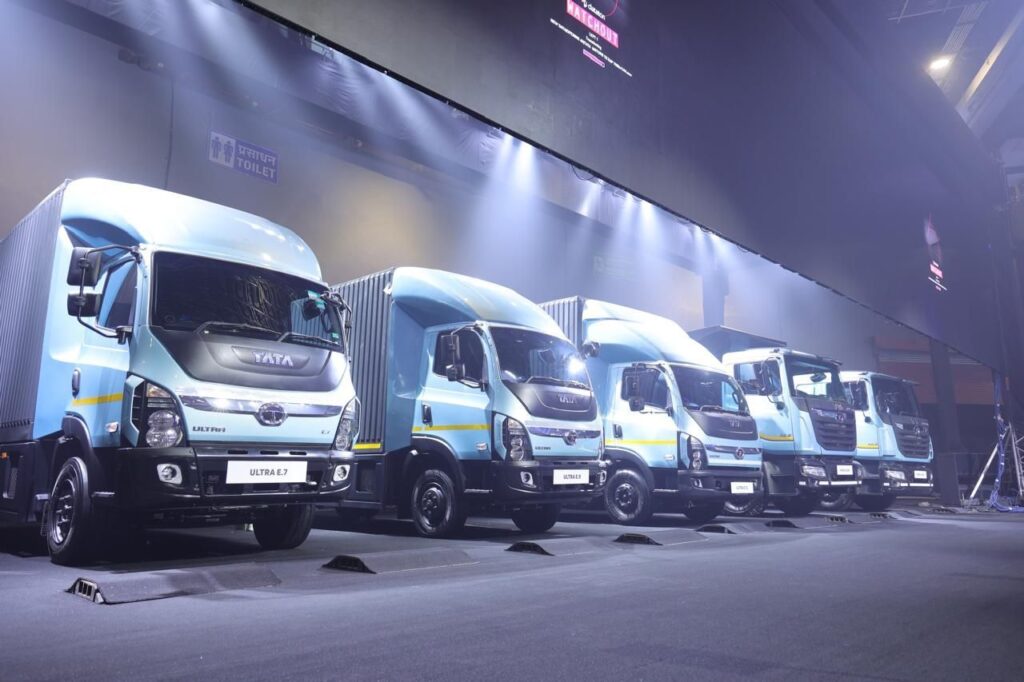
The commercial vehicle segment posted total retail sales of 90,972 units in June 2026, up from 77,836 units in June 2025 — a robust year-on-year increase that reflects sustained freight activity, e-commerce-linked demand, and improving supplies.
Tata Motors led the segment with 30,991 units and a market share of 34.07%, up from 32.52% a year ago. The gain in share alongside strong volume growth suggests Tata is not just riding the market wave but actively outgrowing it, reinforcing its dominant position across the CV spectrum.
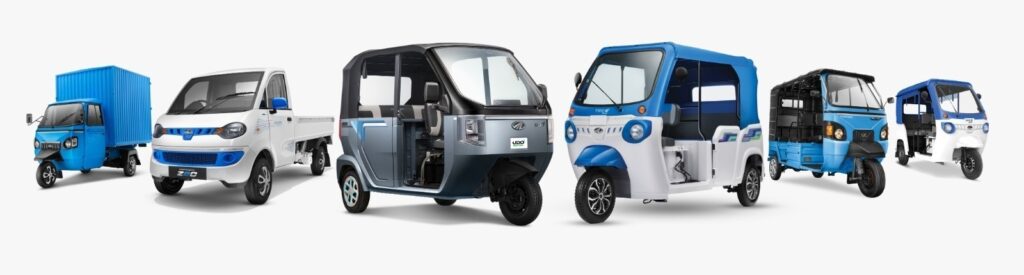
Mahindra & Mahindra was the second largest player with combined volumes of 25,015 units — comprising 23,241 units from its core CV business and 1,774 units from Mahindra Last Mile Mobility. Its overall share rose to 27.50% from 26.32% in June 2025, reflecting a steady consolidation of its position in the segment, including growing traction in electric last-mile applications.
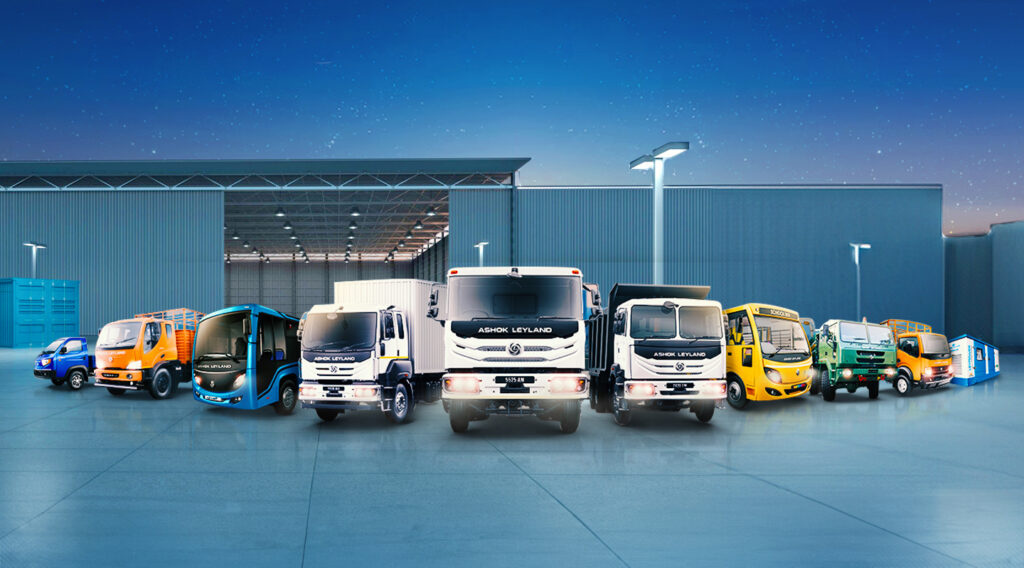
Ashok Leyland came in third with 15,337 units in total, made up of 15,029 units from its core business and 308 units from Switch Mobility, its electric bus subsidiary. However, its overall market share dipped from 18.18% to 16.86%, indicating that while volumes grew, the brand lost some ground relative to the faster-expanding market. Switch Mobility, though small in absolute numbers, more than doubled its volumes from 159 to 308 units, signalling early but meaningful traction in the electric bus space.
VE Commercial Vehicles — the Volvo Eicher joint venture — sold 7,937 units in total, including 7,877 units from its core business and 60 units from its Volvo Buses division. Its market share slipped from 9.60% to 8.72%, a notable decline that suggests the brand is growing more slowly than the overall market, particularly in segments where Tata and Mahindra are pressing harder.
Maruti Suzuki, which competes in the light commercial vehicle space, grew its CV retail from 3,391 to 4,436 units, lifting its share from 4.36% to 4.88% — a quiet but consistent gain in a segment where its small commercial vehicles find strong demand.
Force Motors saw its volumes decline from 2,318 to 2,026 units, with its market share falling from 2.98% to 2.23%, making it one of the few players to lose ground in an otherwise rising market. SML Mahindra similarly slipped, with sales dipping from 2,079 to 1,908 units and share falling from 2.67% to 2.10%.
Daimler India Commercial Vehicles was broadly flat, with volumes of 1,663 units almost unchanged from 1,665 units a year ago, though its market share declined from 2.14% to 1.83% as the overall pie grew around it.
The “Others” category more than doubled from 966 to 1,659 units, suggesting emerging players are beginning to find footing in the commercial vehicle space, particularly in niche or electric segments.
Three-Wheeler Segment — June 2026
The three-wheeler segment recorded total retail sales of 1,20,889 units in June 2026, up from 1,04,035 units in June 2025, reflecting strong year-on-year growth across the category.
Bajaj Auto retained its leadership position with 40,883 units and a 33.82% market share, though its share slipped from 37.54% a year ago, suggesting that rivals are gaining ground faster in a growing market.
Mahindra emerged as the segment’s most notable gainer, with its combined three-wheeler volumes — spanning Mahindra & Mahindra and Mahindra Last Mile Mobility — reaching 13,439 and 13,417 units respectively, together accounting for over 22% of the market, sharply up from a combined 15.24% in June 2025. This near-doubling of Mahindra’s share in the segment points to strong momentum in its electric last-mile mobility push.
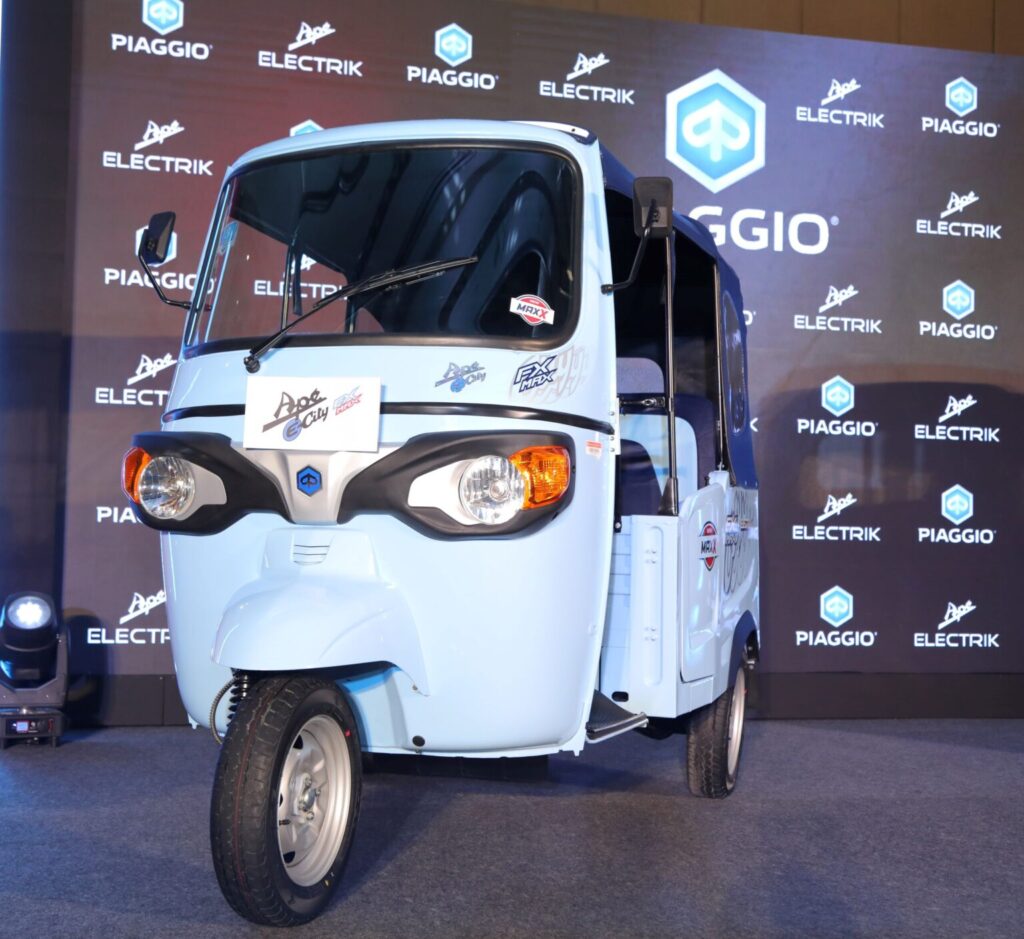
Piaggio Vehicles sold 8,887 units, nudging its market share up from 6.49% to 7.35%, a steady if unspectacular gain. TVS Motor Company was among the stronger performers in percentage terms, growing from 3,778 units to 6,408 units and lifting its share from 3.63% to 5.30% — a gain that reflects the brand’s accelerating push into the three-wheeler space.
Atul Auto held its ground with 2,863 units and a marginally improved share of 2.37% from 2.22%, while Dilli Electric Auto and Mini Metro EV also posted modest gains in both volume and share. On the other hand, YC Electric Vehicle and Saera Electric Auto both saw their volumes and market shares decline year-on-year, suggesting competitive pressure within the electric three-wheeler subsegment where newer and larger players are crowding in.
The “Others including EV” category accounted for 41,408 units or 34.25% of the market, broadly in line with the 34.78% share it held a year ago, indicating that the long tail of smaller EV players continues to collectively hold significant ground even as larger OEMs scale up.