Gulf Oil’s approach is rooted in purposeful evolution—embracing EVs, sharpening its growth focus, and expanding beyond traditional lubricants into a broader, future-ready portfolio. In doing so, it is quietly redefining its role—from keeping engines running to powering the next era of mobility.
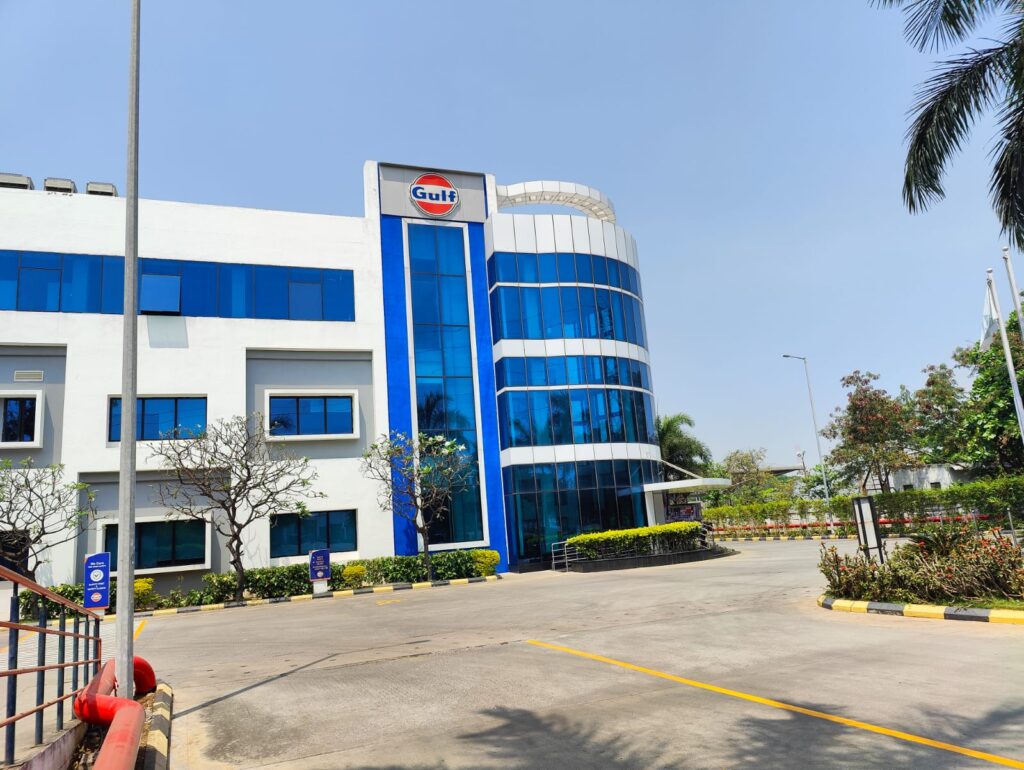
For decades, lubricants have been seen as a steady, predictable business. Quiet, essential, and often taken for granted. When Gulf Oil’s plans unfolded by the Managing Director of the company Mr. Ravi Chawla, it became clear that this is no longer just about oils and greases—it’s about transformation. At the centre of this shift is what the company calls “Unlock 2.0”—a strategy that isn’t just about growing, but about growing differently.
A New Push
According to Mr. Chawla, the idea behind Unlock 2.0 is to grow faster than the market, and grow smarter. While the lubricant industry in India is expected to expand steadily—around 3–4% in volume and 6–7% in value—Gulf Oil is aiming to outpace this significantly. The focus is on premium products, better margins, and sharper execution. That means moving towards synthetic and semi-synthetic lubricants, environmentally friendlier options, and more value-added offerings. It’s less about volume, and more about value, he explained.

Segment Focus
Growth, however, isn’t uniform—and the company knows that well. In the consumer segment, the company already holds a strong position and is targeting growth at nearly twice the market rate. But the bigger shift is happening in the B2B space.
Industrial and infrastructure segments—cement, steel, construction—are emerging as key growth drivers. These sectors demand high-performance lubricants and offer long-term, stable business. Even within automotive, opportunities remain—especially in passenger vehicles and agriculture equipment, where usage patterns are evolving.
EV Shift
The biggest change, of course, is mobility itself. Electric vehicles are often seen as a threat to lubricant companies. But Gulf is looking at it differently—as an opportunity. The company has already stepped into EV fluids and gone a step further by acquiring businesses in charging infrastructure and mobility software. “We are not just preparing for EVs— we are building an ecosystem around them,” he said.
From thermal fluids to battery cooling solutions, and from dielectric fluids to materials compatible with EV components, the company is working on the next generation of products. At the same time, it hasn’t ignored hybrids and range extenders—segments that could demand specialised, high-value lubricants.
Innovation Drive
“Innovation” remains at the core of this transformation. Gulf Oil has a strong legacy in long-drain lubricants—products that last longer and reduce resource consumption. Now, it is extending that expertise across segments. There’s work underway on multi-fuel lubricants—for LNG, biodiesel, and even hydrogen-based applications. In industrial segments, the focus is on high-performance synthetic oils, including those used in wind turbines. Interestingly, the company is also exploring areas like data centre cooling, where specialised fluids play a critical role, he mentioned.
Capacity Build
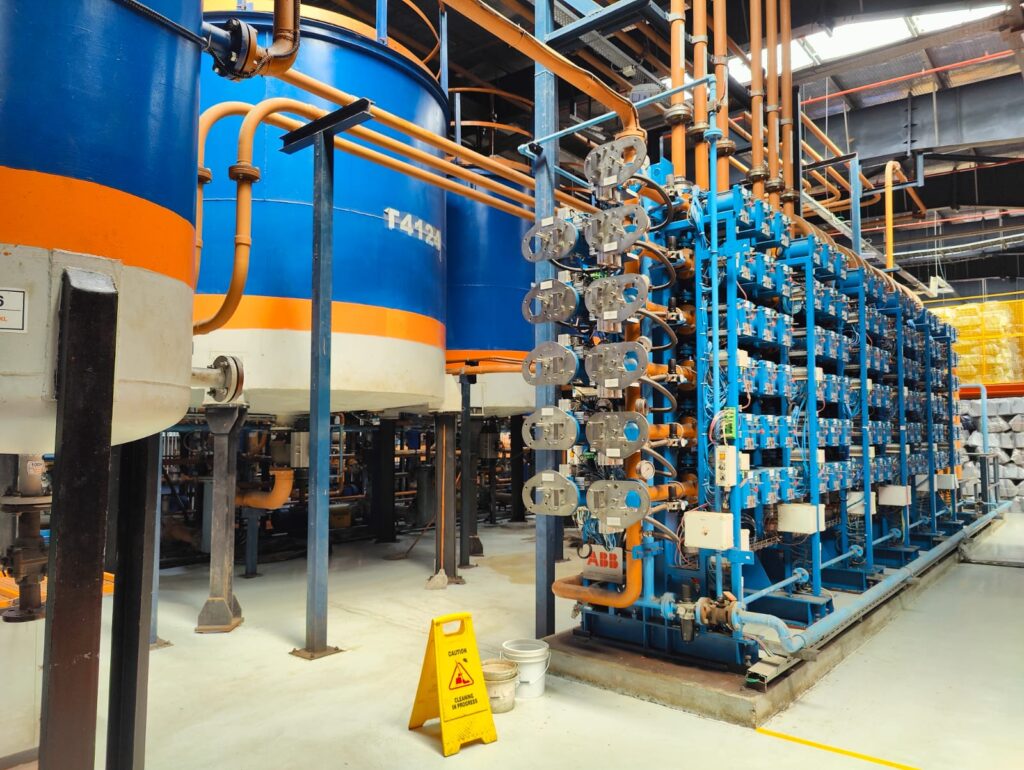
Behind all this is a clear push to scale up. The company is expanding capacity at its Silvassa and Chennai plants, investing in advanced blending technologies and automation. The idea is to build flexibility—so that the company can respond quickly to changing product demands. There’s also a possibility of a greenfield plant in the future, depending on how base oil supply dynamics evolve, he noted.
External Pressures
Of course, the journey isn’t without challenges. Global uncertainties—especially in West Asia—continue to impact crude prices and base oil availability. However, the company is managing this by diversifying sourcing, including supplies from Korea and Singapore, but the risks remain. At the same time, the company is watching new opportunities closely—such as supporting the semiconductor industry and expanding its AdBlue production, both of which align with emerging industrial needs.
Inside the Blend: Where Precision Meets Scale
Step inside Gulf Oil’s Chennai plant, and the transformation story becomes even more real. Here, growth isn’t just about strategy—it’s about systems working in perfect rhythm. From the moment raw materials arrive to the point a finished product is dispatched, everything moves with quiet precision.
At the core of the operation are the blending systems. The plant runs a mix of conventional and continuous blenders, each designed for a specific purpose. While high-value, specialised products are handled in smaller, controlled batches, the continuous blender works at scale. It’s this balance between volume and value that defines the operation.
Raw materials are stored across a tank farm of 34 tanks, neatly organised by product families—engine oils, gear oils, hydraulics, and more. From here, they move through a carefully controlled process, with final mixing handled by jet mixers to ensure uniformity. But what stands out is how seamlessly everything connects.
Digital Backbone
Behind the physical systems is a powerful digital layer. The entire blending and filling process is managed by a central software system—often referred to as the nerve centre of operations. It controls everything from recipe verification and batch sequencing to packaging and dispatch.
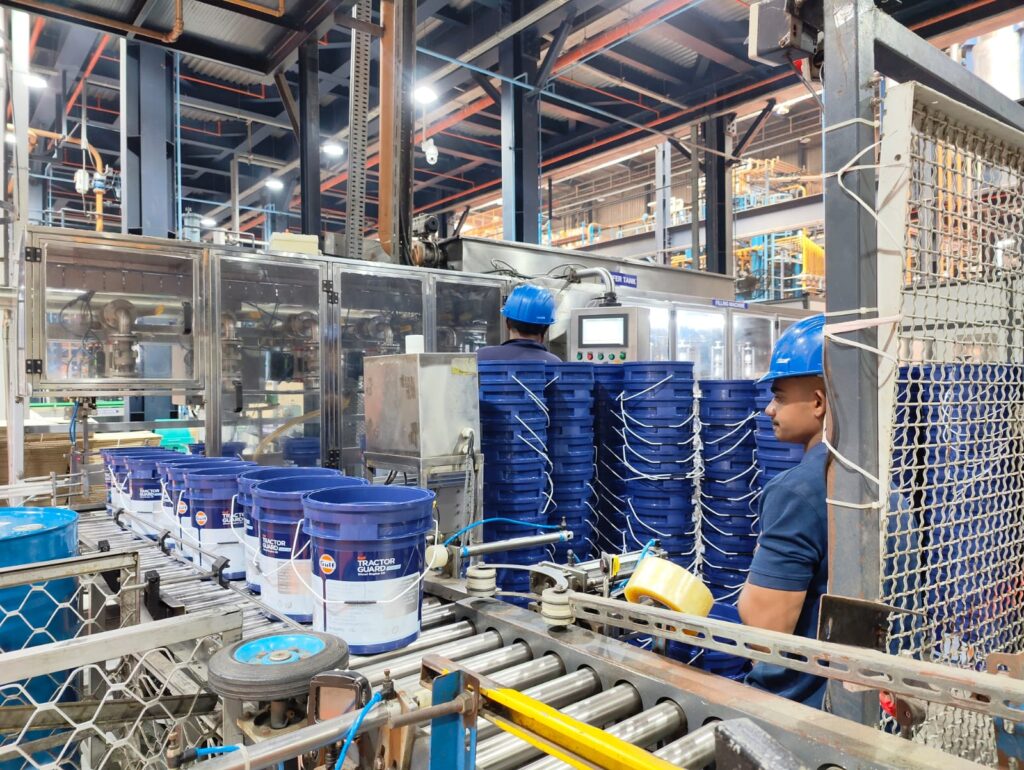
Each product follows a defined recipe—how much base oil, when additives are added, and how the process flows. Even cleaning is automated. After a batch is completed, a small portion of base oil is used to flush the system, ensuring it’s ready for the next run without delays. Integrated with SAP, the system provides real-time visibility into production—what’s being made, in what quantity, and where it’s headed. It’s a level of control that ensures both speed and accuracy.
Smart Movement
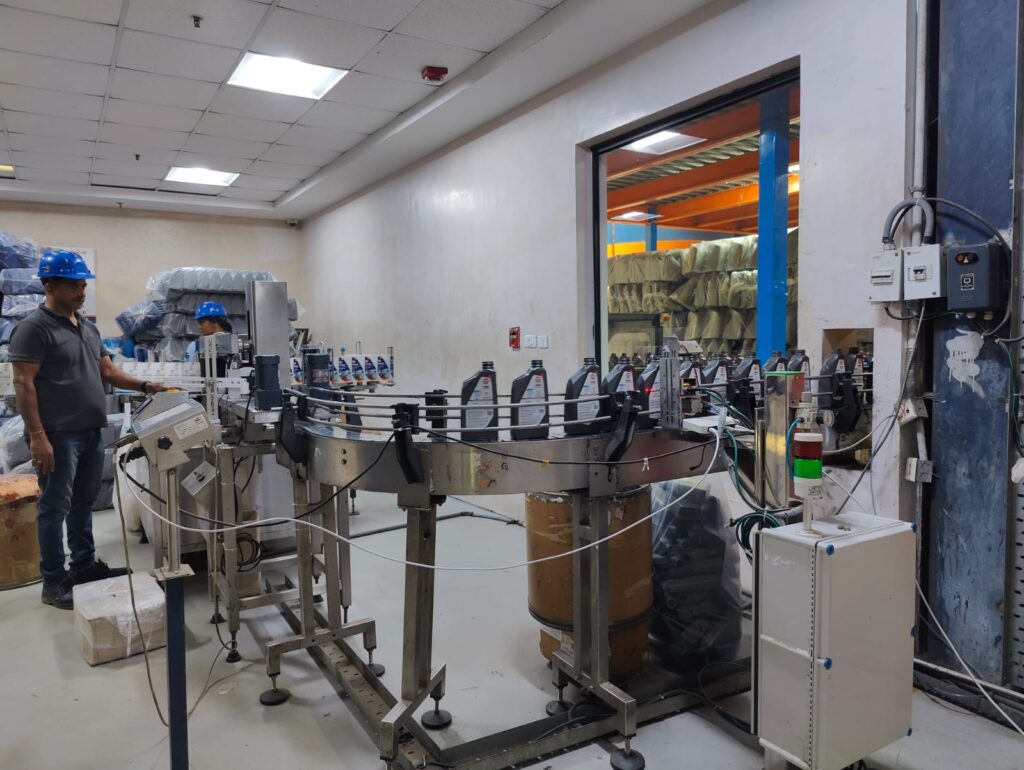
Once blended, the journey continues through filling and packaging. The shop floor houses a mix of linear, rotary, and manual filling machines, all connected through a central manifold system that directs product flow. A clever “pigging” system allows the same pipeline to be used for multiple products by cleaning out residual material between batches—reducing waste and improving efficiency.
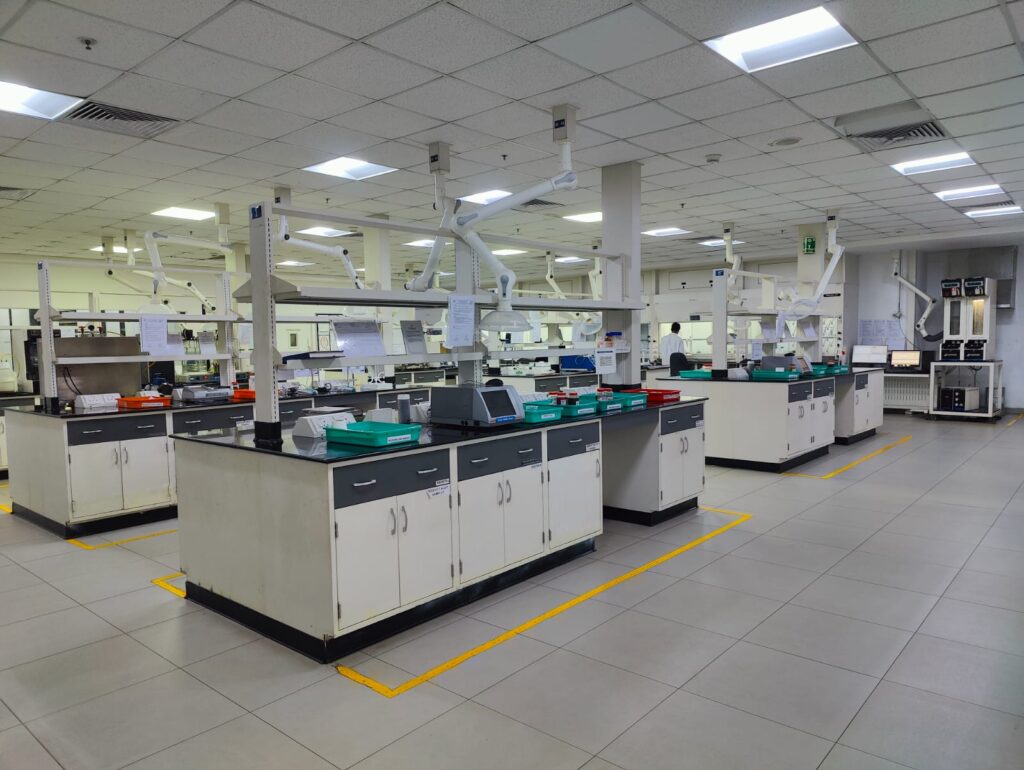
From here, products move onto conveyors, where automated palletisers stack them neatly. Collaborative robots, or cobots, assist in handling, adding another layer of efficiency. The final stop is the automated warehouse—a vast, highly organised space with storage bins. Every pallet is scanned, tagged, and assigned a precise location. When it’s time for dispatch, cranes retrieve the exact batch, ensuring quick and error-free delivery.
Quality First
Running parallel to all this is a strong focus on quality. Every stage is monitored—from raw material inspection to final product release. Incoming materials are tested within minutes. Blended products are checked again before filling. Even the first and last samples from each batch are analysed to ensure consistency.
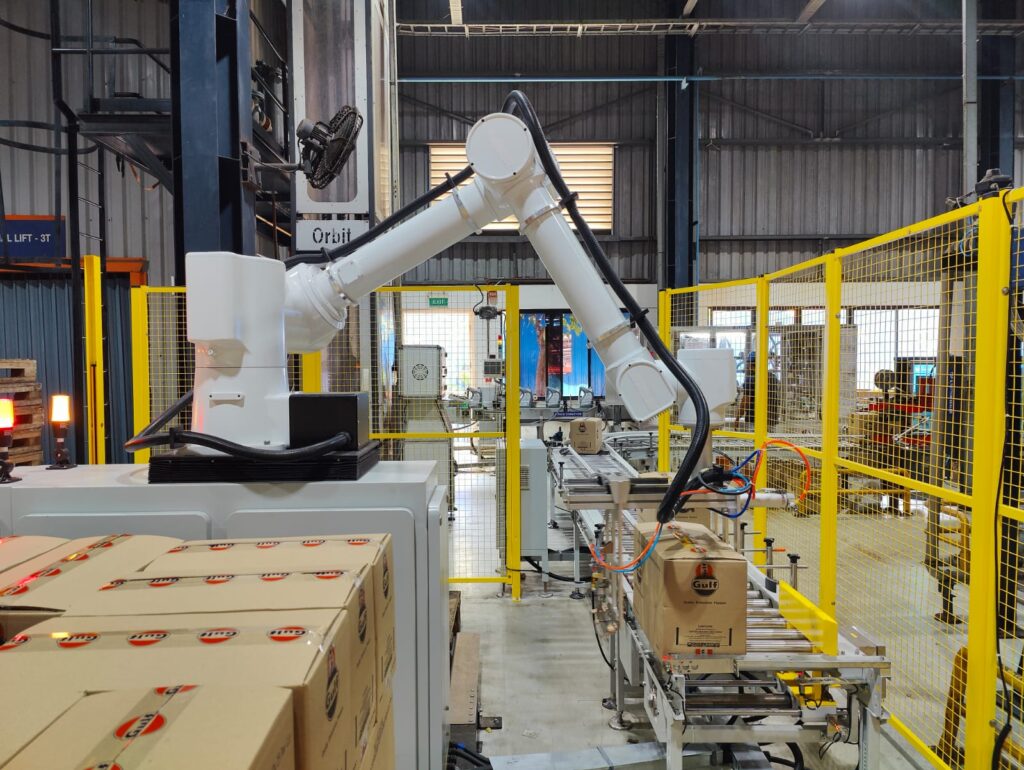
The lab itself is equipped with advanced instruments that measure everything from oil viscosity to wear elements. There’s also continuous monitoring of used oils over time, helping customers understand performance across real-world conditions.
For new products, pilot blending facilities allow testing before full-scale production—reducing risks and ensuring reliability. Every batch is tracked, stored, and even retained for up to a year, just in case any issue needs to be investigated later.
Adblue
Just a few steps away, another process quietly unfolds—manufacturing Adblue. Here, the product begins with two basic inputs: demineralised water and urea. But what follows is a tightly controlled sequence. The materials are blended in large kettles, filtered through multiple stages, and constantly monitored for quality. If even a small parameter goes off track, the system pauses automatically. Within minutes, the blend is ready—clean, consistent, and stored before moving to multiple filling lines, from small packs to large tankers.
Precision in Motion
Walking through the plant, it was clear that this is not just manufacturing—it’s orchestration. Every system, every process, and every movement is designed to work together. It’s this level of precision that supports Gulf Oil’s larger ambition—moving from a traditional lubricant player to a technology-driven, future-ready company. Because in the end, growth is not just about new products or new markets. It’s about building the capability to deliver them—consistently, efficiently, and at scale.
The Road Ahead
What stands out in Gulf Oil’s approach is its willingness to evolve. It’s not treating EVs as a disruption to be managed, but as a shift to be embraced. It’s not chasing growth blindly, but choosing where to grow and how. From traditional lubricants to EV fluids, from industrial applications to new-age technologies, the company is gradually building a broader, more resilient portfolio. And in doing so, it is quietly redefining what it means to be a lubricant company in today’s world. Because the future, it seems, won’t just be about keeping engines running—it will be about powering an entirely new kind of mobility.