The OEMs multi-tier strategy is clear: from value-packed family SUVs to luxury, tech-rich flagships, the brand now offers a variant for every kind of buyer—often delivering more than expected.
By T. Murrali

Mahindra is rewriting the rules of the SUV game with a clear, bold strategy: enter every major price band of the “core SUV” market with strong products, richer features, and sharp pricing. Instead of limiting itself to the premium end, Mahindra is building a portfolio that stretches across customer needs—from value seekers to luxury buyers—while ensuring that every variant feels a step above its competition.
According to Mr. Nalinikanth Gollagunta, Chief Executive Officer – Automotive Division, Mahindra & Mahindra Ltd. and Executive Director, Mahindra Electric Automobile Ltd., the company is targeting the heart of India’s SUV demand: vehicles over four metres long and priced above ₹ 20 lakh alone makes up 30% of the UV market, or nearly 70,000 units a month.
Inside this space, the biggest action lies in the ₹ 20 lakh to ₹ 24 lakh band, which accounts for 45% of buyers. Another 25% sits in the ₹ 24 lakh and ₹ 28 lakh, while the top 30% are customers spending upwards of ₹28 lakh. Mahindra’s plan is simple—own all three, Mr. Gollagunta explained.
“What makes the strategy stand out is the list of features Mahindra offers right from the base variant. Even the entry-level model gets a panoramic sunroof, three 12.3-inch screens with an option to add two more in the second row, a seven-seat layout with sliding second-row seats, a massive 150-litre front storage compartment, class-leading torque, and 180 kW fast charging on select battery options that can jump from 20 to 80% in just 20 minutes. These features, usually reserved for higher trims in rival SUVs, create the foundation for the entire variant lineup,” he said.
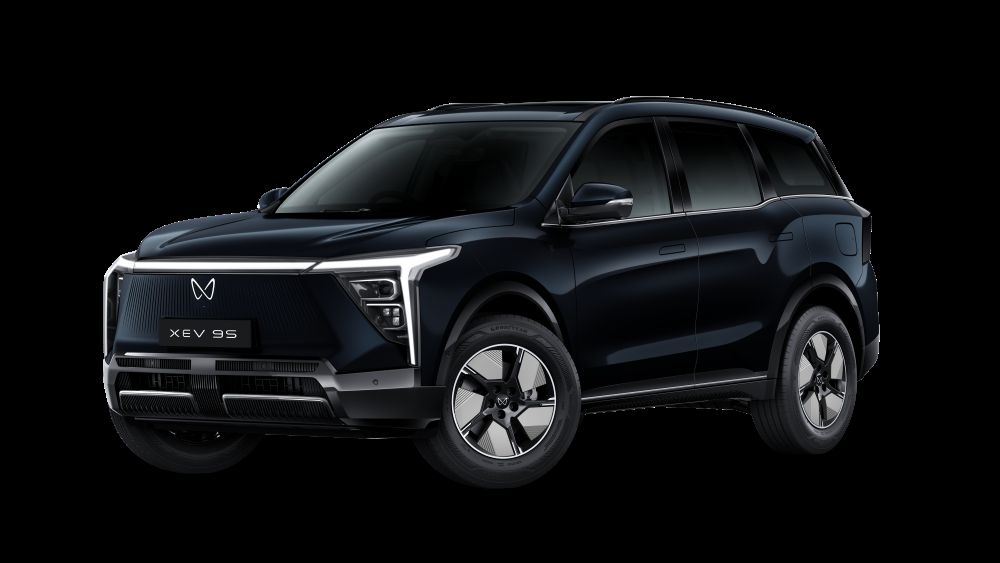
In line with this strategy, the company has introduced four variants of the XEV 9S. The Pack One variant, aimed at the ₹20 lakh to ₹ 24 lakh segment, is designed as a “Choco block” of value—dense, rich, and loaded. It retains all standard features and a battery capacity larger than typical 59 kW or 79 kW competitors. For comparison, similar MPVs in Maharashtra run close to ₹ 23.4 lakh, making Mahindra’s package extremely attractive, he noted.
Pack Two steps into the ₹ 24 lakh to ₹ 28 lakh band, created for buyers who want more comfort and tech. This variant adds premium touches like alloy wheels, a 16-speaker Harman Kardon system, power-adjustable and ventilated seats, and an Level 2 ADAS setup with a single radar. It also introduces a new 70 kW battery option, giving customers more choice and range flexibility, he mentioned.
Pack Three moves into the beyond-₹ 28 lakh premium segment, crafted especially for those who prefer to be chauffeur-driven. Luxury shifts to the second row with features like Boss Mode, second-row ventilated seats, ambient lighting, advanced ADAS with five radars, AQI control, VR filters, and adaptive suspension.
Above this sits the Pack Three Above variant—the ultra-premium offering that aims to compete with SUVs costing as high as ₹ 80 lakh. This range gets auto-park, a 360-degree camera, haptic touch controls, an AR head-up display, and a Driver-Oriented Monitoring System, all powered by a Snapdragon 8295 chip. This variant is priced at ₹ 29.45 lakh —deliberately crafted to stay below the ₹ 30 lakh psychological mark, he said.
With this layered strategy, Mahindra is sending a clear message: whether buyers want an affordable family SUV, a feature-packed mid-ranger, a luxury chauffeur-driven model, or a tech-laden flagship, the company has a variant that fits—and often exceeds—expectations. By offering premium features as standard and ensuring competitive pricing at every step, Mahindra is positioning itself to challenge established E-SUVs, E-MPVs, and hybrids head-on, reshaping customer expectations across the SUV landscape, he added.