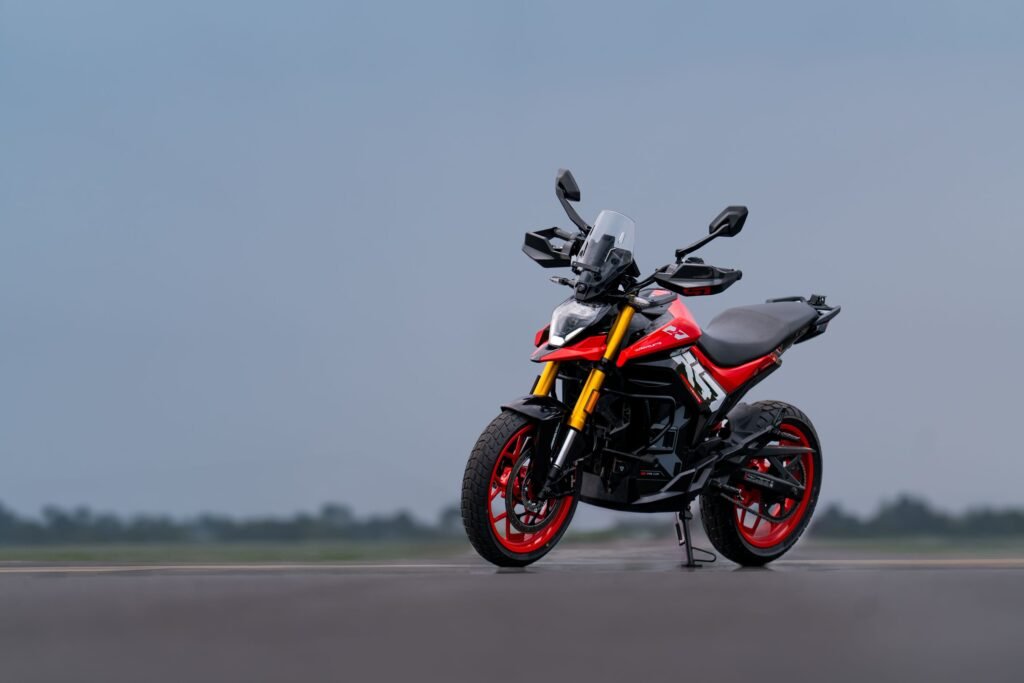
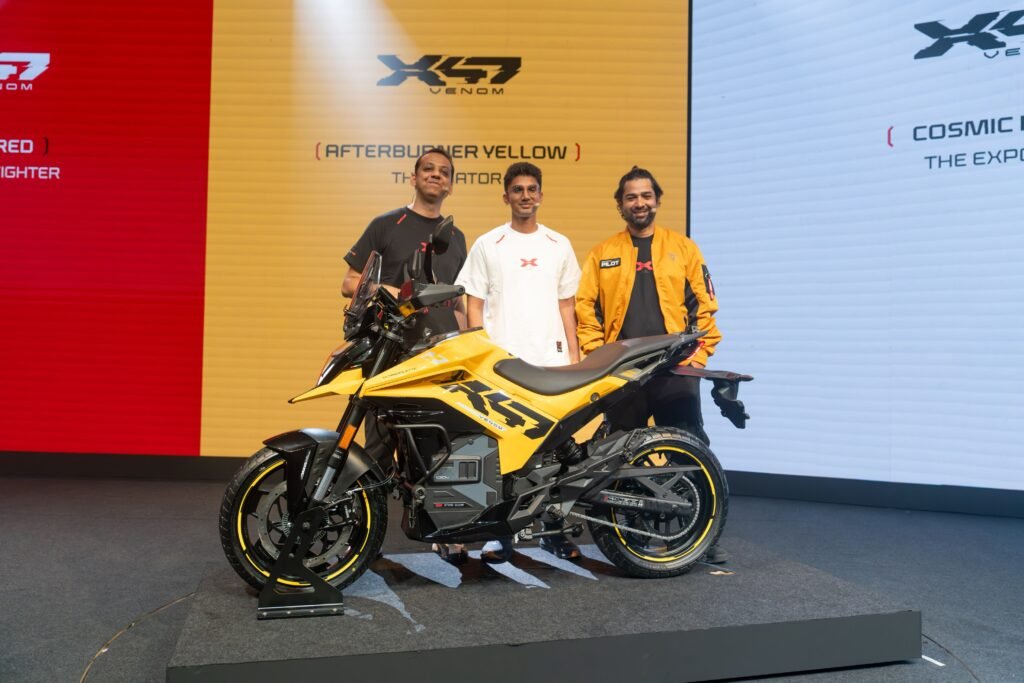
The Bengaluru- based E2W maker Ultraviolette has launched the X-47 Venom last Thursday, an electric motorcycle that it says is lighter, quicker and smarter than anything it has built before. The first 5,000 buyers get it at an introductory ₹2,65,000, and the price starts at ₹3 lakh after that. Bookings opened on launch day, and deliveries begin in November. Europe is next: the bike launches in 20 countries there, with a formal unveiling at EICMA in Milan on 3 November.
Big Idea
Why does a motorcycle company keep talking about aeroplanes? Because that is where its heart is. “We started Ultraviolette to put India on the world map,” says Mr. Narayan Subramaniam, CEO and Co-founder, Ultraviolette. The company calls itself “technology in motion”, and a large part of its R&D team comes from aviation.
Think about what every rider wants – more power, but not more weight. More torque, but under control. Quick acceleration, but without losing range. Electric bikes make these trade-offs harder, so Ultraviolette builds safety, mechanics, aerodynamics and electronics together, as an aircraft maker would. The company’s CTO Mr. Niraj Rajmohan says new ideas often reach aerospace first, and chips used in data centres today may power bikes tomorrow. Teams inside the company work on separate projects with two-to-three-year timelines, and the Venom’s new VX100 platform is what happens when several of them finish together. Mr. Subramaniam says the company built it in two years, a job that usually takes five to seven years.
Weight Loss
The first big trick was shedding 20 kg. “In the automotive world, a 10 kilogramme or 10% reduction in a vehicle platform is an incredible achievement,” Mr. Subramaniam says. Mr. Rajmohan explains the problem; electric cars can weigh 300 to 600 kg more than their petrol twins, because more battery means more weight. “That approach wouldn’t work” on a two-wheeler, so the team cut every part to the bare minimum without losing capability. The result, he says, is a bike that now weighs about the same as petrol motorcycles of a similar price and capacity. Less weight means more punch. The Venom does zero to 100 km/h in 5.9 seconds, which Ultraviolette calls the quickest Indian-made motorcycle, petrol or electric.
Power Pack
Inside sits the new SRB-11 battery with 11 kWh of usable energy. Chief Product Officer Mr. Vinayak S Bhat says it is India’s largest motorcycle battery, yet about 15% lighter than the previous version. The secret is cooling; most makers cool a cylindrical cell from its side, which removes heat at three watts per metre-kelvin. Ultraviolette cools from the end, a patented method that reaches 15 watt per metre-kelvin. A cooler pack wears less, which, according to him, backs an eight-year warranty, besides supporting 12 kW DC fast charging.
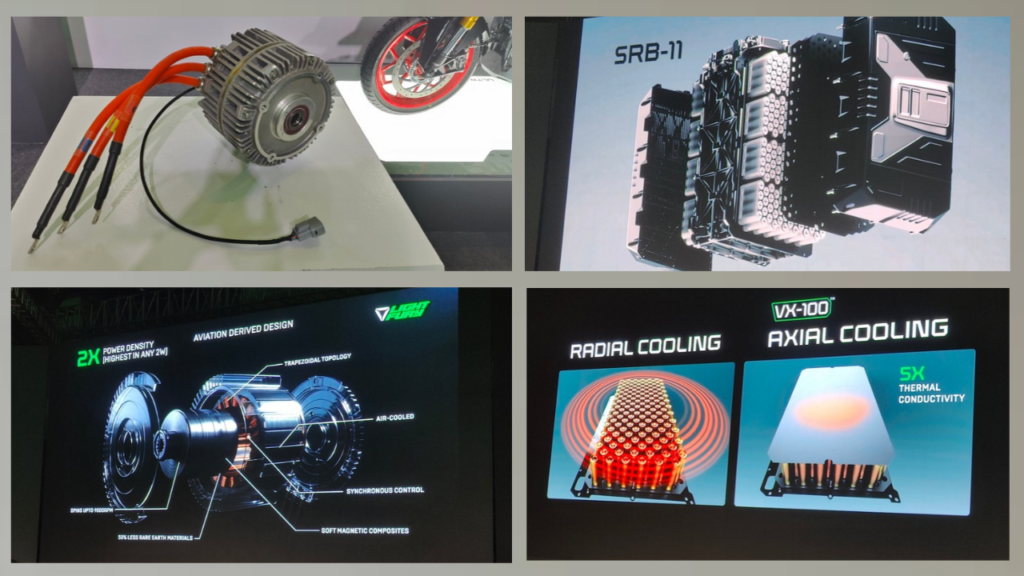
Better cooling shows up in riding. The bike’s full-power “ballistic mode” now works across 90% of the charge range, up from 70%. Regenerative braking, which feeds power back while slowing, can recover over 10 kW and now works at every charge level. In the city, riders mostly use level six or seven of its nine levels and barely touch the brakes, he explained.
Tiny Muscle
The controller, the brain that manages the torque, weighs about 2.6 kg, against roughly 6kg for a car. “It delivers 30 kW delivering over a thousand amps of current while operating at 25,000 hertz and being 40% lighter than our current generation, incredibly small, incredibly powerful. The UV Light Fury motor is 25% to 30% lighter and twice as power-dense, with 550 Nm of torque at the wheel. To show what that means, the team filmed the bike pulling 12,000 kg on level ground.
Safety Net
The battery has six layers of protection. The sixth is a pyro-fuse, which Mr. Bhat calls a first on any two-wheeler. It works like the part that triggers an airbag, snapping the main connector within two to three milliseconds of a fault.
For the road, Mr. Rajmohan says one in three accidents involves a rear impact. So, the bike carries a 77 GHz radar that watches up to 200 metres behind and warns of danger. Last year Ultraviolette put this on a ₹2.49 lakh bike. The next two-wheeler with one, he says, costs over ₹20 lakh. The bike also gets traction control, dual-channel ABS and stability control.
For the rider, there is B-MAX, an airbag vest – a reusable rider safety vest. If the rider is thrown off, it inflates in under 200 milliseconds to protect neck, spine, hips and chest.
Smart Bike
A new vehicle control unit with a 1GHz processor links the battery, motor, radar, cameras and display, and can react in microseconds. A seven-inch touchscreen works with front and rear cameras. They record every ride, eliminating helmet camera, and the footage helps with insurance claims. The rear view also helps in tight parking spots.
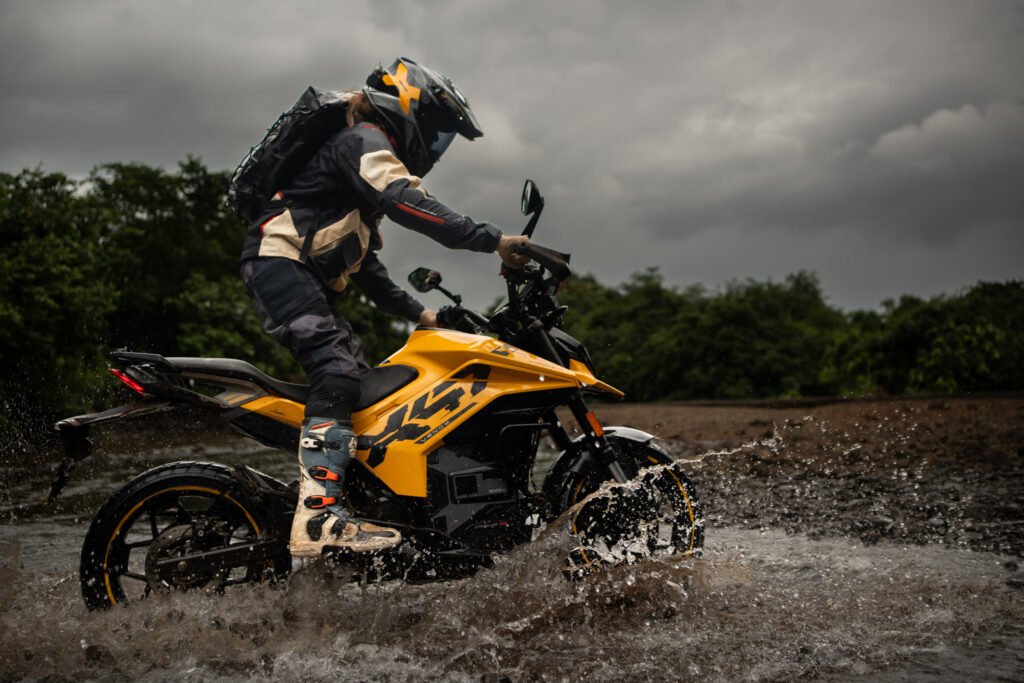
Riders can charge the bike with just a cable, comes with the bike, at any 16-amp socket, even at a roadside dhaba. A lithium auxiliary battery replaces the usual 12-volt lead-acid one, which industry data links to half of all breakdowns. Cruise control adds about 10% to highway range.
Open Plug
The bike does not use a private charging standard. It follows the government-mandated one and works with Bolt.Earth, which has about 500 DC fast chargers now. Every month, thousands of Ultraviolette bikes charge at Bolt chargers, the company says, and more partnerships are on the way. It also runs its own highway network, which it uses to fill gaps that others do not cover. Rider data shows where those gaps are. Between on-board charging, DC fast charging, a home charger and car-charger adapters, the idea is that the rider can plug in almost anywhere.
Money Math
The Venom is claimed to cover 343 km on a single charge (IDC). Mr. Rajmohan admits that IDC is a comparison tool: last year’s bike had 323 km on IDC but 231 km on the tougher WMTC cycle, and the new platform helps most at high speeds. Suppose a rider has ₹1,000 to spend on fuel. On a petrol performance bike, that buys about 10 litres, enough for roughly 300 km, or Bangalore to Chennai. On the Venom, the same ₹1,000 buys 100 units of electricity and takes the rider from Bangalore to Kashmir, says Mr. Subramaniam. By his rough math, running costs are one-tenth of a petrol bike’s.
Road Test
The bike has already seen lots of roads. Mr. Subramaniam says owners of the F77 and X-47, a community called the UV Squadron, have clocked over 40 million km across India, Nepal, parts of Europe and a few countries the bikes were exported to. That experience, he says, went into the Venom.
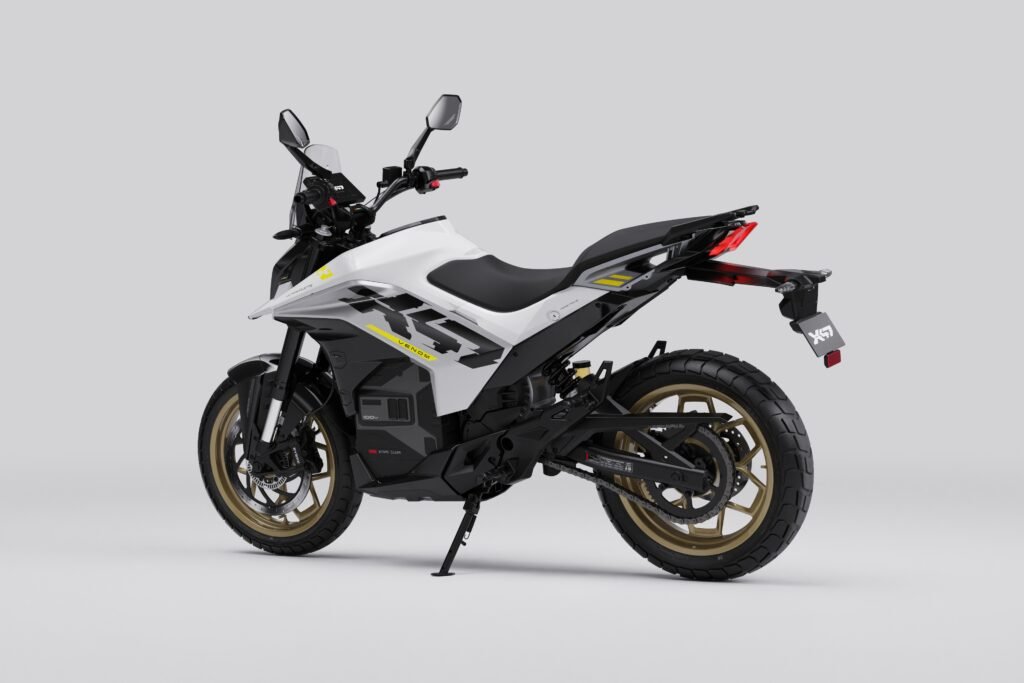
Before launch, about 20 test riders each covered 150 to 200 km a day. Every bike was fast-charged and handed to the next rider, four riders a day, for months. Rider comfort got equal care: a “riding triangle” that keeps the rider mostly upright with a sporty edge, comfortable for a pillion, and ready for city streets and weekend trails. He recalled growing up with motorcycle posters on school walls, and says he wants that same emotion. The bike has what he calls “main character energy”, and he warns that it is “super addictive.”
Team Effort
Nearly everything has been built in-house, from power electronics and embedded systems to mechanical design and simulation. The gaps are cell chemistry and semiconductor materials, where the E2W maker works with partners such as Qualcomm and TDK. More than ₹500 crore has gone into R&D. Mr. Rajmohan says today’s platforms will be supported for ten years.
Dealer Rush
On the road, Ultraviolette has about 55 showrooms, and it expects about 100 by the first quarter, of CY2027 in big cities. Mr. Rajmohan says more than 2,000 people have applied to become dealers, a number he compares to the largest carmakers. The company picks only partners with strong automotive and service backgrounds. Service usually comes first and sales after.
Big Plans
Customers can expect more from Ultroviolette, as the VX100 will go into four new products within a year. The Tesseract scooter and Shockwave are due in the first quarter, and the new F77 is “in the works.” The company sold about 3,000 motorcycles in the first half of this year and has over 7,000 on the road. It sees electric motorcycles following the path of scooters, which went from under 1% to 17% of sales. The current plant can make 50,000 to 60,000 units a year, and a new plant in Hosur is planned for five lakh a year, starting with 2.5 lakh. Mr. Subramaniam credits the machine to “a small focus group of people that refused to accept no for an answer.”