Tenneco’s journey mirrors the auto industry’s shift—from mechanical to mechatronic, and from standalone components to integrated systems—while staying focused on one constant – delivering a better driving experience.
For years, a shock absorber had a simple job—absorb road impact and keep the ride stable. Today, that role has changed completely. Modern vehicles demand much more. A suspension system now has to manage comfort, handling, stability and durability—all at once. And it has to do this across very different conditions, from smooth highways to broken rural roads. For companies like Tenneco, this shift is not just about improving a component—it is about rethinking its entire engineering approach.

Speaking to this publication, Mr. Arvind Chandra, Chief Executive Officer, Tenneco India, said, the change is being driven largely by the rise of SUVs and the growing expectation of premium ride quality. These vehicles are heavier, more powerful and often used across varied terrains. This means the shock absorber must be both strong enough to handle high impact (more so in the case of EVs that carry heavier batteries, higher torque delivery and frequent regenerative braking) and precise enough to deliver comfort.
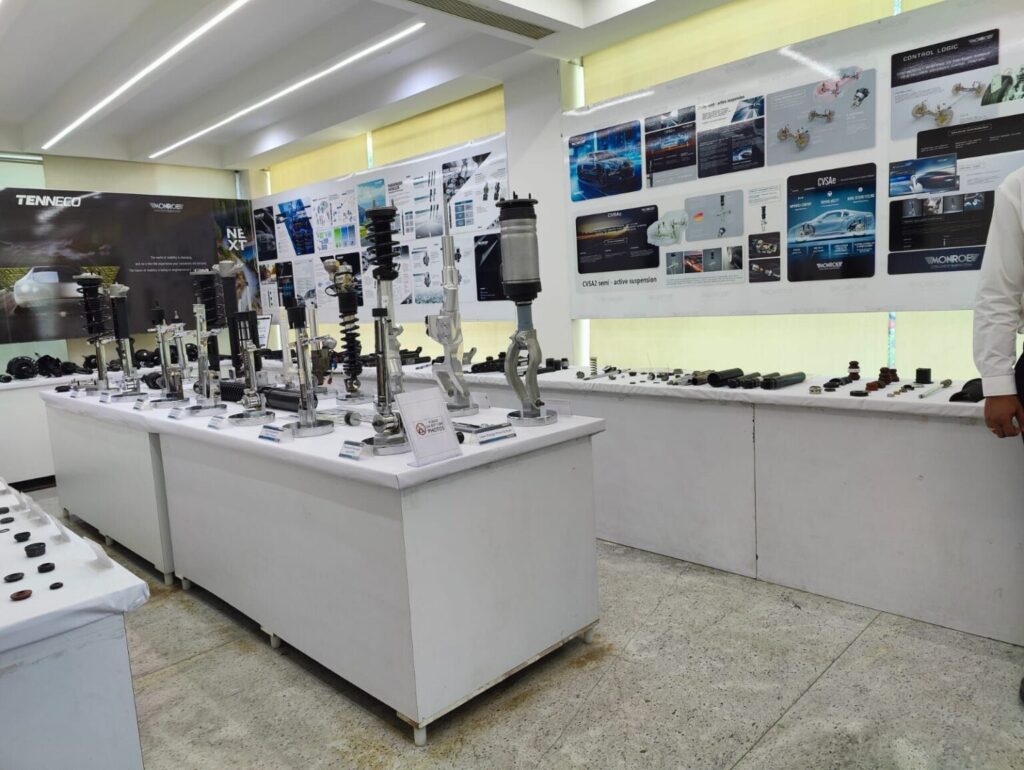
To meet these demands, Tenneco already brought advanced technologies such as DaVinci DCx (double comfort extreme) with a unique set of shim stacks, frequency-dependent damping and advanced hydraulic rebound system. These systems allow the damper to behave differently depending on road conditions—soft when needed for comfort, and firm when required for control. The result is a non-linear damping response that improves both ride quality and driving confidence. Leading SUV maker Mahindra debuted the DaVinci technology while launching the XUV 7XO a few months ago.
But achieving this balance is not easy. The system must be finely tuned, yet robust enough to last 10 to 15 years in tough environments like India. This combination of precision and durability defines the new challenge in suspension engineering, he pointed out.
At the same time, the pace of development has changed dramatically. What once took two to three years is now expected in five to six months. For Tenneco, this means strengthening its R&D capabilities, building faster validation processes and focusing on designs that are compact and lightweight, he said.
Move Towards New Mobility
The company is also aligning itself with a larger shift in the industry—the move towards software-defined vehicles. In this new architecture, vehicles are increasingly controlled by central computing systems supported by zonal architecture. OEMs expect subsystems, including suspension, to integrate seamlessly, almost like plug-and-play modules. This opens up possibilities such as driver-selectable modes for comfort or performance.
For a company rooted in mechanical engineering, this presents both an opportunity and a question. Should it remain a specialist in high-performance components, or evolve into a full system integrator combining hardware, electronics and software? Mr. Chandra said, for now, Tenneco is taking a balanced approach—continuing to lead in mechanical innovation while partnering for electronics and software where needed. At the same time, it is exploring ways to expand its capabilities, backed by strong financial resources and a clear long-term vision. This shift is also reshaping vehicle architecture. The industry, which moves from multiple ECUs towards zonal computing systems, bring new challenges—ensuring system redundancy, maintaining cybersecurity, and prioritising critical functions in real time.
Even in this increasingly digital world, the role of physical components remains crucial. A suspension system, for instance, must respond instantly to a sharp turn or a sudden bump—something that cannot be delayed or compromised, he explained.
Transformation in Manufacturing Operations
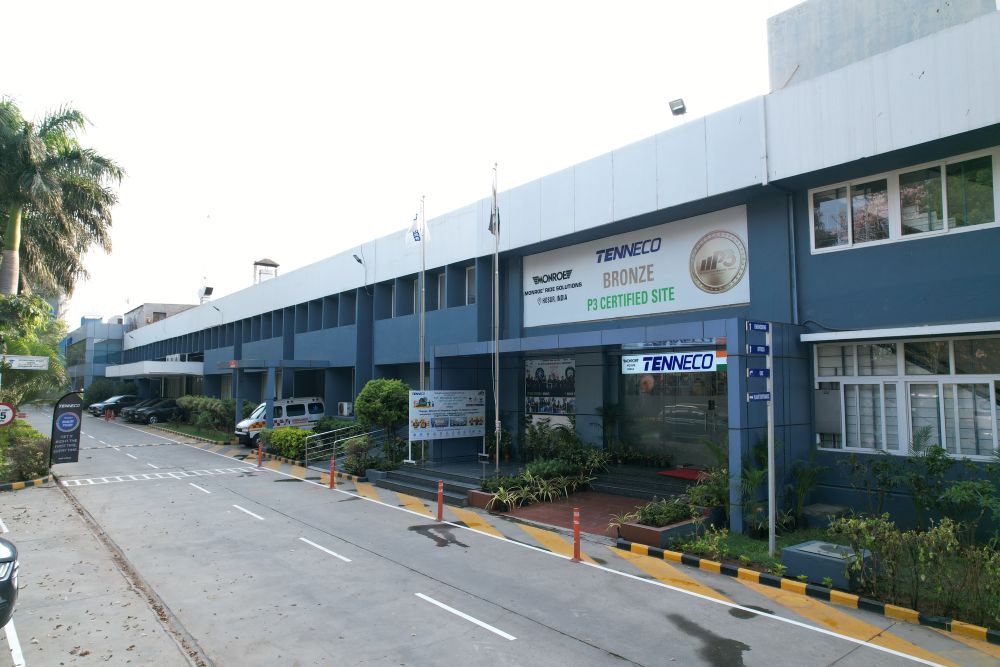
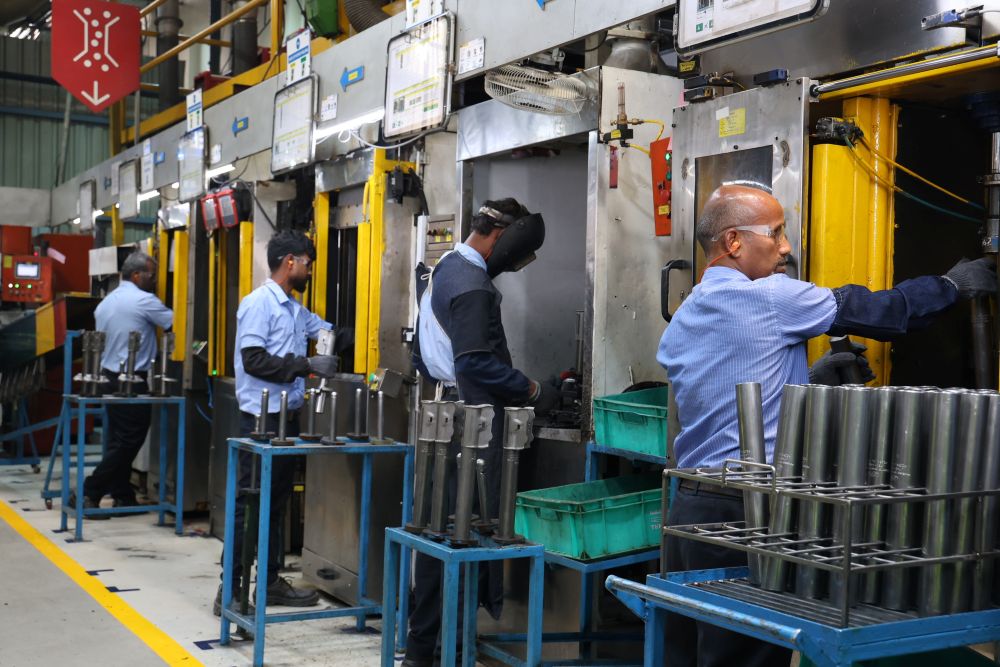
On the manufacturing side, Tenneco is preparing for this evolution with modular and standardised plants. This allows the company to adapt quickly to new product requirements, such as integrating advanced damper technologies into existing production lines. With demand rising, additional capacity expansion, including greenfield facilities, is on the horizon, he noted.
Growth Prospects
Already, one in two cars run on Tenneco shock absorbers, while two out of three commercial vehicles use its clean air systems. The company also holds a 68% share in the off-highway clean air segment. Despite its strong market position, the company is not chasing market share aggressively. With leadership positions already established—across segments—the focus now is on sustaining this strength while growing with the market, he noted.
The real opportunity, as he highlighted, lies beyond just share numbers. With the overall automotive market expanding and exports picking up, new avenues are opening up. There are also “white spaces” within existing customer relationships that can be tapped.
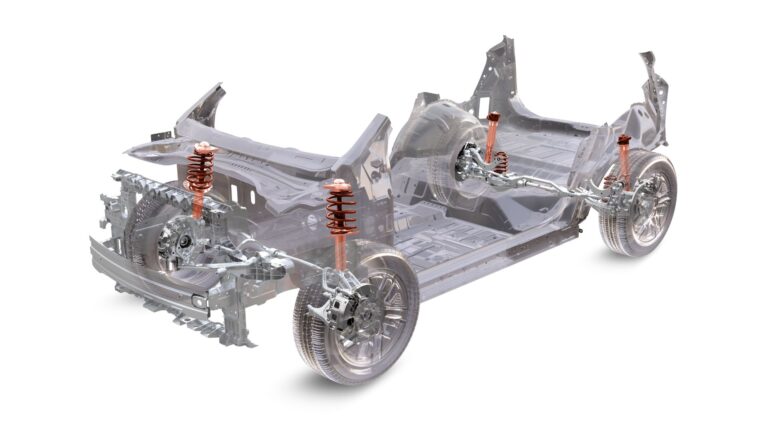
In fact, Mr. Chandra said, some of this is already visible. In key OEM accounts like Maruti Suzuki, Tenneco’s strong position in shock absorbers has enabled it to expand into areas such as clean air systems—products it has been manufacturing for decades. What started as a suspension partnership has gradually expanded into other critical components, he mentioned.
This approach—leveraging strong customer relationships to deepen presence across product lines—has been a consistent growth strategy for the company. Once it becomes part of an OEM’s ecosystem, it steadily builds on that foundation, expanding its role over time.
Looking ahead, the company remains confident of maintaining its leadership while growing through new opportunities—be it exports, new product areas, or deeper integration with existing customers, he concluded.