BMW Group and UNICEF today highlighted the first-year impact of their global BRIDGE partnership in India, showcasing strong progress toward equipping children with future-ready skills. Since its launch in December 2024, the initiative has reached more than 1,10,000 children and nearly 400 educators across Jharkhand, West Bengal, Assam and Tamil Nadu through a mix of foundational learning support and practical STEM education.
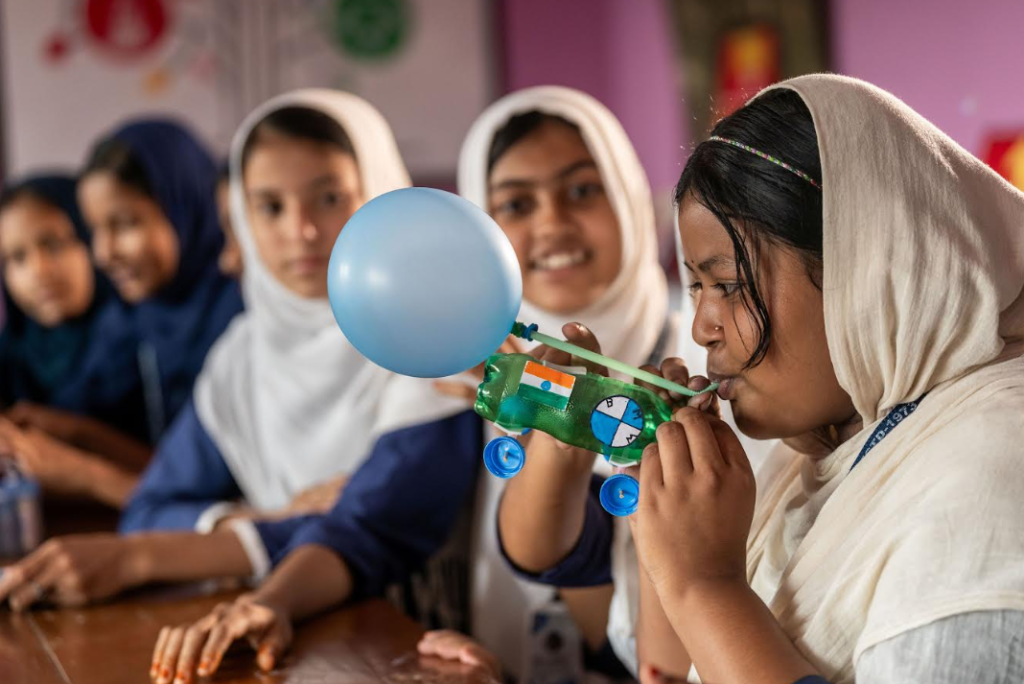
The BRIDGE initiative is part of a long-term global collaboration between BMW Group and UNICEF that runs until 2030. The programme aims to help countries strengthen STEM education (Science, Technology, Engineering and Mathematics) and improve early-grade literacy and numeracy. In India, the approach combines two key pillars: building stronger reading and maths foundations for young learners, and giving adolescents hands-on exposure to science and technology through maker spaces, STEM kits and modern labs.
The programme is implemented with active participation from State governments, ensuring that the interventions respond to local needs, school conditions and learning challenges. By supporting teacher training, improving classroom practices and creating more inclusive, hands-on learning environments, the initiative aims to make education more engaging and accessible—especially for girls, who often have fewer opportunities to explore STEM.
Highlighting the partnership, Mr. Hardeep Singh Brar, President and CEO of BMW Group India, said the collaboration reflects BMW’s commitment to education as a key driver of long-term social and economic progress. “We are proud of the strides made in strengthening foundational learning and creating opportunities for children, especially girls, to explore STEM. Through this long-term programme, we aim to create real and lasting impact on ground.”
UNICEF India Representative Ms. Cynthia McCaffrey noted that today’s job market increasingly demands STEM competencies. “Girls, in particular, miss out on opportunities to learn and practice STEM. For this reason, the BMW–UNICEF partnership is investing in making education more accessible and inclusive, especially for girls, leading to greater economic and social self-reliance,” she said.
Year-One Highlights Across States
West Bengal
A new STEM Instructional Manual with 90 hands-on activities was introduced, and 10 maker spaces were set up in government schools. A digital supervision app now helps track classroom practices such as use of learning materials, student engagement and inclusion. Since late 2024, supervisors have logged more than 8,000 school visits. Large student outreach events, including the International Day of Women and Girls in Science, engaged nearly 59,000 students and helped promote gender equity in STEM.
Assam
Hands-on STEM models and classroom experiments were piloted in 30 schools, reaching over 7,000 students. Teachers provided feedback through surveys and observations, leading to redesigned lessons for difficult topics. Activity-based experiments using locally available materials helped students understand ideas such as motion and fractions in a simpler, more relatable way.
Jharkhand
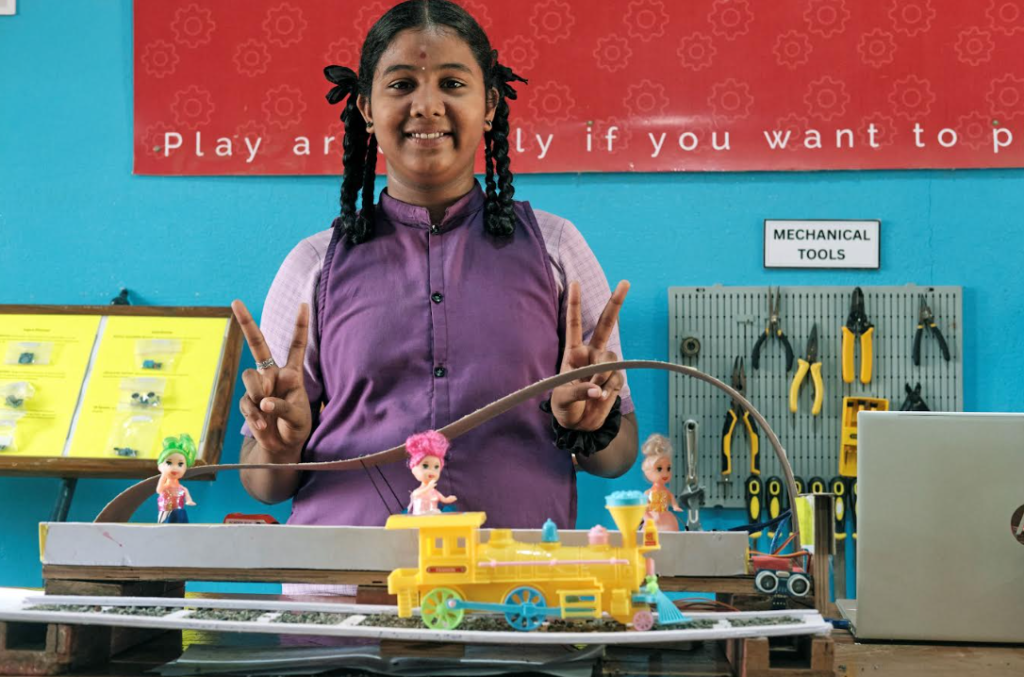
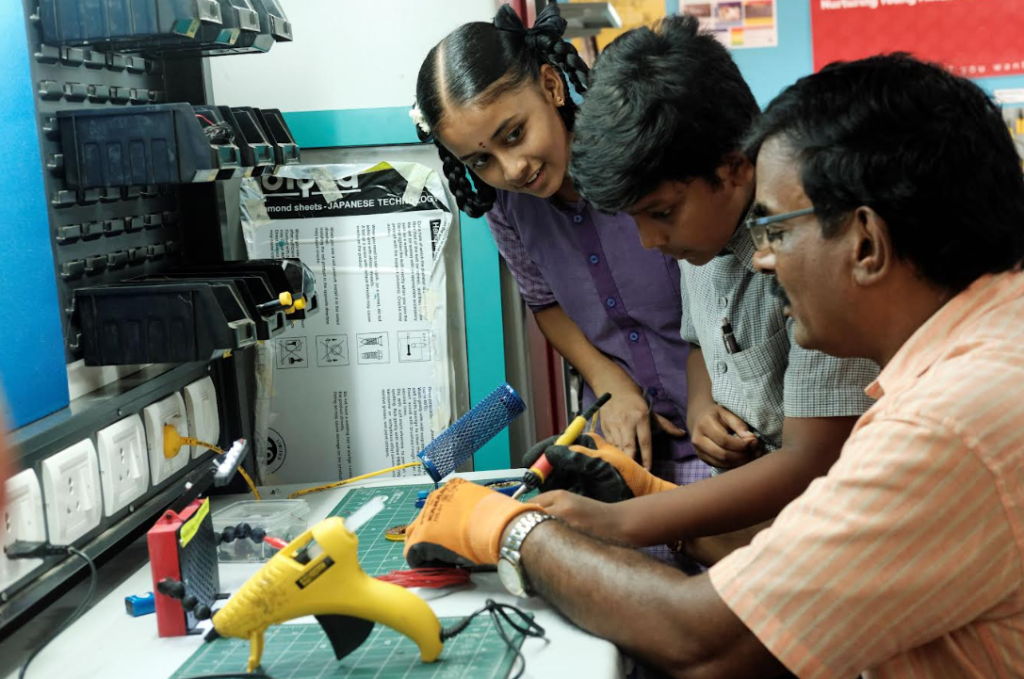
To support early learning, the initiative helped the State develop bilingual textbooks for Grades 1 and 2, aligned with the local curriculum. Jharkhand’s girls’ residential schools (KGBVs) benefited from 11 newly equipped STEM labs and STEM kits distributed across 82 KGBVs. These kits allow students to conduct real experiments using basic tools like soldering irons and batteries, making science more accessible. More than 130 activity-based modules were also developed to help students grasp challenging concepts such as algebra and molecular structures.
Tamil Nadu
A “STEM on Wheels” programme brought mobile science and maths demonstrations to rural and coastal schools, expanding access to hands-on learning for children in remote areas.
Teacher Capacity Building
Across all States, 397 educators were trained in evidence-backed teaching methods, and digital webinars reached more than 17,000 teachers. A State-level action plan was also developed to strengthen supervision systems and improve teaching quality. Regular parent–teacher engagements helped deepen home–school collaboration and build greater involvement in children’s learning.
Global Impact
Globally, the BMW–UNICEF partnership aims to reach more than 10 million children and young people every year through STEM-focused education and training across India, South Africa, Brazil, Mexico and Thailand—countries where BMW has a strong operational presence.
With early success already visible on ground, the BRIDGE initiative is set to scale further, helping build a generation equipped with the skills, confidence and curiosity needed for the future.