Automotive air-conditioning is undergoing a major shift across Europe as legacy refrigerant R-134a is being phased down under the European Union’s revised F-Gas Regulation and the global Kigali Amendment, due to its high Global Warming Potential (GWP).
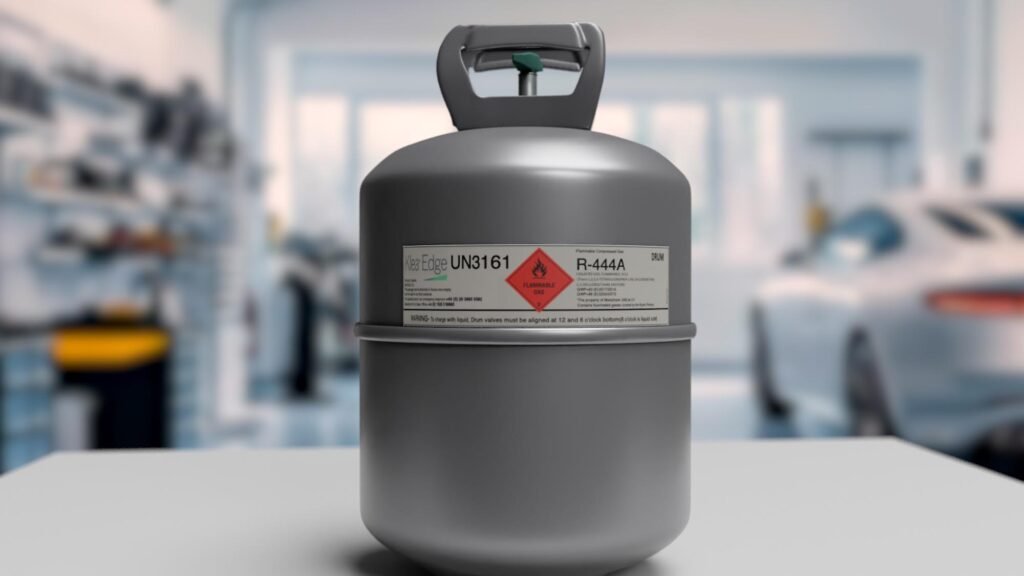
The industry has already shifted from R-134a to R-1234yf in newer vehicles, as manufacturers have redesigned systems to make up for performance reduction and to deal with the shift from a non-flammable refrigerant (A1) to a mildly flammable one (A2L).
However, technicians throughout Europe are experiencing rising costs for R-1234yf because of heightened demand and supply chain challenges. Environmentalists have also raised concerns about its high TFA (Trifluoroacetic Acid) yield.
Technicians need practical, economical, and reliable alternatives that keep all vehicles compliant and operational, helping to avoid costly mistakes and protect customers’ interests.
One viable solution is Klea® Edge™ 444A. Delivering performance, economic, and environmental advantages. Here’s what you need to know if you’re thinking about retrofitting systems currently running on R-1234yf.
Klea® Edge™ 444A as a direct replacement for R-1234yf
For vehicles that have already adopted R-1234yf, Klea® Edge™ 444A (R-444A) offers a direct alternative, built to work within existing air-conditioning systems.
Designed to be an economic alternative to R-1234yf, it is a cost-effective replacement that generates much less TFA, that delivers higher cooling performance and improves fuel usage for ICEs and driving range for EVs.
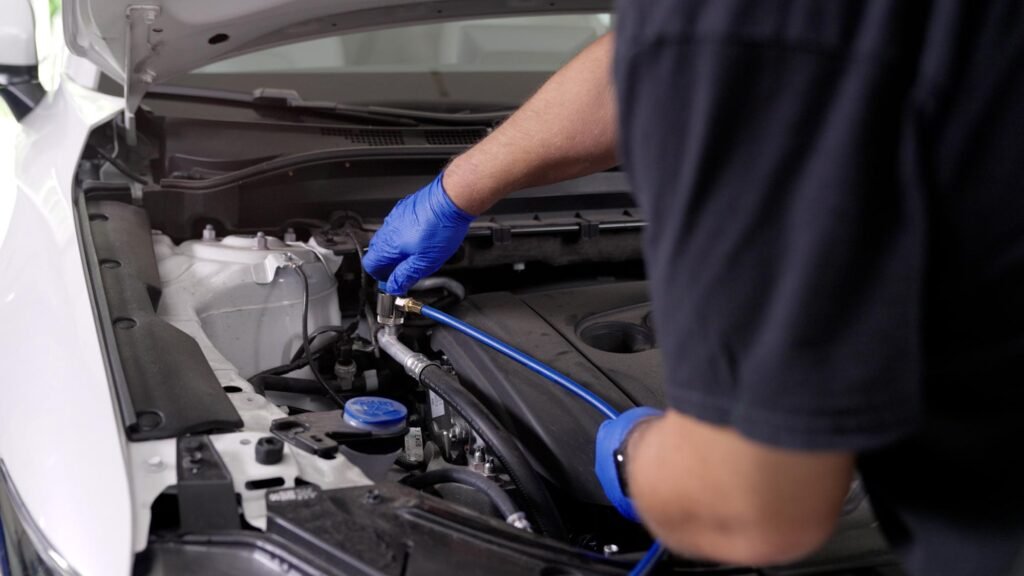
Testing shows the cabin cool-down times are noticeably faster than R-1234yf, without requiring system modifications. The refrigerant itself is designed to deliver this performance using R-1234ze(E), R-32 and R-152a, giving technicians another option that balances performance with operating costs for consumers.
As we move towards electric vehicles, preliminary testing also shows significant advantages of using R-444A providing additional benefits by meeting the demand to cool batteries as well as the cars themselves.
With potential new PFAS regulations coming into force, switching to a low-TFA refrigerant can help garages maintain resilience, avoiding disruptions and unpredictable compliance costs.
Practicalities of retrofitting R-444A
Technicians working in the aftermarket need to stay informed, with treating retrofitting as a controlled conversion to ensure safety, compliance, and long-term reliability.
Klea® Edge™ 444A can be charged using the same procedure R-1234yf, as it shares the same flammability classifications as R-1234yf, reducing complexity in day-to-day workshop operations.
Proper system labelling remains important during retrofits, ensuring accurate service records, avoiding confusion during future maintenance, and helping garages remain compliant with regulations.
Retrofitting should start with a full vehicle inspection: confirming the existing refrigerant in the system, checking hoses, seals and compressor condition, looking for leaks, and assessing the oil.
When retrofitting, oil compatibility is critical. Contaminated or incompatible oil should be replaced, with the system flushed, if necessary, particularly if there is compressor failure.
Matching the correct oil type and viscosity ensures optimal compressor performance and longevity. Oil compatibility with existing R-1234yf lubricants further simplifies servicing, though technicians should continue to check manufacturer guidance.
Systems should be clearly labelled, including refrigerant type, oil specification, charge amount, and conversion date, protecting technicians and vehicle owners in future servicing.
Technicians can charge the system with Klea® Edge™ 444A by weight, extracting liquid from a virgin container to maintain the blend composition. The typical charge is the same as the original R-1234yf specification, ensuring both performance and compliance.
Once the system is charged, the A/C can be turned to max to check high and low-side pressures, compressor operation, and ensure the vent temperatures meet specification.
The final stage of retrofitting should include recording and displaying all details of the retrofit – refrigerant type, oil type, charge weight, technician, and date.
To support the transition, Orbia is partnering with organisations such as Nunchi Climate Group, delivering technical training sessions focused on A/C installation and retrofitting. Such training and adoption of these advanced refrigerants allow workshops to ensure compliance, safety, supply, and dependable pricing whilst protecting the environment and the continued delivery of dependable service.
To find out more about how Klea® Edge™ 444A could benefit your garage, visit the Orbia Fluor and Energy Materials team at stand Hall F10, Booth M31 throughout Automechanika.