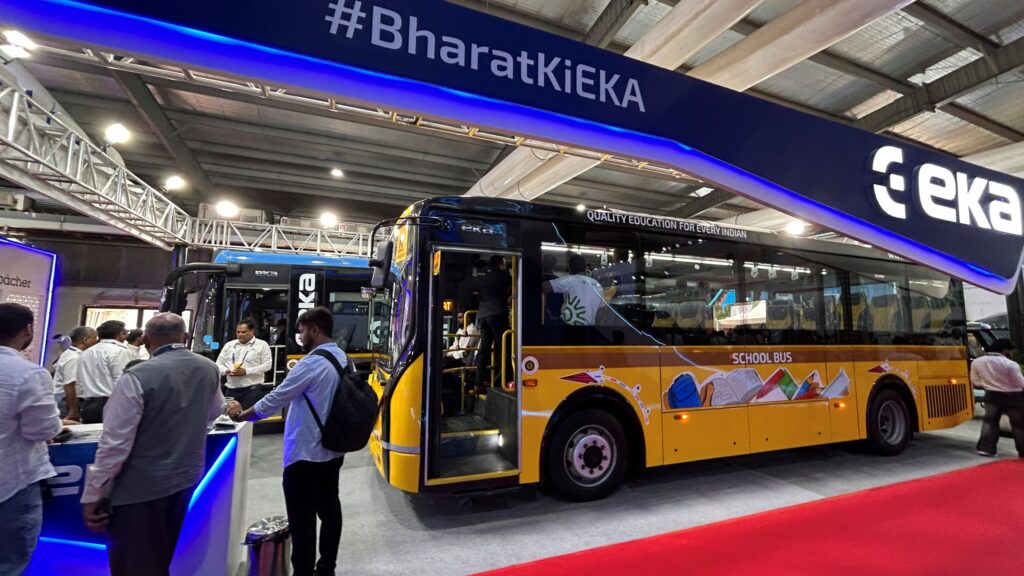
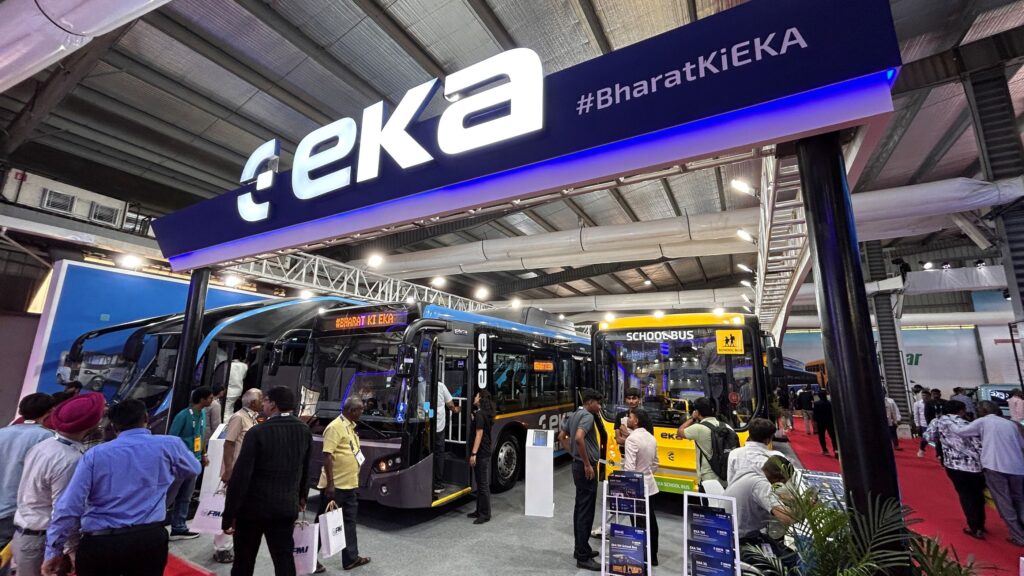
At the recently concluded PRAWAAS 5.0 exposition, EKA Mobility has launched two new products — a 9-metre electric school bus and a 13.5-metre electric intercity coach — while also displaying its low-entry bus, small commercial vehicles, and three-wheelers. Taken together, the display covered the company’s entire passenger segment range, from three-wheelers all the way to full-size buses.
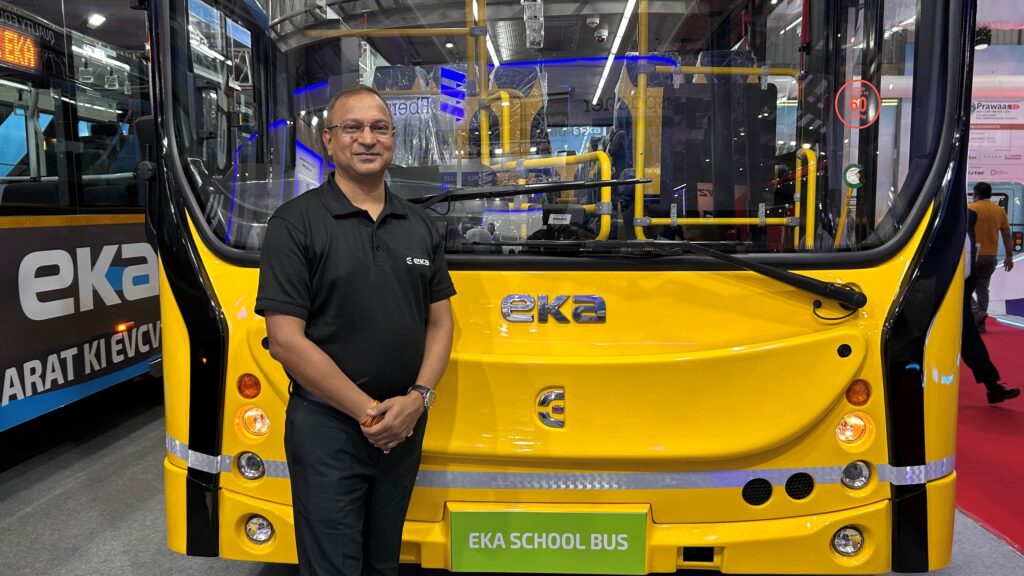
Speaking to this publication, Mr. Amit Kumar Gupta, Head of SCV at EKA Mobility, said, the school bus launch reflects the company’s strategic move. The segment is seen as one of the most promising areas for EV adoption in the coming years, as schools and parents increasingly look for cleaner, safer alternatives to diesel-powered buses. The 13.5-metre intercity coach, on the other hand, targets the growing demand for comfortable, sustainable long-distance travel — a segment that is just beginning its electric transition.
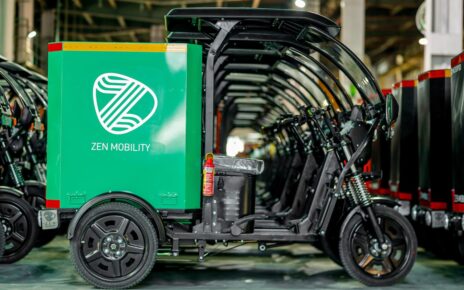
Touching upon the small commercial vehicle space, he said, EKA Mobility entered the three-wheeler segment six months ago with a three-seater and a six-seater. EV penetration in the three-wheeler segment currently stands at around 35% of total industry volumes, and the company expects that to grow to 50% within two years. The total three-wheeler market runs at approximately six lakh vehicles per year — a significant opportunity that the company is positioning itself to capture. Cargo variants in both three-wheeler and four-wheeler formats are also in the pipeline, and expected to be launched within the next two to three months.
Market Focus
Mr. Gupta said the company is targeting a 10% market share in the segments it operates in. Geographically, northern and eastern India are currently the strongest markets for EVs, while the west and south remain dominated by CNG and diesel. The OEM sees these regions as the next wave of growth as the transition gathers pace.
On the technology front, the three-wheeler range comes with a reverse throttle technology — new to the segment — that enables regenerative braking, feeding energy back into the battery and extending range. The result is a claimed range of 190 km on a single charge, which the company believes is the best in its class. All its vehicles currently use fixed batteries, with swappable options being evaluated based on future market demand, he said.
Across its entire product range, the company has developed an in-house telematics and vehicle tracking system called EKA Connect, fitted as standard on all its vehicles. Building this capability internally rather than sourcing it externally is a point of differentiation, he highlighted.
For the company, the expo delivered exactly what the it came for — strong enquiries across buses and three-wheelers, and a platform to put its full range in front of operators and fleet buyers from across the country.