At PRAWAAS the company has launched the GALAXY — an electric sleeper-seater coach that offers the highest seating capacity and luggage space in its segment, giving long-distance route operators a compelling combination of premium passenger experience and the potential to boost revenue by 30 to 40% over conventional buses.
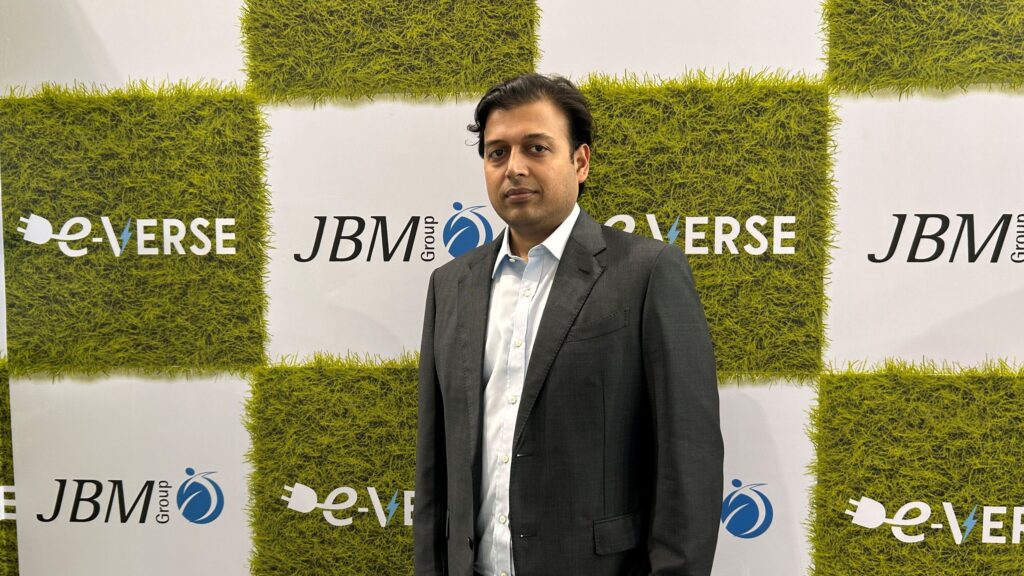
JBM Electric Vehicles has launched the GALAXY — the indigenously developed 100% electric sleeper-seater luxury coach — at PRAWAAS 2026, marking a significant step forward for long-distance electric travel in the country.
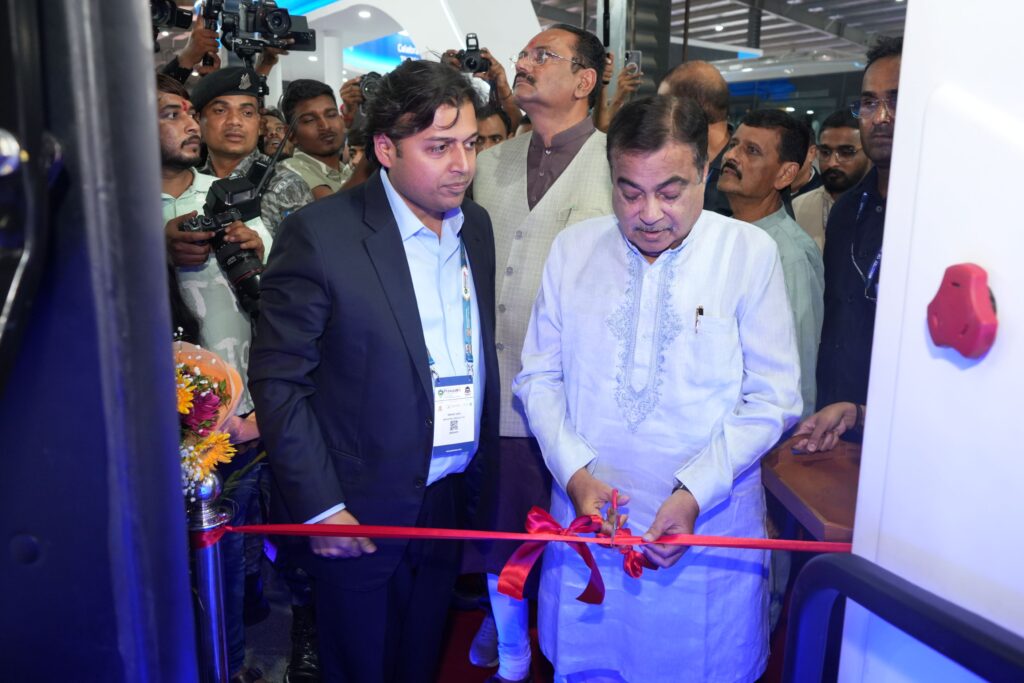
The vehicle was launched by Mr. Nitin Gadkari, Union Minister of Transport & Highways along with Mr. Nishant Arya, Chairman, JBM Electric Vehicles. The new coach comes with 22 Maharaja reclining seats + 20 plush sleeper berths with an onboard washroom. The bus is also available in another seat configuration offering 24 Maharaja reclining seats + 20 plush sleeper berths (without washroom). It also offers the highest seating capacity in its segment paired with highest luggage space, a combination designed to strengthen operator revenue potential and passenger convenience on longer routes. With this launch, the coach will be available in three variants i.e. seater, sleeper & seater and sleeper.
Speaking on the occasion, Mr. Arya said, “The next generation GALAXY has been developed to meet the evolving expectations of premium inter-city travel with a sharper focus on luxury, utility and business efficiency. It reflects our commitment to creating electric mobility solutions that are sophisticated in design, practical in operation and aligned with the future of sustainable transportation.”
Styled with a European-inspired design language, the coach features luxurious interiors, panoramic windows, individual AC louvers and reading lights, USB charging sockets, generous leg and head room, etc. setting new benchmarks in passenger comfort. The vehicle also comes with a robust and comprehensive safety and performance package with an ADAS-enabled architecture, EBS and ABS, hill-hold, live surveillance cameras, emergency exits, etc., to ensure enhanced passenger safety on long-distance intercity travel.
In addition, the coach comes with kneeling and height adjustment feature for easier boarding along with electronically controlled air suspension. It is powered by high-efficiency modular battery packs paired with fast charging and regenerative braking. The overall package is aimed at delivering a seamless long-distance travel experience to the passengers.
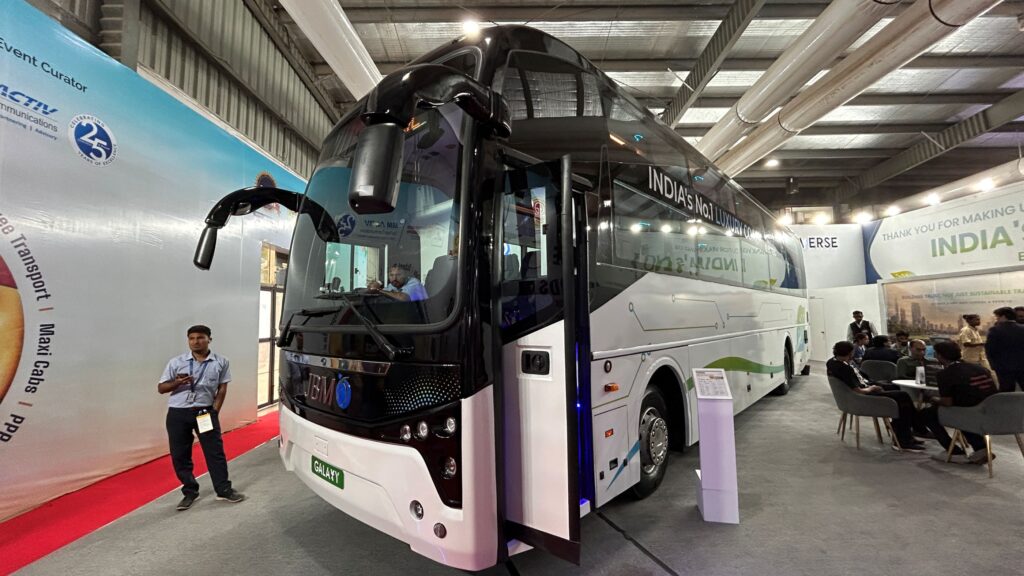
Speaking to this publication in an exclusive interview, Mr. Arya said, the GALAXY, offered in three different configurations with a Maharaja seat option, gives operators the flexibility to configure the bus for different passenger preferences and route requirements. It is designed for intercity, medium-distance, and short-distance travel, combining the comfort of a premium sleeper with the economics of electric propulsion.
For operators, the numbers are compelling. Mr. Arya said the GALAXY can enhance operator revenue by 30% to 40% over conventional buses; driven by the premium experience it delivers and the flexibility to customise the configuration based on the specific application. The focus is firmly on total cost of ownership rather than upfront cost — a lifetime commitment to customers that defines the company’s approach to the market.
The GALAXY is built on in-house software, firmware, and hardware, with high-density power electronics and energy-efficient systems that improve reliability and range. Ultra-fast charging capability and specially selected semiconductors ensure the bus stays on the road offering maximum uptime. The ride experience, according to him, is designed to feel less like a bus journey and more like air travel — trouble-free, comfortable, and distinctly premium.
As EV penetration in the sleeper and intercity bus segment currently stands at around 4.5 to 5%, the company sees significant headroom ahead, with intercity routes, city buses, staff transportation, school buses, airport vehicles, and international markets all identified as sweet spots for growth, he added.
The Genesis
India’s cities are choking. Of the 20 most polluted cities in the world, 14 are in India — and transport is one of the biggest contributors to that pollution. Public transportation alone accounts for 90% of all transport. Yet India has fewer than two buses per thousand people, one of the lowest penetration rates in the world. The problem is clear and so is the direction — clean, electric public transport is no longer a choice. It is a necessity.
Realising this, JBM Group, a $3.3bn global conglomerate with presence in over 37 countries globally, has been building toward this moment for nearly four decades. Starting with low-floor buses that redefined passenger comfort and safety on Indian roads, the company has steadily expanded its portfolio to cover city buses, intercity coaches, school buses, staff buses, tarmac buses and special purpose vehicles— building the in-house manufacturing capabilities to serve virtually every segment of public transportation. That foundation is now being put to work on its most ambitious mission yet: taking India’s electric bus story to the world.
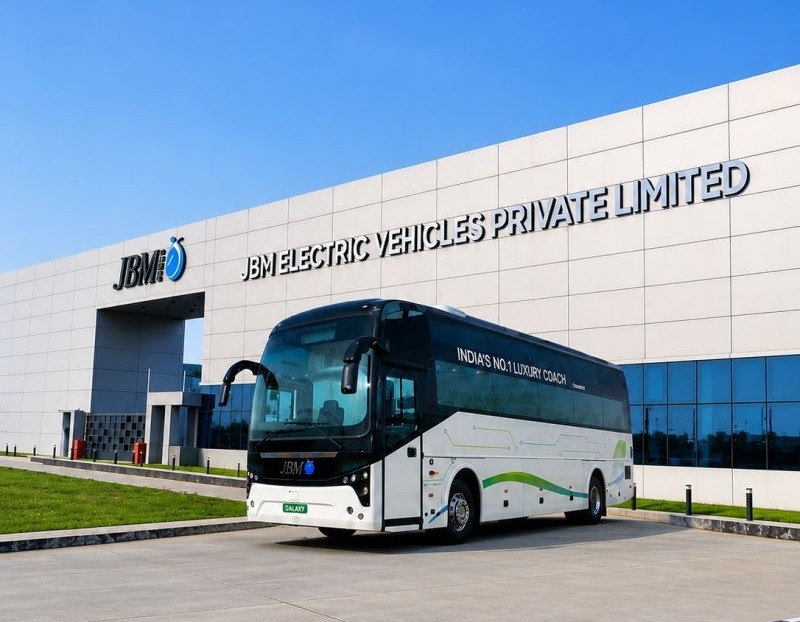
JBM’s ECO-LIFE electric buses, manufactured under JBM Electric Vehicles, offered in 9-metre and 12-metre formats — were, according to the company, India’s first 100% electric, zero-emission buses. Designed and manufactured under the company’s ‘Think Global, Act Local’ philosophy, they are highly localised for Indian conditions while being built to meet global standards. They produce no tailpipe emissions, generate no engine noise, and are engineered for high uptime, low maintenance, and maximum range on a single charge. The economics work too — JBM’s electric buses are designed to deliver significant total cost of ownership, making the transition to electric not just the right thing to do, but the financially sensible one.
What sets JBM Electric Vehicles apart is the depth of its ecosystem. The company does not just supply buses — it provides end-to-end EV solutions, including charging infrastructure and EV aggregates such as battery technologies, creating a complete Well-to-Wheel deployment model. With its electric bus fleet already deployed across multiple Indian States under FAME I and FAME II, PM E-bus, PM E-DRIVE and now expanding internationally, the company is taking the electric public transport model it built in India and scaling it for the world.
Powering Every Journey
Behind every electric bus that runs silently through an Indian city, and every charging station that keeps it moving, there is a battery — and increasingly, that battery, ECOBOLT, is being designed, developed, and tested right here at JBM. The company’s battery division has built one of India’s largest independent high-voltage lithium-ion battery facility dedicated to the development, simulation, and testing of advanced lithium-ion battery solutions. The scope is wide — from high-voltage and low-voltage battery systems for electric passenger vehicles, buses, and trucks, to energy storage systems and solar applications. Decades of research and development experience sit behind every cell, every module, and every pack that leaves the facility.
The batteries themselves are engineered to meet the demanding realities of commercial operation. Fast charging, long service life, high energy density, dust prevention, and waterproofing are not optional extras — they are built in as standard. For fleet operators who depend on their vehicles running reliably through long shifts in difficult conditions, these are the specifications that matter most.
Energy storage is the other dimension of this story. JBM’s Energy Storage Systems are designed to manage peak load, provide power-assisted services, and support grid stability — bringing the same engineering discipline that goes into vehicle batteries to the broader challenge of building a reliable clean energy infrastructure. It is a capability that positions the company not just as a bus manufacturer, but as a full-spectrum clean mobility company — one that can power the vehicle, charge the vehicle, and support the energy ecosystem that makes it all possible.
Charging India Forward
An electric bus is only as good as the infrastructure behind it. Getting the vehicle right is half the story — the other half is making sure it can charge reliably, quickly, and wherever it needs to. That is the challenge JBM Electric Vehicles set out to solve when it expanded into electric vehicle charging infrastructure, and it has approached it with the same end-to-end thinking that defines everything else the company does.
The company’s charging infrastructure journey, ECOFUEL, began where the need was most immediate — at the bus depot. Electrifying depots to enable electric public transportation gave the company a deep understanding of what large-scale, high-demand charging actually requires. From there, the model has expanded to serve cab aggregators across major Indian cities, with charging sites that blend AC slow chargers for overnight top-ups and DC fast chargers for vehicles that need a quick turnaround mid-shift.
Everything is built to comply with the frameworks set by the Ministry of Power, NITI Aayog, and the FAME II policy — giving operators the confidence that the infrastructure they invest in today will remain relevant and compliant as regulations evolve. The systems are also technology-agnostic, designed to adapt as charging standards and vehicle technologies develop, so that an investment made now does not become obsolete in three years.
What makes JBM Electric Vehicles’ charging proposition genuinely comprehensive is the breadth of what it covers. From designing and planning a charging network to integrating, deploying, and managing operations on the ground, the company handles the entire journey. A 24/7 professionally managed network operations centre monitors every charger in real time, ensuring uptime and rapid response when issues arise. For fleet operators and city authorities trying to run electric transport at scale, that kind of end-to-end accountability makes all the difference.
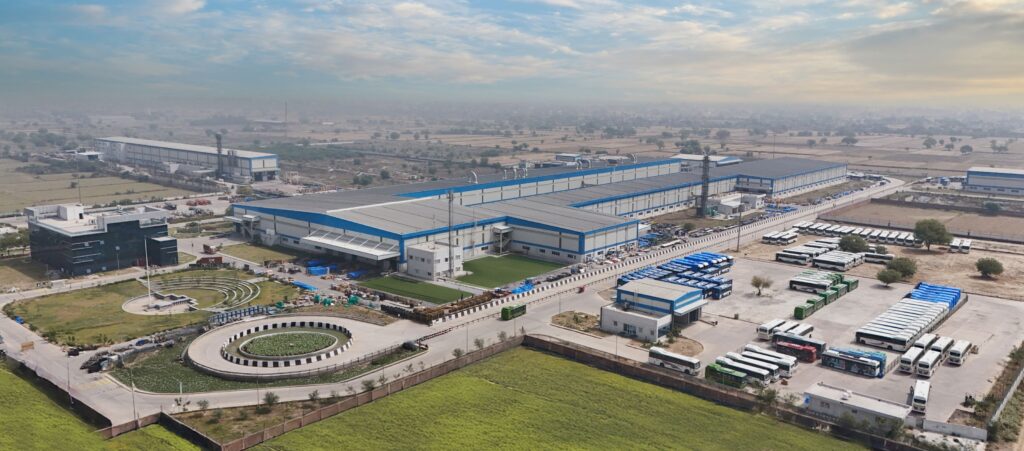
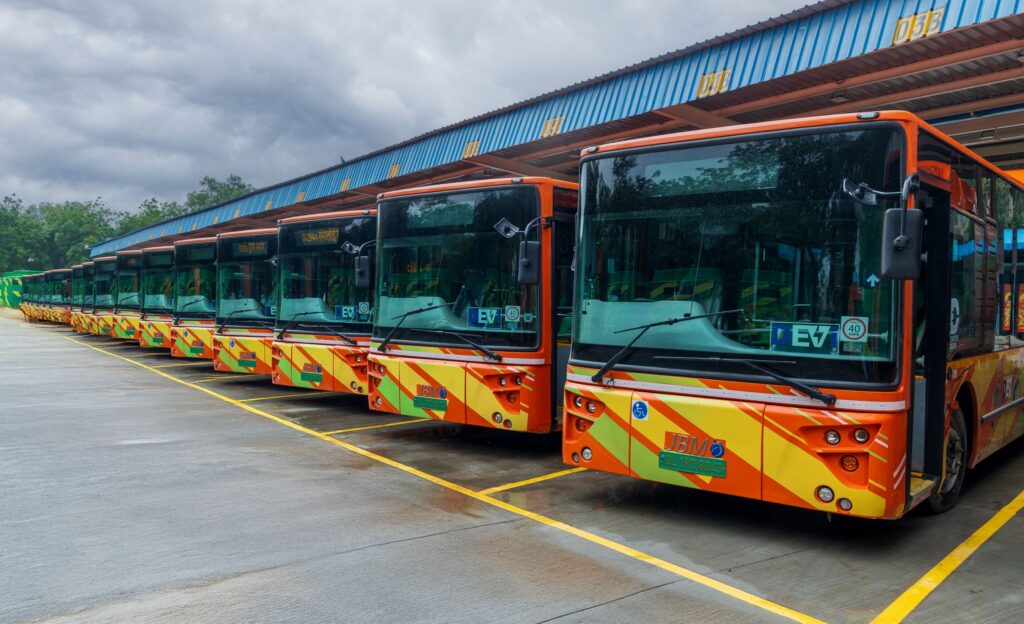
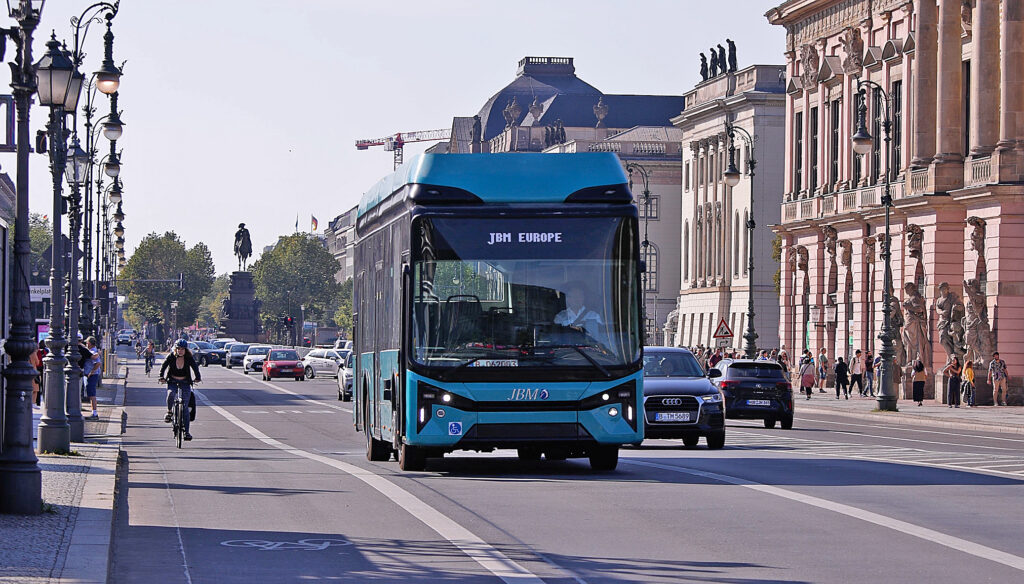
JBM EV has so far deployed over 3,500 electric buses across 40+ cities, 17 States and 18+ + major airports in India. Moreover, JBM EV staff buses are deployed in Dubai and tarmac buses in Indonesia. The company has a robust order book of 10,000+ electric buses and operates the world’s largest dedicated integrated electric bus manufacturing facility in the Delhi-NCR region. Under its 3Bn e-kms promise, JBM electric buses have already clocked 450 million e-kms, having served over 1.5Bn bus commuters globally.
Mr. Arya described JBM Electric Vehicles as the largest electric bus company in the world outside China, with a production capacity of 20,000 buses and a growing presence across India and multiple international markets. For a company of that scale, the GALAXY is more than a product launch — it is a signal about where electric long-distance travel in India is headed, and the company’s intent to lead that transition.