Buoyed by the growth of E2Ws that makes the opportunity impossible to ignore, and rising penetration — currently at just 7%, envisaged to reach 30% by 2030 — Bengaluru-based electric mobility startup E3 Electric.AI has launched the E3 Trion.
Positioned as an AI-powered intelligent scooter, it is offered in three variants: the C1, defined by its removable battery for flexible charging at home, office, or public charging points; the C1x, offering an IDC range of 165 km powered by a 3 kWh battery and one of the segment’s most efficient powertrains; and the C2, which elevates performance with a top speed of 82 km/h and 0–40 km/h acceleration in six seconds via Sport mode, in addition to the Eco and Power modes offered across all variants.
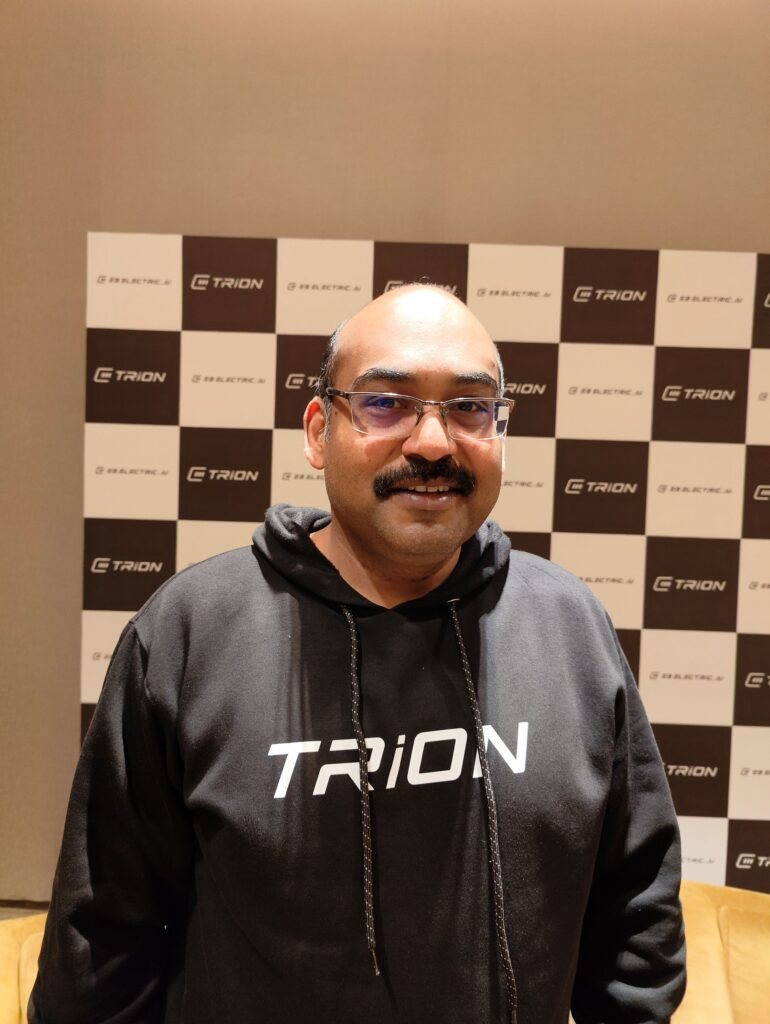
According to Mr. Sanjeev P., Founder & CEO of E3 Electric.AI, the E2W isn’t an electric scooter with an app bolted on — it is built with AI at its core, human-centric engineering, and a modular, future-ready platform. Every problem that’s held Indian families back from going electric — range anxiety, safety, service, cost — is something “we designed around from day one. We didn’t want to build just another e-scooter; we set out to build one where predictive intelligence is core to the architecture,” he said.
Speaking to this publication, he said that he spent seven years watching the E2W market closely across hundreds of markets globally, and came to a clear conclusion: the reason Indian buyers aren’t switching to electric isn’t ignorance. For every 100 searches for petrol scooters, there are 157 for electric ones. People know the benefits — that running costs are a tenth of a petrol vehicle — but they still aren’t buying. The reason, he found, is a three-part confidence problem.
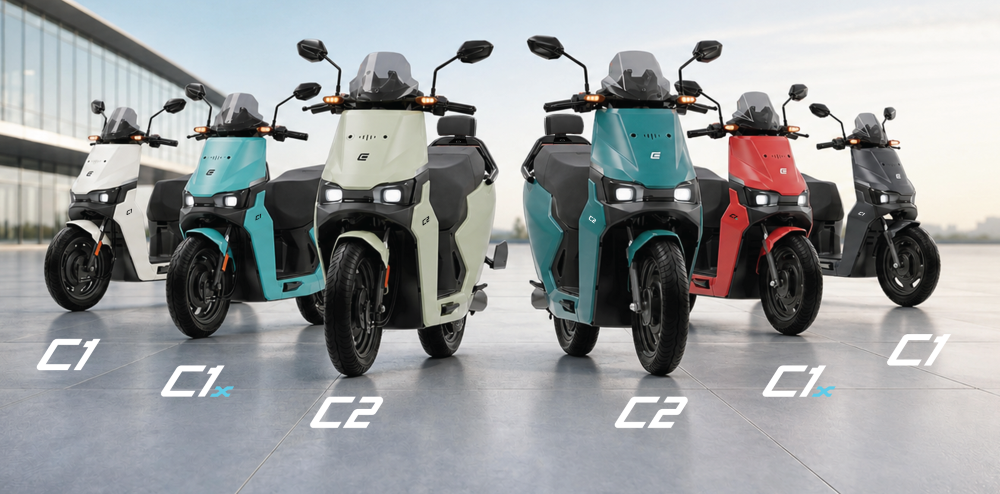
Built to Inspire
Entrepreneurship had been a constant throughout his career, so starting E3 Mobility was a natural next step — driven by a desire to build something with lasting impact. But with EVs, the challenge wasn’t the market, it was trust. “Years of studying customers across hundreds of markets revealed three key concerns. The first is ownership confidence — will the battery last, can the vehicle be resold? In India, a 2W is an asset, not just a tool, and uncertainty about longevity and resale value is a genuine barrier. The second is charging confidence, as range anxiety is real and rational. The third is safety,” he said. That thinking led to three core pillars: a modular platform supporting multiple variants and future battery technologies, AI-driven intelligence for predictive reliability, and human-centric design for safety and comfort.
Engineering the Answer
E3’s response is a scooter platform called Triaxis — named after the three-dimensional Euclidean space conceived by Euclid 2,300 years ago: length, breadth, and height. For him, those three dimensions translate into a modular platform, an intelligent ownership experience, and a human-centred approach to safety and comfort.
The Triaxis frame is built from high-grade steel engineered to handle 60% more structural stress than conventional scooter frames — because Indian roads aren’t getting better overnight, and Indian families of three aren’t going to stop riding together. Seventeen iterations of the frame design were completed before the final version was signed off, resulting in three-axis stiffness that improves rigidity and stability while optimising for the chaos of real Indian road conditions. Smart engineering kept costs in check without cutting corners on performance, he mentioned.
Designed for Every Rider
The Triaxis ergonomics were developed using anthropometry-based engineering that defines six key comfort points, calibrated for riders from a 5-foot woman to a 6.5-foot man. Seat height, reach, leg geometry, and ground clearance were optimised together, not separately — because packaging all of these on a 14-inch dual-wheel platform is genuinely difficult. The team cracked it much like a bicycle’s larger wheels roll over obstacles more smoothly than smaller ones — the same physics here delivers better ride comfort, grip, and acceleration, he highlighted.
Technology shaped every stage of development, from virtual design replacing traditional clay models to an asset-light manufacturing strategy that invested in engineering and IP rather than factories. Today, over 80 components are designed in-house, with production carried out by specialised manufacturing partners in Hyderabad — resulting in a connected, intelligent mobility platform built to make EV ownership simpler, more reliable, and future-ready.
Smart Core
The E3 TRION is powered by the E3 COMMANDCENTER, an intelligent IoT and cloud system that monitors every connected vehicle, predicts issues before breakdowns, and delivers continuous software upgrades — making the scooter smarter with every ride.
Connected Cockpit
This intelligence comes alive through the TRIPSENSE Intelligent Cockpit, merging a 5-inch INSIGHT DISPLAY with the rider’s smartphone. Together they offer 100+ features, including AI HEALTHSCAN diagnostics, predictive reports, a Smart Trip Planner, connected navigation, remote battery monitoring, dashcam, SOS assistance, and geo-fencing.
Intelligence That Matters
The scooter is connected in real time to the company’s command centre, transmitting 216 CAN signals every five seconds. The data is compressed so efficiently that a week of daily riding generates a packet no larger than a song on a music streaming platform. From that stream, E3’s patented machine learning algorithms build an AI digital twin of every battery and vehicle in the fleet — powering predictive analytics that flag potential issues before they become failures, giving riders warning rather than surprises. This is what he called an “intelligent ownership experience” — AI that’s as genuinely useful as UPI is for payments.
Visibility & Storage
The LIGHTIQ lighting system adds dual projector LED headlamps and signature rear lamps for enhanced visibility, while up to 52 litres of storage across the boot, floorboard, and glove box covers everyday essentials.
Servicing Made Simple
One of the most quietly significant engineering decisions was rethinking the hub motor. A direct-drive PMSM hub motor suits range and performance but is notoriously difficult to service. E3’s engineers invented a one-piece, free-rotating system — allowing the rotor to spin smoothly on its axis — that lets the motor’s ring detach cleanly, meaning a wheel issue can be fixed at any local mechanic’s workshop rather than requiring specialised equipment.
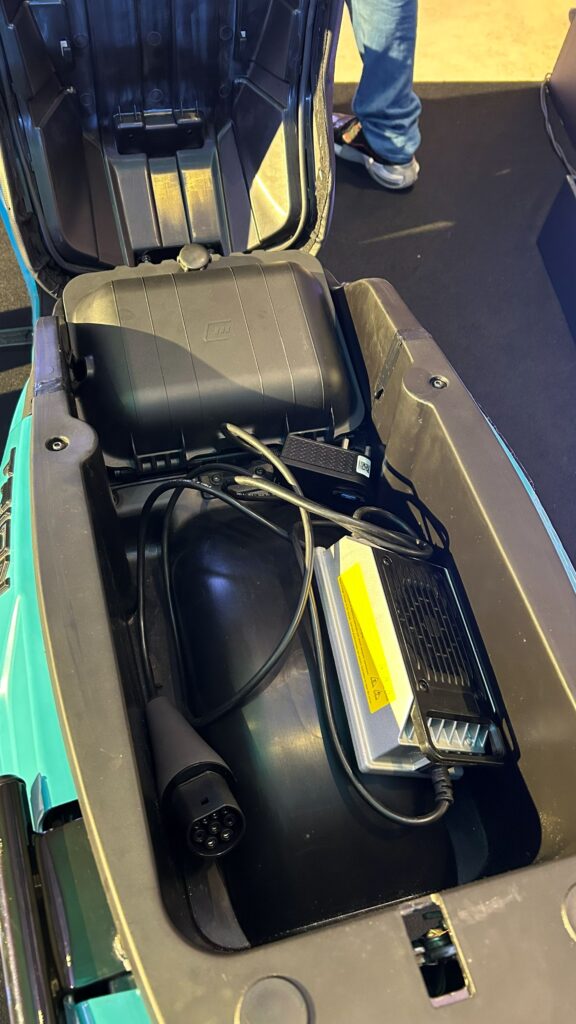
On charging, the Triaxis offers fixed and removable battery options alongside Type 7 public charging compatibility — the first scooter in India, he claimed, to offer all three simultaneously. Ten minutes of Type 7 charging adds 10 km of range. The batteries use LFP chemistry for safety, longevity, and weight, with an advanced PCM cooling system for added thermal safety.
What Comes Next
E3 Mobility has designed the Triaxis as a modular platform — meaning the same underlying architecture can be configured into multiple vehicle types for different customer segments: families, young commuters, college students, and entrepreneurs, Mr. Sanjeev concluded.