The Society of Indian Automobile Manufacturers organised its 6th International Conference on Climate Action on World Environment Day, bringing together policymakers, industry leaders, academia, and sustainability experts to discuss strategies for accelerating India’s transition to a low-carbon future. The conference, themed “Climate Action: Accelerating India’s Transition to a Low-Carbon Future,” reaffirmed the automobile industry’s commitment to sustainable development and clean mobility, with a clear message emerging from the deliberations: no single technology or fuel will deliver India’s envisioned mobility transition — progress will depend on parallel advances across electrification, alternate fuels, circular economy practices, and green manufacturing.
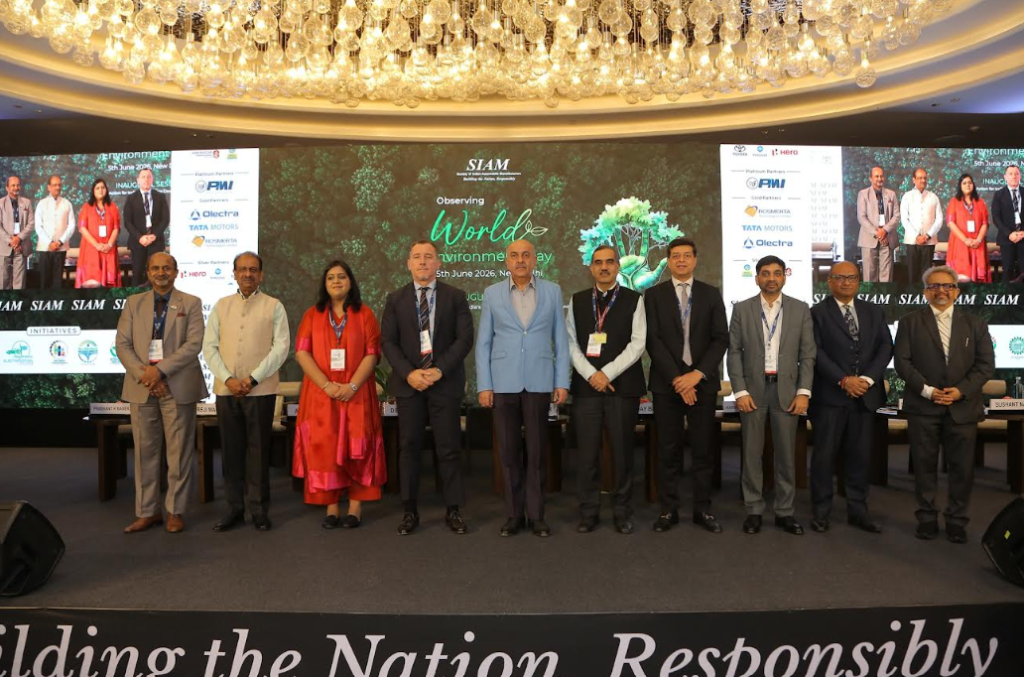
The conference opened with a focus on clean mobility and low-carbon fuels, with speakers emphasising the need for continued innovation, investment, and multi-stakeholder collaboration. Chief Guest Mr. Tarun Kapoor, Advisor to the Prime Minister of India, underlined the urgency of reducing India’s dependence on fuel imports and highlighted the country’s multi-pronged approach to clean energy — spanning biofuels, ethanol blending, flex-fuel technologies, compressed biogas, green hydrogen, LNG/CNG, electric mobility, and coal gasification-based fuel pathways. He also called for much faster EV adoption in the four-wheeler segment, noting that three-wheelers are already well on their way.
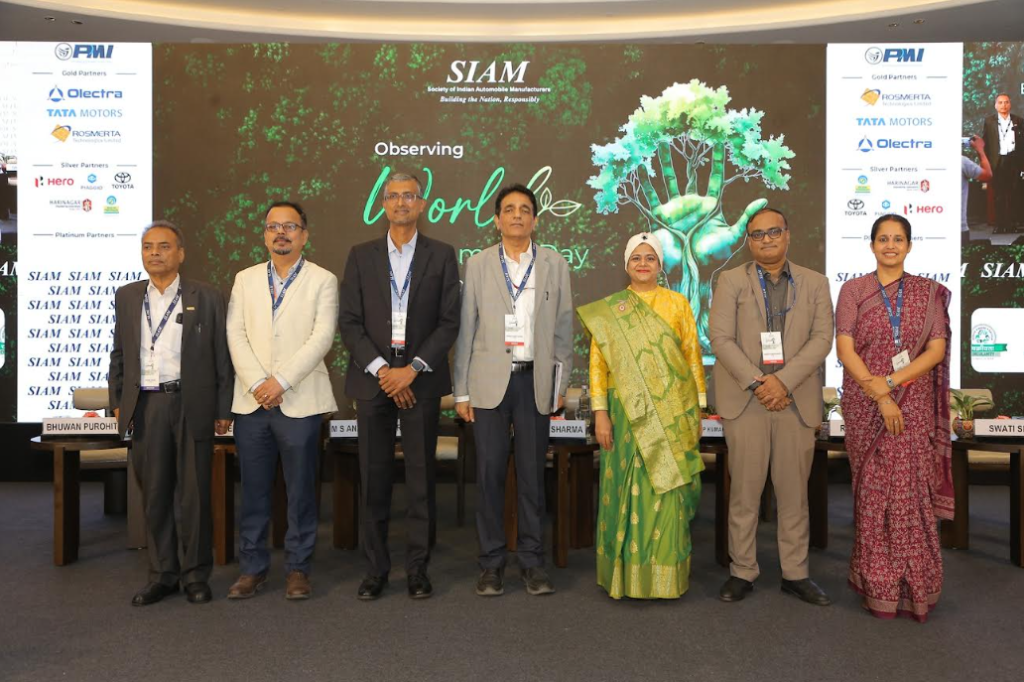
“We are living through a time of unprecedented challenges, from climate change and air pollution to energy security concerns. As the world’s largest market for two-wheelers and three-wheelers, India has already demonstrated remarkable progress in sustainable mobility. At SIAM, we remain committed to building the nation responsibly and supporting the Government of India’s decarbonisation journey,” Prashant K. Banerjee, Executive Director, SIAM.
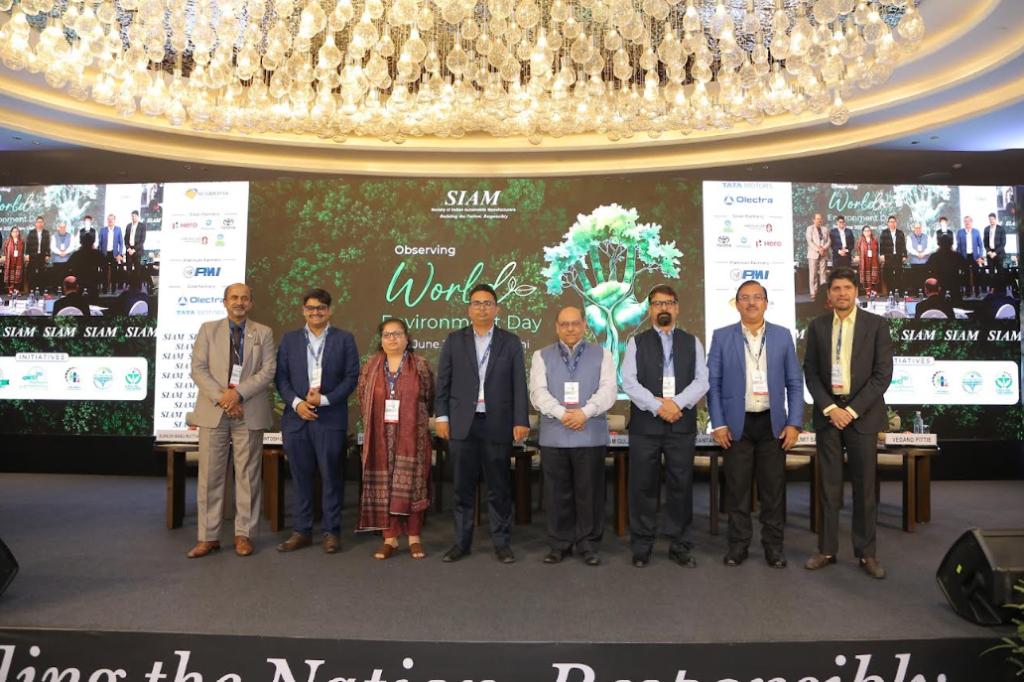
Three thematic sessions anchored the day’s discussions. The first addressed circularity in the automotive sector, covering sustainable sourcing, recycling, resource efficiency, and end-of-life vehicle management. The second focused on alternate fuels, with presentations on global biofuel trends, agricultural residue-based fuels, and hydrogen as a low-carbon mobility pathway. The third examined green manufacturing and sustainable supply chains, including the role of renewable energy, critical minerals, and supply chain decarbonisation in reducing emissions across automotive operations.
Across sessions, speakers stressed that India’s scale and diversity demand a technology-agnostic approach. Mr. Abhay Bakre, Mission Director of the National Green Hydrogen Mission, noted that decisions on new technologies must be evaluated based on where they will be a decade from now — not just on current costs — and that vehicle deployment and charging infrastructure must grow together. Industry voices echoed the need to make unit economics work for consumers to enable large-scale adoption, particularly in public transport.
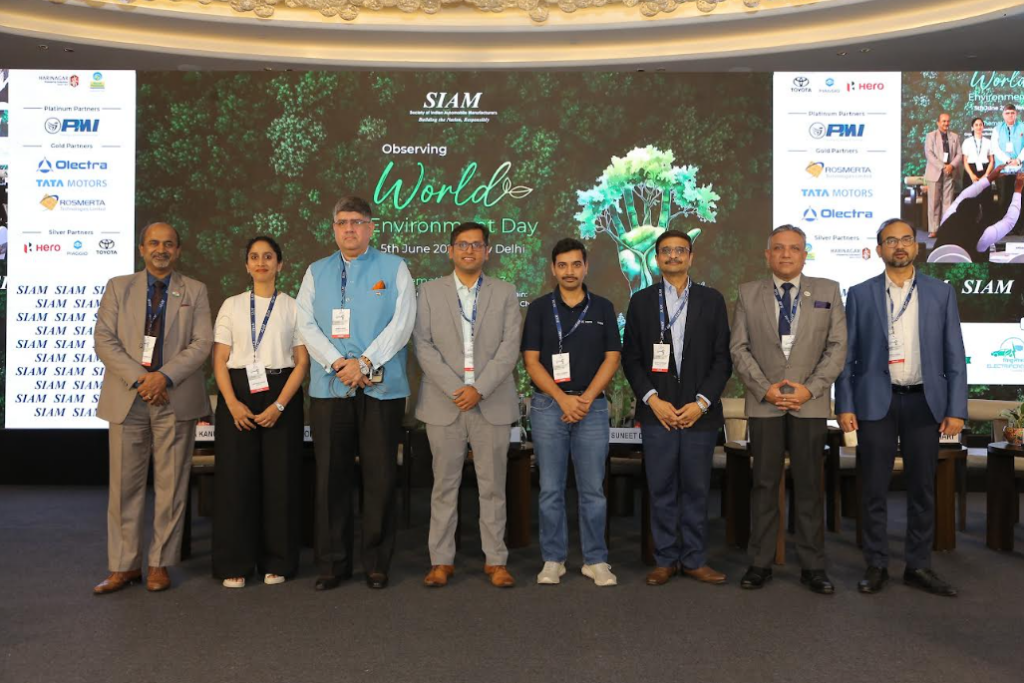
“On the occasion of World Environment Day, it is encouraging to see that EVs now account for a growing share of vehicle sales in India, supported by favourable government policies and increasing consumer acceptance. India’s sustainability goals can only be achieved through close collaboration between industry and government, while creating greater awareness among consumers that sustainability is not just a choice, but a way of life,” Sushant Naik, Chairman, SIAM Electric Mobility Group & Global Head – Government & Corporate Affairs, Tata Motors Ltd.
SIAM is pursuing India’s carbon neutrality goal of 2070 and the Viksit Bharat vision of 2047 through six key decarbonisation pillars: electrification of mobility, promoting ethanol in transportation, enhancing recycling practices, developing gas-based mobility infrastructure, fostering the green hydrogen ecosystem, and ensuring road safety.