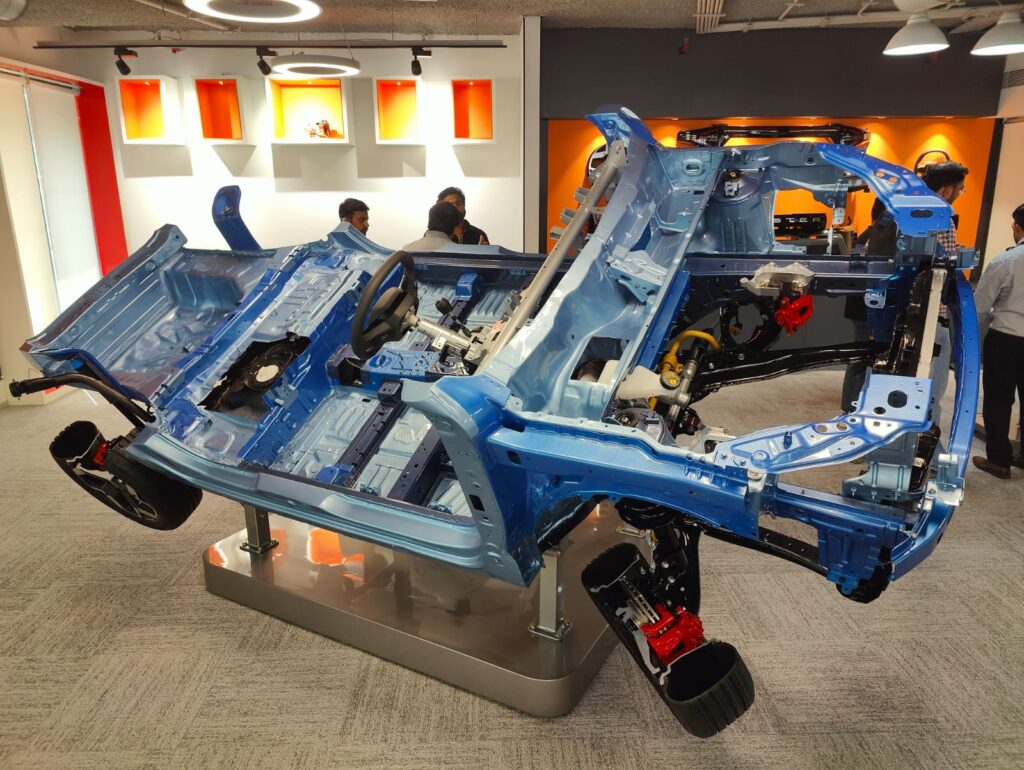
Designed for versatility, the Renault Global Modular Platform goes beyond the Duster, supporting a new generation of vehicles with diverse dimensions, overhangs and tyre configurations across different segments.

Every successful vehicle carries a legacy. For Renault’s Duster, that legacy has revolved around ruggedness, dependable ride quality and the ability to tackle difficult roads with ease. But building the next generation of such an iconic SUV demands more than simply refreshing the design. It requires a completely new engineering approach—one that prepares the vehicle not just for today’s expectations, but for the future of mobility.
At the heart of this transformation lies an entirely new architecture known as the Renault Global Modular Platform (RGMP). It represents a major shift in how the company approaches vehicle development. Instead of designing separate platforms for different models, the RGFP architecture is built around two fundamental ideas: modularity and scalability, Dr. V. Vikraman, Chief of Engineering at Renault Group India, has said.
Speaking at a technical seminar organised by Renault at its design centre in Chennai, he said, the platform, in simple terms, can adapt to different kinds of vehicles without needing a completely new structure each time. More than just underpinning the Duster, the RGMP platform is designed to support a wide range of vehicles. Interestingly, it can accommodate models with lengths ranging from four metres to 4.7 metres, front overhangs from 780 mm to 860 mm, and rear overhangs from 665 mm to 1,020 mm. The platform can also support tyre sizes from 16 inches to 19 inches, with widths varying between 205 mm and 225 mm. With this flexibility, the OEM has the potential to develop multiple body styles, including SUVs, hatchbacks, sedans, MPVs and even coupes, in seating configurations ranging from five to seven occupants, he said. The platform’s modular architecture can further support multiple powertrain options such as ICE, HEV, EV, CNG and flex-fuel, along with two-wheel drive, four-wheel drive and e-four-wheel drive configurations.
This flexibility is particularly valuable in a market like India, where customer preferences vary widely and manufacturers must quickly adapt to changing demands. By creating a single scalable platform, Renault can develop several vehicles efficiently while maintaining strong engineering standards.
Renault calls the Duster a better car to drive. What exactly makes it stand out?
The RGFP platform is not just about flexibility—it is also built with strength and safety in mind. With a torsional stiffness of 25 kilonewton meters, the structure provides enhanced body rigidity, which directly improves both handling and crash safety. More than half of the structure—about 57% —is made from advanced high-strength steel. This allows engineers to make the vehicle lighter while simultaneously increasing structural protection. The goal is to achieve a five-star safety rating while maintaining the rugged character customers expect.
To ensure effective braking, the company has used low-steel, low-metallic brake pads that help maintain a lower coefficient of friction (µ), thereby reducing pedal effort while optimising deceleration. The braking system has been tuned to deliver a non-linear, progressive and intuitive response, making it easier for the driver to modulate braking.
The headlamps offer enhanced high-beam support to assist drivers while negotiating curves at night, while multi-density ventilated seats provide better comfort during long drives across varied terrains. The tilted instrument cluster reduces glare from sunlight, and with nearly 80% of the bonnet visible to the driver, manoeuvring through tight corners becomes easier. For improved driving comfort, the steering system has been calibrated to offer low effort during parking manoeuvres while ensuring better steering returnability during regular driving.
Vehicle Dynamics
Equally important is the way the vehicle has been engineered specifically for Indian road conditions. From rough highways to broken village roads, the platform has been tuned to handle diverse terrain without compromising comfort. The new version is provided with a higher approach and departure angle.
Ride and handling have always been a defining trait of the Duster. The new generation aims to preserve that reputation while pushing performance further. The front suspension uses the proven McPherson strut layout, while the rear employs a multi-link suspension system supported by MTV CL tech multi-tuned valve technology and with twist beam. This combination provides both stability and flexibility in managing road surfaces. A large 25 mm anti-roll bar—the biggest in its class—helps control body roll during cornering, giving the driver greater confidence at higher speeds.
One of the most interesting technologies used to balance comfort and control is the Multi-Tunable Valve with Concentric Land system, often referred to as MTVCL. Developed in partnership with suspension specialist Tenneco, this technology allows the shock absorbers to adapt their damping forces depending on the situation.
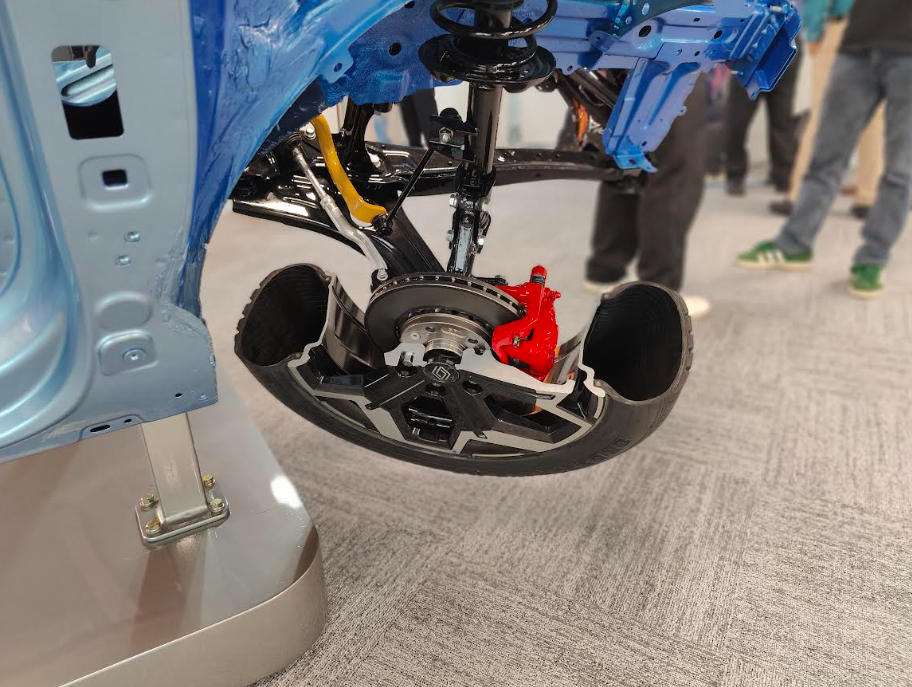
When the vehicle body experiences larger motions—such as roll or pitch during cornering—the system provides higher damping force to maintain stability. But when the wheels encounter bumps or rough surfaces, the damping force reduces, allowing the suspension to absorb shocks more smoothly. The result is a ride that feels both controlled and comfortable, an important balance for Indian driving conditions.
Renault’s engineers also draw inspiration from motorsport when tuning the vehicle dynamics. Just as Formula One teams carefully tune frequency responses to optimise grip and stability, the new SUV uses detailed damping calibration to achieve precise handling.
With these refinements, the vehicle dynamics of the Duster has achieved a rating of 7.5 out of 10, while other vehicles in this segment typically score between 6.25 and 7.25 points.
Powertrain
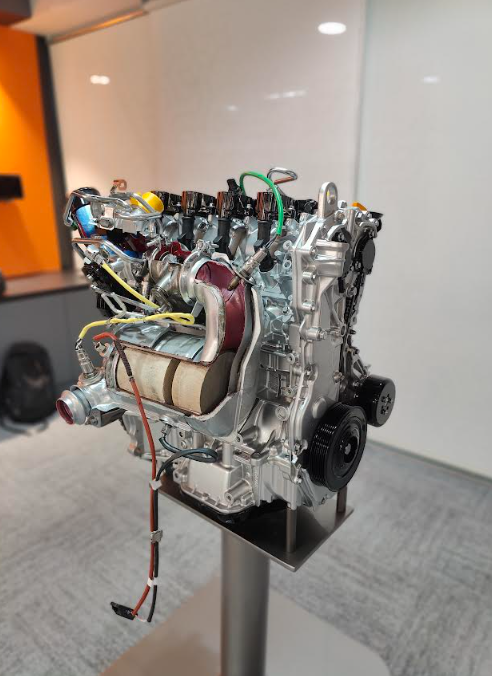
Under the hood, the new platform brings a fresh focus on powertrain technology. The Turbo TCe 160 powertrain features Power GLYD coating that eliminates cylinder liners to reduce weight and improve efficiency, while a wet-clutch DCT gearbox, e-shifter and electric parking brake ensure smoother driving. The engines are designed to meet upcoming BS-7 emission norms and feature a Gasoline Particulate Filter to reduce emissions.
A particularly interesting innovation is the use of dual fuel injection. Instead of injecting fuel just once per compression cycle, the engine performs two injections at different timings. This allows better control of fuel quantity and timing, especially under high load conditions. The approach improves combustion efficiency and power delivery while also helping to reduce knocking inside the engine.
Turbocharging also receives special attention. Unlike conventional systems where only the radiator has a cooling fan, the new setup includes a fan-assisted intercooler. This ensures that the turbocharged air remains properly cooled even at low speeds, such as when climbing steep inclines. The system also helps prevent water ingress during demanding conditions. The SUV’s practical capability remains intact as well, with a water-wading capacity of up to 450 millimeters—an important feature for regions prone to flooding or rough terrain. Such engineering choices contribute to strong performance and reliability, while maintaining efficiency.
Safety
Safety engineering is another area where the new platform takes a major leap forward. The front structure uses three separate load paths designed to manage crash energy progressively. Instead of allowing impact forces to reach the cabin directly, the structure absorbs energy through controlled buckling and bending of sheet metal components.
Wheel wells and tyre structures also play an important role in managing crash forces, directing energy away from the passenger compartment. Engineers pay particular attention to structural integrity, including the strength of spot welds and body joints, to ensure that the cabin remains protected even in severe collisions.
Noise, Vibration & Harshness
Another noticeable improvement lies in the vehicle’s noise, vibration and harshness levels. The new generation SUV represents a significant leap in cabin refinement compared with its predecessor. Noise from the powertrain, wind, tyres and even the air-conditioning system has been carefully managed. To handle India’s harsh summers, the vehicle uses an improved 160-cc variable-displacement HVAC compressor that cools the cabin from 60°C to 30°C faster than many competitors. Cabin comfort is further enhanced by a PM 2.5 filter, air ioniser and an acoustic windshield, while wind noise tuning done in association with IIT Kanpur helps achieve strong cabin isolation.
Engineers have benchmarked the vehicle not just against older models but against global competitors from Europe, Japan and Korea. The goal is not simply to reduce noise, but to create an overall acoustic harmony that enhances driving comfort, he pointed out.
Long-term Strategy
Beyond engineering improvements, Renault’s long-term strategy reflects broader changes in the global automotive industry. Diesel engines, once dominant in many SUV segments, are gradually losing ground due to stricter emission regulations and changing consumer preferences. In response, the company is shifting its focus toward hybrid technology.
Hybrid systems offer a practical balance between efficiency and convenience. Unlike plug-in hybrids, which require external charging, so-called “self-charging” hybrids generate electricity while driving. This makes them easier to adopt in markets where charging infrastructure is still developing.
The company believes hybrids can play an important role in reducing emissions and meeting future Corporate Average Fuel Economy (CAFÉ) regulations. At the same time, it continues to pursue a multi-powertrain strategy, offering combinations of petrol, CNG, hybrid and electric solutions depending on customer needs and regulatory requirements.
Manufacturing
From a manufacturing perspective, the new platform also improves plant efficiency. A modular architecture allows multiple vehicles to be produced on the same assembly lines, reducing complexity and improving utilisation. Engineers are applying design-for-manufacturing principles to streamline production, shorten assembly times and optimise component integration.
In many ways, the new Duster platform represents more than just another SUV launch. It reflects a broader shift in automotive thinking—where flexible platforms, advanced dynamics, hybrid technology and smarter manufacturing all come together. For customers, this means a vehicle that stays true to the Duster’s spirit while embracing the technologies that will define the next era of mobility.