With strong localisation and a broader technology portfolio, the company is gearing up to power India’s next generation of smart, connected construction equipment.
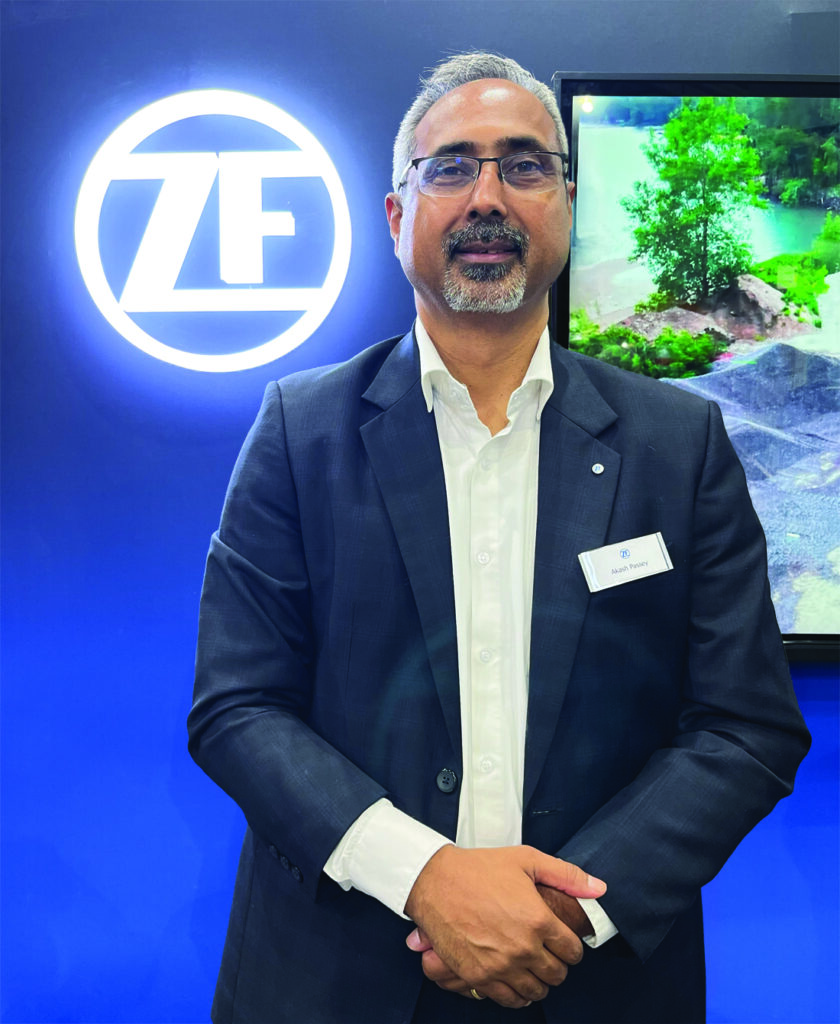
India’s construction equipment (CE) story is changing fast, and ZF Group is firmly positioning itself at the centre of that transformation. Speaking to this publication on the sidelines of EXCON, Mr. Akash Passey, President of ZF Group India, explained how the CE market has moved beyond price alone and is now shaped by technology, better productivity and long-term value.
For ZF, India is no longer just another large market. It has become a strategic growth engine. Since 2014, sustained government spending on infrastructure has triggered a strong rise in construction activity, and the impact is clearly visible. Industry exhibitions like EXCON have grown rapidly, mirroring the expansion of the sector itself. The company’s own presence at the show tells the same story. Compared to two years ago, “its exhibition space has more than doubled, reflecting not just higher ambition but also a much wider product portfolio,” he said.
This expansion is backed by fresh investments on the ground. In June this year, ZF started operations at a new manufacturing and assembly plant in Coimbatore dedicated to CE. The facility produces transmissions and axles for Indian OEMs as well as global customers. Located in a Special Economic Zone, the plant offers significant room for expansion and already supports some of the country’s largest equipment makers. It also signals ZF’s long-term confidence in India as both a production and export base.
What is driving this confidence is a visible shift in how Indian customers think. Earlier, buying decisions in construction equipment were dominated by upfront cost. “Today, that conversation is changing. OEMs and fleet owners are increasingly focused on life cycle cost, uptime and overall value,” he said.
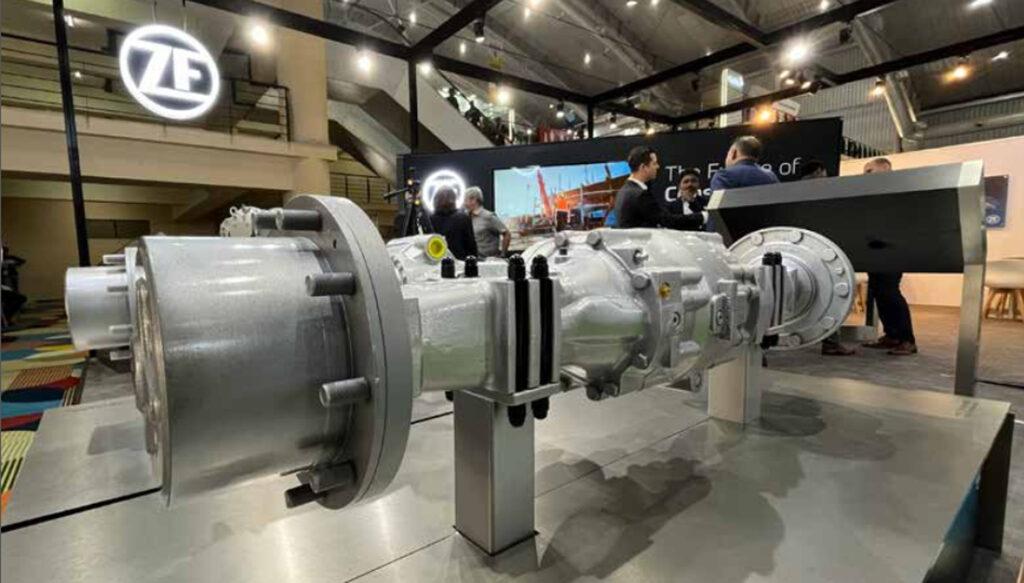
According to Mr. Passey, this change is being shaped by global exposure and export ambitions. Indian OEMs such as JCB and Tata Hitachi are now discussing advanced technology, durability and productivity with the same seriousness as their counterparts in mature markets. As global parent companies rely more on India to serve regions like the Middle East, Africa and Southeast Asia, expectations around quality and performance have risen sharply.
To meet these expectations, the company is expanding beyond its traditional strengths in axles and transmissions. While these remain core to its construction equipment business, the company is now pushing into new areas such as electrified drivelines, electronic control units and telematics. This broader approach is supported by strong investment in research and development, with ZF spending over 6% of its global revenue on R&D. The aim is clear: to stay relevant as machines become more connected, intelligent and efficient, he noted.
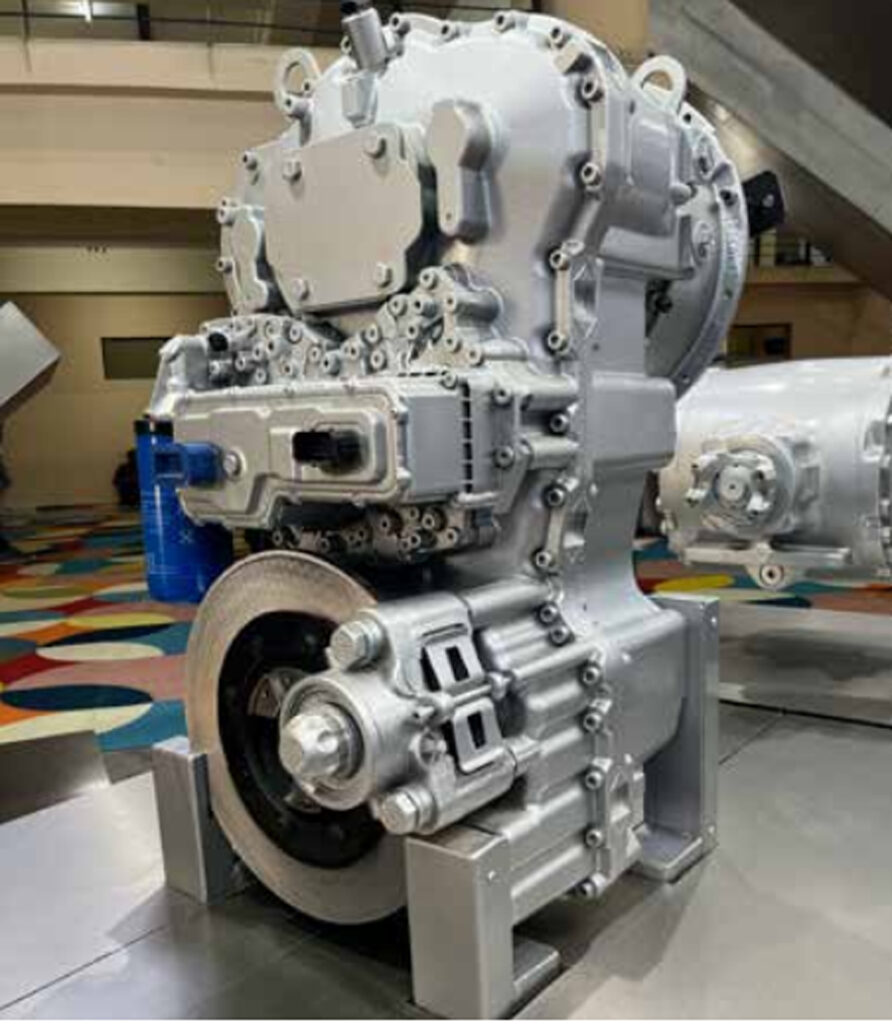
The CE segment also presents a unique challenge. Unlike passenger vehicles, off-road machines have much longer operating lives. Customers want equipment that lasts for years, yet still delivers modern performance. Mr. Passey said, the company is responding by developing heavier-duty axles and more advanced transmissions that improve productivity while standing up to long working hours and harsh environments. “As the market grows, demand will rise not just for proven products, but also for next-generation solutions that can handle higher loads, tougher duty cycles and evolving regulations,” he said.
Looking ahead, the growth potential is enormous. He expects India’s CE market to double over the next five years, making it the fastest-growing segment within the automotive space. This growth will also accelerate the adoption of new technologies. Concepts like software-defined vehicles and telematics, already common in on-road mobility, are gradually entering CE, especially in controlled environments such as mines and large project sites. Electrification is another area gaining momentum, particularly for lower-tonnage machines, where sustainability goals and emission norms are pushing customers to rethink traditional diesel solutions. ZF already has electric drivelines in use in Europe and sees India as the next major frontier.
Underlying all this is a strong localisation and sourcing strategy. “ZF leverages its wide presence across automotive segments to create common engineering and purchasing efficiencies. India has emerged as a critical sourcing hub, with the company currently sourcing materials worth over ₹6,000 crore for its global operations. Over the next five years, ZF aims to increase this five-fold, focusing on forgings, castings and electronics. Local application engineering and manufacturing are central to this plan, helping deliver competitive solutions while meeting global quality standards,” he said.
Taken together, ZF’s strategy in India reflects a deeper shift in the CE industry itself. By expanding its footprint, broadening its portfolio and investing heavily in localisation, ZF Group is aligning itself with India’s infrastructure ambitions and preparing for a future where construction machines are not just stronger, but smarter, cleaner and more connected than ever before.