The car shows how thoughtful engineering can deliver more without excess— all while keeping ownership costs under control.

The story of the new Punch.ev.is really a narrative of clever, practical engineering — the kind that solves real problems without making the car heavier, costlier or less safe.
Customers wanted more range, faster charging and better everyday efficiency. The engineering team went back to the drawing board, and what followed was a quiet but robust transformation, Mr. Anand Kulkarni, Chief Products Officer, Head of HV Programs and Customer Service at Tata Passenger Electric Mobility, told this publication.
According to him, the first ask was simple: give the car more range. Therefore, the team added about 6.5 kWh of extra battery capacity. It chose LFP chemistry for one clear reason: it delivers long life, strong thermal stability and high safety without driving up costs. Then came the packaging rethink. By optimising how the cells are arranged, the engineers achieved 10% higher energy density and 15% more usable capacity—enough to accommodate a 40 kWh pack without adding significant weight.
The shift to prismatic cells made this possible, allowing tighter integration and better space utilisation. Cooling, too, has been redesigned. A plate-type cooling system now keeps temperatures even across the pack, while a segment-first electronically controlled thermostatic expansion valve (ETXV) fine-tunes refrigerant flow for more precise and efficient thermal control. Together, these changes allow the battery to sustain full fast-charging power even when outside temperatures touch 45°C—an essential capability for real-world Indian conditions.
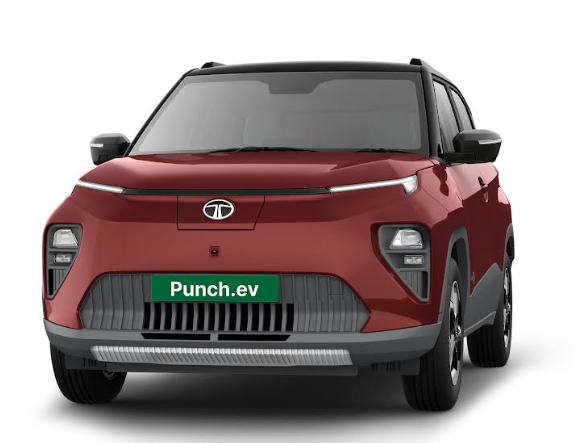
Normally, higher capacity battery should have made the car heavier. But instead, it maintained the same weight, as “we redesigned the heart of the EV — the electric drive unit. We integrated the motor, the controller, the gearbox and several other parts into one compact unit – acti.ev architecture. This single change saved nearly 50 kg, freed up valuable space, and made the EV noticeably more efficient,” he said. This weight saving cancelled out the extra battery weight, so the car’s total weight stayed the same. Besides, the vehicle achieves an efficient battery size-to-footprint ratio – thanks to smart cell packaging and tightly optimised floor integration, Mr. Kulkarni explained.
A Big Jump in Real-World Driving Distance
“As a result of this, E-drive itself is efficient by about 5%; and this, when added to the extra capacity of the battery, we are able to realise almost a 20% improvement in real life,” he said. The earlier model could do around 280–290 km. Now the upgraded version can deliver roughly 335–355 km. That’s enough to cover about 95% of typical daily driving in India without any anxiety, he mentioned.
Despite the upgrades, what truly matters is how it feels on the road. The new 40 kWh pack now stretches to a tested 468 km. Even the smaller battery benefits from the improvements, offering 365 km on the P1/P2 cycle and a usable 265–280 km in real-world conditions, making both versions far more versatile than before.
For those rare long journeys, fast charging has been boosted too. In just 15 minutes, the car can gain around 130–135 km of range. With a short break, “you can even complete a 500-km trip comfortably,” he said.
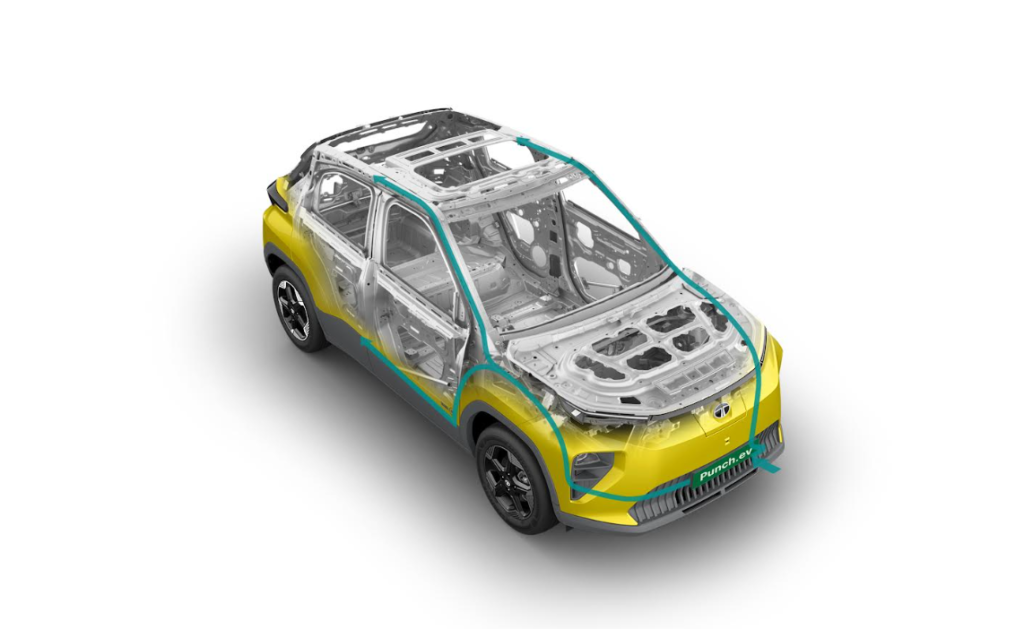
Even with all the changes, the car remains just as safe as before. This is because structural safety is enhanced through reinforced crush zones, engineered energy-absorbing pathways, and robust electrical isolation across the battery system. The earlier model had a 5-star BNCAP rating, and the new version has already met the same standard. Since weight and structure remain stable, there is “no compromise in rigidity or crash performance,” he pointed out.
Advanced Engineering, Not Higher Cost
Customers today expect higher power, longer range and more cabin space — all without a significant jump in cost. Achieving this balance is clearly a complex engineering and business challenge – to deliver all these improvements without making the car expensive.
Mr. Kulkarni said, “the equation of capability has to be achieved with lesser cost. Because equation of more capability for more money is simple, but what is the disruption in that? So, to achieve that, we’ve done changes to the battery and electric drive.” The team achieved this through smarter battery design, the integrated drive unit, and targeted cost optimisation in non-cell components. Furthermore, past learnings have helped refine multiple elements while keeping structural safety and rigidity fully intact. “All of this put together is realising in a car that is of exceedingly high value, but not of an exceedingly high cost,” he explained.
“When the Punch EV debuted a little over two years ago, it was built on one of the most structurally rigid platforms in its class — a level of rigidity comparable to what you typically see in luxury cars,” he said. This inherent stiffness gives the vehicle a planted, confidence-inspiring feel, filtering out road disturbances and ensuring significant stability. With the latest upgrade, the redistribution of weight has changed the balance by barely 1%, keeping it nearly at a 50:50 equilibrium. As a result, there was no need for major structural changes or additional protective components, a fact that has been further validated by the new BNCAP 5-star certification, he mentioned.
Ready for the Future of Driver Assistance
The updated model also gets improved ADAS features, tuned to behave more like a calm, helpful co-driver rather than an intrusive one. The system mirrors real Indian driving, a direction, customers first appreciated in the Harrier EV, Mr. Kulkarni concluded.