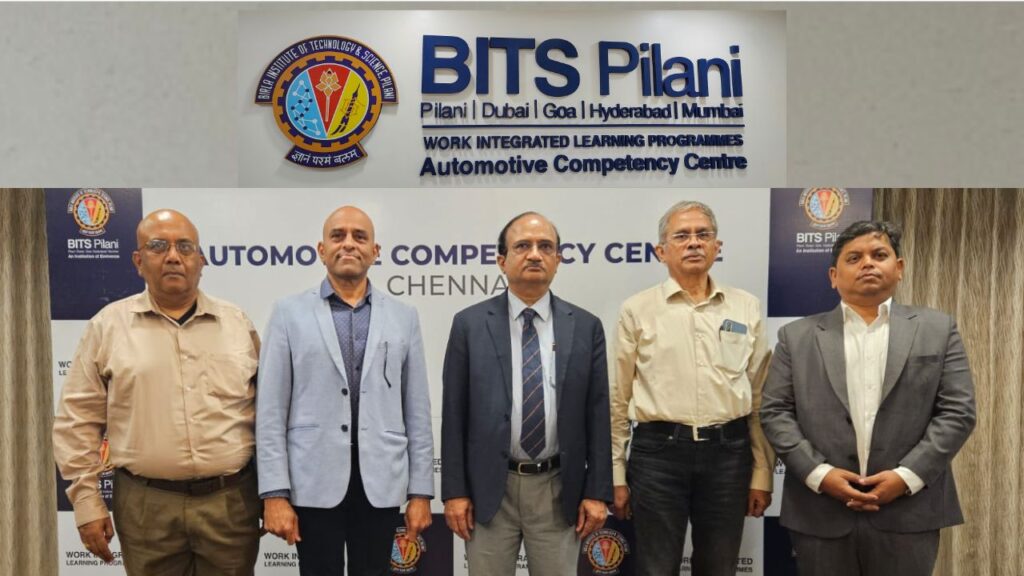
This is the first of several Competency Centres BITS Pilani will launch in 2026, with Bangalore and Pune set to follow — each focused on emerging technologies that match India’s industrial priorities.
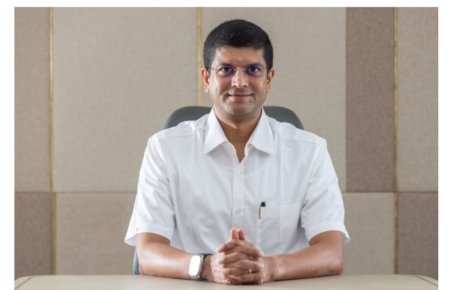
Thousands of engineers trained on traditional automotive systems now need to be rapidly reskilled for an entirely new era. From fresh graduates to senior chief engineers, the talent pipeline must transition into EV, embedded electronics and intelligent vehicle programmes to stay globally competitive. The launch of the Automotive Competency Center (ACC) in Chennai by BITS Pilani, through its Work Integrated Learning Programmes (WILP), comes at a pivotal time for India’s mobility industry, Dr. Shankar Venugopal, Vice President at Mahindra Research Valley (MRV), Mahindra & Mahindra, has observed.
Delivering his keynote address, he said the pace of automotive technology accelerates—from Internal Combustion to EVs, to Software-Defined Vehicles (SDVs), and soon AI-Driven Vehicles—the sector faces a widening skills gap. Even with a strained voice, he captured the urgency of the moment, joking that he wished for a “tunnel” connecting MRV directly to the new lab so young engineers could walk in every day to learn, experiment and evolve.
As he recalled, the M.Tech in Automotive Electronics from BITS Pilani had been “magical”—transforming mechanical engineers into EV-ready specialists in just two years, proving what structured, applied learning can achieve. But today’s automotive landscape demands even more, he said, adding that it needs a new kind of professional—a “mobility engineer” fluent in mechanical systems, electronics, basic coding, and design thinking. Achieving this, he stressed, requires deep industry–academia collaboration; neither side can build such talent alone. The ACC steps in to bridge this divide, he added.
Delivering his address Mr. Marcel Fernandes, Head of Capability Building and Skill Development at Tata Motors, traced how engineering moved from mechanical roots to electronics, telecom, software, and now to SDV — evolving so quickly that the industry is already flirting with the term AI-Driven Vehicles. In this race, he said, the real challenge is not technology itself but the human ability to absorb and apply it. Thousands of experienced engineers schooled in internal combustion engines must now be reskilled for EVs, electronics and software-heavy architectures. That is where BITS Pilani’s ACC programmes will make a difference, he said, pushing for more use-case-driven learning and more application-oriented curricula.
ACC – Chennai
The state-of-the-art ACC is designed to deepen industry–academia collaboration and accelerate innovation in automotive engineering, next-generation mobility and smart manufacturing. Besides, it will combine experiential learning, real-world problem solving, applied research, faculty development and industry engagement. It will enable working professionals, students, faculty and corporate partners to collaborate on live engineering challenges, bridging classroom knowledge with the needs of India’s fast-evolving automotive and mobility sectors.
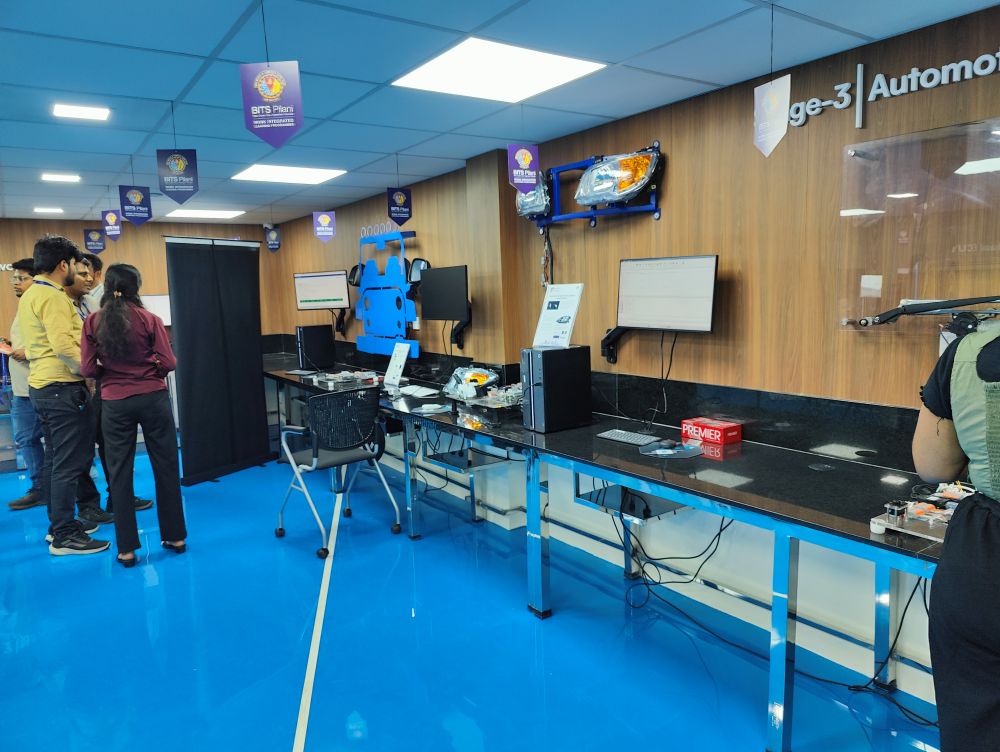
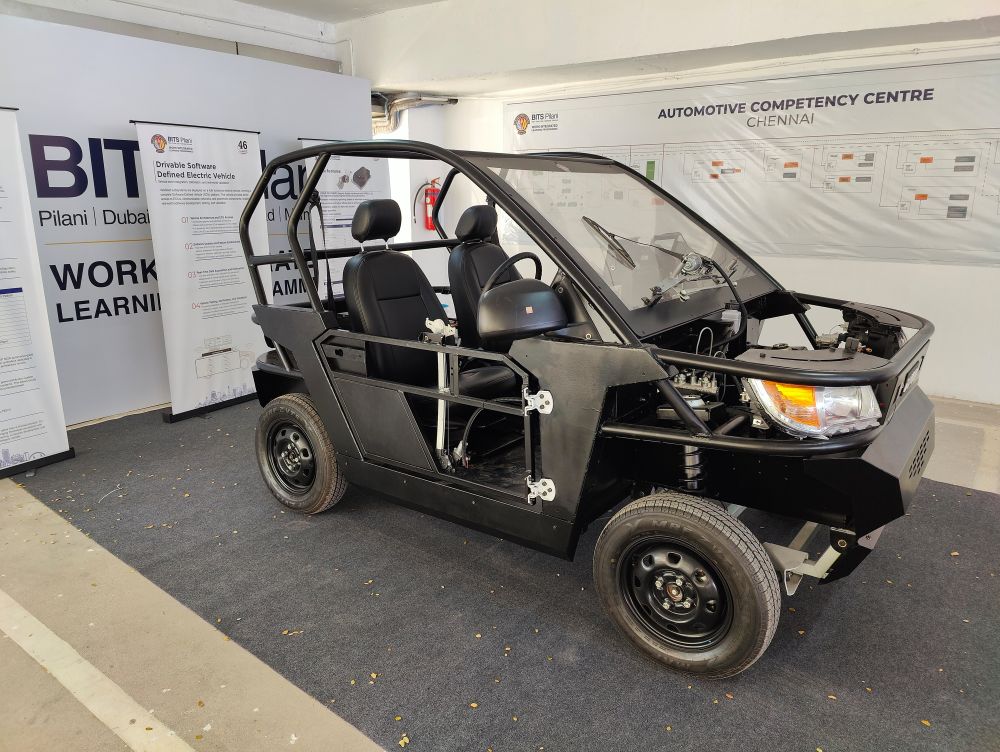
ACC Chennai is equipped with advanced labs and simulation environments supporting software-defined vehicle development, e-mobility systems, embedded automotive electronics, diagnostics, functional safety and automotive cybersecurity. With structured technology immersions, industry-linked projects and capability development programmes, the centre aims to foster applied research, rapid prototyping and collaborative innovation.
Earlier, Prof. V. Ramgopal Rao, Group Vice-Chancellor, BITS Pilani, said, “Through this Centre, our working professionals, students, and faculty will engage with real-world challenges in next-generation mobility. ACC Chennai will not only nurture globally competitive talent but also support innovation that addresses the pressing needs of industry and MSMEs.”
Prof. G. Sundar, Director, BITS Pilani WILP Division, added,
“Chennai is the first city in the series of Competency Centres we are planning to establish this year. ACC Chennai has been designed to nurture both intellectual curiosity and practical capability, and contribute to India’s journey towards Atmanirbhar Bharat in advanced manufacturing.”
Prof. PB Venkataraman, Dean –WILP, described the new competency center not as a routine expansion, but as a carefully crafted strategic move — one meant to redefine how professional education is delivered. Positioned under the broader WILP vision, the centre is designed to blend rigorous academic learning with meaningful, real-world work experience, creating a model that could set global benchmarks.
He outlined five priorities guiding WILP’s future: embracing AI, building career-oriented programmes for a larger learner base, strengthening work-integrated formats to influence national policy, shaping WILP into a global model, and establishing a distinct international identity. To validate this approach, BITS Pilani consulted some of the world’s leading thinkers in work-integrated learning. After spending days reviewing the labs, curriculum and instructional design, the team of experts concluded that the scale and depth of the model were unlike anything currently available anywhere in the world, he explained.
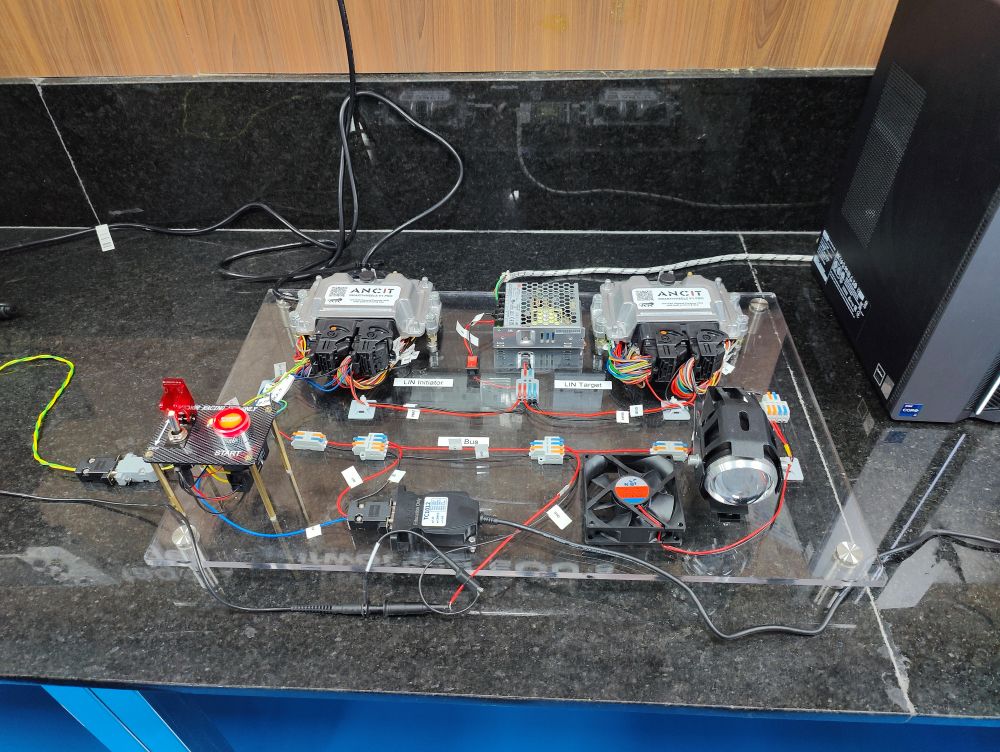
Prof. Paramesw Chidamparam, Associate Professor, BITS Pilani, described the new competency centres as places built not to showcase potential, but to prove capability — facilities where academic learning meets real industry problem-solving. He said Chennai marks the first major hub, home to the SDV Lab — where learners explore zonal architectures, ECUs, subsystem development and the full SDV lifecycle — and the E-Mobility Lab, covering everything from traction motors and diagnostics to model-based design and Hardware-in-the-Loop simulation. More centres are planned across India, each focused on a different technology domain. ACC will play a key role enabling the candidates to contain the time to market and gain expertise in open architecture. Besides, it will offer hands-on learning, rapid prototyping, weekend certification modules, and structured support for startups and interdisciplinary projects, he added.