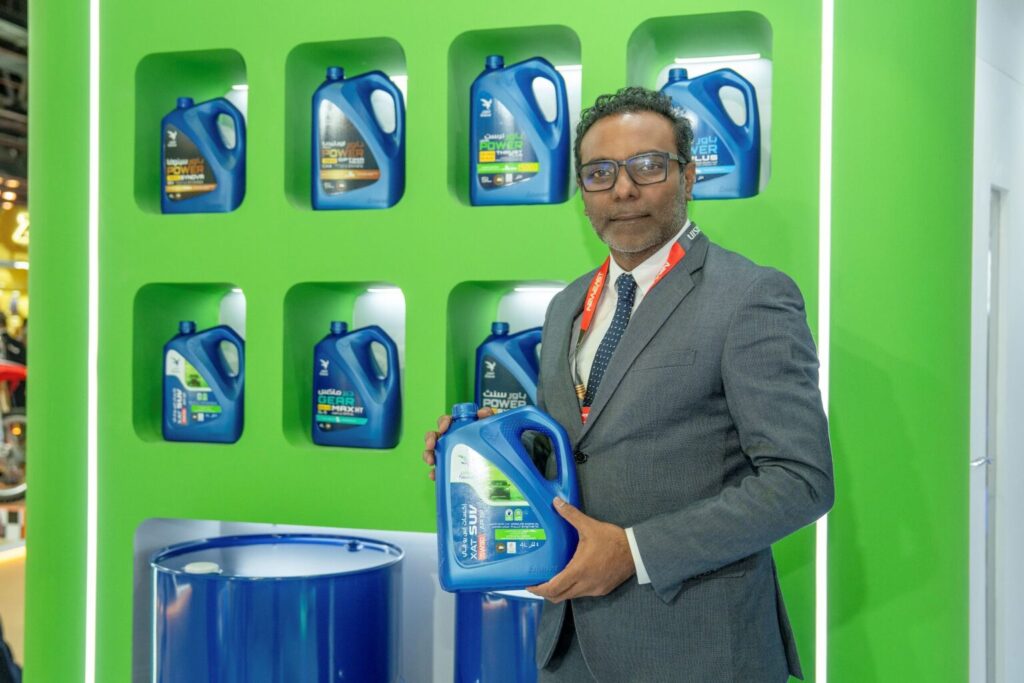
At Automechanika Dubai, Emarat used a high-visibility global platform to underline its transition from a regional lubricant player to a structured international brand. The company signed a Memorandum of Understanding (MoU) with a partner in Armenia, marking a decisive step in its Central Asia expansion strategy, while also outlining a calibrated, multi-year approach for India and other high-potential markets.
Speaking at the event, Burny Johnson, Senior Vice President – Lubricants, Emarat, described the MoU as more than a market-entry agreement, positioning it as a gateway to a wider regional play. “Armenia is among the Central Asian territories that we are looking to expand into, and this is the starting point,” he said, explaining that discussions initially centred on lubricants before evolving into a broader retail and brand expansion opportunity.
Armenia as the gateway to Central Asia
Johnson noted that while lubricant distribution formed the foundation of discussions with the Armenian partner, the scope expanded significantly over time. Emarat has now signed off not only on lubricant business but also on retail station expansion in Armenia, reinforcing its intent to establish a long-term operational footprint rather than a transactional presence.
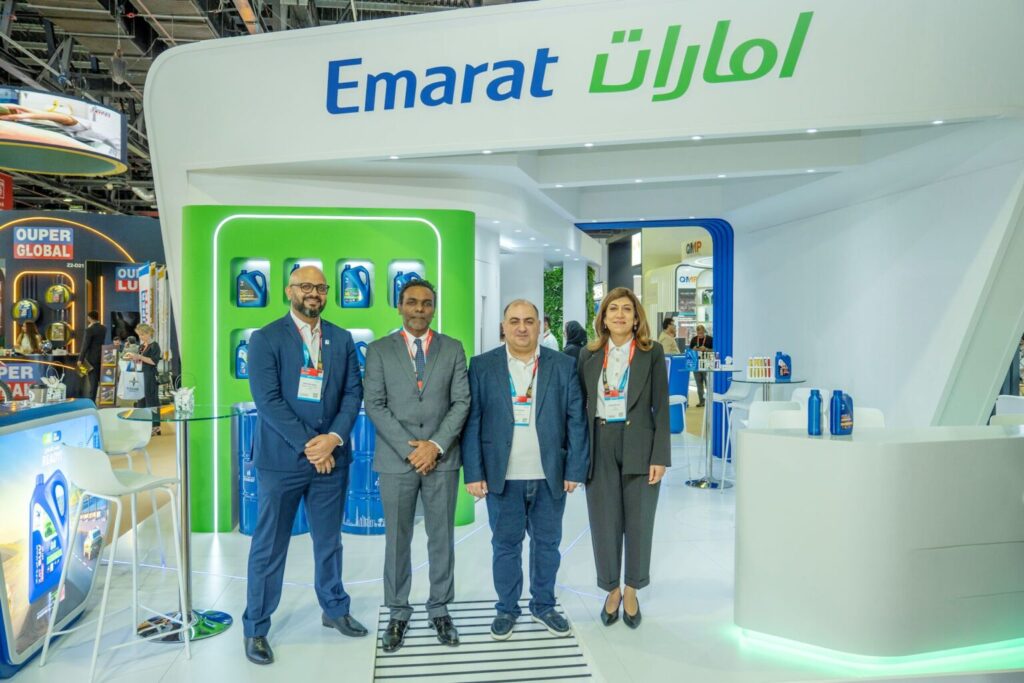
“This brings us another territory and, more importantly, fits into our wider expansion strategy across Central Asia,” he said. According to Johnson, the region is strategically attractive due to its demand for higher-technology lubricant grades and its close commercial and cultural ties with the Middle East. “The Middle East, and particularly the UAE, is well recognised in these markets. We are taking that route to enter Armenia, gain respect and position ourselves as a high-level, mid-tier brand.”
Emarat’s expansion logic, he explained, is structured around corridors rather than isolated markets. With CIS as one route and Asia as the next, the company is sequencing its growth in a way that balances brand visibility, partner capability and long-term sustainability.
Market mix, hubs and long-term relevance of lubricants
Outlining Emarat’s current geographic spread, Johnson said the Middle East and Africa together contribute a significant percent of the company’s business, with Asia accounting for a similar share. Within Asia, Emarat has built presence in markets such as Bangladesh, Myanmar and the Philippines, while acknowledging that large, high-ticket markets like Malaysia and Indonesia are still on the roadmap.
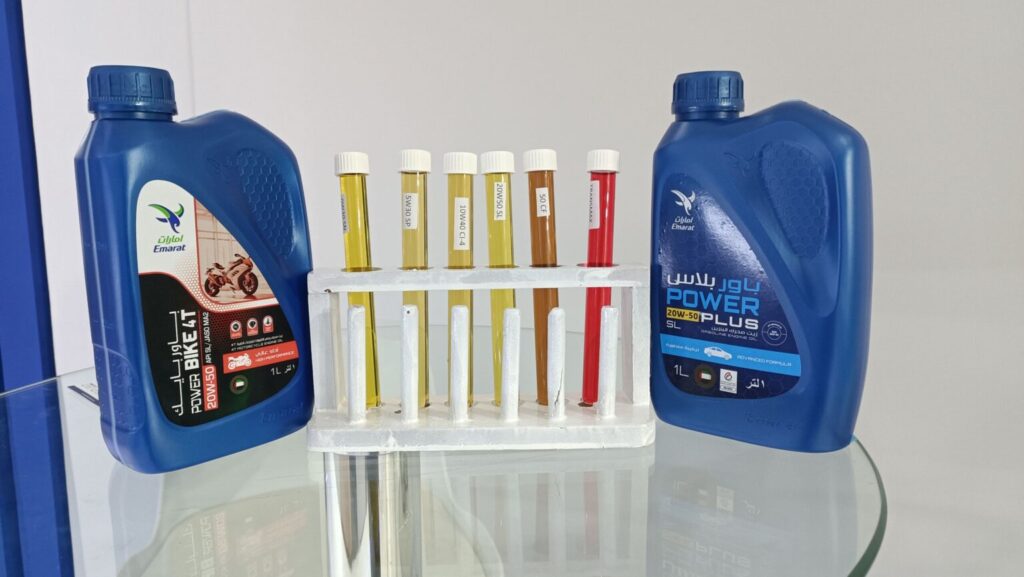
“Our first stage in any country is to cross a one percent market share threshold. That establishes presence,” he said, adding that growth beyond that point depends on partner strength, eco-political conditions and regional trade frameworks such as ASEAN in Asia and COMESA in Africa.
Looking ahead three years, Emarat expects to operate with at least two additional hubs beyond the Middle East. Egypt is being evaluated as a base for North Africa, while India or another Southeast Asian country is being considered as a future hub to serve surrounding markets. Johnson emphasised that demographic and cultural alignment plays a role in these decisions, noting that much of the expatriate population in the Middle East originates from these regions.
On the broader industry outlook, he struck a pragmatic note. While Europe is already seeing a structural decline in lubricant demand, Johnson believes the Middle East, Africa and Asia offer a 25–30 year runway of solid lubricant business. “This part of the world still has time, scale and industrial depth on its side,” he observed.
India: calibrated entry, segmented strategy
India, Johnson confirmed, is firmly on Emarat’s strategic drawing board, though the company is deliberately resisting a rushed entry. “2026 will be about fine-tuning our way of working in India. A strengthened plan will be executed in 2028,” he said, underlining that India requires multiple strategies rather than a single national template.
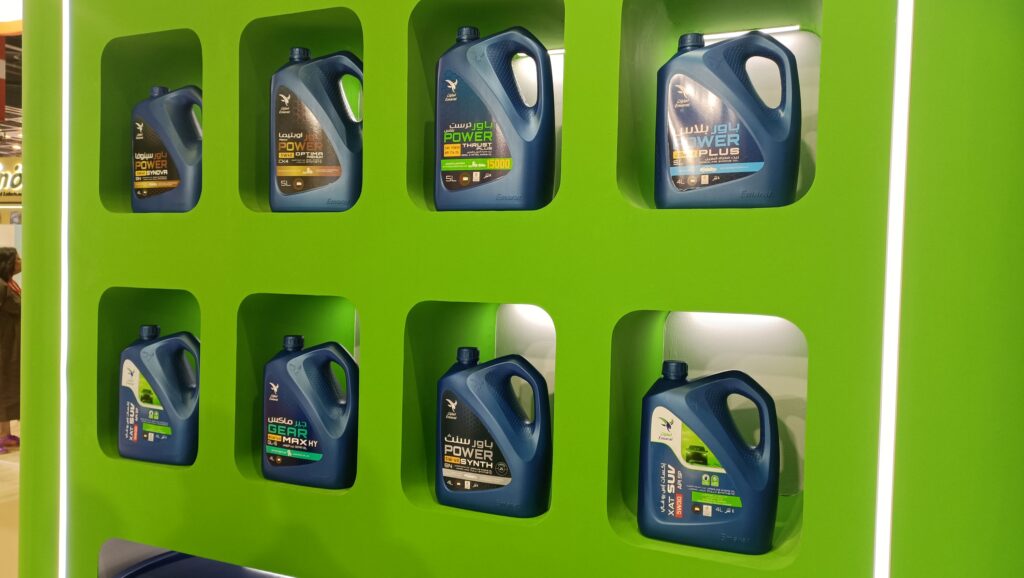
With at least four distinct zones shaped by culture, language and market segmentation, Emarat is conducting ground-level research to determine where and how to enter. “One size does not fit India. We will be very focused, very different in our approach, and we are not chasing big headline numbers,” Johnson said.
From a product perspective, passenger car motor oils (PCMO) and diesel engine oils (DEO) together account for roughly 60 percent of the Indian lubricant market and will remain core focus areas. Motorcycles represent around 25 percent, though Johnson acknowledged the segment is in transition due to evolving EV technologies. “IC engines will stay for some time, and by the time technologies settle, we will be ready,” he said, adding that commercial vehicles and industrial segments will continue to anchor lubricant demand.
Currently, industrial lubricants also accounts forms a part of Emarat’s portfolio, an area the company is selectively studying for future growth rather than pursuing indiscriminately.
Consolidation behind, growth ahead
Summing up Emarat’s recent trajectory, Johnson described 2025 as a year of consolidation, marking the end of a long phase where the company operated largely within regional shadows. “We have transformed ourselves to take on multinationals as well as strong regional players,” he said.
The next phase, he indicated, will be growth-led. Emarat expects rapid expansion in 2026 and 2027, followed by consolidation, with rapid expansion plans in the next few years. “Today we are at 20 countries, with 18 active and two just getting started,” Johnson said, stressing that partnerships, sustainability and long-term commitment will remain central to the company’s global strategy.