Tata Motors Passenger Vehicles Ltd. and its subsidiary Jaguar Land Rover Automotive Plc. have commenced operations at their new manufacturing facility in Panapakkam, Ranipet district, Tamil Nadu, marking a major milestone in India’s automotive industrial landscape. The greenfield plant, built to produce next-generation vehicles including EVs for both brands, has rolled out its first model—the locally manufactured Range Rover Evoque, renowned globally for its luxury appeal and refined craftsmanship.
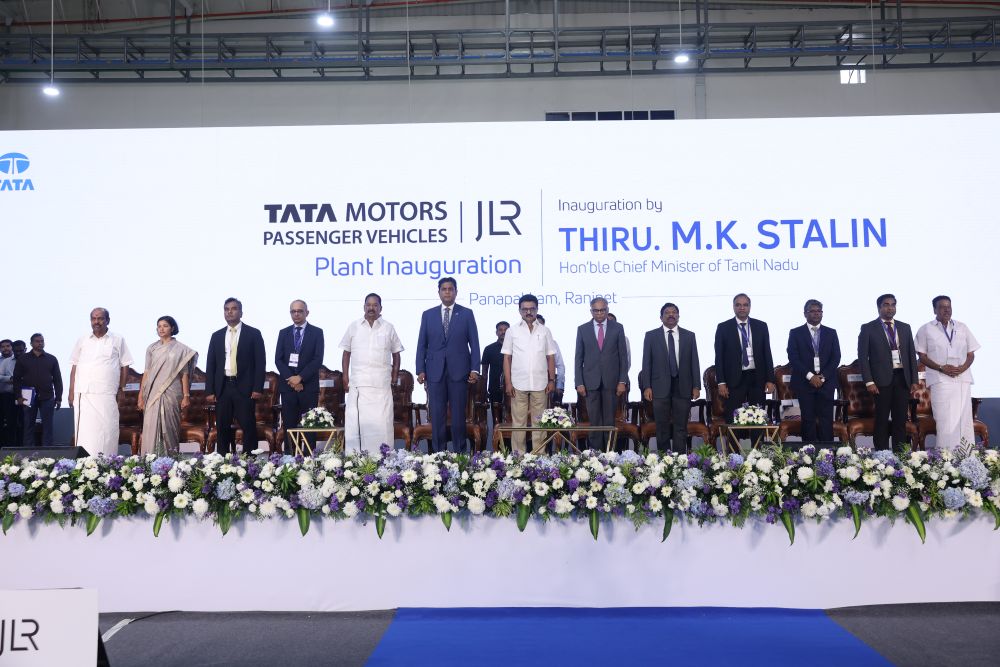
The facility was inaugurated by Mr. M.K. Stalin, Chief Minister of Tamil Nadu, alongside Mr. N. Chandrasekaran, Chairman, Tata Sons & Tata Motors Passenger Vehicles, in the presence of State Ministers, senior officials, and leadership from Tata Motors, JLR and the Tata Group.
Speaking at the inauguration, the Chief Minister said that Tata Group has played a pivotal role in nation-building and shares a deep partnership with Tamil Nadu. He added that the rollout of the first Range Rover Evoque from Panapakkam reinforces Tamil Nadu’s position as India’s leading hub for manufacturing and mobility, promising jobs, innovation and economic growth.
Mr. N. Chandrasekaran described the Panapakkam facility as a significant step in Tata Group’s journey to strengthen India’s leadership in sustainable and future-ready manufacturing. He highlighted that the facility will produce vehicles of exceptional quality and technology for customers in India and global markets, deepening the Group’s long-standing partnership with Tamil Nadu.
Inside the Panapakkam Plant
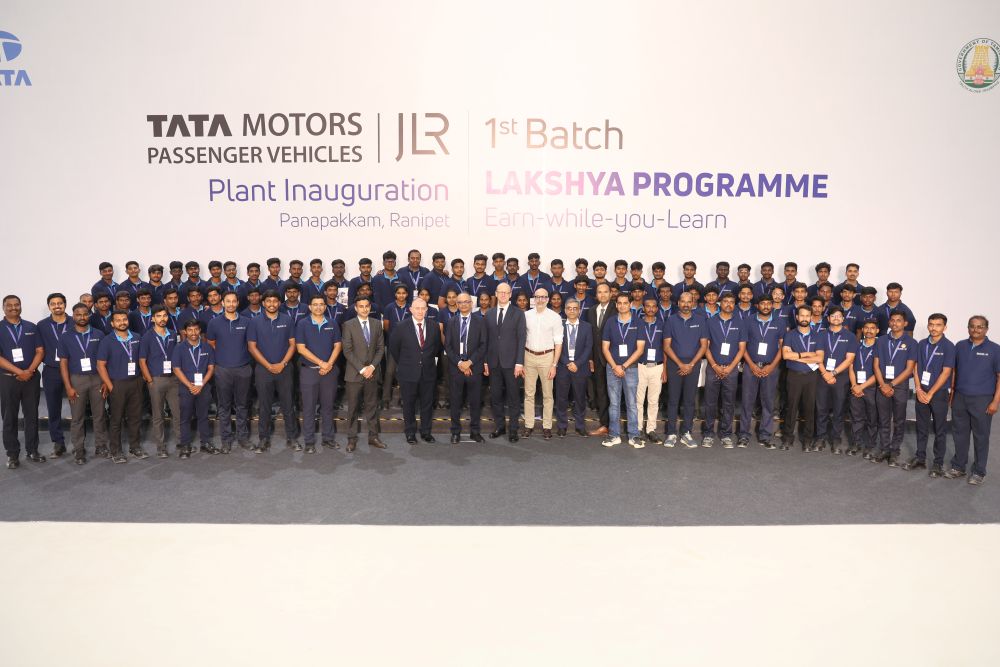
The Panapakkam plant combines advanced manufacturing technologies with a skilled, diverse workforce drawn from across Tamil Nadu. Many of the shopfloor technicians are participants in Tata Motors’ Lakshya programme—an “earn while you learn” initiative that enables polytechnic graduates to work while pursuing a company-sponsored B.Tech degree. Selected through a rigorous state-wide process and trained for five months at JLR facilities, these young technicians now operate with global-standard technical and operational proficiency.
This initiative highlights how focused skilling and local talent development can support advanced automotive manufacturing while delivering economic and social upliftment to local communities.
With operations now underway, production will scale up gradually to reach the plant’s full annual capacity of 250,000 vehicles in the next 5–7 years, serving both domestic and international markets. Overall, Tata Motors Passenger Vehicles Ltd. plans to invest around INR 9,000 crore to develop the site into a cutting-edge facility supporting its long-term growth plans. The project is expected to generate over 5,000 direct and indirect jobs while strengthening the regional automotive supplier ecosystem.
Sustainability at the Core
The Panapakkam facility has been designed around a sustainability-first philosophy. The plant aims to run entirely on renewable energy, operate as water positive, and follow stringent global environmental standards. Built with high-efficiency systems and low-emission processes, it sets a benchmark for green automotive manufacturing in India.
With its advanced capabilities, sustainability focus and dual-brand production strategy, the Panapakkam plant marks a significant leap forward for India’s automotive manufacturing ambitions. If you’d like, I can also prepare a crisp LinkedIn post or a shorter news version.