With global supply chain disruptions creating new opportunities, India is emerging as a reliable alternative for international buyers.
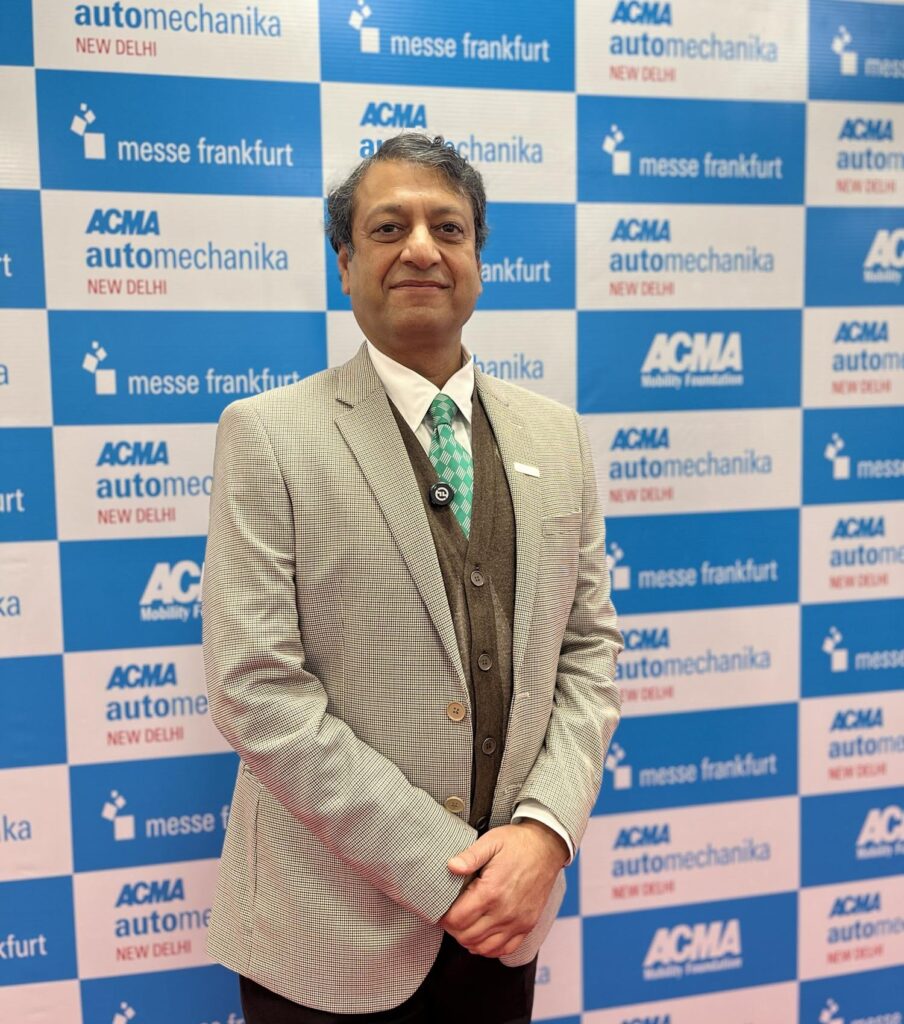
The 6th ACMA Automechanika show that opened with its biggest edition yet, on 5th February, 2026, has also set another great example of sustainability, Mr. Vikrampati Singhania, ACMA President, has said.
Speaking to this publication, he said the event, among several other unique initiatives, adopted eco-friendly practices such as recycled carpets and flex boards, reflecting ACMA’s broader push toward sustainability and ESG goals.
He further said the government has played a major role in supporting the sector, especially through major free trade agreements with the EU, US, UK and New Zealand. These markets already make up 60% of India’s $20 billion auto component exports, and the new FTAs are expected to help the industry double or even triple exports in the coming years. GST harmonisation has also reduced spurious parts and strengthened formalization across the aftermarket.
With global supply chain disruptions creating new opportunities, India is emerging as a reliable alternative for international buyers. According to Mr. Singhania, the industry’s growth will be driven by two areas: improving traditional parts with technology and digital tools, and building new capabilities in electronics and software-based components.
The shift towards electronification and new vehicle technologies should be seen as an opportunity for India to localise, innovate and build joint ventures. Although imports of parts have risen temporarily, exports remain steady, and the long-term outlook is strong. As advanced technologies begin to be manufactured in India, the industry expects imports to fall and exports to rise, supported by OEMs and the government’s strong push for localization and supply-chain stability, Mr. Singhania concluded.