Montra Electric, part of the Murugappa Group, began as a simple idea about five years ago — a belief that mobility could be cleaner, smarter, and far more sustainable, much like the group’s first product: the bicycle. What started as a passion project has now evolved into a movement, augmenting electric mobility landscape. Today, we can see the scale of that transformation at Montra Electric’s manufacturing hub in Ambattur, Chennai. The plant appears to be like a bridge between eras: on one side, the group’s decades-old legacy of engineering discipline; on the other, a significant new chapter shaped by electrification, digital intelligence, and sustainability.
Ambattur’s Second Life
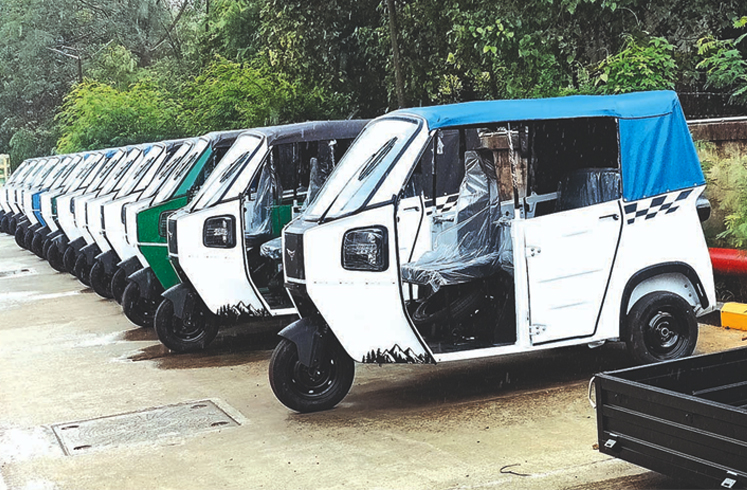
The Ambattur plant has lived many lives, but none as dramatic as its shift from bicycles to commercial vehicle electric mobility. Once a major centre for cycle manufacturing, it has now been rebuilt into a modern EV hub with integrated operations, advanced tech, and a deeply local supply chain. The factory turns out several versions of passenger and cargo three-wheelers, offering different body sizes, charging systems, and performance levels. Its flagship Super Auto — with a true range of 160 km and more than 13,000 units covering nearly 150 million kilometres — shows how quickly the brand has scaled. The Super Cargo range pushes even further, delivering 170 km of real-world range with a 13.8 kWh battery that can fast-charge in just 15 minutes. The 1.2-tonne Super Capacity Cargo comes in three formats (170 cu ft, 140 cu ft, and 6.2 ft FT), widening the appeal for commercial users. Sales reach has grown too, with 150 showrooms across 114 markets, especially strong in the east and northeast.
For decades, Ambattur was known for building bicycles — a symbol of simple, accessible mobility. But by 2020, the company made a bold pivot: most bicycle operations moved to Rajpura in Punjab, and Ambattur began its reinvention into a full EV facility. Today, the group runs multiple electric vehicle verticals — three-wheelers in Ambattur, electric tractors in Chembarambakkam, small commercial EVs in Ponneri – all near Chennai, and heavy-duty EVs in NCR. Ambattur’s own expansion is driven by a new generation of auto drivers who want better design, comfort, efficiency, and higher daily earnings.
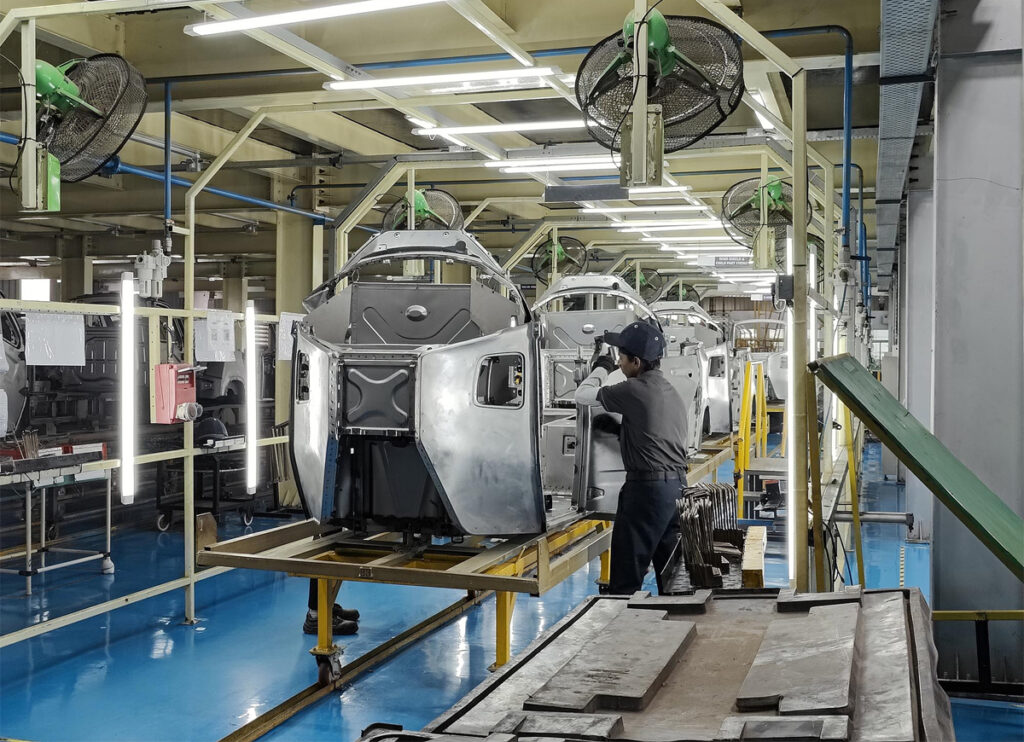
Spread across 12 acres, the Ambattur plant is built entirely for E3W production. It houses painting, assembly, finishing, and end-of-line testing under one roof. Even the BIW welding takes place just 5km away at a partner facility, ensuring a tightly synchronised process and smooth production flow.
Journey of Transformation
The Ambattur factory tells a quiet story of reinvention. What was once a space for storing and assembling bicycles has been rebuilt, piece by piece, into a modern electric-vehicle facility. By 2022, this journey gave birth to the Montra Electric brand, supported by a strong R&D backbone that shaped every idea into a working machine.
That foundation begins at the Corporate Technology Centre, where engineers created the first experimental vehicles to test powertrains and battery systems. Inside, a 120-member design team worked alongside a dedicated quality division and a Proto Shop filled with specialised test rigs — vibration benches, brake testers, door-latch rigs, and long-run dynamometers. Today, full-vehicle testing happens at the SCV plant, allowing faster and more centralised validation.
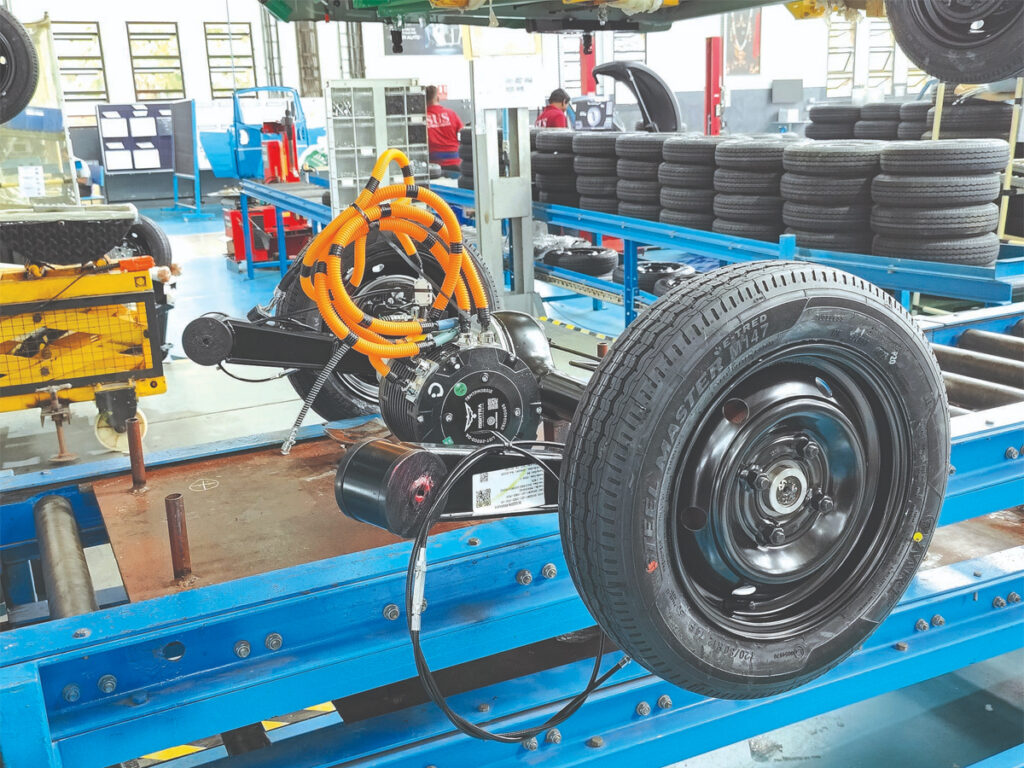
Quality sits at the heart of the entire setup. Each part must clear strict system, process, and PPAP audits before it enters production. On the assembly line, digital torque tools, QR-coded battery mating, poka-yoke steps, and history cards ensure traceability and eliminate errors. Vehicles pass through several quality gates — underbody checks, mid-line inspections, and final verification — before heading to dynamometer testing, on-road trials, underbody lifts, and a final sign-off.
Craftsmanship Meets Smart Manufacturing
The journey of each vehicle in Ambattur begins with precision. A unique VIN is stamped onto the body, after which the shell receives a Gen-11 ED coating — the same corrosion protection used in modern passenger cars, tested to withstand 1,200 hours of salt spray. Robots then take over, laying down an even top coat that gives every vehicle a clean, uniform finish.
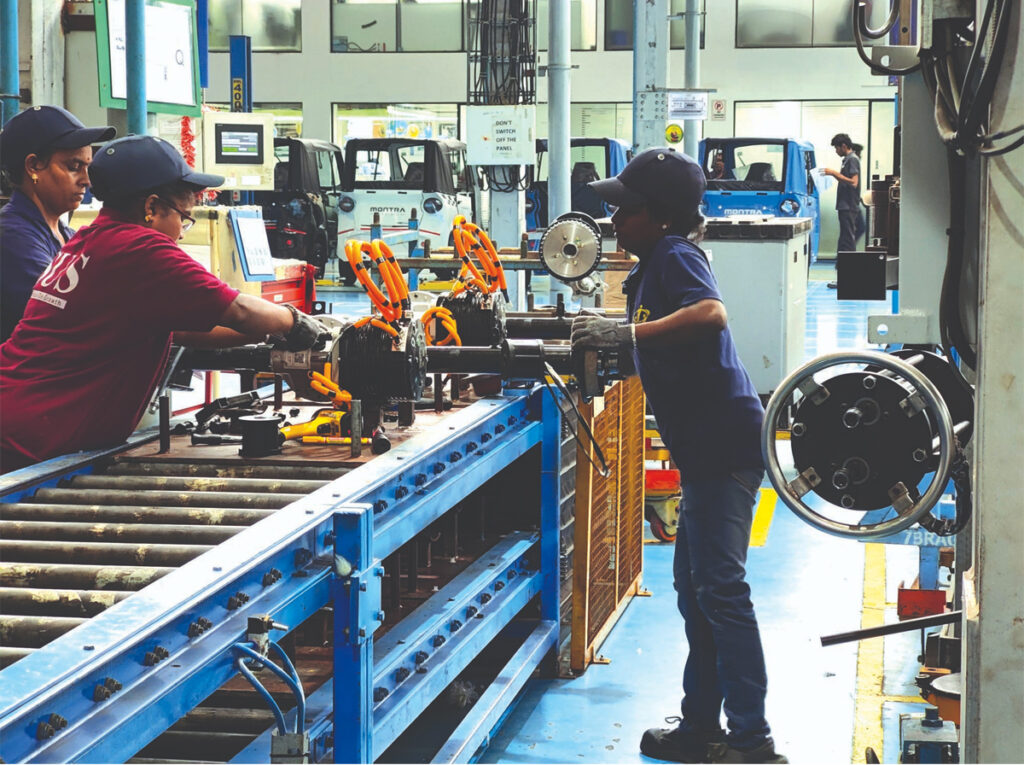
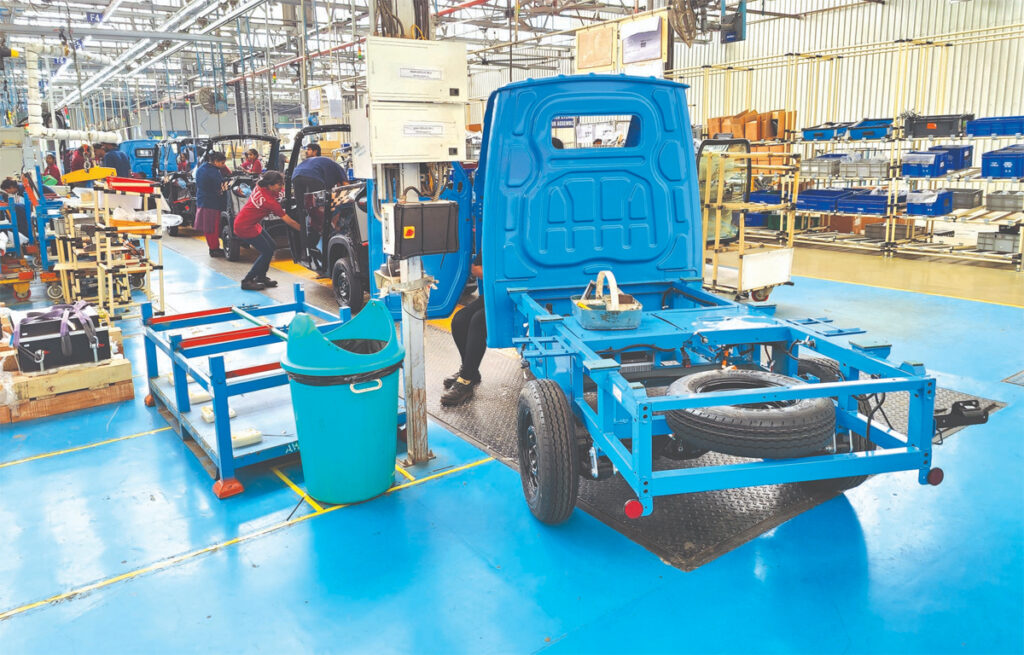
On the assembly line, intelligence guides movement. A digital system tracks each work order through the line, linking torque values, serial numbers, batches, and every step of the process. The body first passes through five pre-assembly stations, then eight hanging conveyor points where the underbody takes shape, and finally to 12 floor-conveyor stations where the battery, seat partition, and hood are installed. What emerges at the end is a fully built vehicle shaped by data, timing, and careful orchestration.
A Supply Chain Designed for Speed
Much of this efficiency comes from a supply chain built for short distances and fast decisions. Nearly 80% of suppliers sit close to the plant, with most based in Chennai. BIW components arrive in company trucks, while plastics and ABS parts come through a daily “milk run” from a supplier just 15 km away. Motors arrive from Sona Comstar and axles from Coimbatore. Low-priority items like switches and fasteners come from Delhi, keeping logistics simple and predictable. A digital warehouse system using FIFO rules manages variant changes smoothly, ensuring fast-charging and standard-battery versions move through the line without stock issues.
Ambattur holds a special place in India’s industrial history — it was the first plant in the country to make a mobile vehicle after Independence: the bicycle. Today, that legacy powers Montra Electric’s product promise, captured in the SUPER philosophy: Space, Utility, Performance, Earnings, and Reliability. Every model — Super Auto, Super Cargo, and the upcoming Super Rig — carries this DNA.
Built Lean, Built Green
The plant runs on lean principles, maintaining only a day’s inventory and producing up to 75 vehicles per shift. Sustainability is woven into daily operations. About 90% of the plant’s power comes from green sources, and a 500-kW solar unit under installation will soon supply a quarter of total energy needs. Solar lighting already powers outdoor spaces.
Water systems rely on biological treatment and tank-to-tank recycling, with zero discharge — waste is reduced to powder for safe disposal. Paint ovens are being upgraded for LPG efficiency, and dedicated effluent and ATP systems help monitor water and chemical use.
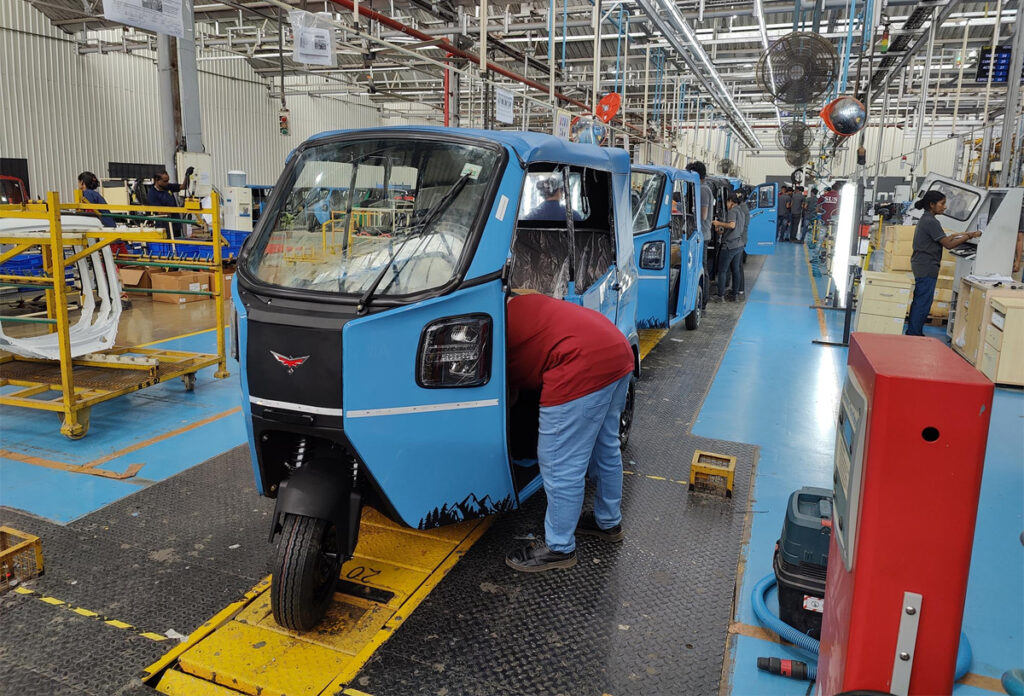
Continuous improvement is a daily practice. Data from brake tests, paint flow, and motor vibration feed into dashboards that guide predictive maintenance and process tuning.
Together, these elements show how a factory with deep roots can evolve into a modern EV powerhouse — blending heritage, engineering precision, and sustainability into a single forward-looking vision.