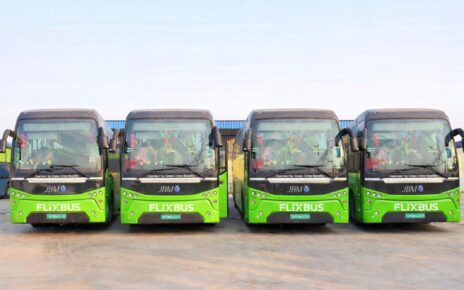
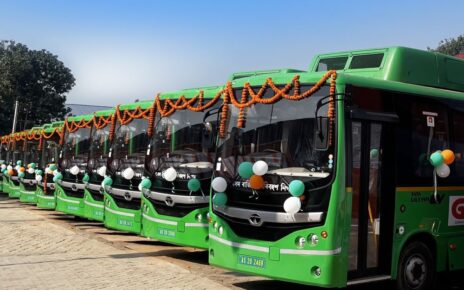
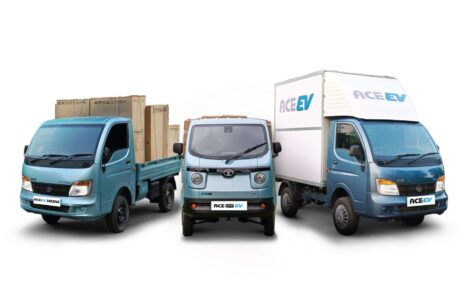
Founded in 2020 with a clear sustainability-first mandate, Green Drive Mobility has, in a short span of five years, built one of India’s most diversified electric mobility operations. Headquartered in Bengaluru, the company today operates across more than 10 cities, running a 100 percent electric fleet that spans two-wheelers, three-wheelers, four-wheelers, cabs and buses, serving a wide spectrum of logistics and mobility applications.
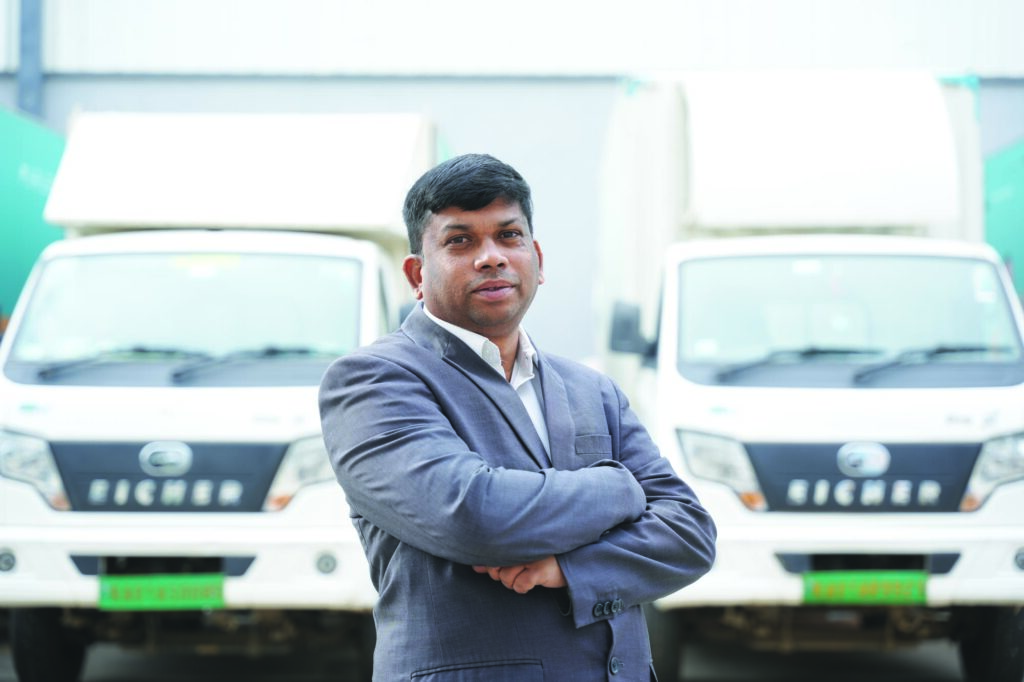
Explaining the genesis of the company, Mr. Hari Krishna, Founder & CEO, says the idea took shape around a strong belief that sustainability and commercial viability would eventually converge. “Green Drive started in 2020 with the objective of building a carbon-free, sustainable mobility organisation. We began with Bengaluru as our head office and gradually expanded into other cities. Today, we are operating in 10 cities, working with different clients across multiple customer segments,” he notes.
From the outset, Green Drive Mobility was structured as a full-stack EV platform rather than a single-segment fleet operator. “We are a full-stack EV company with a 100 percent electric fleet. We operate two-wheelers, three-wheelers, four-wheelers, cabs and buses. Overall, our fleet strength today is over 7,000 vehicles across segments,” Hari Krishna explains. In the four-wheeler category alone, the company operates vehicles ranging from 800 kg to 2-tonne payload classes, catering to increasingly demanding urban logistics requirements.
Diversified Customer Base
Unlike many EV fleet operators who are heavily dependent on e-commerce, Green Drive Mobility has consciously diversified its customer base. According to Hari Krishna, this strategy has been critical to building resilience. “We are not dependent on only one type of customer. E-commerce is one part of logistics, but we also work with food industries, dairy, furniture, courier and industrial customers. Our focus has always been on serving all types of segments,” he says.
This diversified approach has helped the company scale steadily while working with leading enterprise clients such as IKEA, DHL, Zepto, Blinkit and Swiggy. It has also shaped Green Drive’s fleet planning philosophy, pushing the company to look beyond light EVs and adopt higher-capacity electric commercial vehicles capable of handling mid-mile and heavier last-mile applications.

Enter Eicher Pro X
As Green Drive’s operations expanded, the need for reliable electric trucks in the 2-3.5T GVW segment became increasingly evident. “We were specifically looking for vehicles with payload greater than 1.7T because earlier most of our fleet was in the 1 to 1.5-tonne range,” Hari Krishna recalls. “Around the same time, Eicher and a few other brands entered this segment, but what stood out for us with Eicher was their dedicated service network with EV-enabled workshops and overall ecosystem.”
The decision to partner with Eicher was driven as much by operational confidence as by product capability such as factory-built container offering largest cargo space in the segment. “Eicher is a leader in the Light and Medium Duty Truck space. In EVs, the difference is mainly the battery and motor, but service support becomes even more critical. Issues can come in any product – what matters is how quickly they are resolved,” he explains.
This confidence translated into early adoption of the Eicher Pro X, with Green Drive currently operating 30 Pro X vehicles across select deployments. “That service assurance is what gave us confidence to go with Eicher,” Hari Krishna adds.
Battery choice, range confidence and dealer responsiveness
From an operational standpoint, battery configuration and range were key considerations for Green Drive. “The Pro X offers two battery options – 32 kWh and 40 kWh. We preferred the higher capacity battery because we wanted to run longer distances and maximise daily utilisation. For us, the 40 kWh battery made more sense for long-term operations,” says Hari Krishna.
Equally important has been dealer responsiveness, particularly when rapid deployment is required. “When we get an order from a client, speed of deployment becomes critical. There have been instances where we needed vehicles urgently, and we received delivery within two to three days. That helped us onboard new customers quickly and deploy vehicles without delays,” he notes.
This ability to align vehicle availability with customer timelines has directly strengthened Green Drive’s value proposition, enabling faster revenue ramp-up and improved customer satisfaction.
Sustainability, ESG and the bigger picture
For Green Drive Mobility, electrification is closely linked to the broader ESG agenda. Hari Krishna believes this will soon become a defining factor for enterprise logistics decisions. “Today, most MNCs are required to maintain ESG goals, and government regulations will only become more stringent. Carbon credit trading is also expected to start in India soon, similar to Europe and the US,” he observes.
In this context, EV fleet operators play a strategic role. “Having a strong EV ecosystem allows us to work closely with corporates and help them meet their ESG objectives. Sustainability is no longer optional – it is becoming a core business requirement,” he says.
Operational realities and learning curves
Despite the strong growth outlook, Hari Krishna is candid about the challenges of operating EV fleets at scale. “People often think EVs are easy to operate, but service and maintenance are still very important. Even though there are fewer moving parts, periodic maintenance and attention to small details are critical for long-term performance,” he explains.
Charging discipline is another area that requires constant monitoring. “In most cases, we ask clients to provide charging infrastructure at their premises. We closely track charging patterns – slow charging, fast charging and cell balancing. If batteries are charged properly and consistently, vehicle performance improves significantly,” he adds.

Ambitious growth targets anchored by strong partnerships
Looking ahead, Green Drive Mobility has set aggressive expansion targets. “This year, our target was around 13,000 vehicles. We have already crossed 7,000 and expect to reach between 10,000 and 13,000 in the near term,” says Hari Krishna. By 2030, the company aims to operate close to 25,000 EVs, including buses, and eventually expand into intercity and heavier truck segments.
Eicher Pro X will be a key part of this journey. “We are looking to add more Pro X vehicles to our range, potentially within the next few months,” he reveals. Initial deployments will focus on major logistics hubs such as Bengaluru, Hyderabad, Delhi-NCR, Mumbai and Pune, followed by phased expansion into Tier-2 and Tier-3 cities.
Summing up his confidence in the road ahead, Hari Krishna points to experience as the biggest enabler. “As a five-year-old company, we have already faced vehicle-related challenges and learned how to manage them. The next focus area is riders – taking care of them, supporting their careers and building a stable workforce. If we do that right, the rest of the challenges can be handled.”
For Green Drive Mobility, the partnership with Eicher is not just about adding vehicles to the fleet. It is about building a scalable, reliable and future-ready electric logistics ecosystem – one that aligns commercial growth with India’s transition to clean mobility.