State Express Transport Corporation (SETC) stands at an inflection point in Tamil Nadu’s mobility landscape – a legacy institution with nearly five decades of history, now accelerating into a new era of modernisation and operational discipline. Originally formed in 1975 as the long-distance express wing of the Pallavan Transport Corporation, later restructured as Thiruvalluvar Transport Corporation in 1980, and eventually reorganised into today’s State Express Transport Corporation Tamil Nadu Limited in 2002, SETC has played a defining role in connecting district headquarters and major urban centres across the state and the region.
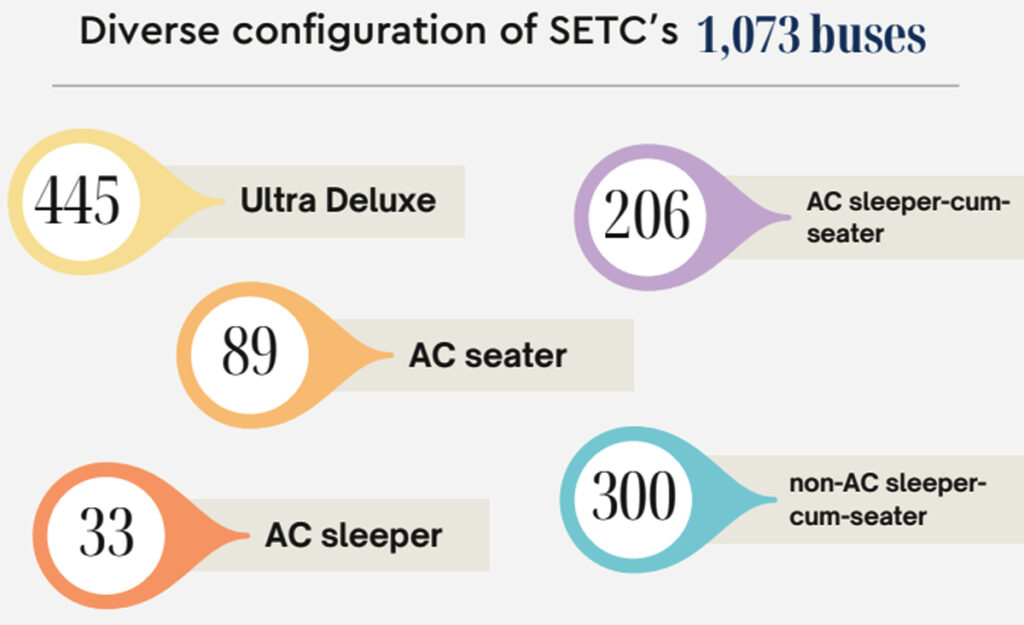
Today, SETC operates with a sizeable fleet strength of 1,074 buses and 1,000 scheduled services across Tamil Nadu and adjoining states – including Karnataka, Kerala, Andhra Pradesh and Puducherry – reaffirming its position as the state’s long-distance backbone. Within Tamil Nadu alone, SETC runs 108 intra-state routes with over 600 daily services, while its inter-state network spans 88 routes and 392 services covering major corridors to Bengaluru, Kochi, Tirupati, Hyderabad (via Andhra), and other key destinations.
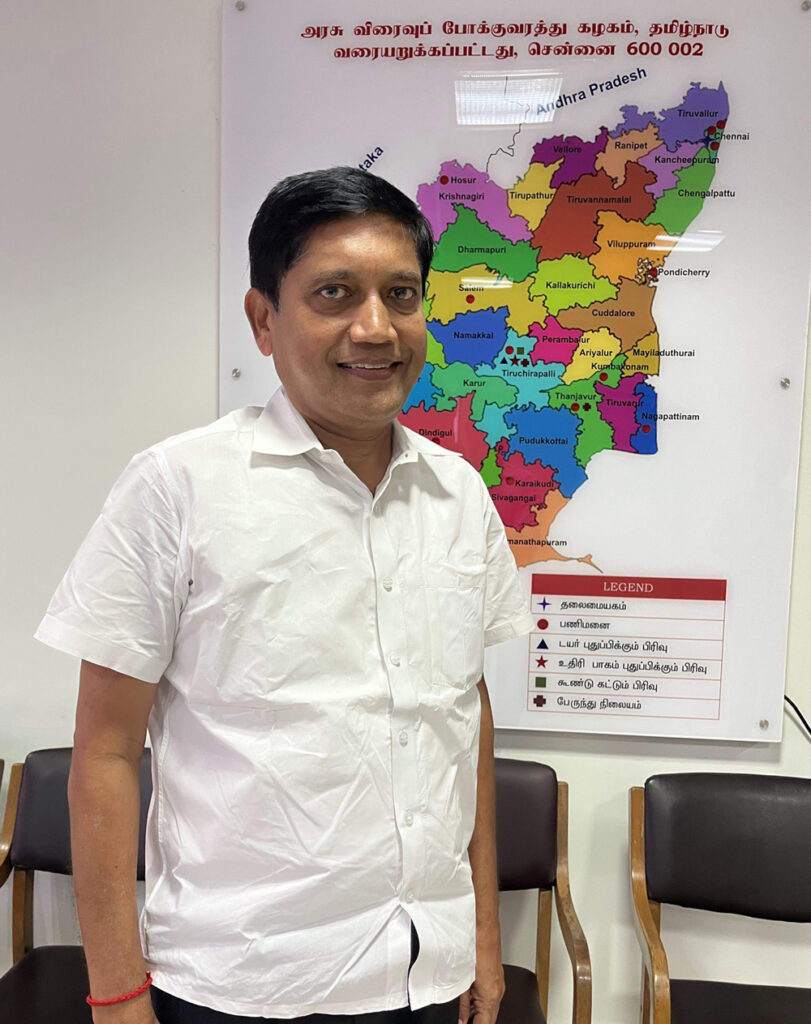
Against this backdrop of scale, reach and social responsibility, Managing Director Mr R. Mohan shared a candid assessment of SETC’s operational realities and the forward-looking strategy now being executed to elevate passenger comfort, improve cost efficiency and strengthen long-distance mobility for the future.
Legacy routes, expanded reach
Mr Mohan emphasised that SETC’s operational footprint is not just wide but deeply intertwined with the state’s economic and social mobility. “We operate on many long-haul corridors – those connections are integral to regional mobility and to communities that rely on us,” he said.
However, the cost of operations has been steadily rising. On certain Ultra Deluxe services, SETC earns around ₹42 per km, whereas the operating cost works out to nearly ₹61 per km, creating a structural gap that affects sustainability. While subsidies and capital support reduce the effective cost to around ₹49 per km, the gap remains significant. “Fuel and maintenance trends make it hard to sustain older vehicle profiles on long-distance duty,” he explained, pointing to the steady rise in diesel prices and the impact on variable costs and steady increase in wages.
Despite these pressures, SETC’s mandate is welfare-driven. Unlike private operators motivated purely by profitability, SETC ensures uninterrupted connectivity to towns, villages and underserved regions. “We are a welfare-oriented state operator – our mission is to connect people affordably while moving the organisation toward financial sustainability,” Mr Mohan said.
Multi-axle entry, Premium coaches and Diversified products
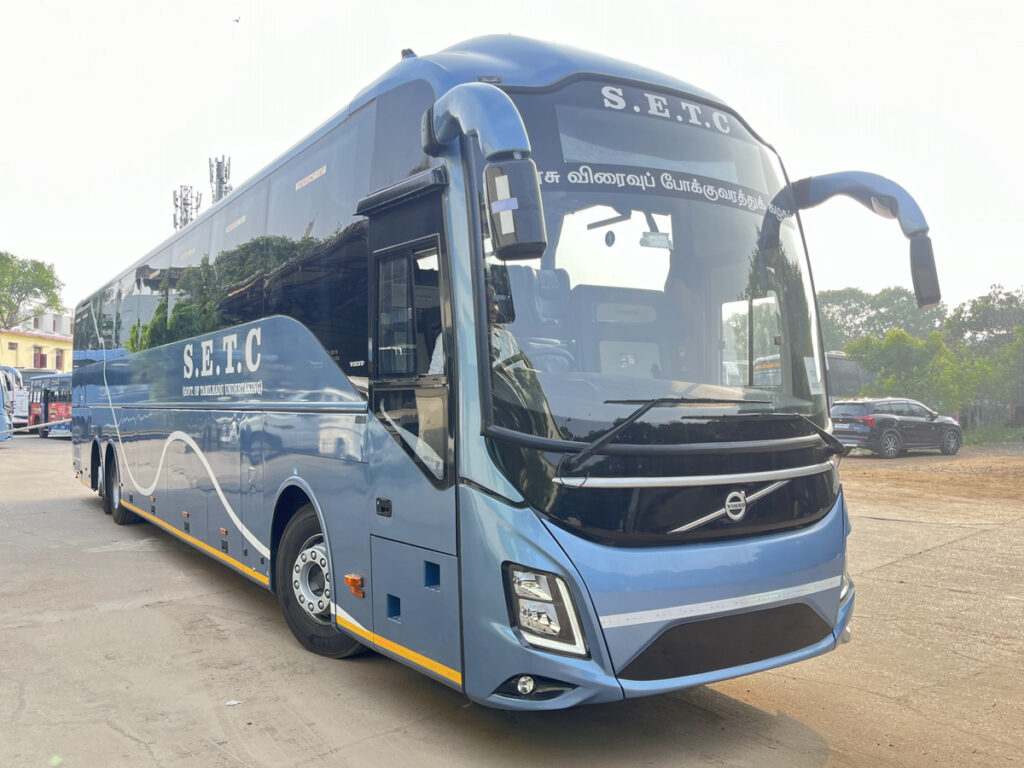
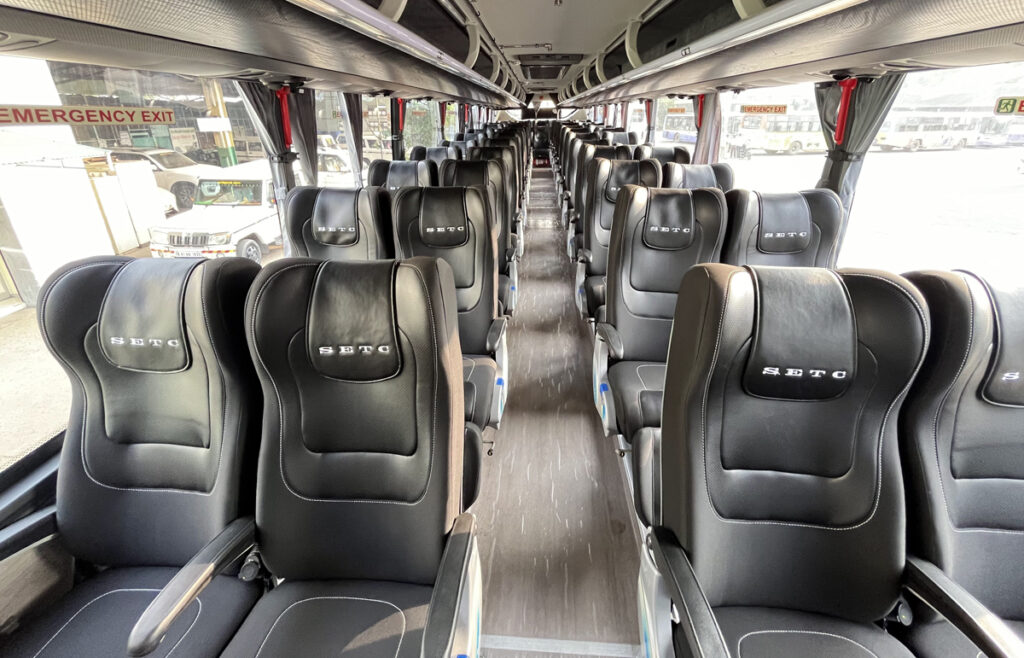
Responding to shifting passenger expectations, SETC is refreshing its fleet profile with new-generation vehicles, including premium and multi-axle coaches. 20 Volvo buses are currently being inducted, with multi-axle configurations expected to enhance comfort and reduce per-seat operating costs on longer routes.
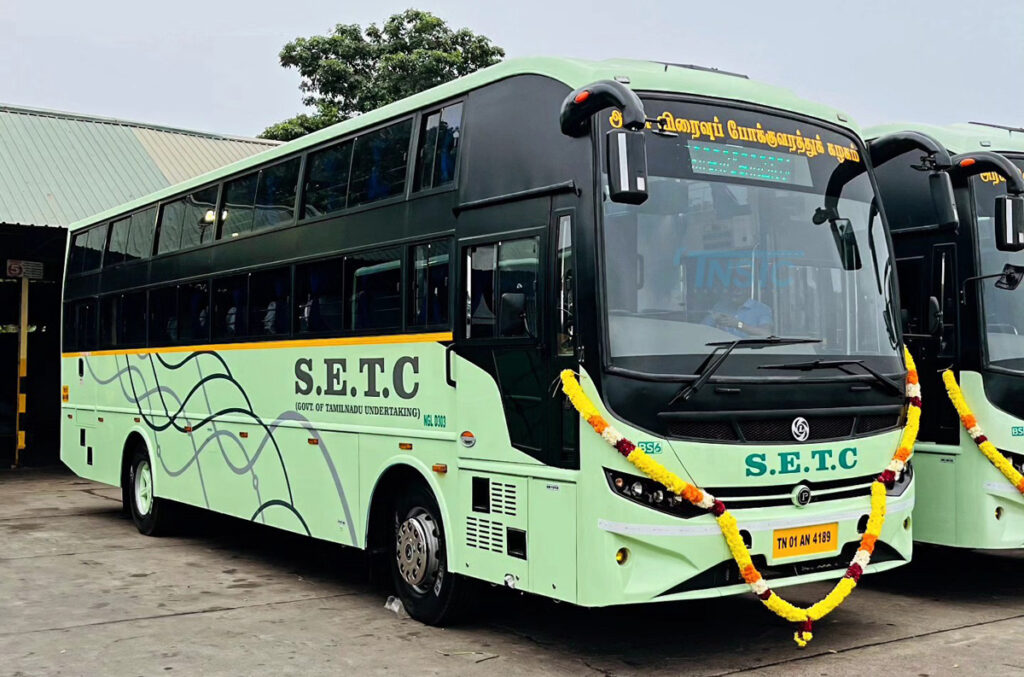
Mr. Mohan noted that passenger preference has shifted strongly toward sleepers on night routes. “A sleeper coach that is full can generate higher per-kilometre returns; passengers also prefer the comfort for 8–11-hour journeys,” he said. However, he stressed that safety and driver discipline remain paramount in operating sleeper fleets.
CNG, retrofits and a phased shift toward electrification
To counter the impact of diesel price volatility, SETC is piloting alternative fuel strategies. CNG retrofits are being tested on existing vehicles, with a large-scale plan to convert up to 1,000 buses (all Tamil Nadu STUs put together) based on the positive results seen in initial pilots.
Early outcomes indicate potential savings of 15–20%, depending on CGD pricing and route conditions. “We are seeing encouraging results – if CGD infrastructure expands and support continues, we can scale CNG conversions quickly,” Mr Mohan said.
Electrification remains a medium-term frontier. While electric buses offer promise, long-distance duty cycles require robust testing, battery-swapping capabilities at highway nodes, and commercially viable maintenance ecosystems. “Electric buses are promising, but we must validate charging cycles, duty patterns and total cost of ownership on our long-haul network,” he cautioned.
Digital transformation – Emerging as a national leader
One of SETC’s most notable transformations is digital. The corporation has recorded breakthrough achievements recognised at the national level:
- ASRTU 2023–24 Awards:
1st place – Digital Transactions
1st place – Employee Productivity
2nd place – Vehicle Utilisation - SKOCH 2024 Award for the innovative “Namma Payani” passenger dashboard
- “Namma Perundhu” dashboard shortlisted as a semi-finalist for SKOCH 2025
- Digital transactions have risen to 23% across services and by OTRS (Online ticket reservation system) 37%
These milestones underscore SETC’s emerging competency in data-driven operations, digital service delivery, and enhanced commuter engagement.
Safety, training and maintenance discipline
SETC continues to invest heavily in driver training and maintenance systems. A dedicated driving institute in Trichy delivers structured and refresher programmes. Fuel efficiency, telematics insights and passenger feedback are all used to monitor driver behaviour and identify issues such as rash driving or high diesel consumption. “Driver behaviour, vehicle condition and maintenance discipline together determine both safety and operating cost,” Mr Mohan said.
Each vehicle follows a strict daily maintenance protocol – defect reporting, brake checks, air-leak assessment, and maintenance certifications before being cleared for duty. Defects logged by drivers must be resolved before a vehicle receives fuel for the next trip – a control mechanism that enforces accountability.
Depot-level maintenance infrastructure and workshops enable timely repairs, part replacements and preventive service routines – a backbone that supports SETC’s scale of long-distance operations.
A balanced, pragmatic and forward-looking roadmap
Mr Mohan emphasised that transformation cannot be sudden or disruptive, but must be phased and calibrated. Retrofitting older vehicles, inducting premium coaches, piloting alternative energy sources, expanding telematics, and enforcing rigorous safety protocols collectively represent a pragmatic roadmap toward operational excellence.
“We will continue with trials – CNG, conversions and modern coaches – scale what works, and keep safety and operational reliability at the core,” he said.
SETC’s journey reflects the reality many state-run long-distance operators face: balancing legacy obligations, rising costs and the imperative to modernise. With modern fleets, tech-driven dashboards, alternative fuel trials and a strengthened training ecosystem, SETC is now positioning itself for the next phase of resilient, sustainable and passenger-centric mobility.