Seventy-five years after it first began serving farmers around Pune, Hundekkaree Goods Transport Service (HGTS) today stands as a professionally managed, pan-India road logistics company supporting some of the country’s most demanding industrial supply chains. Founded in 1950 by Late Shri Babanseth V. Rukari, the company has evolved from a bullock-cart-based agricultural transport operation into a fleet-driven logistics partner known for reliability, ethical practices, and long-standing customer relationships.

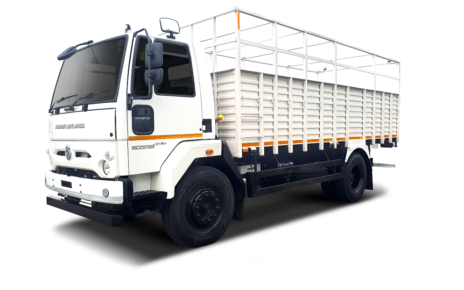
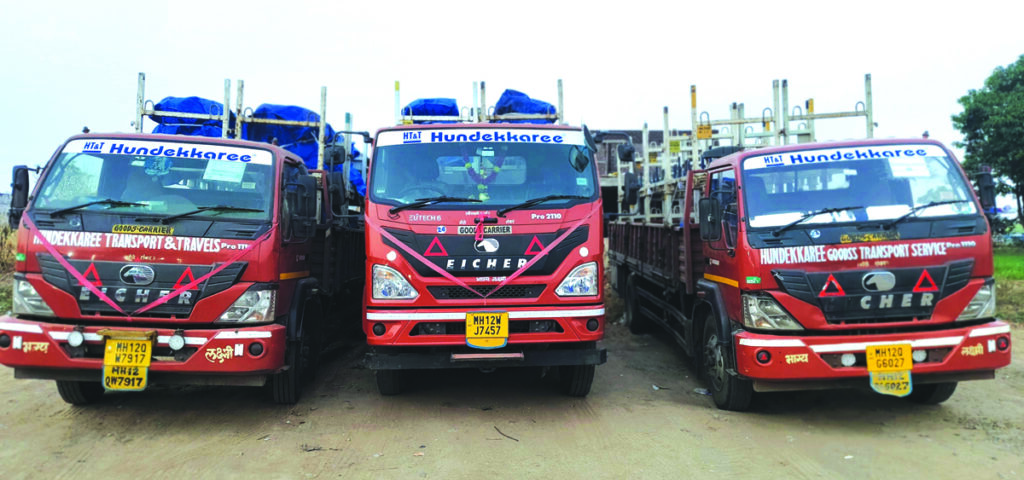
This generational journey is now being led by Mr. Sunjjoy M. Rukare, Director, and Mr. Santosh M. Rukari, Director, who have focused on strengthening HGTS’s industrial presence while staying rooted in the values laid down by the founders. Today, HGTS operates a fleet of 145 owned vehicles ranging from 8 MT to 30 MT, including open-body trucks, containerized vehicles, 20-ft EXIM container carriers, and high-capacity multi-axle trucks.
“Our growth has never been about aggressive scale at any cost. It has always been about doing the job right, earning trust, and growing alongside our customers,” says Sunjjoy.

HGTS’s core business spans long-haul industrial transportation, container movement, and dedicated contract logistics. Vehicles are frequently customized to meet specific cargo and route requirements, particularly for automotive, engineering, and EXIM-linked movements. This flexibility, supported by promoter-led decision-making, has helped the company retain customers over decades.
From Regional Roots to National Corridors
HGTS today operates across West, South, Central, and North India, with strong route density originating from Pune, Kolhapur, Belgaum, Nagpur, Ahmedabad, Jaipur, Rudrapur, Roorkee, and Goa. These corridors connect key industrial hubs including Bangalore, Chennai, Hyderabad, Coimbatore, Delhi NCR, and Haridwar.
A significant strength lies in the company’s EXIM container movement from Nhava Sheva (JNPT), servicing industrial customers across Maharashtra and adjoining regions. Rather than rapid geographic expansion, HGTS has followed a measured strategy focused on operational depth.
“We prefer strengthening corridors where we already have strong execution capability instead of spreading ourselves thin,” explains Santosh. “This ensures better fleet utilization, predictable transit times, and tighter service control.”
Going forward, the focus remains on increasing containerized movement, selectively adding capacity in high-growth industrial clusters, and deepening engagement with existing customers rather than chasing volume-led growth.
HGTS’s client portfolio reflects this industrial orientation. The company works with Mahindra Logistics, Finolex Cables, Hindustan Coca-Cola Beverages, POSCO India, Automotive Axle, AAM India Manufacturing, and Visaka Industries, serving sectors ranging from automotive and FMCG to metals, cables, and building materials.
Delivering Value Beyond Transportation
HGTS’s value proposition extends beyond basic freight movement. The company often supports customers with route planning, fleet deployment strategy, and capacity assurance, particularly for complex industrial operations.
One notable example is HGTS’s involvement in setting up the transportation framework for Finolex Industries’ Ratnagiri plant, where the team supported the client from the planning stage through consistent execution during the plant’s establishment phase. “When a client is setting up a new facility, transportation becomes mission-critical. Our role is to remove uncertainty from that equation,” notes Sunjjoy.
Another long-standing association is HGTS’s 14-year partnership with Mahindra & Mahindra and Mahindra Logistics, involving long-haul industrial movements across locations such as Chakan, Rudrapur, Haridwar, Zahirabad, and Jaipur. These operations demand high fleet availability, strict adherence to schedules, and zero tolerance for disruption.
For customers such as Finolex Cables and POSCO India, HGTS handles high-value engineering and metal cargo requiring careful handling, consistent transit times, and disciplined capacity planning. These relationships are sustained through transparency, responsiveness, and operational reliability.
Infrastructure, Fleet Modernisation, and Reliability
HGTS’s operational backbone includes strategically located yards, maintenance facilities, and container handling capabilities across key routes. Preventive maintenance using genuine spares and a strong focus on vehicle uptime play a critical role in service consistency.
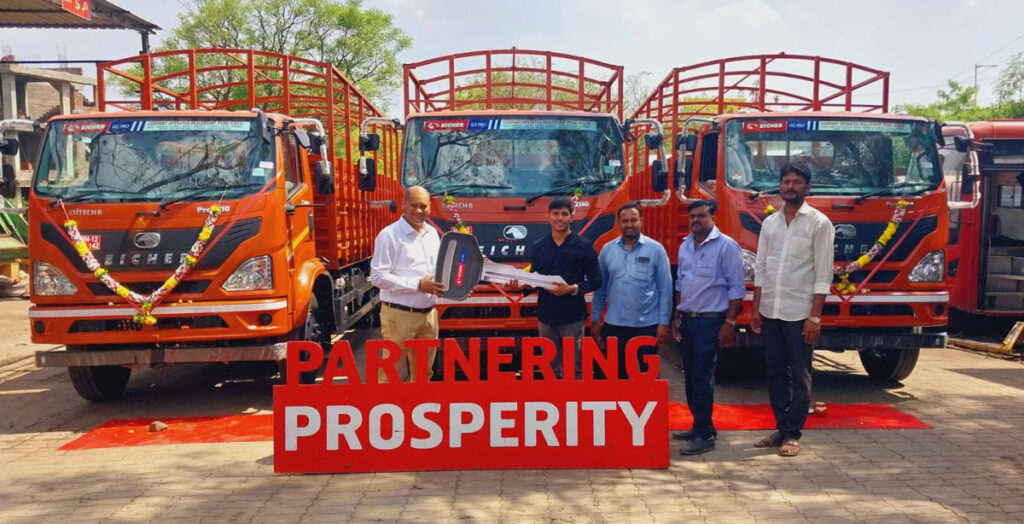
Fleet modernisation has been a continuous process. HGTS has consistently invested in newer vehicle platforms and was among the early adopters in Pune to trial brands such as MAN, Mahindra Navistar, and Eicher Pro. The fleet today complies with current emission and safety norms, with older vehicles phased out systematically.
“Newer vehicles are not just about compliance. They improve driver comfort, reduce downtime, and deliver better operating efficiency,” says Santosh.
Modern vehicles have also had a visible impact on driver comfort and operating efficiency. Speaking about the newer Eicher vehicles in the fleet, Santosh notes that cabin refinement has improved significantly. “Cabin noise has reduced so much that drivers can now comfortably listen to music directly on their mobile speakers, without the need for additional tapes or sound systems. The smoothness of the engine and driving comfort allow drivers to cover 700 to 750 kilometres in a single stretch without fatigue,” he says.
Fuel efficiency has emerged as another major benefit. “Across segments, the vehicles are delivering the average that was promised to us. This has reduced fuel consumption and directly improved revenue,” Santosh adds. Improved service support and a wider service network have further strengthened vehicle uptime, even in outstation locations.
People, Technology, and Long-Term Stability
HGTS operates through a network of branch offices and route hubs across Maharashtra, Karnataka, Gujarat, Telangana, Uttarakhand, Rajasthan, and Tamil Nadu. Supporting this network is a workforce of drivers, operations staff, supervisors, and administrative teams, many with long tenures.
Employee welfare is treated as a business imperative. Timely payments, insurance coverage, and family support systems have helped HGTS maintain low attrition levels. “In logistics, stability on the ground directly reflects in service quality. Our people are our biggest operational strength,” says Sunjjoy.
All HGTS vehicles are equipped with GPS tracking, with real-time access shared with customers. Digital tools for trip monitoring and reporting improve visibility, fleet utilization, and customer confidence.
Navigating Change While Staying Grounded
HGTS primarily transports automotive and auto components, engineering goods, metals, FMCG, beverages, cables, building materials, and industrial raw materials, while also offering niche services such as containerized EXIM movement and customized vehicle solutions.
The company has adapted effectively to sector-wide changes such as GST implementation, improved highway infrastructure, and FASTag adoption, enabling more predictable transit schedules. Challenges such as driver availability and rising operating costs remain, and HGTS addresses these through disciplined cost control, long-term contracts, and operational optimisation.
Recognitions including Mahindra Logistics Business Partner Awards and Apollo CV Awards nominations reflect HGTS’s consistent performance. Looking ahead, the company is targeting 15–20% growth in FY26–27, driven by fleet optimization and deeper customer engagement.
“Our founders built this company on trust and ethics. Everything we do today is about protecting that legacy while preparing for the future. Notably, the third generation, Pratthamesh Rukare, Sagarika Rukari and Vighnesh Rukare, have also joined the family business and are playing an active role in further strengthening HGTS’s foothold in the industry while continuing its commitment to customer-centric service,” Santosh concludes.