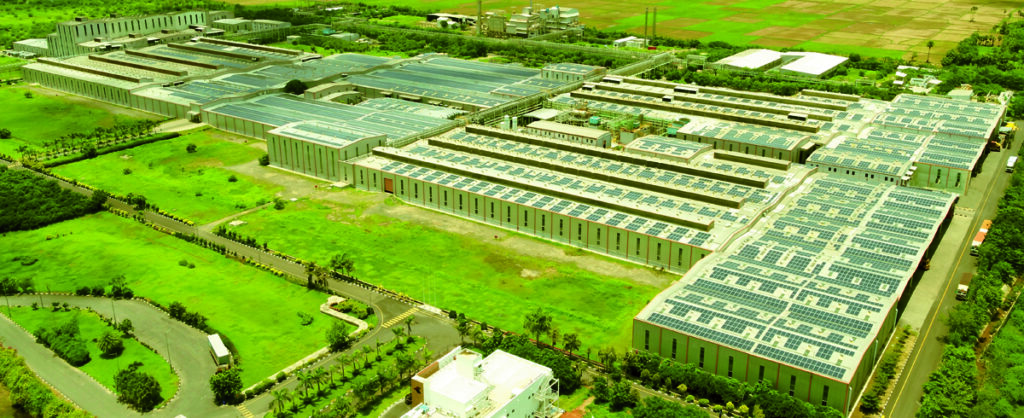
JK Tyre is positioning its Chennai greenfield facility as a strategic fulcrum in the company’s premiumisation and export agenda – a highly automated, sustainability-first plant that already contributes a material portion of consolidated revenue and is designed to scale. During a tightly run plant visit and round-table, the company’s senior leadership laid out the operational, technological and commercial blueprints that support that claim – and explained how investments in automation, renewable energy and product R&D underpin an ambition to move up the value chain while protecting margins.
Chennai – engineered for premium products, exports and scale
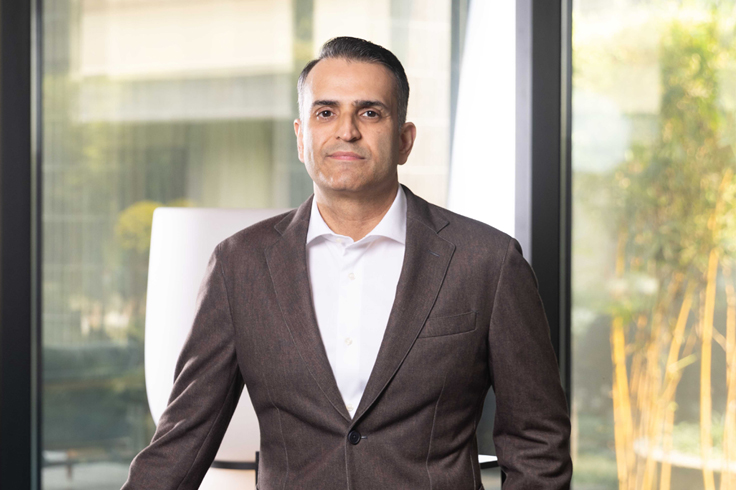
“Chennai is 26% of our production and a significant part of our revenue mix,” said Mr. Anshuman Singhania, Managing Director, underlining the strategic role the plant plays for both domestic and international markets. Commissioned as a greenfield in February 2012, the facility was built rapidly – the team stressed a record 17-month project execution on what was effectively a reclaimed wetland – and was designed from day one to be future ready.

The plant’s current throughput is reported at roughly 350 metric tons per day, with a blueprint allowing expansion up to 600 tons per day when market conditions warrant. “We kept the space and the modular approach in mind so we can scale without re-engineering the upstream balancing equipment – that’s capital efficiency,” Singhania said. The modularity approach is central to JK Tyre’s capital allocation framework – prioritise high utilisation and targeted expansion in economically attractive pockets rather than blanket greenfield programmes.
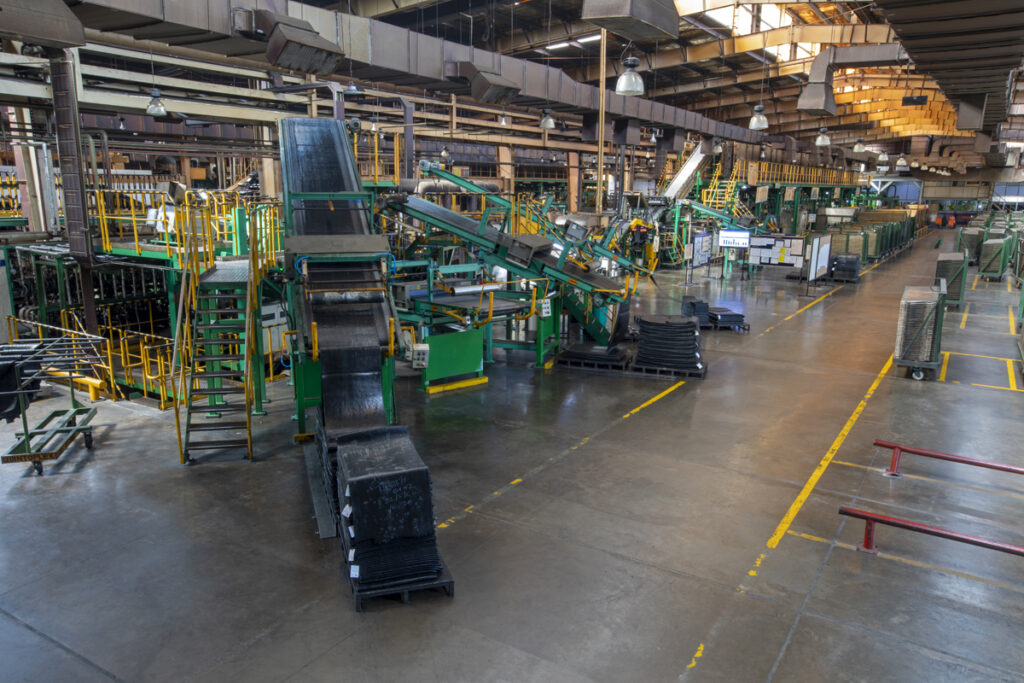
On utilisations Singhania added that the plant runs across three shifts and is operating at north of 90% capacity utilisation – evidence, he argued, of robust OEM and aftermarket demand mix and the plant’s operational efficiency.
Automation, IIoT and proprietary solutions
Technology and process innovation were presented not as buzzwords but as direct levers for quality, cost control and product premiumisation. Mr. V. K. Mishra, Technical Director, framed the conversation around automation, data and product differentiation.

“We have automated end-to-end controls – from tyre building to curing and inspection – so manual interventions are minimised and online data capture drives real-time quality control,” Mr. Mishra explained. He highlighted the plant’s use of cameras, sensors, AGVs and conveyorisation to reduce variation and ensure traceability. On the software side, the team said proprietary AL/ML routines are used for early detection of wastage and quality deviations – a capability they developed jointly with select vendors.

The R&D investment thesis is complementary – JK Tyre houses a 250-strong R&D team near Mysore with advanced testing assets including an anechoic chamber for noise and vibration analysis. “EVs change the noise profile of vehicles; cabin noise and rolling resistance become critical inputs. That’s why our PCR and EV-specific compounds are tested extensively,” Mr. Mishra said. He pointed to the company’s UX Royal Green product – certified under ISCC PLUS – and R&D work on wear-resistant compounds for high-torque EV applications.
JK also emphasised sensor and TPMS integration. “We are moving from aftermarket TPMS kits to embedded sensor solutions – that next generation of tyres will have sensors integrated and linked to OEM dashboards,” Mishra noted, describing the data feedback loop as a product improvement and aftermarket engagement enabler.
Sustainability and resource efficiency
Sustainability isn’t framed as a compliance checkbox but as a manufacturing and product differentiation axis. The Chennai plant was showcased as one of the company’s most energy-efficient and green facilities – rooftop solar capacity of 7.5 MW was highlighted, along with a stated renewable energy mix (the management referenced renewable usage in the 70% range for the site) and efforts to replace coal with biomass – the latter reportedly displacing a material portion of thermal fuel in boiler operations.
Water stewardship is another headline – the plant operates on a zero liquid discharge basis and the group claims industry-leading benchmarks for water conservation. Community programmes, Miyawaki plantations, pond renovation and local skilling initiatives were presented as part of an integrated ESG footprint that improves social license to operate.
Product strategy – EV, TBR and premium PCR focus
JK Tyre outlined a three-pronged product push – premium PCR for passenger cars, EV-optimised tyres, and continued leadership in truck and bus radials (TBR). “EV tyres must deliver low rolling resistance, high wear resistance and low noise – we’ve developed specific compounds and structures to meet those requirements,” Singhania said, while reiterating that the firm doesn’t see EV tyres as a separate line requiring dedicated lines – the Chennai set-up can handle EV applications on existing lines.
On commercial vehicle tyres, JK Tyre reiterated market leadership claims in TBR and highlighted targeted capacity expansion projects elsewhere – including significant TBR capacity under the company’s ongoing capex pipeline to capture the radialisation trend. The management reiterated the company’s fleet engagement programmes – mobility-as-a-service and per-km tyre-as-a-service models – designed to lock in large fleet customers and protect lifetime value.
Financials and growth outlook
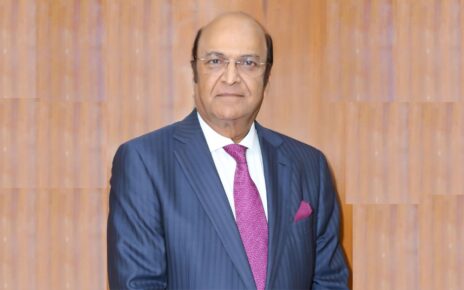
Mr. Sanjeev Aggarwal, CFO, framed the capital and margin matrix for the company. Aggarwal said the company is deploying a calibrated capex posture – large greenfield and brownfield investments are balanced against modular expansions and targeted upgrades – and pointed to the recent $130 million foreign currency raise that is earmarked for specific expansion projects across TBR, PCR and light radial lines.
On demand outlook, the company’s management voiced a cautiously optimistic macro stance – expecting mid-to-high single digit growth in exports and a domestic demand uptick driven by passenger vehicle recovery, rural revival and infrastructure-led freight growth. “With improved monsoons, eased interest rates and the GST tailwinds, we expect a positive reversal in consumer sentiment and sectoral demand,” Singhania said, with the company guiding to sustained double-digit consolidated growth in the near term, subject to cyclical variability.
Export and market diversification
Export markets are a strategic lever – JK Tyre uses its Mexico base for direct access to the US under USMCA while routing other products from India to Europe, LATAM and the Middle East. The management said exports represent a mid-high single digit portion of revenue and that the company has rebalanced shipments following recent trade turbulence. “We diverted previously US-destined shipments to Europe and Latin America where margins and access profiles are favourable,” the team explained.
JK Tyre’s Chennai plant presents a repeatable template – marry high automation and digital control with targeted R&D, embed sustainability across operations and products, and pursue a premiumisation strategy to protect margins in a capital-intensive industry. As Mr. Singhania put it – “Investment is required to be green and future ready, but productivity and quality improvements let you balance that investment with profitability.” For stakeholders watching tyre companies recalibrate for EVs, export diversification and ESG, JK Tyre’s Chennai playbook is a pragmatic, execution-oriented case study in industrial transformation.