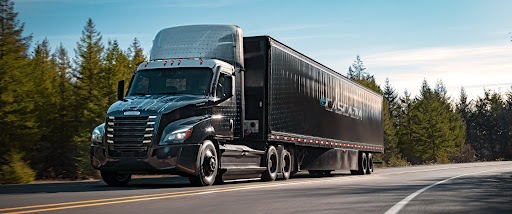
According to Research Intelo, the global electric semi-truck market was valued at USD 3.2 billion in 2024 and is projected to reach USD 18.7 billion by 2033, growing at a robust CAGR of 21.8 percent during the 2024–2033 period. This accelerated growth is being driven by an intensifying global push for decarbonisation and the urgent need to reduce greenhouse gas emissions across the transportation and logistics sectors.
As governments and corporations commit to net-zero targets, demand for electric semi-trucks is gaining strong momentum. Advances in battery technology, tightening emission regulations, declining battery costs, and the rapid expansion of charging infrastructure are collectively reshaping the commercial vehicle landscape. In parallel, investor and consumer preference for sustainable supply chains is further reinforcing market traction.
A Structural Shift in Freight Transportation
The global logistics ecosystem is undergoing a structural transformation. What was once considered experimental is now evolving into a commercially viable and scalable solution. Electric semi-trucks are transitioning from niche pilot deployments to mainstream fleet integration, signalling a fundamental reset in how long-haul freight will move in the coming decade.
Quieter operations, zero tailpipe emissions, and digitally enabled drivetrains are positioning electric trucks as the next logical step in freight efficiency and sustainability.
Emissions, Economics, and Regulation
The transportation sector contributes nearly 20 percent of global CO₂ emissions, with heavy-duty trucks accounting for a disproportionate share. Rising diesel costs, increasingly stringent emission norms, and mandatory sustainability disclosures have created a compelling business case for electrification.
Governments across North America, Europe, and Asia are tightening emission standards while offering financial incentives to accelerate fleet electrification. Anti-idling regulations and urban access restrictions are further compelling logistics operators to reassess diesel dependence. These policy shifts are no longer optional – they are redefining fleet procurement strategies worldwide.
Technology Turns Viability into Reality
Just a few years ago, fully electric Class 8 trucks were widely viewed as impractical for real-world operations. That narrative has changed decisively. Breakthroughs in battery energy density, thermal management systems, and fast-charging technologies have unlocked commercial viability.
Key enablers include long-range lithium-iron phosphate and emerging solid-state batteries, megawatt charging systems (MCS) that significantly reduce charging downtime, and AI-driven telematics that optimise route planning and energy consumption. Early adopters are now demonstrating that electric semi-trucks can match – and in some duty cycles outperform – conventional diesel platforms.
Lower Total Cost of Ownership Strengthens the Business Case
Beyond sustainability, economics remain a critical decision driver. Electric semi-trucks offer a compelling total cost of ownership advantage due to fewer moving parts, lower energy costs, and reduced maintenance requirements. Lower downtime and predictable operating expenses are enabling fleet operators to improve long-term cost efficiency, even as upfront acquisition costs remain higher than diesel counterparts.
Competitive Momentum Builds Across OEMs
A growing number of global manufacturers are racing to establish leadership in this space, balancing range capability, payload efficiency, and operating economics. Key players actively shaping the competitive landscape include Tesla, Volvo Group, Daimler Truck, BYD Company Limited, Nikola Corporation, Paccar Inc., Scania AB, MAN Truck & Bus, Hyundai Motor Company, Tata Motors Limited, and Cummins Inc., among others.
Early Adoption Across Key Industries
Electric semi-trucks are seeing faster uptake in segments where predictable routes and return-to-base operations offer immediate advantages. These include e-commerce and last-mile logistics, food and beverage distribution, organised retail, port operations, and manufacturing supply chains. For many operators, fleet electrification is fast becoming a visible marker of environmental responsibility and corporate governance maturity.
Challenges Remain, but Momentum Is Unmistakable
Despite strong tailwinds, challenges persist. High upfront vehicle costs, uneven charging infrastructure, battery replacement economics, and range constraints for ultra-long-haul routes continue to temper adoption in certain use cases. However, these barriers are being steadily addressed through grid upgrades, renewable energy integration, dedicated electric freight corridors, battery-swapping pilots, and the convergence of autonomous driving technologies with electric platforms.
Outlook: A Market Redefining Freight Economics
Research Intelo projects that electric semi-trucks will account for a significant share of new truck sales over the next decade. Continued reductions in battery prices, the possible integration of green hydrogen for heavier applications, and data-driven fleet management models are expected to further accelerate adoption.
This is no longer a speculative market. Electric semi-trucks are not just growing in volume – they are fundamentally rewriting the economics, sustainability metrics, and operational intelligence of global freight movement.