A rider searches online for a replacement brake component, finds the motorcycle’s name in a product title and places an order. The photograph looks familiar. The package arrives. Only when the mechanic compares the old and new parts does the real question emerge: is this the correct version?
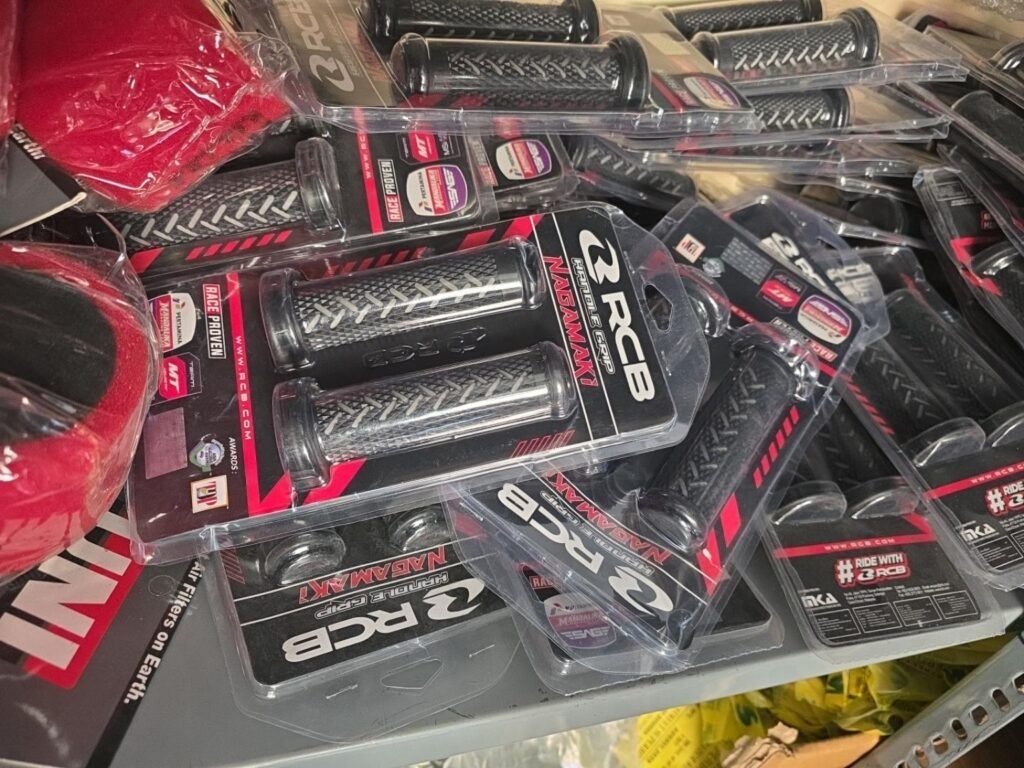
That is a hypothetical example, not a reported customer incident. But it illustrates a basic problem for the growing online spare-parts trade: a motorcycle model name is a useful starting point, not a complete fitment specification.
A familiar name can cover several generations, production revisions and equipment configurations. Even before a rider considers a modified motorcycle or an imported variant, a listing may need to distinguish the manufacturing year, engine specification, brake arrangement or electrical connector. A well-written product page should make those distinctions easier to check—not hide them beneath repeated keywords.
The year on the registration certificate isn’t the whole story

A customer may say that a motorcycle is a “2022 model” because it was registered in 2022. The relevant part, however, might depend on the manufacturing period or a mid-cycle component revision. Registration date and production specification are not interchangeable.
A practical approach is to start with the full model and variant, then compare any year range stated by the parts catalogue or product maker. For high-consequence components, the motorcycle’s service documentation and the markings on the removed part deserve greater weight than a broad online title.
This does not mean every buyer must become a mechanic. It means sellers should identify what information a buyer needs before checkout, and make it easy to ask a useful question.
The number on the part is useful—but which number?
Part numbers bring order to a crowded catalogue, provided they are described accurately. An original-equipment reference, an aftermarket manufacturer’s application number and a retailer’s own stock-keeping unit are not necessarily the same thing.
A seller can help by labelling each field. If a number is a retailer SKU, call it a retailer SKU. If the number is an OEM reference, identify its source rather than suggesting that the physical part has been authenticated by the reference alone. Even an apparently exact number should be checked alongside the applicable vehicle revision and any replacement or supersession notes.
An unusually broad statement such as “fits all years” is not a shortcut to confidence. Unless the supplier’s verified application data supports it, that statement should be narrowed or removed.
Three categories where a small difference matters
Brakes: A disc rotor is not confirmed to fit simply because the wheel and motorcycle name appear familiar. The fitment check can include front or rear position, mounting pattern, outer diameter, thickness, offset and the relevant caliper or ABS arrangement. Exact requirements vary by application. Braking parts should be identified and installed according to the correct service specification by someone qualified.

Electrical parts: A sensor or relay may look similar in two photographs yet have a different connector, mounting or electrical specification. A connector that appears to engage physically does not establish electronic compatibility. The correct part reference, connector details, vehicle generation and manufacturer documentation all matter.
Filters and drivetrain items: Air-filter shape, airbox sealing surfaces and model-year application need checking. For chains, sprockets, belts and pulleys, a broad bike-model match cannot replace the required dimensions, tooth counts, profile and compatible assembly details. A performance label is not itself proof of fitment or performance gain.
These are examples of how to inspect the question, not claims that every named motorcycle has all of these variations.
What a good online listing should show
There is a straightforward way for marketplaces and individual retailers to reduce ambiguity without writing a technical manual for every item.
First, the page should identify the part’s purpose and position. “Front-right indicator” tells a buyer more than “bike indicator.” Next, it should state the vehicle application with relevant years and variants, with exclusions where the source supports them.
Second, the photograph should show the part clearly, including important markings and connector or mounting details when available. Images should not pretend to identify unseen specifications. If dimensions are essential, provide measured, source-supported values rather than estimates.
Third, the seller should state what is in the package. A pair, a single unit and a service kit are different purchases. Buyers should not have to infer whether seals, bolts, plates or connectors are included.
Finally, the page should have an honest route for uncertainty: “If your motorcycle differs from the listed variant, compare the old part and request a fitment check before ordering.” That is a more useful sentence than a promise that every product fits perfectly.
The customer can do a five-minute check
Before paying, a rider can keep five details ready:
- Full motorcycle make, model and variant.
- Manufacturing year or generation, not just registration date.
- Clear photographs of the removed part and any visible markings.
- The part’s location—front/rear, left/right—and relevant connector or mounting details.
- The intended order quantity and kit contents.
Sensitive documents are rarely necessary for a first fitment enquiry; share only the information needed to confirm compatibility. Where a vehicle identification number is genuinely required by an authorized parts lookup, it should be handled through an appropriate, privacy-conscious channel.
If the product is safety-critical and the seller cannot establish compatibility, the sensible decision is to verify further—not to treat a return policy as a substitute for correct identification.
The opportunity is in clarity, not louder claims
The future of online motorcycle spares will not be won by repeating “genuine,” “universal” or “high performance” in every description. Those expressions can create confusion when no documentation supports them. Search-friendly content and technically useful content do not have to be opposites.
For a retailer, the durable investment is a catalogue that separates model generations, explains reference numbers, identifies pack contents and links buyers to adjacent technical guidance. For a workshop, it means an order arrives with enough information to compare against the vehicle. For a rider, it means fewer guesses between the search result and the service bay.
The most reassuring product page is not necessarily the longest. It is the one that answers the questions that matter—and admits what still needs to be checked.
Contributor disclosure: This is a source-informed, AI-assisted editorial draft prepared for NSR Motors, an Indian motorcycle spare-parts retailer. It does not claim independent testing, interviews, original field measurements, or quantified reductions in returns. The receiving editor is welcome to revise, fact-check, reject or request a human expert review before publication.