In less than 15 months, Daimler India Commercial Vehicles (DICV) has quietly achieved something rare in the global commercial vehicle world: three major milestones in a row that now place India at the heart of Daimler Truck’s future.
It began in July 2025, when Daimler Truck named DICV a key pillar of its global operations. Soon after, the Indian team was handed an even bigger responsibility. When Daimler Truck began building a brand-new factory in Indonesia, it entrusted the project to the same DICV team that had built the Indian plant from the ground up.
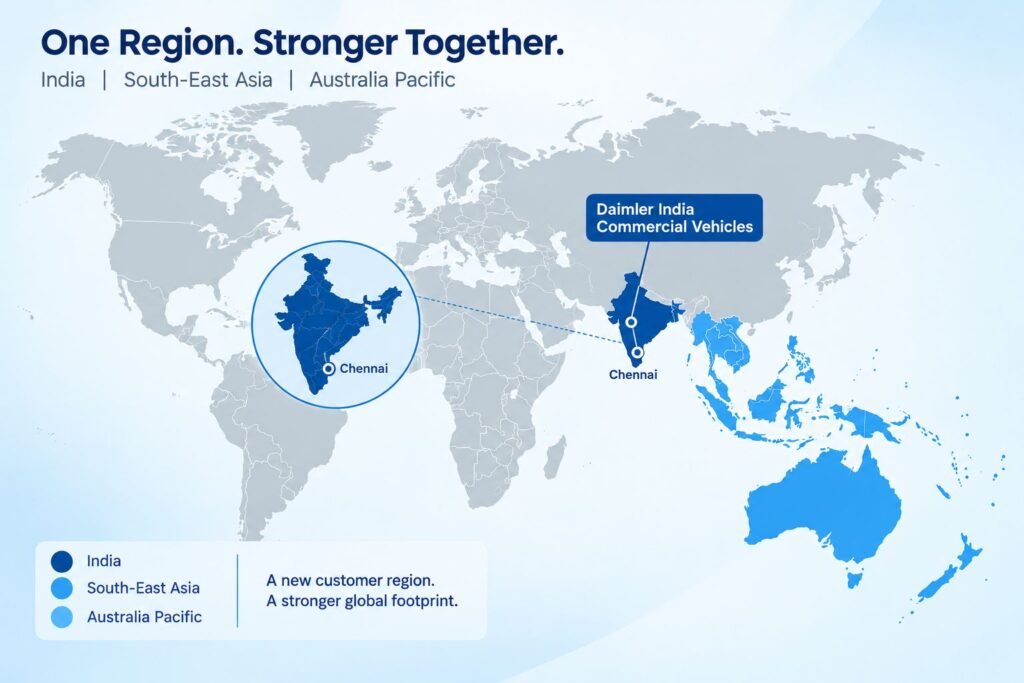
The biggest moment came in September this year. Mercedes-Benz Trucks reorganised its global business into four customer regions, each with its own voice on the Management Board. One of them, covering India, South-East Asia and Australia Pacific (ISEAA), will be led from India. Announcing the move on 14 September 2026 at IAA Transportation in Hannover, Germany, Mr. Achim Puchert, CEO, Mercedes-Benz Trucks, said, “I want to have strong customer voices in my Board.”
A Bigger Plan
The move fits a wider plan set by Ms. Karin Rådström, President & CEO, Daimler Truck Holding AG. At the show, she made her goal clear. “Our ambition is to build the best truck and bus company. At IAA Transportation, we show how we are turning that ambition into action. We bring innovative products, technologies and services that help our customers succeed.”
Turning ambition into lasting growth, however, takes more than new products. Ms. Rådström knows the value of teamwork well. Before she rose to the top of the truck industry, first at Scania and then at Daimler Truck, she rowed for Sweden’s national team. In rowing, every stroke counts, and everyone must pull in the same direction. Today, as head of Daimler Truck, she is bringing that same spirit to one of the world’s biggest truck makers.
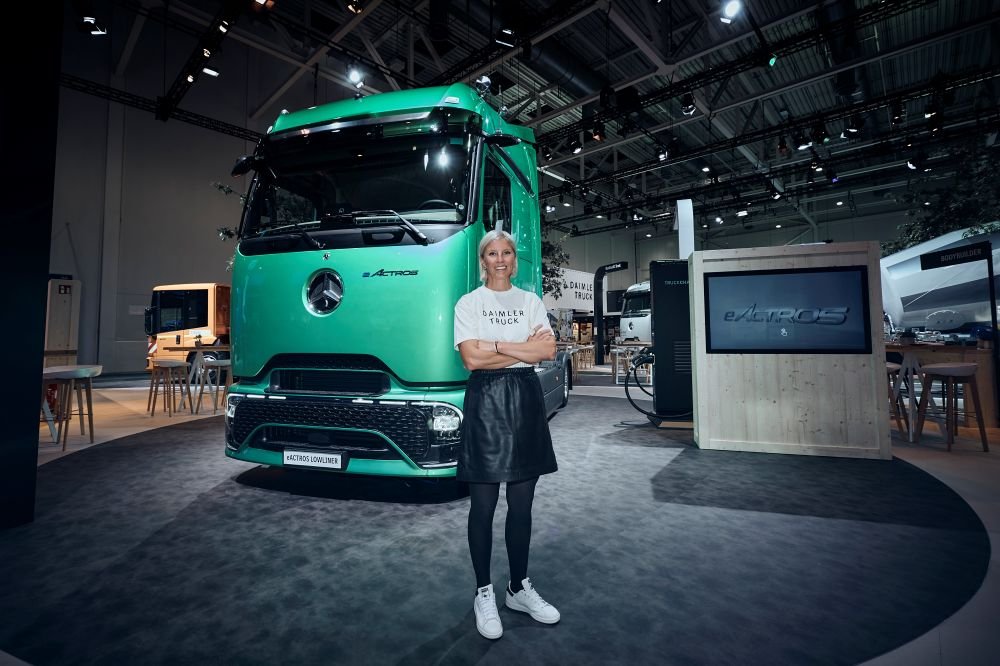
Since taking charge as CEO exactly two years ago, Ms. Rådström has led a major turnaround and cultural change at Daimler Truck, guided by a simple mantra – “simpler, faster, and stronger.” The idea is to help teams make decisions more quickly and give them more freedom to act. To get there, she has made the organisation less centralised and encouraged employees to let go of old, bureaucratic ways of working. Accordingly, the company, last year, updated its corporate strategy, “Stronger 2030.” Now, her focus is entirely on delivering it. The creation of ISEAA, led from India, is a clear example of that strategy in action.
A New Map for Mercedes-Benz Trucks
The reorganisation comes in a landmark year, as 2026 marks 130 years since Gottlieb Daimler invented the truck. Mercedes-Benz Trucks has also recently brought several businesses under one roof, including its operations in Africa, the Middle East and South-East Asia, and BharatBenz.
Mr. Puchert described the old set-up as a patchwork of businesses gathered from around the world. Under the new structure, global teams will handle product development, R&D and operations to create modular, cost-efficient products, while four customer regions stay close to buyers. Besides ISEAA, the other three are Europe; Latin America, the Middle East and Africa; and China, which gets its own focus because of its complexity.
Why India
When Daimler Truck looked for a base to lead one of its biggest and fastest-growing regions, it turned to India. The region spans 42 countries and around 2.8 billion people, with commercial vehicle demand expected to grow by more than 5% a year.
Proximity to customers was the key reason. Regional heads were placed where the company already has a strong footprint, in Germany, Brazil and India. That doesn’t mean the region will only get Indian-made trucks. Vehicles can come from anywhere in the global network, just as Indian trucks already go to Latin America and Africa, and European trucks go to Australia and New Zealand.
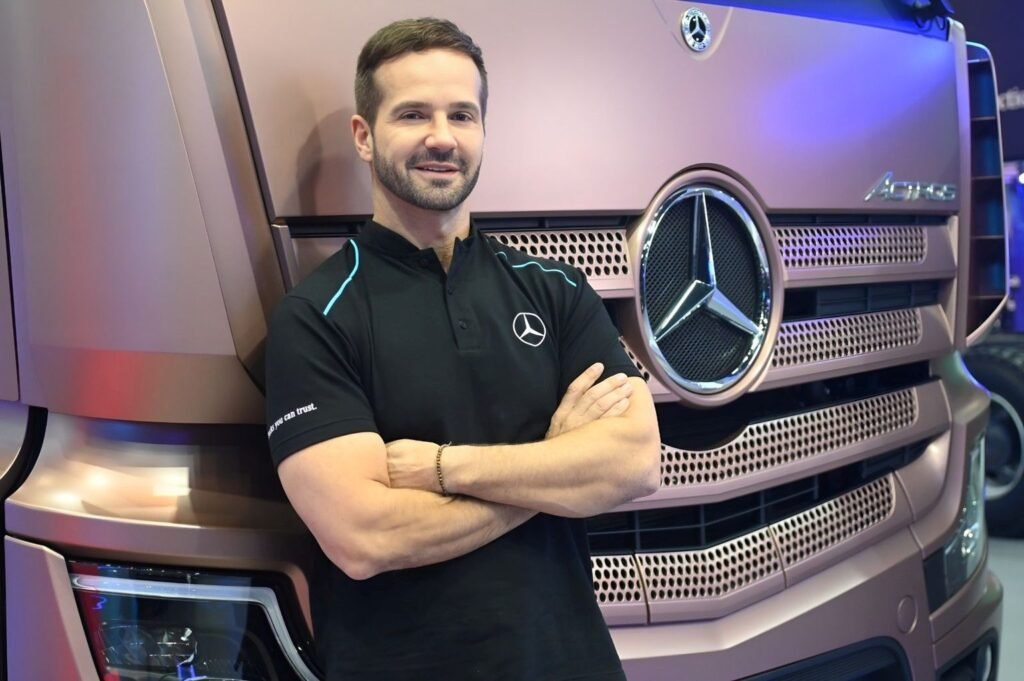
Mr. Puchert was also candid that India’s price-sensitive market brings thinner margins than Europe. India’s real value, he said, lies in its highly competitive supplier base, one the entire group now wants to tap into.
Regional Anchor
Daimler Truck wants DICV to be the anchor that holds this vast region together. The Indian company already brings manufacturing, engineering, sourcing and exports under one roof, and the plan is to build on all of them, using India’s competitive suppliers and manufacturing skills to support Daimler Truck’s operations around the world.
DICV has already shown what it can do. Since it began production in 2012, it has exported 75,000 vehicles and more than 330 million parts to over 70 countries. Its Oragadam plant near Chennai is the only facility in the group that builds trucks for every brand: BharatBenz for India, and Mercedes-Benz, Freightliner and FUSO for rest of the world. The plant even supplies medium-duty transmissions to Daimler Truck’s factories in Germany. And the next big step may not be far away, as Daimler Truck is studying India as a possible supply base for engines for its global operations.
Beyond Manufacturing
India’s role is also growing beyond manufacturing. Its engineering teams are taking on global R&D responsibilities, and Daimler Truck Innovation Centre India (DTICI) in Bengaluru already provides software and services to the group worldwide. One early result of the new structure is a global medium-duty truck platform. For the first time, a single modular design will meet the needs of Europe, Latin America, India and South-East Asia, reducing investment while still allowing different versions for each market.
For Daimler Truck, India is no longer just a domestic market. It is fast becoming one of the group’s most important bases for making and exporting trucks and parts to the world.
BharatBenz Comes of Age
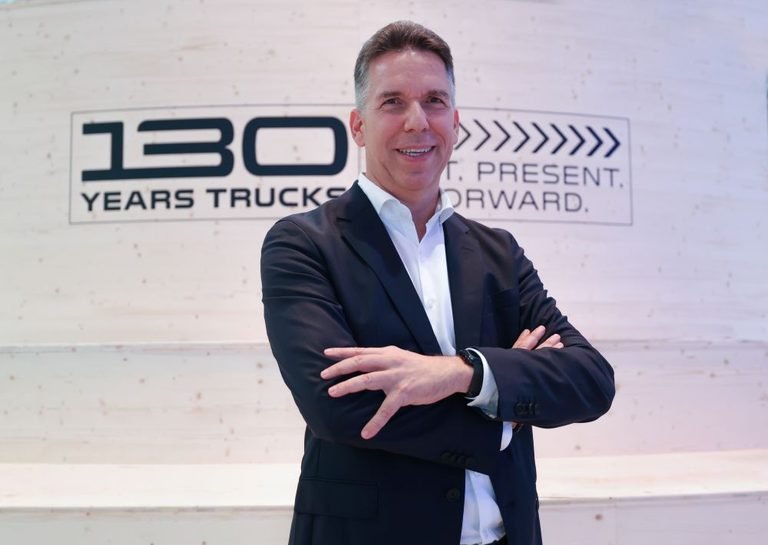
In India, BharatBenz will remain a dedicated brand. At 14–15 years old, it is “still in a teenager age,” said Mr. Torsten Schmidt, CEO & MD, DICV, and President of ISEAA, but it has already made strong progress. Recent additions such as the HX series and TorqShift automated manual transmission have been well received by customers for making driving safer, more efficient and more productive. He expects steady long-term growth in India, driven by rising manufacturing, growing freight demand and the need to replace ageing fleets.
Behind this progress lies a quieter success story, one built on quality and on the suppliers who grew alongside DICV.
Built on Quality from Day One
To understand how DICV earned the group’s trust, it is necessary to go back to the start. When Daimler decided to make engines in India for the first time in its history, the pressure was immense. Launching BharatBenz meant introducing a completely new brand, and as a foreign OEM, the company knew there was no room for error. Even if one critical part failed, the first impression would be that a BharatBenz truck broke down.
Growing Suppliers, Not Replacing Them
From the start, Daimler made it clear that BharatBenz was a long-term commitment. That promise won the trust of suppliers during the brand’s early, low-volume years. Today, more than 400 suppliers work with DICV, most of them partners since day one.
To raise them to global standards, DICV runs its three-tier Q Prime programme. Q Prime Essentials builds basic supply chain capabilities and will cover more than half of all suppliers by next year. Q Prime BharatBenz Way focuses on wider transformation, and the majority of the trained suppliers have been certified. At the top, Q Prime Plus brings together strategic partners who work with DICV on future products.
Quality That Survives the Sea
Supplying plants around the world brings its own challenges. Parts must arrive on time, in the right quantity and with consistent quality, even after weeks at sea. Each part carries a data matrix code linked to supplier quality data, so analytics can spot problems early. Spot checks at consolidation centres and inspections at receiving plants catch issues such as corrosion. Digital, IoT-based process controls are also replacing manual checks, feeding data into AI systems for predictive insights. The system works. The medium-duty transmissions DICV sends abroad have impressed Mercedes-Benz plants with their precision, and the company has achieved more than 90% localisation in its trucks.
Ready for Any Storm
Global supply chains face constant risks, and DICV has changed its approach to match. Earlier, it focused on “best cost country” sourcing, based mainly on price and quality. Today, it follows “best sourcing country,” which also weighs geopolitical stability and trade ties. The approach was put to the test during the Red Sea crisis, when DICV ordered early and built buffer stocks to keep plants running.
From a new factory in Chennai to the heart of Daimler Truck’s global plans, DICV’s journey has been built on quality, trust and partnership. In just 15 months, those foundations have turned India from a promising market into the leader of half the Global South.
NB: Illustration is representational.