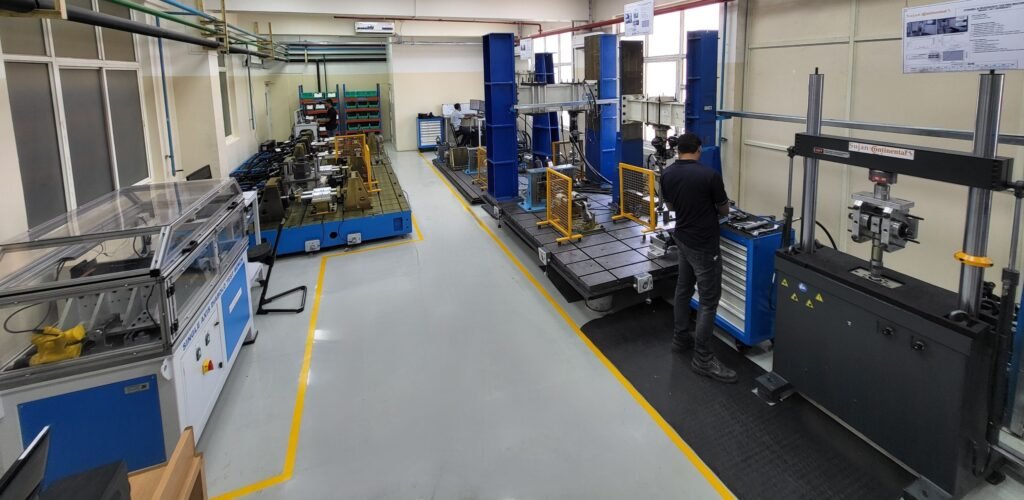
Since its inception in 2008, Sujan ContTech India has created world class, cost effective anti-vibration solutions for passenger vehicles, leveraging its in-depth understanding of the market and customer requirements. Building on this strong foundation, in 2018, CEO, Vijay J Sujan strategized a specialised focus on commercial vehicles with the clear intent to create new capabilities and hybrid solutions. The JV’s association with a new European partner at this time gave access to advanced technologies and global testing. Moreover, the JV had complete autonomy to create a comprehensive eco-system for NVH solutions for both CV and PVs. Our gameplay was backed by a dedicated leadership and a CTO for CVs, Bruno Carre. Today, the JV’s customer base includes the biggest brands in the CV sector.
In the past, commercial trucks were designed with one main goal—strength. That meant parts in the under belly that to support not only a truck’s weight but heavy machinery and overloading, the bane of India’s trucking sector. If parts such as Engine Mounts, Frame and attachment brackets failed, the standard solution was to make it thicker, stronger, and heavier using cast iron or steel.
Today, that approach is changing. Overloading has fallen, and truckers now focus on better mileage, road comfort, turnaround time and connectivity. Optimized component geometry has been adopted to ensure the new lightweight aluminium/composite mounts matched or exceeded the fatigue life of traditional heavy iron designs under high-stress duty cycles. Lightweighting initiatives for CV engine mounts and structural brackets, have transitioned from legacy cast iron/steel to high-performance aluminium and composites.
Truck manufacturers are now focusing on making vehicles lighter without reducing strength or safety. This change is driven by the need to improve fuel efficiency, reduce emissions, lower operating costs, and offset the extra weight of batteries in case of electric CVs. As a result, India’s CV industry is moving towards lightweight, high-performance designs. And while OEMs such as Tata Motors and Ashok Leyland have led in innovative ways, the entry of multinationals has also raised the bar. More than ever before, India’s CV sector is integrated with the global industry as evidenced by the acquisition in 2025 by Tata of Iveco’s CV business.
Why Reducing Weight Matters: People, Safety, and Cost
To understand why light weighting matters, one has to interact with logistics fleet managers. They aren’t looking at ‘sustainability’ as just a corporate buzzword; they are calculating total cost of ownership (TCO) down to the last cent.
In traditional diesel-powered trucks, reducing vehicle weight helps improve fuel efficiency. The biggest financial benefit is for trucks that carry heavy loads — fuel tankers, sand and stone trucks, or steel coil transporters. A lighter truck can carry more cargo while staying within the legal weight limit, helping fleet owners earn more from every trip, thus contributing to profitable operations.
Numbers Behind the Savings:
If the empty weight of a heavy-duty truck is reduced by about 1,500 kg, it has been estimated that this can save around 13 lakh litres (1.3 million litres) of fuel for every 1,000 tonnes of cargo transported over a year.
Case Studies: Modern Success Stories in light weighting
Lightweight design is no longer limited to sports cars or aircraft. Today, CV manufacturers and their suppliers are successfully using it in trucks and buses running on our roads every day.
Here are two case studies that throw light on what is happening in the lightweighting of trucks
Case Study 1: The Multi-Material Chassis Matrix
Traditionally, heavy-duty trucks use a ladder-type chassis made of two heavy steel side rails connected by steel crossmembers. Today, new engineering technologies have made these parts much lighter and stronger. Recent engineering breakthroughs from structural component supplier specialists like Gestamp.
- The Innovation: Replace conventional steel crossmembers with advanced materials such as Carbon Fibre Reinforced Polymer (CFRP) or Advanced High-Strength Steel (AHSS) hybrid designs.
- The Result: Testing and computer simulations showed that each crossmember can be 68-70% lighter. At the same time, the chassis became more than 7% stiffer thus improving vehicle stability, driver comfort, and long-term durability without compromising safety.
Case Study 2: Aluminium domination in North America & Europe where India is still at a nascent stage : Use of lightweight materials in commercial vehicles has increased significantly in recent years. According to the Aluminum Association, aluminium is being used more than ever in both light and heavy commercial vehicles.
The Benefit: By replacing steel with aluminum in parts such as wheel hubs, fuel tanks, fifth wheels, and cab structures, vehicle manufacturers can reduce the weight of these components by 40% to 50% while maintaining the required strength and durability
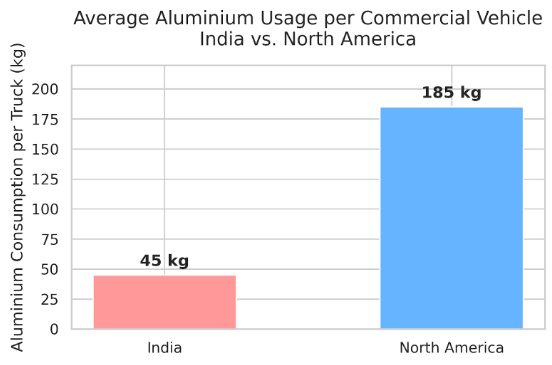
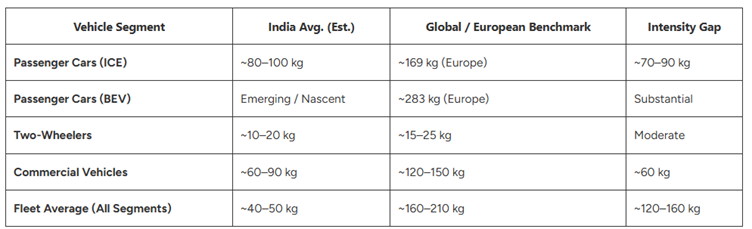
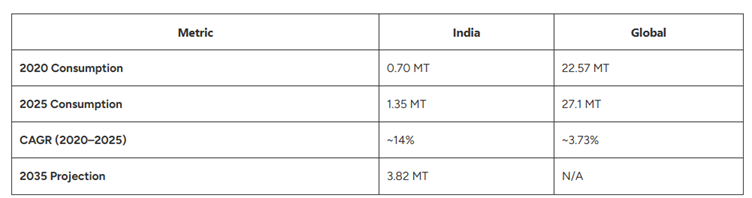
- Source : Indian metal majors and regulatory bodies , Ministry of Mines & AL Circle industry data.
The New Catalyst: The Heavy Battery Dilemma
- If stricter emission rules started the lightweighting trend, electric commercial vehicles (eLCVs) have accelerated it and made it even more important.
- Lithium-ion battery packs are very heavy. An electric delivery van or a heavy truck needs a large battery to travel about 240–320 km on a single charge. This adds a lot of extra weight to a vehicle.
- If the vehicle body and other parts are not made lighter, the truck can carry less cargo. This reduces its earning potential and makes it less attractive for fleet operators.
- To solve this problem, vehicle manufacturers and Tier-1 suppliers are developing lightweight solutions using ultra-high-strength steel, aluminum alloys, and composite materials. They are also designing lighter battery enclosures. These changes reduce the overall vehicle weight, increase payload capacity, and improve the efficiency of electric CVs.
The Obstacles: The Complexity of the Multi-Material Vehicle
- Lightweight materials offer many benefits, but they also come with some challenges. The biggest challenges are higher cost and recycling.
- Higher Cost: Advanced materials are more expensive than traditional steel. High-strength steel is still affordable, but carbon fibre costs much more. Therefore, it is mainly used in premium vehicles or parts that require very high strength and low weight.
- Recycling Challenge: Modern CVs use a combination of steel, aluminium, plastics, and carbon-fibre composites. Many of these materials are bonded or glued together, making them difficult to separate when the vehicle reaches the its end of life. This makes recycling more complex and costlier. As a result, OEMs are now designing vehicles and components that are easier to dismantle and recycle.
Future of Lightweight Commercial Vehicles
In the coming years, lightweight CVs will be developed using three main approaches:
Smart Design → Multi-Material Design → Easy Recycling
1. Smart Design (AI-Based Topology Optimization)
Instead of making the whole part from expensive lightweight materials, engineers use AI to remove material only from low-stress areas. The part is made thicker where more strength is needed and thinner where the load is less. This reduces weight without affecting performance.
2. Affordable Lightweighting Materials
New manufacturing technologies are making materials like carbon fibre composites faster and cheaper to produce. As production increases, their cost is expected to come closer to that of aluminium, making them suitable for more commercial vehicles.
3. Large Single-Piece Structures (Gigacastings)
Instead of joining many small steel parts using bolts and welding, OEMs are now making large, single-piece lightweight components. These ‘gigacastings’ reduce the number of parts, lower vehicle weight, simplify assembly, and improve overall strength.