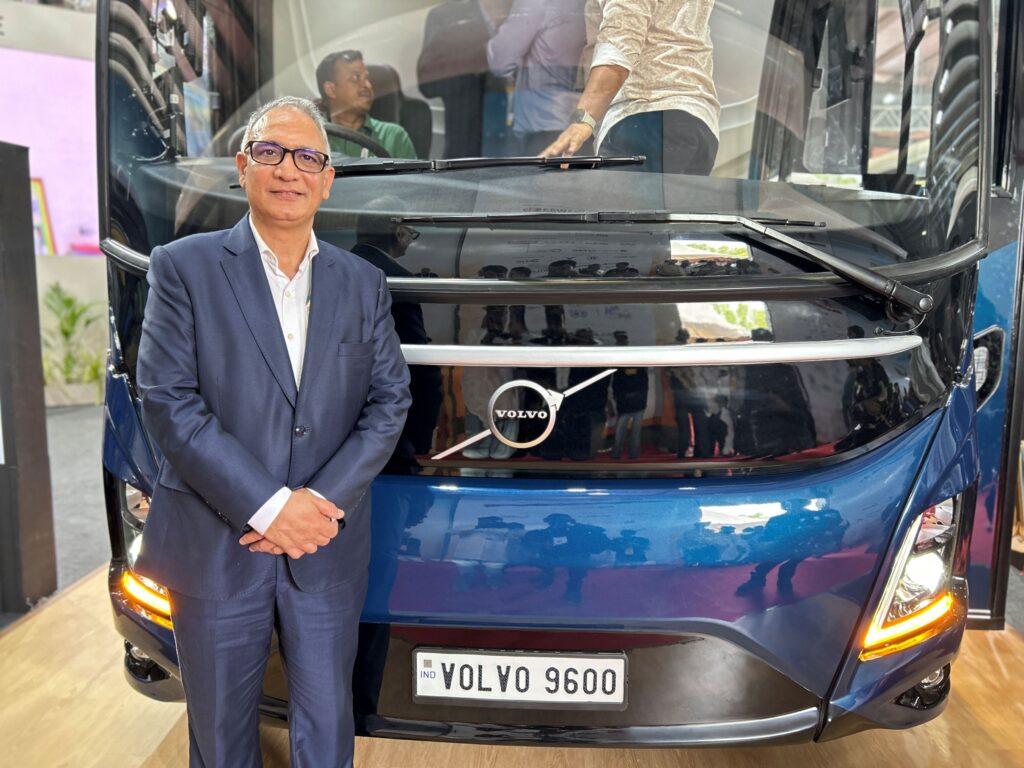
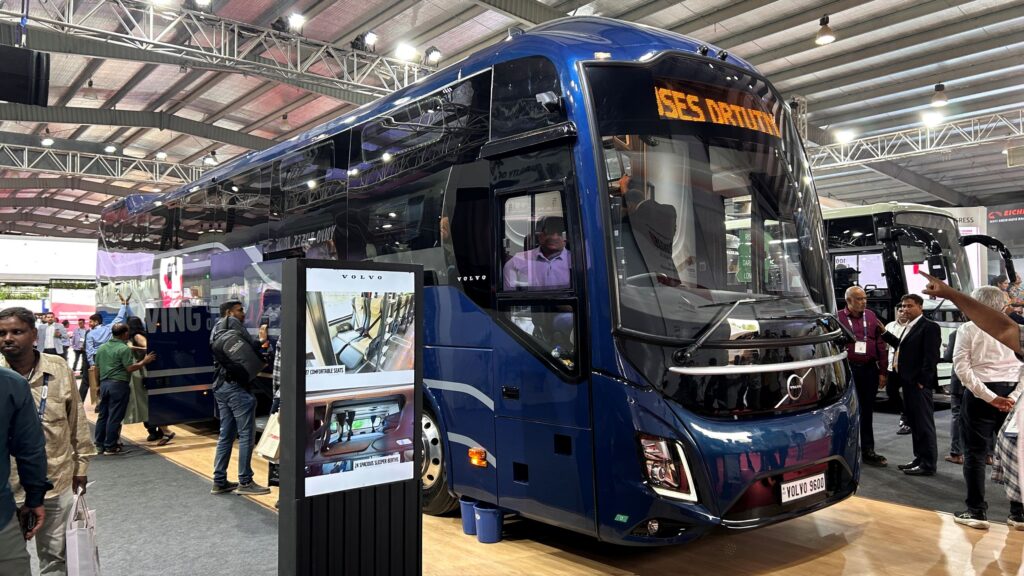
Volvo Buses India, a business unit of VE Commercial Vehicles (VECV) has unveiled what it describes as India’s first bus from an OEM manufacturer — built in-house at its own plant — that combines sleeper berths and recliner seats in a single vehicle. Featuring 24 upper sleeper berths and 27 premium lower-deck seats with calf support, the new coach enables operators to efficiently cater to both short- and long-distance routes while delivering an elevated travel experience for passengers. For a transporter, that means better seat utilisation, more revenue per trip, and greater commercial viability on routes that do not generate enough overnight demand to justify a full sleeper coach.
Mr. S. S. Gill, Chief Commercial Officer, VECV, told this publication that the product has been developed with Volvo’s global safety DNA embedded from the ground up. The most visible safety addition is an E-mirror system — cameras that eliminate the blind spots on the driver’s left side in right-hand drive buses, displaying a clear view on a screen. This technology has been used by the Volvo Group globally in trucks and buses for close to a decade and is now being offered in India for the first time on a large premium coach.
A driver-state monitoring system alerts the driver if drowsiness is detected, and an alcohol interlock system prevents the bus from starting unless the driver passes a breathalyser test. All of this data, including driver behaviour, feeds into the My Volvo Bus app and the My Eicher app, giving operators real-time visibility into how their fleet and drivers are performing.
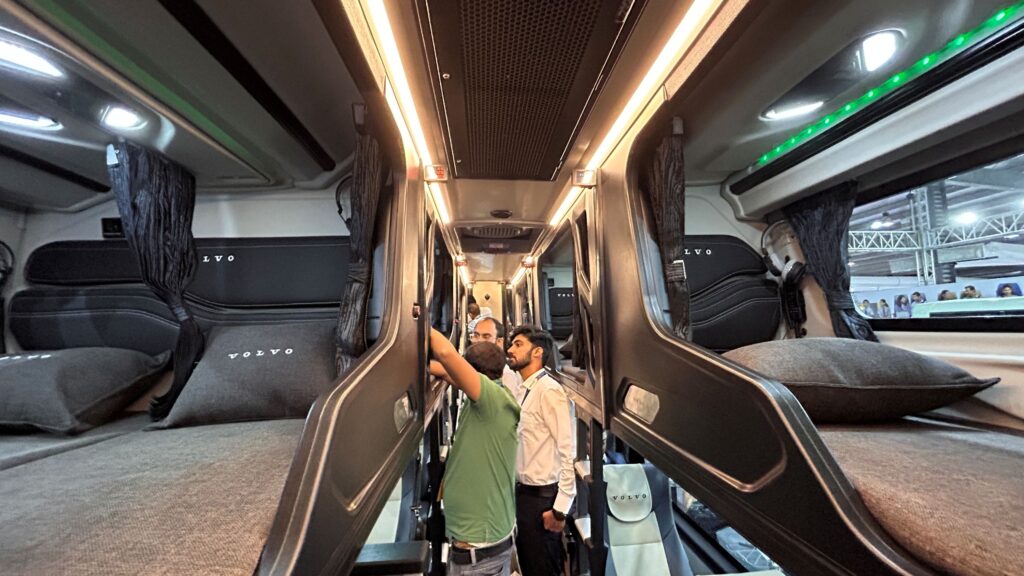
Passenger convenience has been considered with equal care. An onboard washroom with a familiar Indian faucet mechanism serves travellers on longer routes. A mini pantry with a small coffee machine and a cooler provides refreshment options. A television screen adds to the in-cabin experience. These are small additions, but on a four-hour intercity journey, they collectively make a meaningful difference.
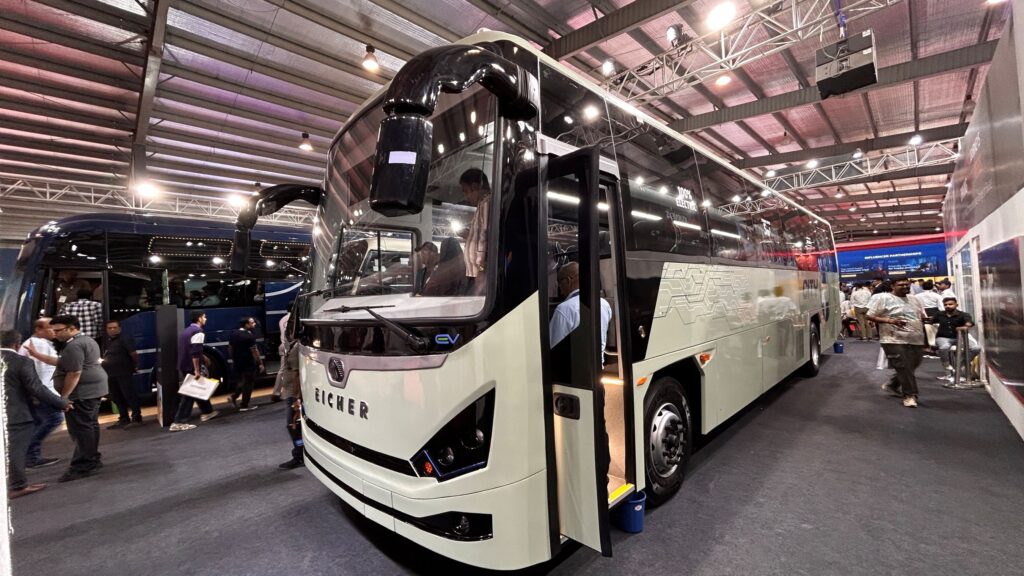
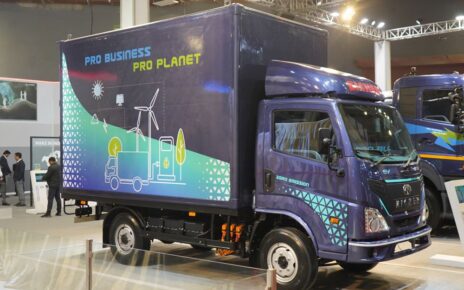
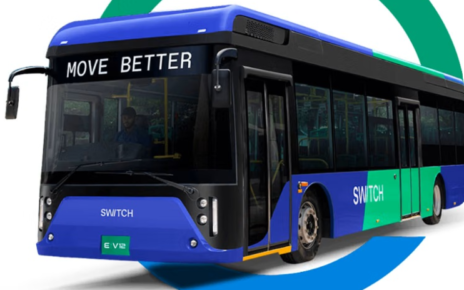
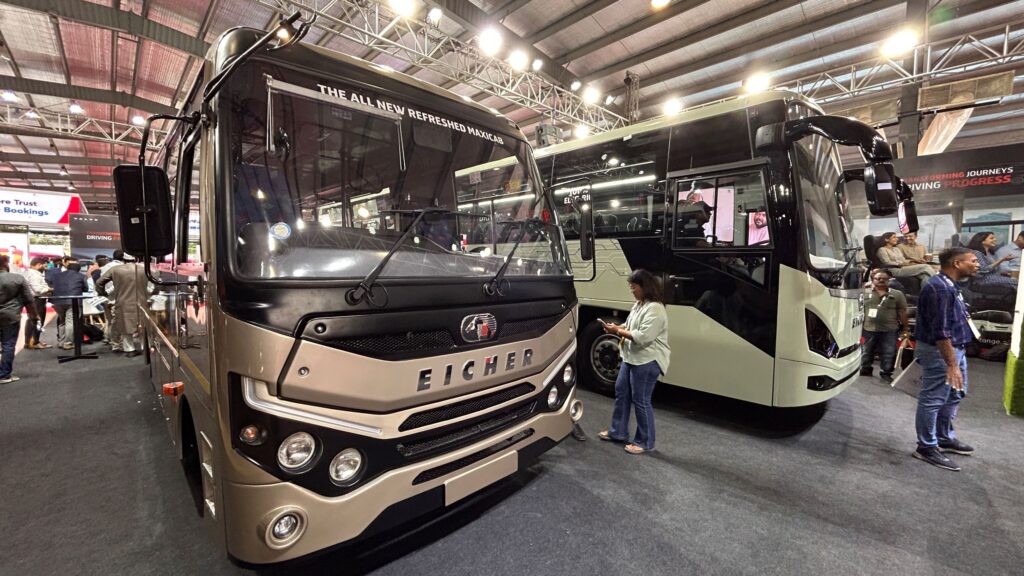
From Eicher Trucks & Buses stable, VECV showcased Skyline Pro E Intercity Electric Bus and the Starline 2050 E Maxi Cab at the expo. Mr. Gill said the bus uses a modular three-battery-pack system of 100 kWh each, totalling 300 kWh, with split charging to enable faster turnaround. In real-world conditions, it delivers around 200 to 230 kilometres of range — enough for a single intercity run, with the opportunity to charge during a scheduled rest stop. The company already has a 9-metre city EV bus running in Chandigarh, Kerala, and other cities, a 13.5-metre electric intercity bus operating on the Dehradun-Lucknow route, and staff buses deployed at its own plants and for several corporates across India.
According to him, EV penetration in the bus segment — currently around 4.5 to 6% — could reach 8 to 10% this year and move toward 20% over the next three to five years. More than 90% of current EV bus deployments are government-driven, but as infrastructure, financing, and awareness improve, private intercity, staff, and school segments will follow. He noted strong interest in EV school buses at PRAWAAS specifically, calling it one of the more encouraging signals from the show.
VECV is also investing heavily in the service ecosystem that keeps buses earning rather than sitting idle. Night service has been introduced for intercity buses, which predominantly run in the evening and night. Sunday servicing is offered for school buses, which are idle on weekends. Staff buses are serviced at their parking yards during idle hours. A 24/7 uptime centre monitors fleet data in real time and proactively advises drivers and operators on battery management, charging practices, and maintenance — keeping uptime high and total cost of ownership low.
Mr. Gill ended with a thought that captured the spirit of PRAWAAS itself. “The true measure of progress will be the day when all the industry participants arrive at the next edition of the show not by car, but by bus,” he concluded.