The OEM places customers at the centre of its business strategy and, over the mid- to long-term, it intends to expand its mobility ecosystem with a strategic focus on PBVs, autonomous driving, and robotics, connecting people and infrastructure.
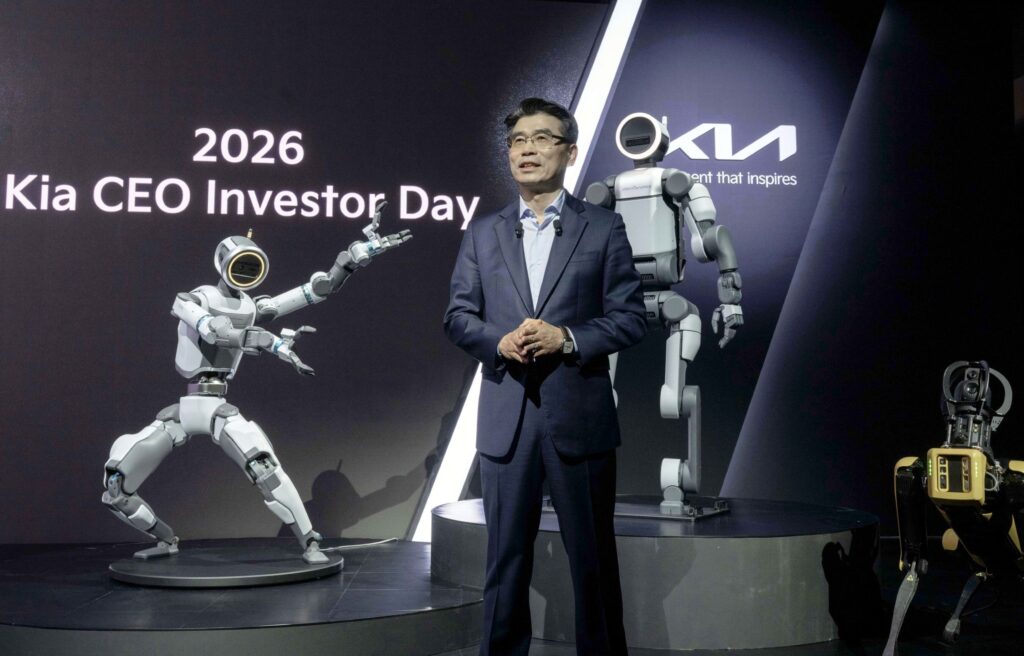
India is set to play a central role in Kia’s next phase of growth. As the company maps out its global strategy, it is clear that the Indian market is not just another region—it is a key pillar in Kia’s long-term vision of becoming a future-ready mobility leader. This message was clear at the 2026 Kia Investor Day addressed by Mr. Ho Sung Song, President and CEO of Kia Corporation, today.
The global OEM is targeting annual sales of 410,000 units in India by 2030, aiming for a 7.6% market share. This growth will be driven by a sharper focus on electrification, a wider product lineup, and a stronger on-ground presence. The company plans to expand its portfolio to 10 models, including eight electrified vehicles, bringing EVs and hybrids closer to Indian customers across segments.
This push reflects a deeper shift. India is no longer seen as just a volume market—it is becoming a strategic hub for Kia’s future technologies and growth. With rising demand, improving infrastructure and strong policy support, the country is emerging as a key driver in the global transition towards electrified mobility.
At a global level, Kia’s ambitions are equally firm. The company aims to sell over 4.13 million vehicles annually by 2030, but what matters more is how it plans to get there. Electrification, software-defined vehicles and new mobility solutions are at the core of this journey.
The company is betting big on electrification. It plans to expand its EV lineup to 14 models and aims to sell 1 million electric vehicles annually by 2030. At the same time, it is not abandoning conventional technologies. Hybrid vehicles will play a strong role, with a target of 1.1 million annual sales, reflecting the reality that different markets will move to electrification at different speeds.
But Kia’s vision goes beyond powertrains. The company is building an entirely new ecosystem around mobility. Its Platform Beyond Vehicle (PBV) strategy is a key part of this shift. These are not just vehicles—they are flexible, purpose-built mobility solutions designed for businesses, logistics and urban needs. With models like PV5, PV7 and PV9, Kia is aiming to create a new category altogether, targeting 232,000 PBV sales annually by 2030.
“Building on the achievements of innovation across all areas over the past five years —including brand, EVs, PBVs, and ESG — EVs, HEVs, autonomous driving, and robotics will serve as key drivers for Kia’s fastest growth to date. Even amid the evolving global environment, Kia will proactively respond to changing market conditions through differentiated strategies,” Mr. Song, added.
Technology
Technology is another big focus. Kia is moving towards software-defined vehicles that can evolve over time through updates and data. Its first such model is expected by 2027, marking a shift from traditional hardware-driven vehicles to intelligent, connected platforms.
Backing all of this is a massive investment plan of KRW 49 trillion (an increase of KRW 7 trillion over the previous plan (2025–2029) over five years, with a strong focus on electrification, autonomous driving and robotics.
What stands out is how the definition of a car company is changing. The OEM believes that success is no longer just about design, performance or brand legacy. It is about building connected ecosystems, delivering software-led experiences and creating mobility solutions that go beyond ownership.
Kia’s India strategy is closely tied to its global transformation. As the company evolves from a carmaker into a mobility solutions provider, India is emerging as one of its most important growth engines—both in scale and in shaping what the future of mobility will look like.