For buyers who value a quiet cabin, rich entertainment and a relaxed driving experience, this update feels like a clear step forward.
By. T. Murrali
At first glance, the XUV 7XO feels familiar. Its size, stance and proportions are almost the same as XUV 7OO. The wheelbase remains unchanged, the ground clearance still stands at 200 mm, and the overall footprint is identical. But when you look closely and step inside, it is clear this is more than a small update—it is a meticulous rework focused on design, comfort and technology.

The transformation begins at the front. The grille, bumper and skid plate have been completely redesigned, giving the SUV a sharper and confident face. Lighting has been upgraded too, with projector LED headlamps using a dual BI-LED setup, paired with distinctive “ice cube” style fog lamps. The wheels grow larger and bolder, with the top variant rolling on new 19-inch alloys, while other versions get fresh 18-inch wheels.

Piano-black finishes now wrap around the wheel arches, running boards and pillars, adding a glossy, premium touch, while subtle chrome lines lift the look along the lower body. At the rear, a sleek piano-black strip connects the LED tail lamps, and the silver skid plate neatly integrates parking sensors. The boot opens manually and offers 240 litres of space with all three rows in use—enough for small bags—with the spare wheel tucked away underneath.
Safety remains a strong pillar. The structure is designed to achieve a five-star crash rating, and six airbags are standard across the range. Core systems like ABS, EBD, traction control and hill-hold assist are present, while higher variants add Level 2 driver assistance features supported by cameras, radar and a 540-degree surround-view camera. It feels reassuring, though the reminder remains that real-world safety always depends on how the vehicle is driven.
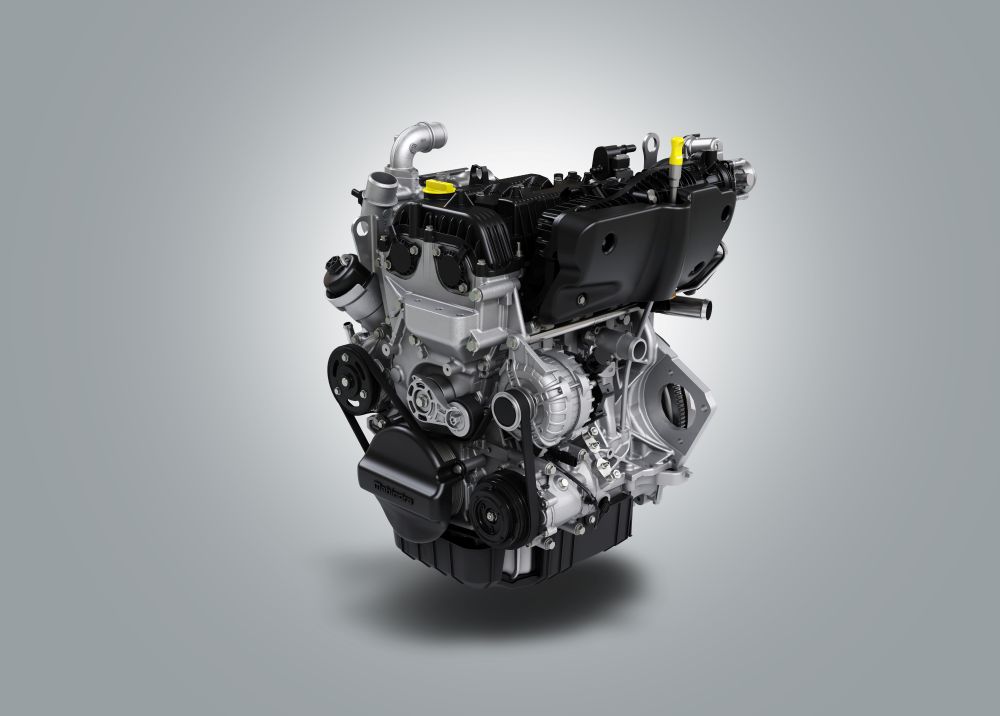
Under the hood, buyers can choose between petrol and diesel motor. The SUV is powered by the 2.0-litre mStallion TGDi petrol engine and the 2.2-litre mHawk diesel, with the latter also offering a first-in-segment all-wheel-drive option. Mahindra claims 0–60 kmph acceleration in under five seconds for the petrol manual, alongside multiple drive modes—Zip, Zap, Zoom and a custom setting—for tailored driving experiences. The petrol engine delivers 200 bhp and 380 Nm, while the diesel offers even more pulling power with 420 Nm of torque. Both engines are available with manual or automatic gearboxes, giving customers flexibility based on driving style and usage.
A Space That Pulls You In
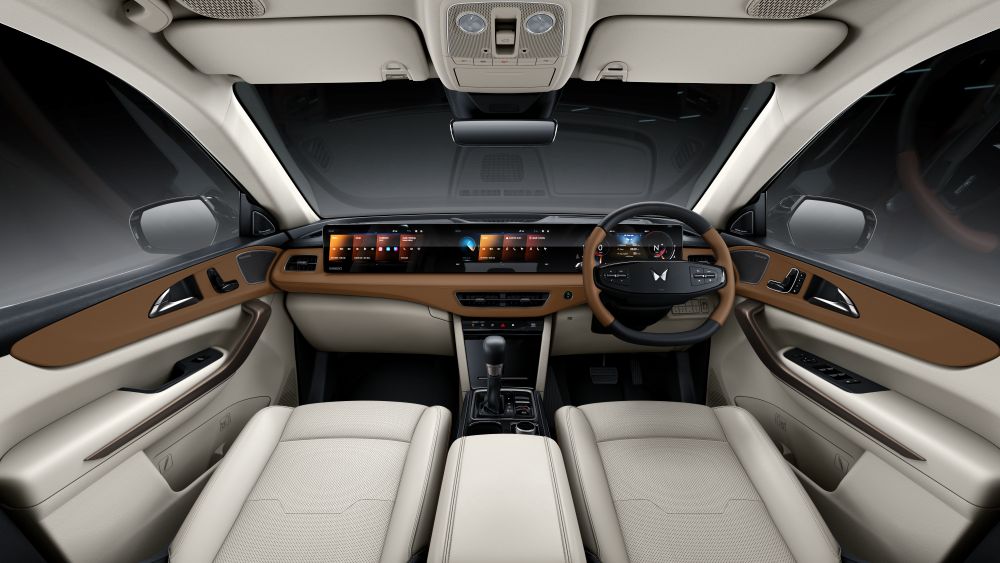
Step inside, and the biggest leap forward becomes obvious. The dashboard is dominated by a clean, continuous triple-screen coast to coast layout—one for the driver, one in the centre, and one for the front passenger. A new two-spoke steering wheel adds to the fresh look, while the dual-tone peach and brown interior brings warmth and is practical enough to hide everyday dust and wear. Physical buttons have largely made way for touch controls, but a smart rotary knob near the gear-shift lever, remains for volume and climate functions, which is interesting as it keeps things simple and safe while driving.
According to Mr. Pratap Bose, Chief Design and Creative Officer, Mahindra, a strong focus has also been placed on colours, materials and finishes, with the aim of creating a cabin that feels rich and reassuring to the touch. Every surface has been carefully designed to avoid a plasticky or flimsy feel, with inspiration drawn not just from cars but also from yacht design, architecture and premium furniture.
The XUV 7XO is offered with two distinct interior themes—Lumina and Chestnut Brown—each crafted to deliver a refined atmosphere. From the soft leatherette to the mix of smooth and textured surfaces, every touch feels well thought out, making the cabin feel warm, comfortable and cosy during my drive.
The cabin turns into a multi-use space, blending entertainment, work and comfort. Cinema Escape enables content sharing across all three screens with BYOD support, paired with Dolby Vision and Atmos. A 16-speaker Harman Kardon system delivers balanced 3D sound across all rows, supported by noise compensation and Venuescapes for concert-like experiences. Sound lovers like me will notice the biggest upgrade of all, which turns the cabin into a rich, immersive audio space—less like a car stereo and more like a home studio setup. At the unveiling, the two companies demonstrated how they translated a home-like experience into the vehicle.
In a conversation with Mr. R Velusamy, President, Automotive Business, Mahindra & Mahindra Ltd., 15-time Grammy Award–winning sound engineer Richard King spoke about the audio system’s studio-quality sound, noting how cleanly and accurately music fills the cabin. Larger subwoofer enclosure enhances bass performance, creating a rich, full and well-controlled low end throughout the vehicle. The interface is designed to be intuitive and easy to use, making everyday interaction seamless. A standout feature, according to Mr. King, is the 3D immersion mode, which turns regular stereo tracks into a surround experience, allowing users to move the soundstage around them with a simple slider. The system has also proven its strength in real-world conditions, performing consistently well at high speeds, on varied roads and even in noisier internal combustion vehicles, across both music and spoken content. Adding to the experience, the Venuescapes feature lets occupants feel as if they are listening from iconic locations around the world, adding a sense of escape to every drive.
Improved Processing Power
The user experience system is backed by generous processing power and storage, making it feel quick and modern. For professionals, Work on the Go mode offers BYOD Boss mode, rear wireless charging and even Makeup on the Go functionality. Comfort is enhanced through high-density foam seats with plush pads and front and rear ventilation. Solar Shield glass reduces heat, noise and UV rays for a cooler cabin, while personalised ambient lighting allows front, rear and dashboard zones to display different colours simultaneously.
As explained by Mr. Velusamy, I was able to experience the SUV’s display technology firsthand, built around high resolution, wide contrast and smooth colour transitions, with support for HD, Full HD and even 4K content. Powering this is the 8 Series 8155p chipset, (a high-performance, 7nm System-on-Chip for next-gen automotive cockpits), delivering a major leap in graphics, processing speed, AI capability and memory. As Manjari Upadhye – Chief Marketing Officer, Automotive Division, outlined, the SUV uses an Ethernet-based system instead of the older CAN network, allowing much faster data flow, full over-the-air updates for all systems, and smoother control of apps. This also supports practical features such as an intelligent navigation app that helps locate nearby services and place calls directly with a single touch.
Comfort is further enhanced with dual-zone climate control, a large panoramic sunroof, a frameless auto-dimming mirror, wireless charging, fast Type-C ports, and plenty of thoughtful storage spaces throughout the cabin.
Seating comfort has clearly been a key focus. Both front seats are electrically adjustable, with memory and a welcome function for the driver, gently drawing the driver into the immersive experience from the moment they step in. Ventilated seats now extend to the second row as well. Rear passengers can even adjust the co-driver seat electrically using the “Boss” function. The third row is best suited for children or short trips for adults, but it comes with its own air vents, speakers and charging options. Representatives from Harman Kardon explained that the speakers in this row were specially tuned, as they sit much closer to occupants than those in the other rows. Fold the third-row, and the SUV becomes a spacious and comfortable five-seater with ample luggage room.
The SUV come sin variants – AX7, AX7T, AX7L AX, AX3 and AX5. The 7XO comes in seven colour options, including fresh shades like Desert Mist and Ruby Velvet.
Driving the XUV 7XO AX7L from Jaisalmer to Turkon Ki Basti—about 70 km each way—I quickly realised how well it rides. The global debut of Mahindra’s DAVINCI suspension, with its new valve-based damping, delivers a noticeably plush and settled drive, even on uneven stretches. Add to that the strong engines, generous cabin space and a feature list that feels more than complete, and the XUV 7XO makes a strong case for itself. Priced from around ₹13.6 lakh—close to what the XUV700 cost at launch—it now offers far more in terms of comfort, technology and everyday convenience.
In the end, the 7XO is not about changing what already worked—it is about refining it. By keeping the familiar size and adding meaningful upgrades in design, technology and comfort, it positions itself as a more polished, more indulgent SUV.