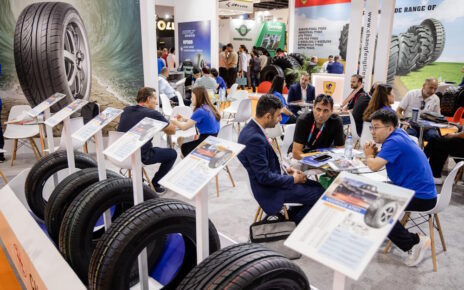
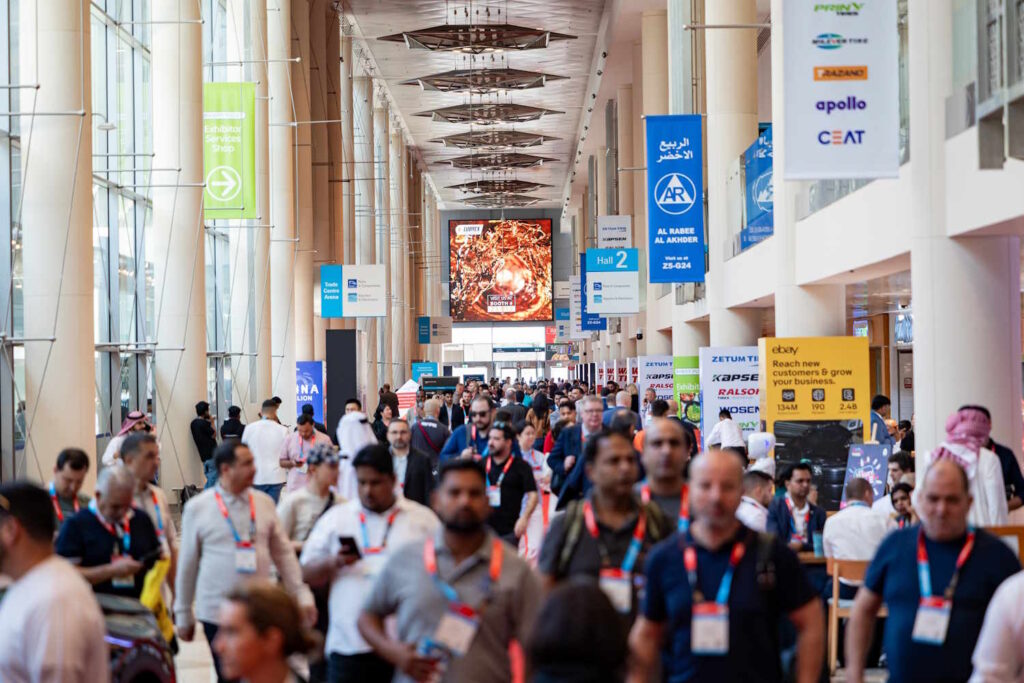
Automechanika Dubai, the largest international trade exhibition for the automotive aftermarket in the Middle East and Africa, opened with a strong emphasis on sustainability, placing the theme at the core of this year’s Automechanika Academy programme.
During an opening session, Sameer Parab, Senior Manager / Sector Lead, Automotive & Mobility at Aranca, underscored how stronger alignment among policymakers, regulators, and industry leaders is accelerating the region’s shift toward a greener and more innovative automotive ecosystem. His keynote address, Sustainability in the Aftermarket: Government Initiatives and Industry Collaboration, highlighted the coordinated policy and industry levers required to enable long-term environmental impact reduction.
Aligned with the event’s increased government presence—including the Ministry of Energy and Infrastructure and Dubai’s Roads and Transport Authority (RTA) as Government Supporters—the session examined how targeted incentives, evolving regulatory frameworks, and fast-rising investment in sustainable technologies are reshaping the aftermarket landscape.

The discussion further outlined the practical building blocks for a circular automotive economy, covering remanufacturing, greener workshop operations, fleet transition strategies, resource efficiency, and the integration of digital tools to support sustainability-driven decision-making.
Parab stated: “Targeted government incentives, evolving regulatory frameworks, and accelerating investment in sustainable technologies are fundamentally reshaping the automotive aftermarket. As policies tighten around emissions and end-of-life vehicles, and scrappage schemes begin to reward responsible disposal, markets gain the regulatory clarity and feedstock they need to scale circular practices.
“At the same time, OEMs and tier ones are investing heavily in remanufacturing, advanced recycling, and battery recovery, turning what was once waste into a strategic asset. Together, these forces are shifting the aftermarket from a fragmented, informal ecosystem to a structured, value-creating circular economy delivering lower total cost of ownership for fleets and drivers while materially reducing the sector’s environmental footprint.”
The UAE continues to advance its sustainability agenda rapidly. EV adoption is climbing, supported by the National Electric Vehicle Strategy, which targets 50% EV penetration by 2050. Growing corporate fleet electrification, enabling government policies, and rising consumer demand are accelerating the shift. According to Roland Berger, nearly 24,000 EVs were sold in the UAE in 2024, while estimates from organisations such as Positive Zero indicate that EV sales could rise from 3% today to 30% by 2030.
Parab added: “The UAE is on the right track. By defining clear policies and exploring battery recovery and second-life applications, it’s positioning itself at the forefront of a fast-growing circular automotive market in the GCC.”
Under the theme Driving the Next Era of Automotive Aftermarket, the Automechanika Academy serves as the region’s premier knowledge-exchange platform, convening policymakers, OEMs, suppliers, fleet operators, workshop owners, investors, and technology innovators. The programme is designed to equip stakeholders with strategic insights and practical guidance on the trends and disruptions shaping the global aftermarket.
Tommy Le, Show Manager, Automechanika Dubai, commented: “Today’s discussions illustrate why sustainability is no longer a future ambition but a defining force reshaping the automotive aftermarket now. The insights shared highlight how policy direction, industry collaboration, and investment in clean technologies are accelerating real, measurable progress across the region. As governments strengthen regulatory frameworks and companies embrace circularity, electrification, and greener operations, we are witnessing the foundation of a more resilient, innovative, and environmentally responsible aftermarket ecosystem take shape.”
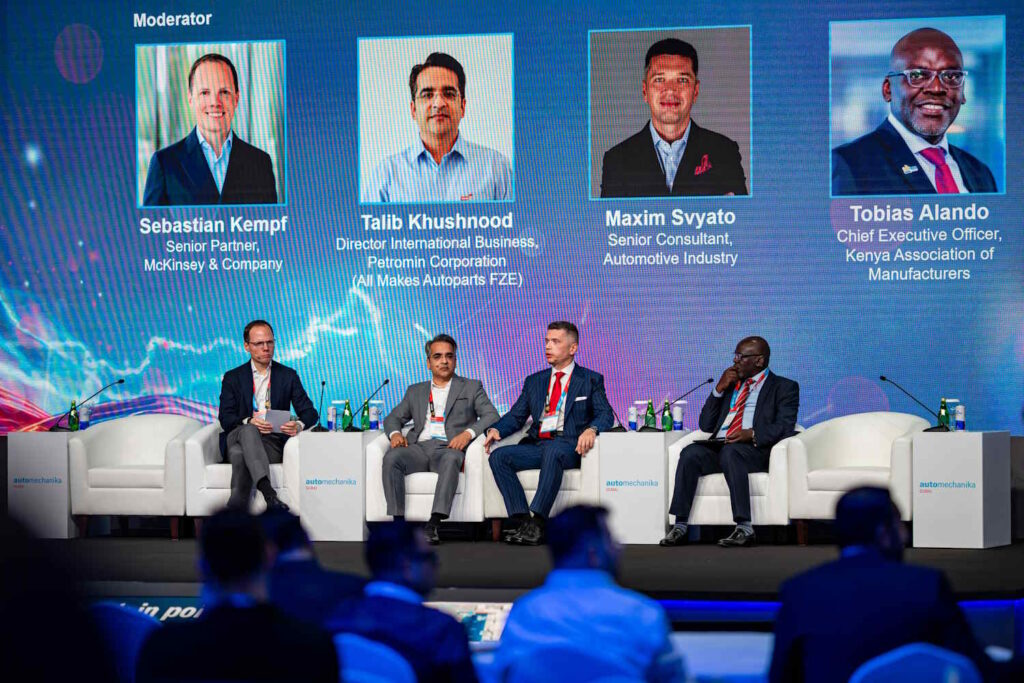
Additional sessions included insights from Aishwarya Menon of SGS on how regulatory and conformity standards are reinforcing aftermarket safety and quality. A panel moderated by McKinsey & Company’s Sebastian Kempf—featuring Talib Khushnood of Petromin Corporation, senior consultant Maxim Svyato, and Tobias Alando from the Kenya Association of Manufacturers—explored collaboration between OEMs and the independent aftermarket. Frank Schlehuber (CLEPA) contributed a global perspective on regulatory shifts and competitiveness.
Further contributions from Frost & Sullivan, SGS, Slimstock MEA, DHL Global Forwarding, Transport Overseas Group, and Al-Futtaim Logistics highlighted trade frameworks and supply-chain resilience. The day closed with market insights from Vitali Bielski of Intelia Nova on quick-service growth, and Fahad Ali of Broomstick Creative on the role of digital content and community-building in shaping aftermarket brand engagement.