By T. Murrali
Imagine riding from Bengaluru airport to Chennai airport—300 km apart—on just ₹100 worth of electricity. Ultraviolette says it’s possible with its newly launched X47. By contrast, a petrol bike would barely get you from the Bengaluru airport to the same city. No wonder the X47 Crossover clocked over 3,000 bookings in just 24 hours.
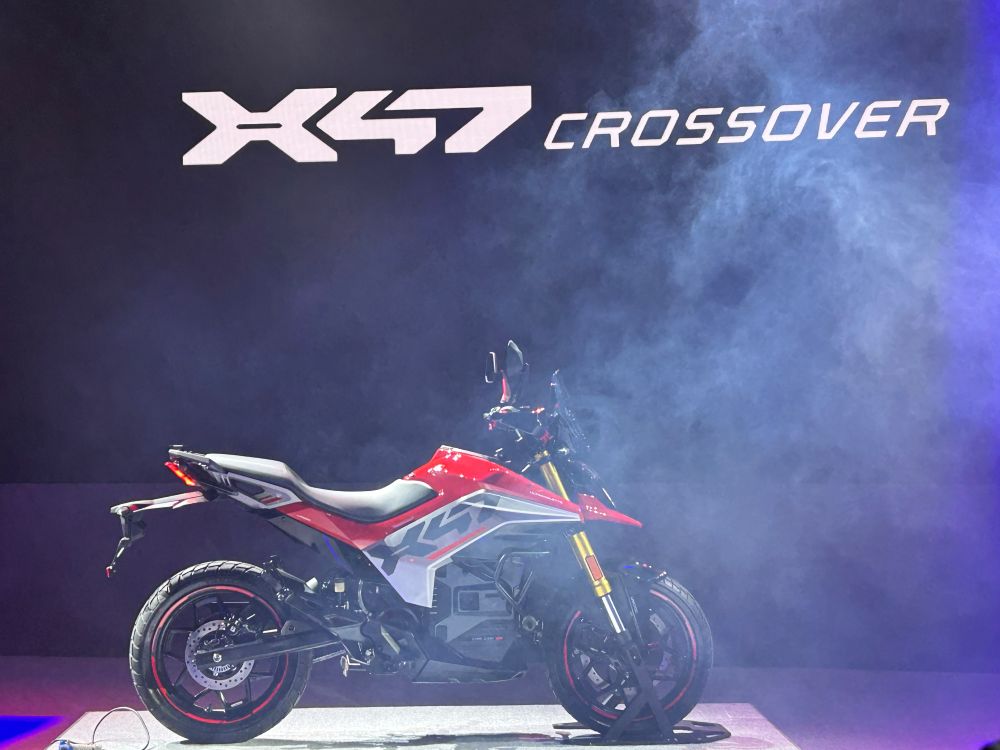
For Ultraviolette, the X47 is more than a motorcycle—it’s a rethink of how India rides. As CEO and Co-founder Mr. Narayan Subramaniam explains, India is a land of extremes for motorcyclists. A 30-minute ride could mean sunny highways, sudden monsoon rain, traffic jams, or weekend trails, making India both the toughest and most exciting stage for innovation.
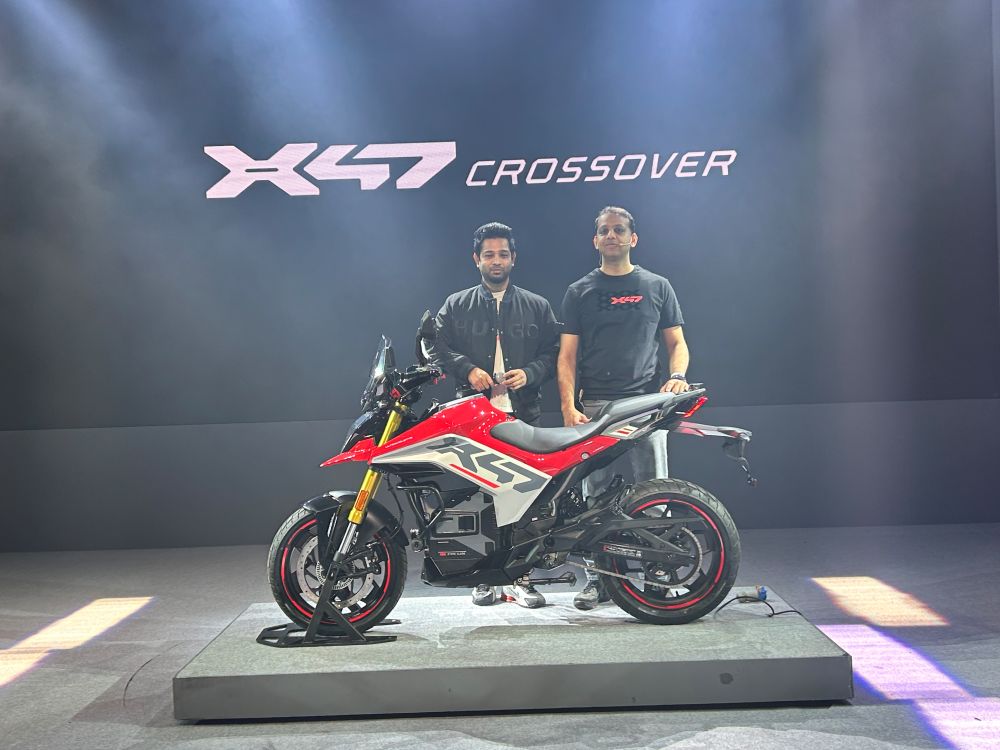
Traditionally, bikes have come with rigid labels—sports, cruisers, dirt, roadsters—categories borrowed from the West, where riders own multiple machines for different needs. But Indian riders want one bike that can do it all: tackle weekday traffic, endure unpredictable weather, and still thrill on weekend escapes.
That’s why Ultraviolette is discarding these “20th-century labels” and carving out a new space: the Crossover. With most riders spending 60–70% of time in cities and 30–40% on leisure rides, the crossover aims to be versatile, powerful, and intelligent—capable of being many motorcycles in one.
Built for every kind of rider
In India, bikers aren’t just one thing. Some are weekend tinkerers, others explorers chasing long trails, thrill seekers hungry for speed, or daily commuters grinding through city traffic. A new tribe has also emerged—tech-savvy riders who want their machines as smart as their phones.
As Subramaniam explained, “most of us are a blend of these personalities. That insight shaped the X47’s design. Instead of boxing riders into categories, the company built one motorcycle versatile enough to match every side of a rider’s life.”
Aviation DNA
The X47 carries Ultraviolette’s trademark aviation DNA, its forward-swept wing design lending agility, aggression, and a stance that looks capable from every angle. But design here goes far beyond looks—it’s about syncing rider and machine. A six-to-eight-month clay model study shaped an upright yet active posture—comfortable for city commutes and controlled for weekend rides, tuned to India’s varied terrain.
Ultraviolette X47 debuts a cast aluminium seat subframe—tough enough to carry accessories without compromise. From panniers to aero discs, knuckle guards to auxiliary lamps, riders can tailor the bike to suit their journeys, whether urban commuter or weekend explorer. Every detail, from textures to mechanical finishes, was crafted with the same precision, making even the bare components part of the design language.
Safety powered by technology
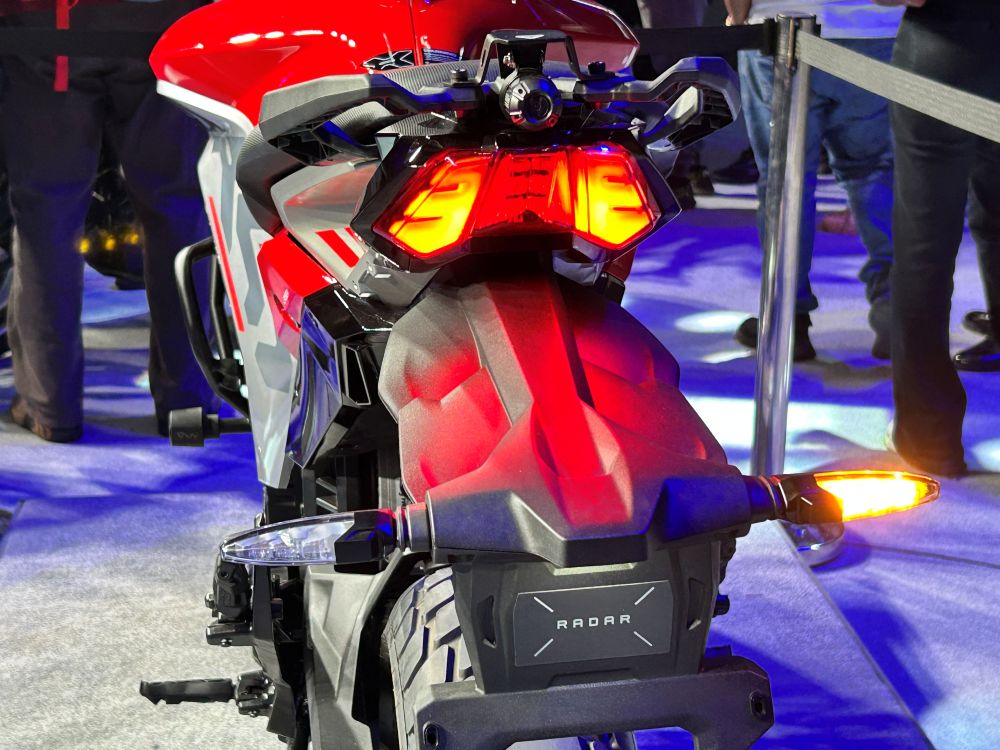
Ultraviolette has long been ahead of the curve on safety, pioneering dual-channel ABS and traction control for electric motorcycles. With the X47, it takes the next leap—bringing radar technology to two wheels for the first time.
Accidents often happen in blind spots, where riders can’t see without twisting uncomfortably. The X47 solves this with a 77 GHz rear-facing radar that acts like “eyes at the back of your head,” scanning up to 200 metres with a wide 150-degree horizontal and 68-degree vertical view. Tuned specifically for Indian roads, it adapts to lean angles, narrow lanes, and rolling terrain, giving riders a new level of spatial awareness, Mr. Niraj Rajmohan, CTO and Co-founder of Ultraviolette, said.
This tech powers the UV HyperSense safety suite—features once limited to bikes costing over ₹20–25 lakh. Riders now get blind spot detection, lane-change assist, overtake alerts, and rear-collision warnings that automatically flash hazard lights to alert following traffic. In one stroke, the OEM narrows the safety gap between motorcycles and cars.
Adding to that is an integrated dual-camera dashcam, another India-first. With 1080p Sony IMX sensors, wide-angle coverage, and IP67 protection, it records every ride in crisp detail. A secondary display allows live monitoring, playback, and automatic video locking during crashes, while Wi-Fi, Bluetooth, and anti-theft mounts make it as practical as it is protective, he mentioned.
The digital co-pilot
A smart digital co-pilot that tracks over 3,000 data points every second. From lean angles and energy use to movement, towing, and crash alerts, it keeps riders informed and fleets connected through an e-SIM app. Supporting this intelligence is the new UV Vector display, a clean, intuitive TFT cockpit showing regenerative braking, power flow, and ride analytics at a glance.
For battery safety the OEM built a five-layer protection system—thermal, electrical, electronic, mechanical, and software. Cell-level fuses, redundant circuits, and advanced thermal management eliminate hotspots, while microsecond monitoring ensures real-time response. A rugged enclosure shields the pack from shocks and rough terrain.
This blend of radar, AI, and battery innovation extends the company’s safety-first legacy. Long before regulations, it brought dual-channel ABS and traction control to EV motorcycles. With the X47, technology once limited to luxury machines is now within reach of everyday riders, Mr. Rajmohan added.
Regeneration, stability & structure
The Ultraviolette X47 gives riders control with four levels of regenerative braking—T1 for light feedback, T3 for the strongest, and an option to turn it off entirely. Dual-channel switchable ABS comes standard, paired with a world-first Dynamic Stability Control system that syncs regen and ABS to prevent wheel lock and keep the bike stable under sudden braking.
Mr. Vinayak S Bhat, Chief Product Officer, Ultraviolette, said, built on the principles of stiffness, strength, and lightness, the X47 uses advanced composites and detailed simulations to achieve significant strength-to-weight ratio. Despite bigger suspension, wheels, and handlebars, it stays light and agile. Aerodynamics aren’t just about looks—vents and deflectors route airflow to cool the motor, controller, and battery.
Charging
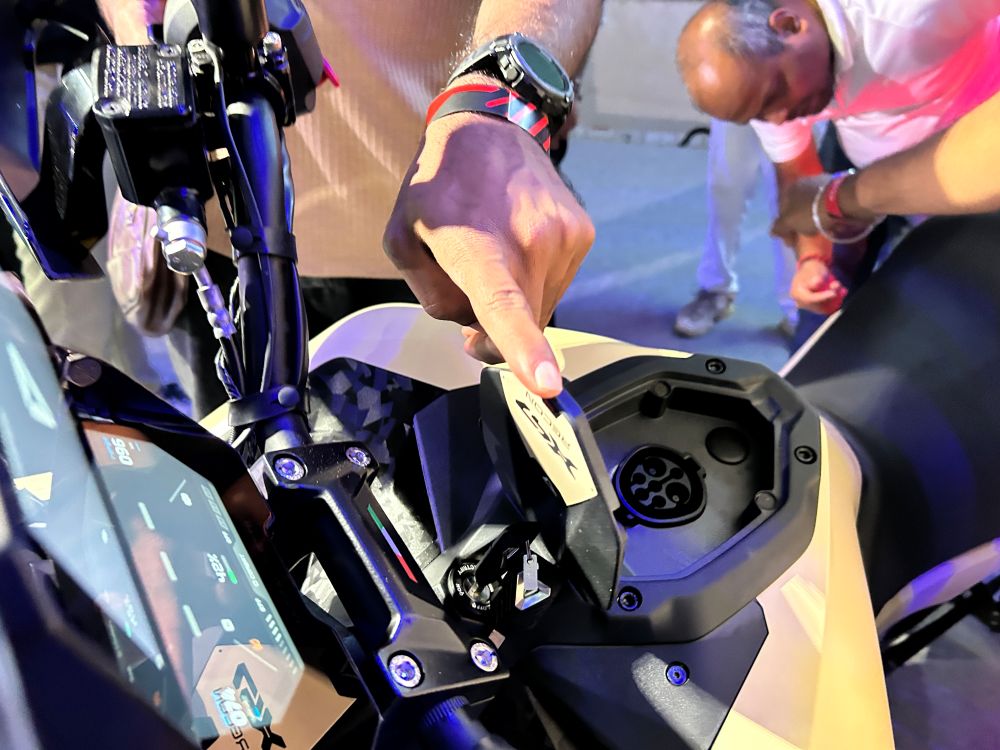
Ultraviolette’s X47 takes away range anxiety with multiple charging options. It packs Asia’s largest battery (323 km IDC range), supports portable 1.3 kW and 3 kW chargers, connects to the brand’s 12 kW Supernova DC fast-charging network, and links to 4,000+ AC car chargers through UV Link.
The real breakthrough is its onboard 1.6 kW charger, tucked neatly into the chassis. Claimed to be the world’s most power-dense air-cooled charger, it works even in 55°C heat and offers twice the efficiency of global rivals. With inbuilt safeguards against surges, EMI, and voltage fluctuations, it’s built for India’s unpredictable grid. The motorcycle delivers 40 hp, a 610 Nm of wheel torque, 0–60 km/h in 2.7 seconds, 0–100 km/h in 8.1 seconds, and a top speed of 145 km/h.
Shared DNA
The X47 may be a new chapter, but it builds on Ultraviolette’s proven F77 platform. Mr. Bhatt said both bikes share the same powertrain; what sets the X47 apart is an all-new, in-house design and built motor controller to boost performance.
The battery pack and motor, based on a 48-volt system, come from the F77, unlike the 400-volt F99 prototype, which remains a demo concept. The same plant that builds the F77 is ready for the X47, with a new facility also in the works to meet rising demand. Aggressive pricing means scaling up will be essential, but Ultraviolette sees that as a welcome challenge.
At launch, the X47 arrives in three striking personalities—Laser Red, Air Strike White, and Shadow Black. Different in expression, yet united by the same futuristic, athletic DNA. As Subramaniam summed it up: the X47 is “designed by motorcyclists, for motorcyclists.”