Entrepreneur Minal Mehta of Miletrade shares how the second-generation family enterprise continues to raise benchmarks in hazardous goods transportation through technology, safety, and a people-first approach in this exclusive feature.
For Minal Mehta, logistics isn’t just a business; it’s a legacy. As the second generation leading Miletrade, she carries forward the vision and values laid down by her father, Mr. Yogesh Mehta, who founded the company over 47 years ago. What began as a modest transportation outfit has today evolved into a name synonymous with safety, discipline, and reliability in hazardous goods logistics across India.
“Logistics is often seen as a business of machines,” says Minal, “but in truth, it’s a business of people. Our drivers are the real custodians of safety and trust.”
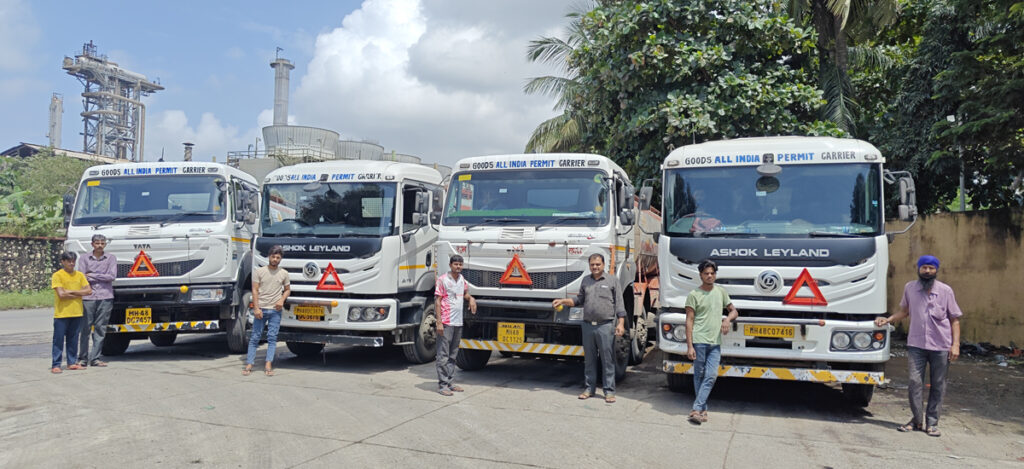
With a fleet strength of 90 vehicles from the stables of Tata Motors, Ashok Leyland and MTBD, Miletrade operates pan-India, specialising in the transport of hazardous materials; a segment that demands rigorous safety standards, technical precision, and operational discipline. Rather than simply expanding fleet numbers, the company focuses on improving carrying capacity and operational efficiency through modern, larger vehicles.
A Philosophy Rooted in People and Safety
Miletrade’s people-first culture sets it apart. Minal explains that their drivers’ comfort and dignity are central to operational excellence. The company was among the first in the Mumbai region to introduce air-conditioned vehicles with factory-fitted cabins for drivers; a move that was considered unconventional at the time. “Since then, every vehicle we buy comes with AC and fully equipped modern cabins,” she adds.
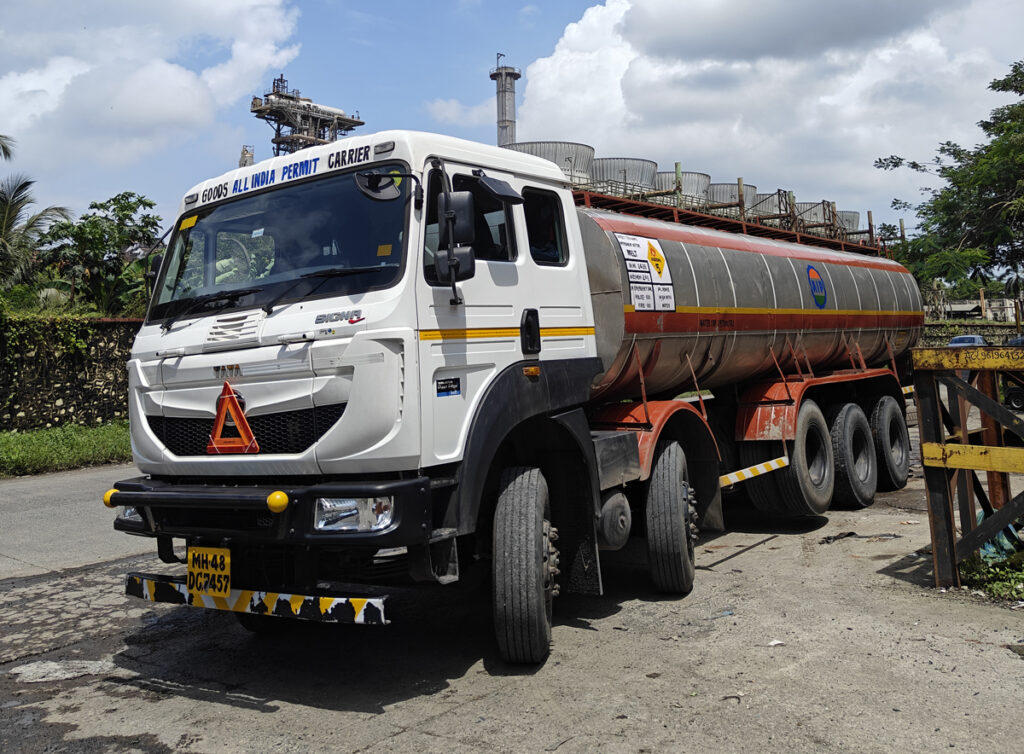
This philosophy extends to how the fleet is managed. The company rotates its vehicles every five years to ensure they remain modern, compliant, and efficient. Every truck is backed by a Tier-1 AMC package directly from OEMs, ensuring consistent, high-quality maintenance. The result; fewer breakdowns, minimal downtime, and enhanced safety.
“Safety in our line of work isn’t just a performance metric,” Minal remarks. “It’s a responsibility; toward our drivers, our customers, the communities we pass through, and the environment.”
Embracing Change: Key Trends Shaping Logistics
Having spent 17 years in the industry, Minal has seen logistics evolve from a traditional operation into a digitally connected, tech-driven ecosystem. She identifies four major trends transforming the industry; digitalisation, sustainability, rising customer expectations, and gender diversity.
Digitalisation & Real-Time Transparency
“Customers today demand visibility and accountability; especially in hazardous goods transport, where it’s non-negotiable,” says Minal. Miletrade adopted GPS, telematics, and real-time monitoring long before they became regulatory requirements. Full trip visibility has improved safety while allowing customers to plan their production schedules with greater accuracy.
Sustainability & Green Practices
Miletrade’s young fleet, rotated every five to six years, ensures compliance with BS-VI norms. The company practices route optimisation and preventive maintenance to reduce fuel consumption and emissions. “We even ensure that our DEF is sourced from OEMs to maintain reliability and performance,” Minal notes.
Rising Customer Expectations
With better infrastructure and vehicle technology, customers expect faster and more reliable services. Miletrade’s disciplined fleet management, preventive maintenance, and driver training help maintain its edge in this evolving environment.
Gender Inclusion & Diversity
Reflecting on her early years, Minal notes that women in logistics leadership were rare. Today, however, the industry is changing. “We now see women taking on operational and technology-driven roles. Diversity brings innovation, and we at Miletrade actively support this positive shift.”
Technology: The Invisible Backbone
For Minal, technology isn’t a luxury; it’s an enabler. “Post-Covid, the pace of digitalisation has accelerated, and logistics is no exception,” she explains.
All Miletrade vehicles are GPS-enabled and monitored by a dedicated control team. These systems do much more than tracking; they provide preventive maintenance alerts, vehicle health diagnostics, and driver behaviour insights. “Margins in logistics are tight, so technology helps us stay profitable by ensuring uptime and operational efficiency,” she says.
The company has also digitalised its trip management system, reduced paperwork and improving customer response times. Data analytics now drives most decision-making, identifying idle time patterns, route efficiency, and fuel consumption; helping reduce emissions and improve productivity.
“While trucks and highways are the visible face of our business,” Minal says, “the real game-changer lies in the invisible; data, discipline, and smart technology.”
Meeting Modern Customer Expectations
Customers in today’s logistics landscape expect more than just delivery; they expect assurance. In hazardous goods transport, even minor lapses can have major consequences, making reliability and transparency non-negotiable.
Miletrade ensures end-to-end visibility through GPS-based solutions that track everything from speed and stoppages to driving patterns. The company’s preventive maintenance program ensures minimal downtime, while AMC-backed servicing keeps every vehicle at peak performance.
However, Minal believes that the ultimate differentiator remains people. “Technology and vehicles ensure visibility and reliability; but it’s our people who build trust. Our drivers are trained not just in safety and compliance but also in responsibility and communication. That’s what our customers value the most.”
The Road Ahead: Opportunities and Challenges
As India aims for global competitiveness in logistics, Minal identifies three foundational pillars; vehicles, infrastructure, and people.
On the opportunity front, India’s growing economy and manufacturing expansion, aided by initiatives like Make in India and PM Gati Shakti, are fuelling logistics demand. At the same time, new technologies such as electric and LNG-powered trucks are paving the way for greener operations.
However, challenges remain; from volatile fuel prices and infrastructure gaps to tightening regulations and the persistent shortage of skilled drivers. “The driver availability gap worries me the most,” Minal admits. “We must restore dignity and respect to the profession to attract the next generation.”
Yet, she remains optimistic. “At Miletrade, we see every challenge as an opportunity to innovate. Our focus on safety, technology, and people-first practices positions us to stay competitive and future-ready.”
In a sector often defined by deadlines and distances, Miletrade’s story stands out for its heart. Under Minal Mehta’s leadership, the company continues to blend its 47-year legacy with a forward-looking approach; proving that in logistics, progress and people can indeed move in the same direction.